Opening new training paths for engineers in the life sciences
EMBL’s TechDev Internship Programme offers technology-minded students and graduates hands-on experience in cutting-edge tool development for the life sciences
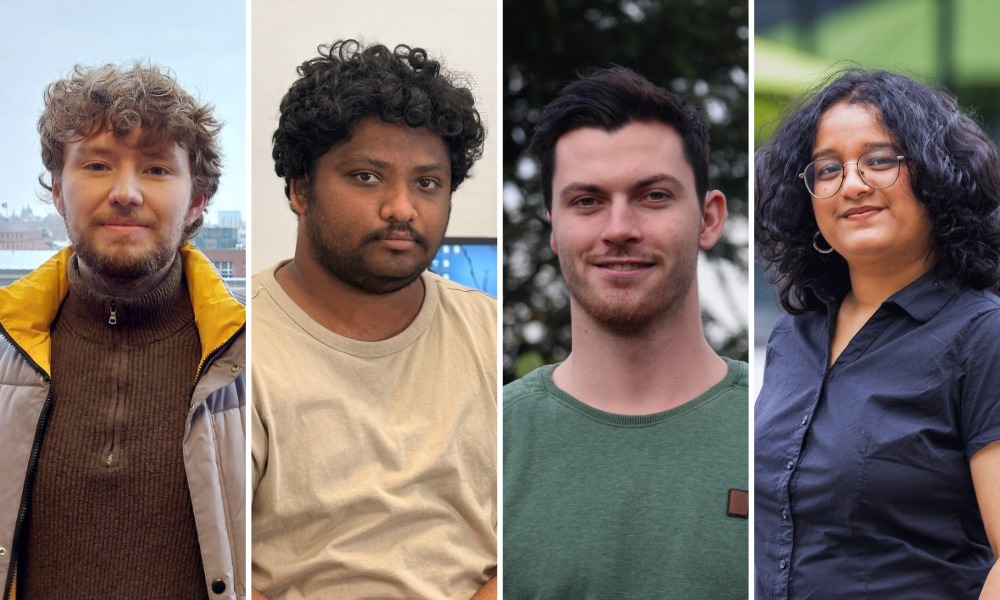
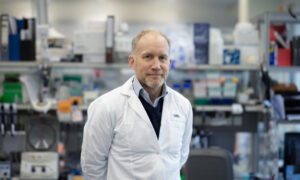
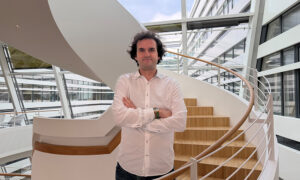
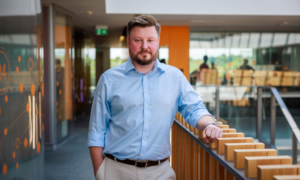
Portraits of four participants of the 2026 TechDev Programme. From left to right: Florian Vögele, Sree Vatsav Grandhe, Marcel Meyer and Sakshi Taware.
Co-authored by Dorota Badowska, Shreya Ghosh, and Kim Nalin
Behind many life science discoveries, there are people and technologies that made them possible. These include advanced instruments assisting experiments, as well as software for data processing and analysis. Building the next generation of such tools would require talented people skilled in different areas of engineering who are curious about finding technical solutions to help answer biological research questions.
The EMBL TechDev Internship scheme aims to train exactly these people. It provides students and recent graduates in engineering, physics, mathematics, computer science, and related fields an opportunity to gain early hands-on training by participating in ongoing cutting-edge projects.
Here, four TechDev interns at EMBL Heidelberg, Hamburg, and Grenoble share their impressions from their time at EMBL, what they have learned, and how this experience will support them in their next steps.
Developing an analysis tool for biophysics data and enjoying great coffee at EMBL Hamburg
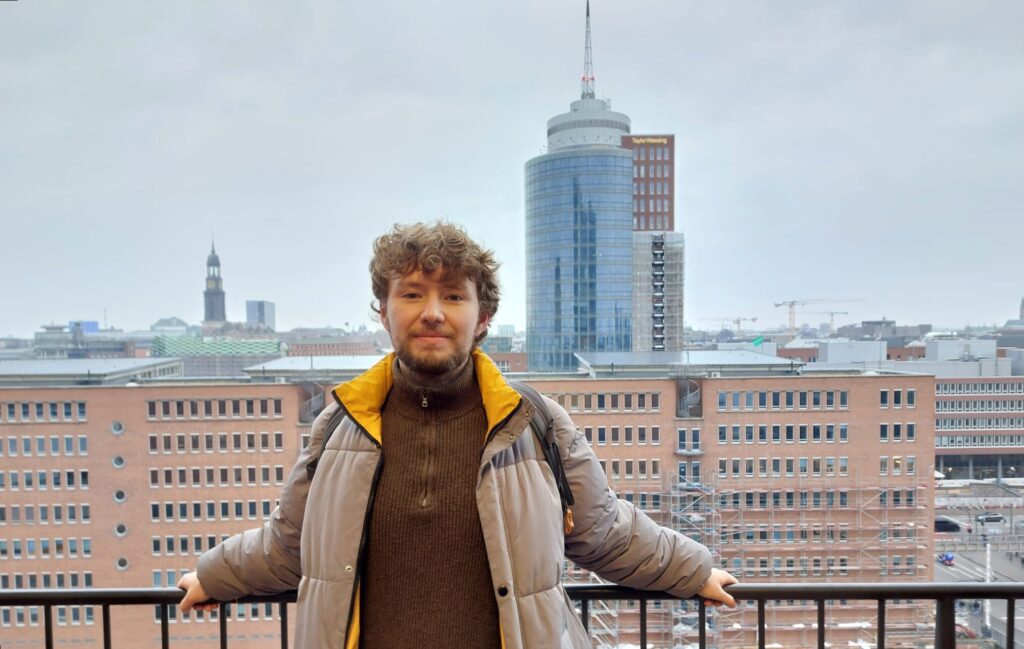
Florian Vögele in Hamburg . Credit: from his personal collection
Florian Vögele, a Bioinformatics graduate, completed his TechDev internship in the García Alai Team at EMBL Hamburg. Together with his supervisor, he developed CheMelt, a tool for analysing differential scanning fluorometry data to measure protein stability. The tool is now included in eSPC, a freely available online platform for analysing molecular biophysics data.
“During my Master’s, I did a lot of coding, but building a tool that other people can use requires a much wider skillset,” said Vögele. “In my internship, I am involved in the whole process of collaborative package development, from A to Z. I have contributed to writing the paper too – it’s now published in Protein Science. I had the opportunity to explore many new technical methods. This experience will enable me to develop scientific software in the future.”
During the internship, Vögele learned not only about package development, but also about biophysics: “It’s the first time I’ve worked in biophysics. It’s quite mathematical. I think it’s very powerful, but also very complicated. I like the challenge,” he said.
“I chose EMBL because of its reputation,” Vögele added. “I often came across EMBL through its resources, publications and tools during my studies. I started this internship to check if research is something for me. Now, I see it is, and I am eager to continue this path in my PhD studies. The experiences with modelling and computational work will definitely benefit me during my PhD.”
The memories Vögele will keep from his time at EMBL Hamburg span beyond scientific skills: “I really liked it there – the project and the international working environment. From the start, I’ve felt very welcome and supported. I’ll definitely remember the excellent coffee at EMBL Hamburg too,” he said with a smile.
Developing CREST: a web tool for centralised Cryo-EM workflow tracking
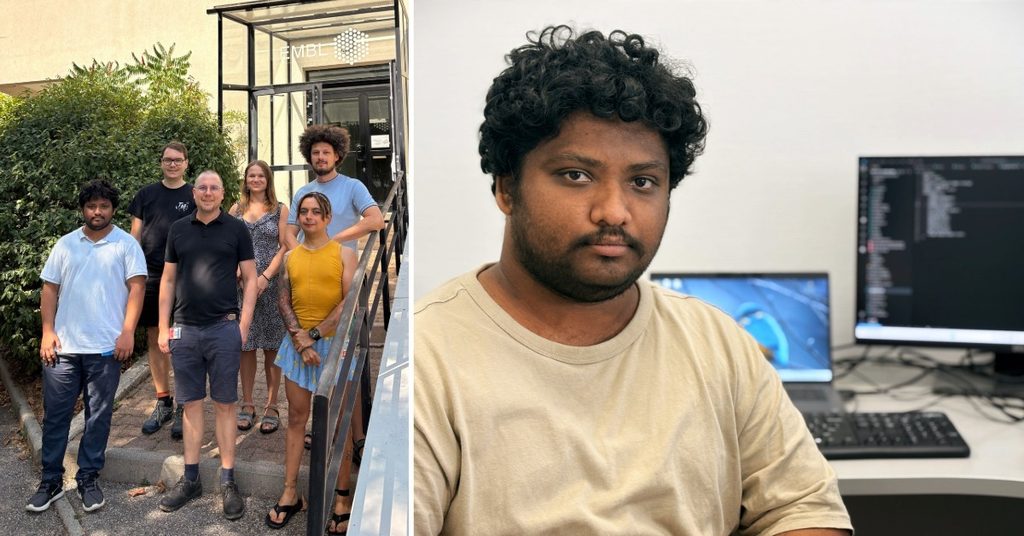
Sree Vatsav Grandhe in the company of the EMBL Grenoble instrumentation team members. Credit: Kim Nalin/EMBL
Sree Vatsav Grandhe, a recent graduate from Newcastle University with a degree in bioinformatics, joined the Papp team at EMBL Grenoble for his internship. With expertise in computational biology, genomics, and biological data analysis, he is passionate about developing computational approaches that enable researchers to extract insights from complex biological data.
Grandhe, side by side with his mentors, designed and started the development of CREST (Cryo-EM Sample Tracking), a web application that helps researchers organise and track biological samples used in cryo-electron microscopy (cryo-EM).
Cryo-EM uses an electron beam to image vitrified samples, allowing researchers to reconstruct the 3D structures of proteins and other biological molecules. The process involves multiple instruments, sample preparation steps, and data analysis stages, so developing CREST can have a crucial impact on scientists’ workflows.
The system supports the entire sample journey, from preparation and quality checks to long-term storage, making it easier for researchers to manage samples, keep accurate records, and streamline laboratory workflows. It has been designed primarily for the EasyGrid pipeline but also accepts samples from other preparation systems.
Grandhe also enjoyed making the most of life in Grenoble, nestled in the heart of the Alps, during his internship:
“The city’s unique character, with a vibrant scientific and student community, made it easy to recharge outside of work. Being in a place with such a strong research identity made it feel entirely natural to be part of EMBL’s mission. It is a city I will remember fondly.”
Beyond technical skills, Grandhe leaves with a genuine appreciation of the essential dialogue between engineers and scientists.
“I am particularly grateful to Gergely Papp, our team leader, for giving me this opportunity in the first place – his trust in me to take on a project of this scope was the foundation of everything that followed,” he said. “I also came to appreciate the importance of designing systems that scientists – not just engineers – can use comfortably day-to-day. Interactions with colleagues across different EMBL sites reinforced the idea that the best solutions emerge when domain expertise and engineering engage in authentic discussions. These are values I will carry with me on my next journey.”
Timing light: measuring photons with picosecond precision
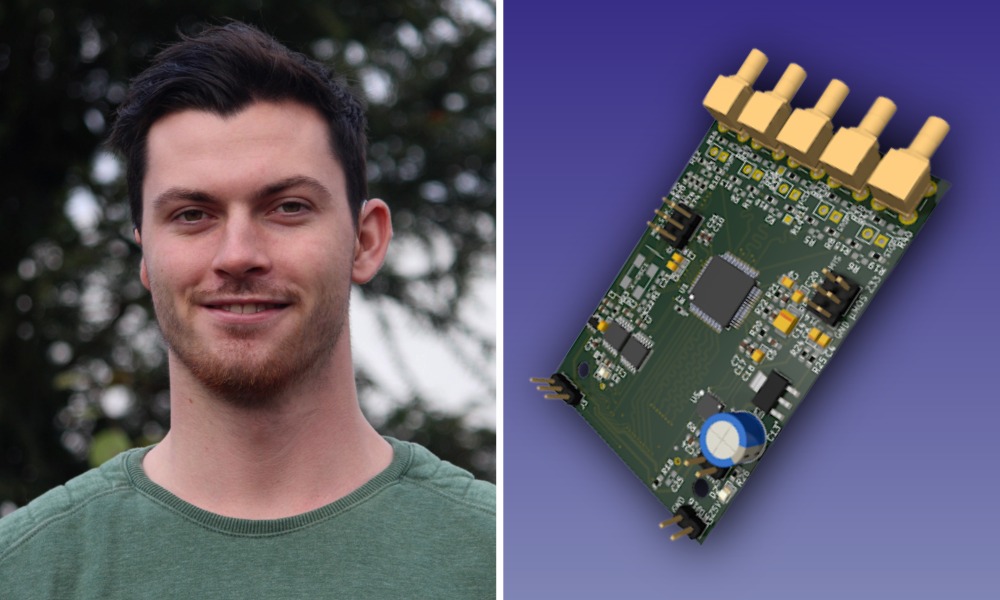
(Left) Marcel Meyer, intern from the TechDev programme 2026. (Right) Meyer built a data acquisition Card for Time-Correlated Single Photon Counting (TCSPC). It was developed in collaboration with the EMBL spin-off Suricube. Credit: Marcel Meyer/EMBL
For Marcel Meyer, the Prevedel Group provided an opportunity to put his electronics engineering skills and biophysics knowledge into practice, by solving a key problem in biological imaging.
Fluorescence lifetime imaging (FLIM) is a microscopy technique first developed in the 1980s. It uses the fact that fluorophores – light-emitting compounds used by biologists to mark specific structures inside cells – emit light over specific periods of time, a property called ‘lifetime’. This lifetime depends on the local micro-environment of the fluorophore, and therefore by measuring it precisely, biologists can capture this information to add a new dimension to their images.
During his time at EMBL, Meyer built a data acquisition card for Time-Correlated Single Photon Counting (TCSPC). TCSPC is a method of precisely measuring photon arrival times, which is important for FLIM.
“I am measuring photon arrival times at a temporal resolution of 10 picoseconds,” explained Meyer. “Since this data acquisition has to happen very fast, I am using an FPGA for this, which is a chip that can be programmed to form any digital circuit in hardware.”
The new data acquisition card, which was developed in collaboration with the EMBL spin-off company ‘Suricube’, can be integrated into an existing microscope controller in order to easily upgrade microscopes to perform FLIM.
“I definitely would recommend the fellowship to anyone who wants to work on a cutting-edge project at the intersection of science and engineering,” Meyer said. “The working conditions are excellent. Even my University Professor was impressed by the high-quality equipment I got to work with.”
Meyer, who is next planning to do a Master’s in embedded systems engineering, hopes to continue working on this and similar systems in the future.
Ensuring data privacy in synthetic electronic health records
Sakshi Taware, intern from the TechDev programme 2026. Credit: Stuart Ingham/EMBL
Sakshi Taware is interested in exploring the intersection of public health and policy. Following a Master’s in Sustainable Drug Discovery, she was in discussions with Oliver Stegle, Acting Head of AI Centre at EMBL, about a potential joint project when she came across the TechDev Internship.
This turned out to be the ideal opportunity for her to work in an emerging area that is quickly becoming important in public health – the use of AI to generate synthetic health records that protect patient privacy.
Electronic health records (EHRs) that collate data from patients on a variety of health-related measures can be of invaluable benefit to healthcare providers and researchers who try to spot patterns in these data to understand and predict disease outcomes and patient health trajectories.
“However, these data are highly sensitive and often challenging to share due to privacy requirements and regulatory constraints,” explained Taware. “At the same time, some groups, including certain age groups, racial groups, genders, and diseases, may be underrepresented in these datasets, which can limit the generalisability and robustness of AI models .”
To work around this problem, generative AI models can be used to create synthetic EHRs, which simulate and reproduce the patterns observed in real patient data, allowing them to be used for research and model development, while reducing the risk of exposing sensitive patient information.
However, it remains to be seen how effective synthetic EHRs are in mitigating the risk of patient re-identification. Taware’s work in the Stegle Group looked at whether synthetic EHR data can preserve the clinical usefulness of synthetic EHR data while reducing re-identification risks. She also investigated whether generative AI models can reproduce or amplify existing biases in the real data related to sensitive attributes such as race and gender.
Taware would recommend the fellowship to those considering whether or not to do a PhD.
“The internship gives you a real sense of what research feels like in practice: spending time with a difficult question, trying out ideas, getting stuck, discussing your work with others, and slowly making progress,” she said. “It is also a great opportunity to network and learn from people at EMBL, their collaborators and beyond.”
The EMBL TechDev Internship Programme
The EMBL TechDev Internship Programme is a scientific visitor scheme run by the Scientific Visitor Programme designed to provide early-career students/graduates with a passion for technology and tool development an opportunity to gain hands-on training experience through participation in ongoing cutting-edge projects at the intersection of science and engineering at the European Molecular Biology Laboratory (EMBL).
Visit this webpage to learn more and apply to projects offered through this scheme.