A lab away from home
EMBL Sabbatical Fellowship Programme continues to attract participants as scientists see opportunities for collaboration, top-notch technology, and research advancement

When EMBL’s Molecules to Ecosystems programme began in 2023, it included a concerted effort to attract and fund scientists to a mutually beneficial scientific exchange in the form of sabbaticals.
The initiative intended to bring ‘non-traditional’ scientific allies together at EMBL to enable cross-fertilisation of knowledge and expertise. It launched formally as part of EMBL’s programme that broadened the organisation’s strategic vision.
“The idea was to develop a formal exchange programme that would attract high-level scientists, particularly non-traditional allies, such as mathematicians, ecologists, technologists and physicists, for example,” said Juergen Deka, EMBL’s Head of External Scientific Training. “Not many comparable programmes privately arrange the logistics as we do.”
Applications for sabbaticals are growing, as are the length of stays and the number of EMBL sites hosting scientists.
“The hope is that EMBL gets exposed to science and scientists it doesn’t normally encounter, and in exchange, these scientists benefit from EMBL’s multi-site and multi-faceted research and services environment,” said Aditya Sankar, Scientific Visitor Programme and Training Lead. “It offers a period of reflection, where scientists can reinvent or reinvigorate their own research in a new setting characterised by talented scientists, new technologies, and fresh perspectives. They’re able to gather new insights that help influence the speed, scope, and significance of their work.”
Sabbatical fellowships usually last between three months and a year. In addition to visiting a particular group, participants can interact with scientific service providers, as well as other EMBL researchers and colleagues across all sites. Fellows deliver background and reflection seminars at EMBL at the start and end of the fellowship, respectively.
The process for a fellow begins with a conversation or contact with an EMBL scientist who agrees to host them on a sabbatical. After discussions on the nature and potential benefits of a visit, the candidate and the host jointly submit a formal application seeking funding to a review committee that represents all EMBL sites. Only a few applicants are selected each year.
“Each ‘call’ for applications gets revised to incorporate developing priorities and fellows’ needs in a bid to accommodate more diversity among participants,” Sankar said. “In the future, we’re hoping to continue seeing longer sabbatical stays with strong participation in EMBL life and activities.”
EMBL has hosted 13 sabbatical fellows since 2023. Each one has engaged with the EMBL community in its own way, introducing their own expertise in the process. Two new sabbatical fellows will join us in 2026, including a first awardee for EMBL Grenoble. Here are just a few experiences shared by current awardees on a sabbatical at EMBL:
Developing a more holistic view of cerebral malaria research at EMBL Barcelona
Christopher Moxon brings an unusually broad perspective to cerebral malaria research. Because Moxon works as a paediatric infectious disease specialist at the Royal Hospital for Children in Glasgow and at the Queen Elizabeth Central Hospital in Malawi, his research group is split between the two locations. He is currently at EMBL Barcelona on a sabbatical in Maria Bernabeu’s group, where the collaboration is strengthening the bridge between clinical insight and cutting-edge model systems, advancing the understanding of cerebral malaria in translational ways.
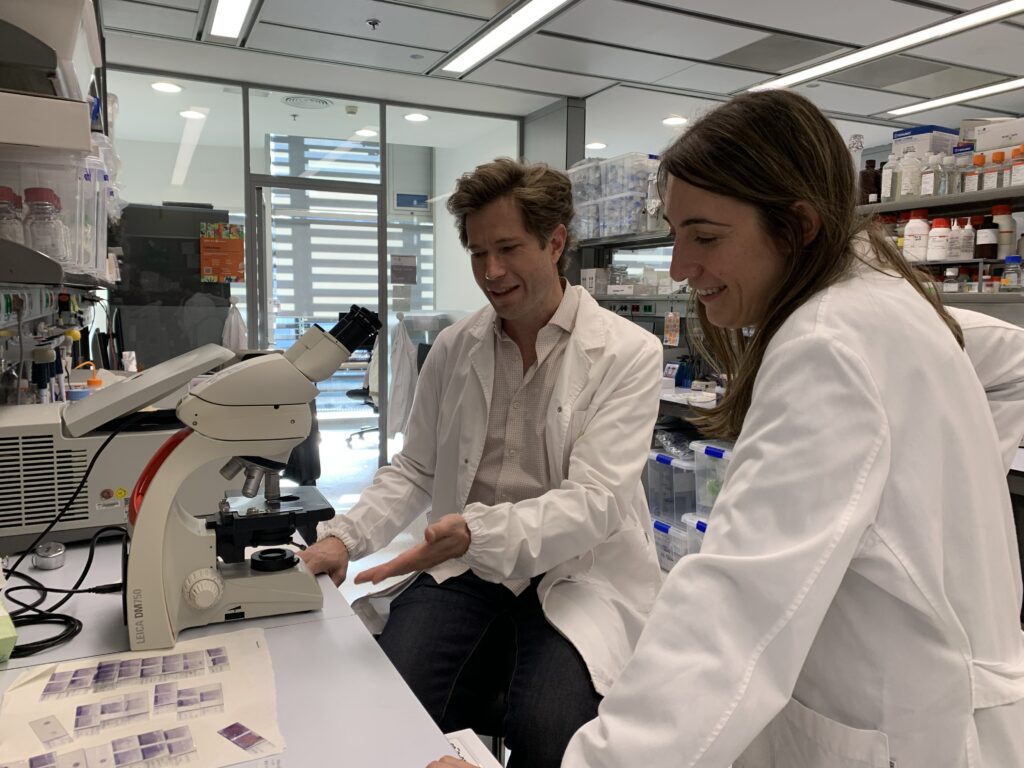
“At my own group, we study cerebral malaria across scales,” Moxon said. “Our lab uses multi-omics approaches and systems biology tools to integrate insights from patients down to the cellular level. Ultimately, we want to identify treatment targets to improve outcomes for patients.”
Moxon and Bernabeu began collaborating a couple of years ago and jointly supervised an EIPOD postdoc, Olawunmi Oyernide. The synergy was clear: the combined range of their expertise – from cells to tissues – allowed them to develop a more holistic view of cerebral malaria pathogenesis.
“Integrating Maria’s cutting-edge in vitro model with my group’s multi-omics approaches is very exciting and highly synergistic,” Moxon said. “The model can be improved and its utility better understood through insights from our work in patients, and those patient-derived insights need to be validated and explored in a tractable model system.”
Working in both Glasgow and Malawi is challenging but essential for Moxon’s group to gain a deep understanding of the pathology and, crucially, to foster knowledge transfer across disciplines. The EMBL sabbatical programme strengthens this approach, helping both Moxon’s and Bernabeu’s groups deepen their collaboration, share data, and brainstorm new ideas.
“These months in Barcelona have exposed me to the very rich environment of EMBL Barcelona’s unit meetings, seminars, and visiting speakers,” Moxon said. “I am also in touch with other EMBL group leaders and core facilities. I’ve just had a truly inspiring visit to Heidelberg that sparked ideas through discussions with group leaders there, notably discussions relating to imaging clinical samples with Yannick Schwab.”
As the sabbatical progresses, Moxon is looking forward to translating these new ideas into concrete research directions. He believes that emerging tools, such as spatial transcriptomics and AI-enhanced analytical methods, will fundamentally expand what is possible to investigate in human disease.
“These approaches are transforming our ability to understand the heterogeneity of human pathology,” Moxon said, “and I think we will see major advances in identifying human-relevant mechanisms and treatment targets.”
Connecting epigenetics and immune memories at EMBL Rome
Luigia Pace is an Italian immunologist whose research focuses on T-cell memory in the context of infection and cancer. After a PhD in Immunology at the University Tor Vergata in Rome, she carried out postdoctoral research at the Curie Institute in Paris and at the TWINCORE Institute in Germany. In 2018, she returned to Italy thanks to a Harvard-Armenise fellowship to establish her research group, first at the Italian Institute for Genomic Medicine (IIGM) in Turin, and later at the IRCCS Fondazione del Piemonte per l’Oncologia in Candiolo.
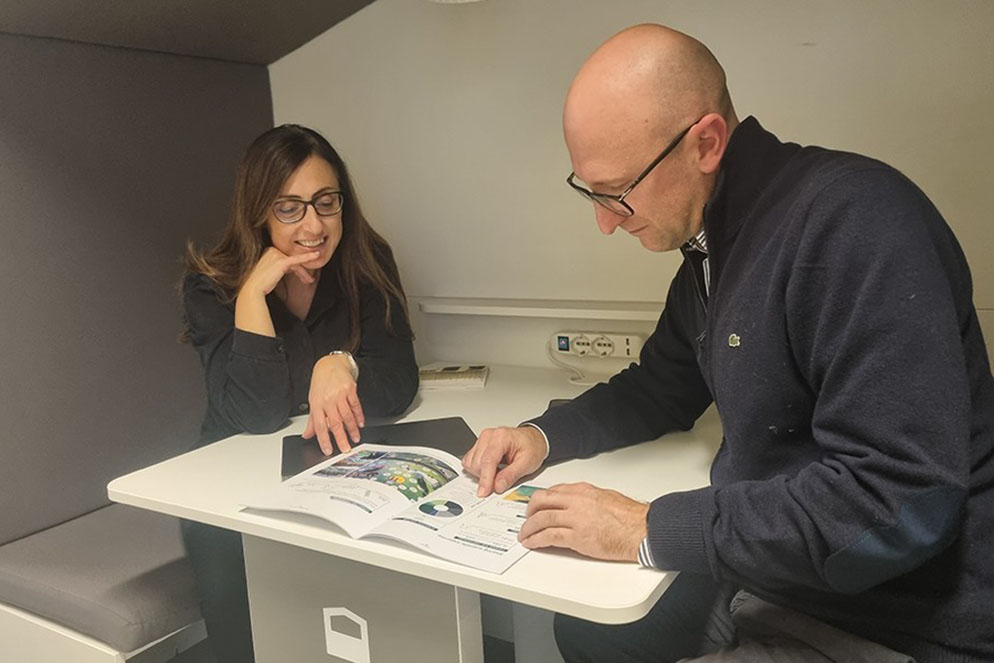
Pace’s research focuses on how epigenetic mechanisms and chromatin structure influence T-cell differentiation and the formation of immune memory.
“I have always embraced a multidisciplinary and collaborative approach, working closely with other research groups and specialised facilities,” Pace said. “Also, these have been multicultural environments that encourage open exchange and sharing of ideas. Through my interactions with experts in epigenetics, I began to notice intriguing parallels between epigenetic regulation and the mechanisms that shape immune responses. This insight inspired a project through which we were able to demonstrate that immunological memory is driven by an epigenetic process.”
Pace reached out to colleagues at EMBL Rome because it is one of the prominent European centres to study epigenetics and is equipped with specialised facilities to generate mouse models with targeted epigenetic modifications. Her group began collaborating with the Boulard Group at EMBL Rome, as well as several EMBL facilities.
With the launch of EMBL’s Molecules to Ecosystems programme and the introduction of transversal themes that encourage collaborative, multidisciplinary projects, an opportunity emerged to develop a joint project with Mathieu Boulard (EMBL Rome) and Kyung-Min Noh (EMBL Heidelberg). Their collaboration explores the epigenetic basis of T-cell memory following bacterial infection and received internal funding from the Infection Biology Transversal Theme.
When EMBL opened a call for sabbaticals, it offered the opportunity to work more closely with her collaborators and take part in EMBL’s scientific life.
“I participate in all the activities within the Boulard Group and, more broadly, across the campus. But I also love walking through the corridors and talking to people,” she said. “That’s how the best ideas are born – by bringing together different perspectives to approach scientific questions that are ultimately very similar, even if they apply to different systems.”
This sabbatical not only consolidates her collaboration with EMBL Rome but also expands her network across EMBL sites. Pace visited the EMBL Heidelberg campus in December and will visit EMBL-EBI in Hinxton, UK, in January.
Conferring on population-scale genomics and machine learning to better understand human disease
Originally from South Africa and now based in Sydney, Australia, Natalie Twine’s career has taken her across the globe. She currently leads a genomics team at the Commonwealth Scientific and Industrial Research Organisation (CSIRO), Australia’s national science agency, which focuses on population-scale genomics, cloud-based platform development, and machine-learning approaches to understanding human disease.
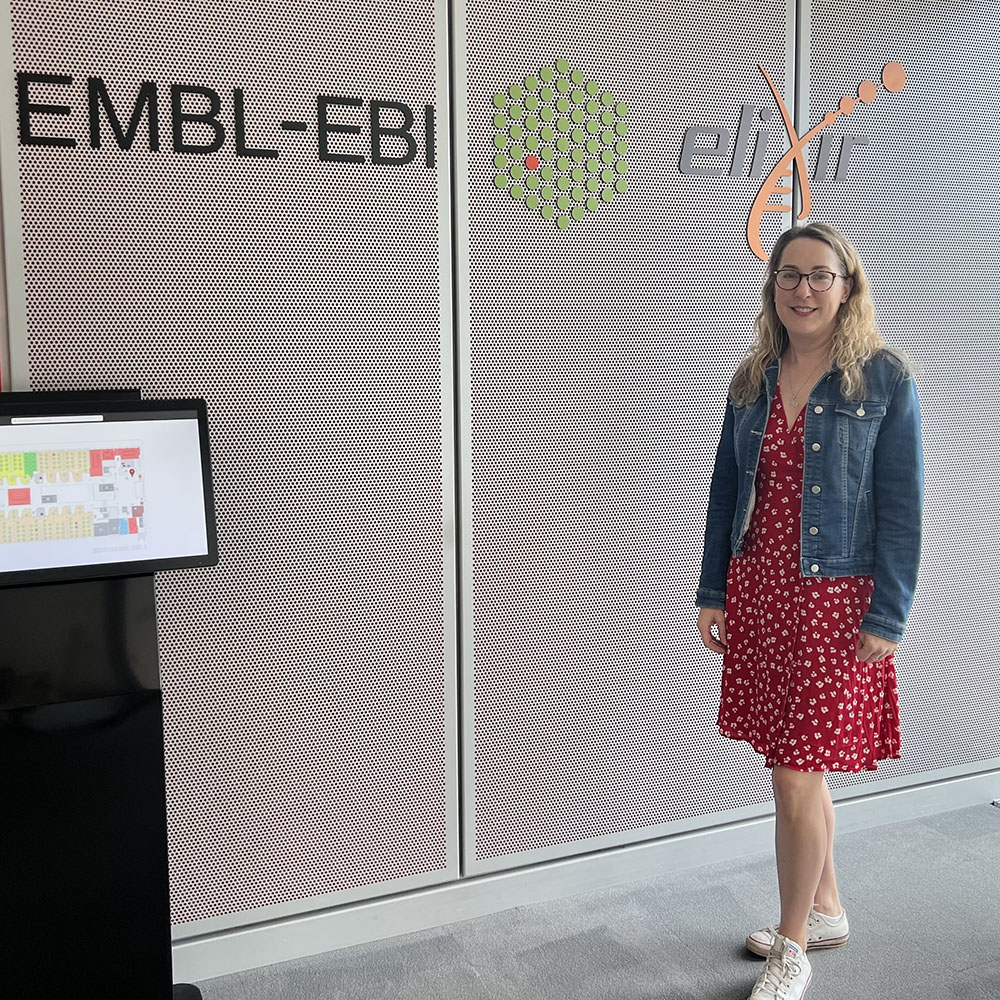
After giving a presentation at the Wellcome Sanger Institute, Twine connected with EMBL-EBI Team Leader, Mallory Freeberg, whose expertise in large-scale human genomics complemented Twine’s own research. EMBL’s sabbatical fellowship, supported by a career-development award from CSIRO, offered an ideal opportunity for Twine to come to EMBL-EBI and build on this shared scientific focus.
During her sabbatical, she has been developing a scalable framework for analysing data from the UK Biobank, a large biomedical research project that collects health, lifestyle, and genetic information from half a million participants in the United Kingdom. Twine’s work focuses on identifying gene-gene interactions within these data across a large range of diseases. These interaction results will be integrated into the Ensembl Variant Effect Predictor (VEP), EMBL-EBI’s tool for identifying genetic variants and facilitating variant prioritisation and interpretation, for example, to understand human disease.
One of the most rewarding aspects of Twine’s time at EMBL-EBI has been the collaboration and networking opportunities. These have included interactions with EMBL-EBI’s services, research groups, and training team, as well as with other organisations on the Wellcome Genome Campus, including the Wellcome Sanger Institute. Being on-site has enabled the kind of spontaneous discussions and collaborations that are difficult to generate remotely.
Learn more about the EMBL Sabbatical Visitor Programme and the next call for applicants.