Exploring the future of life sciences at EMBL Rome
EMBL’s first Rome Future Week event brought together PhD students, researchers, and industry professionals to explore emerging technologies and cutting-edge research in epigenetics, neuroscience, and AI in the life sciences
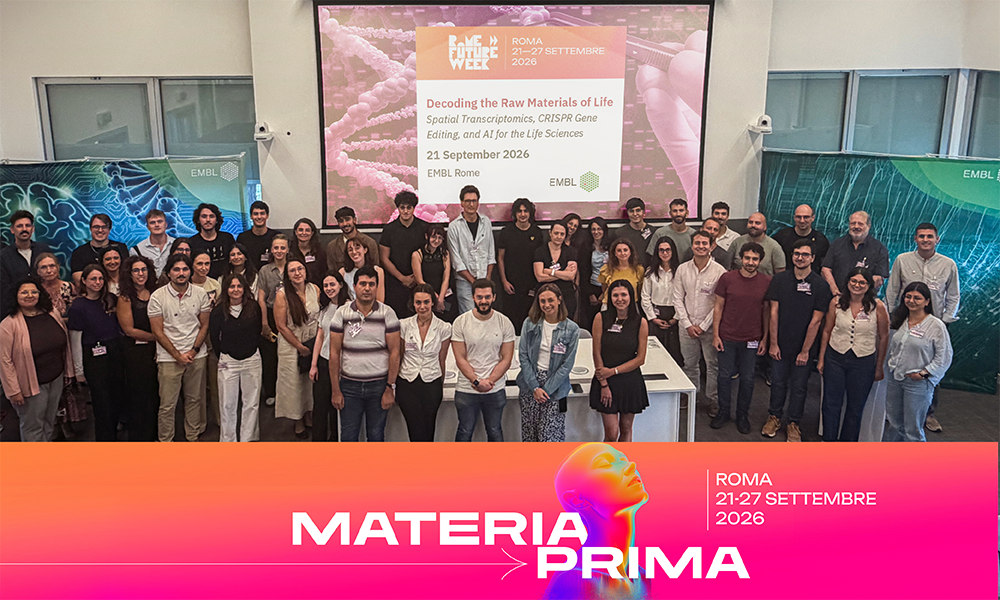
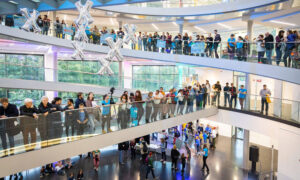
On 21 September, EMBL Rome hosted its first event organised as part of Rome Future Week. Titled ‘Decoding the raw materials of life’, the event brought together researchers, students, and professionals for a day dedicated to scientific discovery, emerging technologies, and innovation in the life sciences.
The event was inspired by this year’s Rome Future Week theme, ‘Materia prima’ (raw material). Drawing on EMBL Rome’s research environment, the event explored the theme from a biological perspective, focusing on one of the most fundamental forms of raw material: our genetic information.
During the event, participants could discover how EMBL Rome researchers investigate how genetic information is read, regulated, and translated to understand fundamental biological processes, such as development, health, and disease.
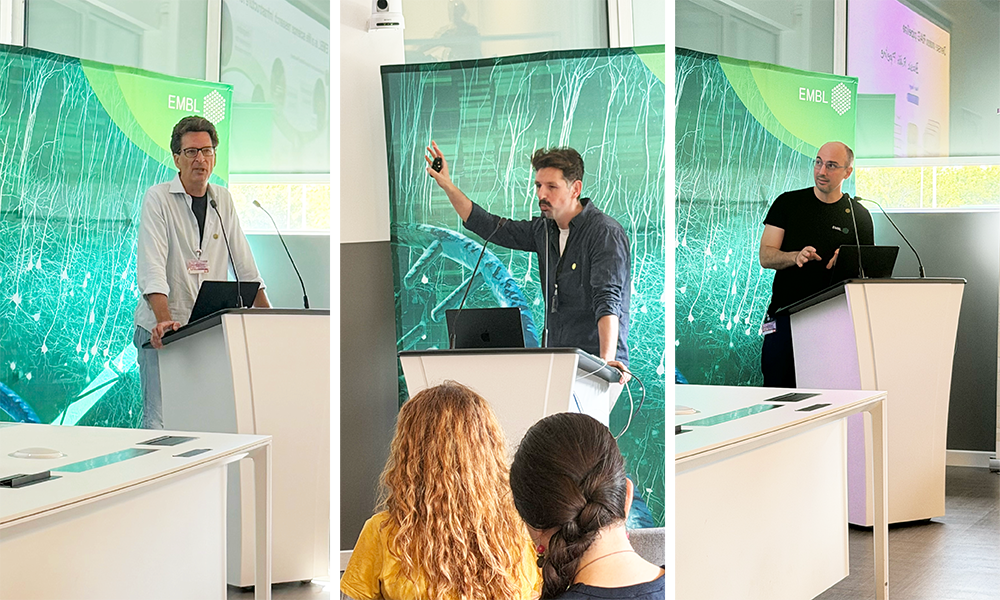
The morning programme featured three scientific presentations that showcased different aspects of EMBL Rome’s research and technological expertise. EMBL Rome Head of Site Cornelius Gross presented new tools and technologies for understanding social behaviour, while Group Leader Jamie Hackett explored how gene-editing technologies can be used to engineer the epigenome and investigate the mechanisms that regulate gene activity. Group Leader Fabio Petroni introduced participants to emerging approaches in artificial intelligence for scientific discovery, including co-scientist agents and physical AI.
The afternoon moved from theory to practice, with participants divided into three groups for parallel workshop sessions focused on technologies that are increasingly reshaping life-science research.
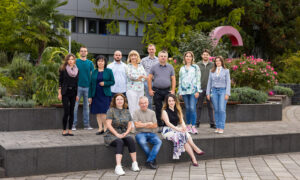
In ‘Seeing genes in space’, scientists from the Light Microscopy Facility introduced participants to spatial transcriptomics. This rapidly developing field combines molecular biology and imaging to measure gene expression while preserving cells’ spatial organisation within tissues. Through microscopy demonstrations, interactive games, and real datasets, participants explored how molecular information can be transformed into spatial maps of biological tissues.
The ‘CRISPR project design and AAV template delivery’ workshop was led by EMBL Rome’s Gene Editing and Virus Facility. It provided a practical introduction to the design of gene editing strategies. Participants explored the steps involved in targeting genes, selecting guide RNAs and delivering DNA templates, gaining insight into how CRISPR-based approaches can be used to modify the genome and investigate gene function.
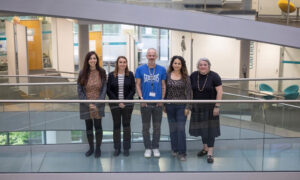
Scientists in the Petroni Group led the third workshop, “AI agents in the life sciences”, focused on the emerging role of autonomous AI systems in scientific research. Participants explored how AI agents can interact with scientific tools, databases, and other computational resources to support complex research workflows, with practical examples that illustrate the potential of these technologies in biomedical and life-science applications.
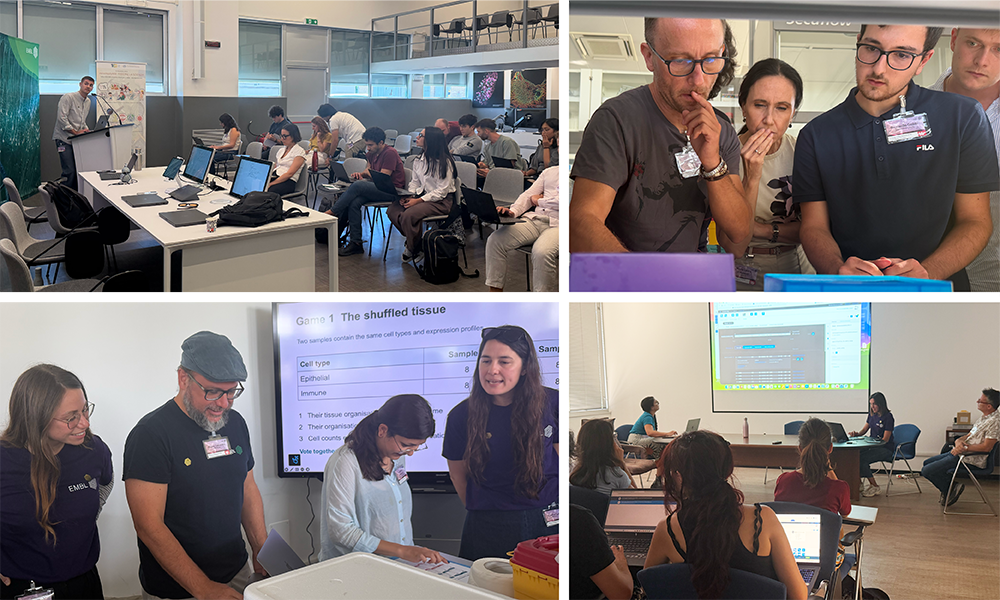
Together, the three workshops offered participants an opportunity to experience state-of-the-art technologies applied to the life sciences and engage with EMBL Rome scientists working at the forefront of these fields.
The event reflected EMBL Rome’s broader research environment that addresses fundamental questions in epigenetics, neuroscience, and gene regulation while developing and applying new technologies. By combining scientific expertise with shared technological capabilities and hands-on training, EMBL Rome provides an environment in which researchers can explore new approaches to understanding the complexity of living systems.