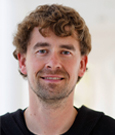
Johannes Krause
Max Planck Institute for Evolutionary Anthropology
Germany
EMBO | EMBL Symposium
Combining genome-wide data from ancient and modern populations opens new windows into the past and, importantly, their integration with archaeological evidence and historical records elucidates aspects of human history and cultural evolution of past societies. Population-scale sequencing projects investigating past and present human diversity have already provided us with extraordinary insights into patterns of human variation and mobility through time and space. Moreover, genome-wide data from archaic human remains, such as Neanderthals and Denisovans, allows to investigate human evolution in action and to provide direct insights into genetic changes that define our own lineage.
The available dataset of genome-wide data from present-day and archaic humans has risen exponentially since the first EMBO ‘Reconstructing the human past’ meeting in 2019. This has drastically enhanced our ability to carry out further large-scale studies on both global and local scales across deeply sampled time transects, making it now possible to ask and answer questions that were simply impossible to address before, in addition to motivating the development of new analytical methods. Critically, with new frontiers in data generation and analyses, questions on ethical practices in paleogenomics need to be considered.
Furthermore, the reconstruction of ancient pathogen genomes and metagenomic analysis of the oral and gut microbiomes provides us with molecular fossils to study microbial evolution through time. The potential of ancient DNA data to reconstruct genomic variation of human-associated animals and plants to understand the process of domestication and their evolutionary trajectory is equally promising to such studies in humans.
This meeting will involve scientists from population genetics, bioinformatics, microbiology, anthropology, archaeology, and history and will strengthen future interactions in this young research field that is already changing the way we think about our past and will shape how we study genetic variation in the future.
“The ancient DNA conference was a thought-provoking exploration of a broad range of topics. The organizers’ meticulous efforts to foster networking opportunities significantly enriched the overall experience.” — Ganyu Zhang, Institute of Vertebrate Paleontology and Paleoanthropology, Chinese Academy of Sciences, China
“You’ll never see so many of the biggest names in a DNA research, all in one place together, presenting new data and new results. And to get the chance to present your own work and talk to them is an amazing opportunity!” — Adam Rohrlach, Max Planck Institute for Evolutionary Anthropology, Germany
“As a first time EMBL conference attendee, I found this community extremely welcoming and outstanding! The incredible research at this conference left me taking notes at each and every speaker. Hope to attend in the future!” — Lydia Sykora, University of Kansas, USA
Max Planck Institute for Evolutionary Anthropology
Germany
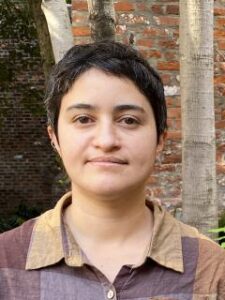
University of Chile
Chile
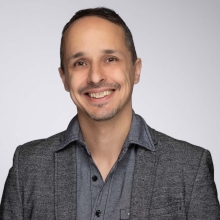
McGill University
Canada
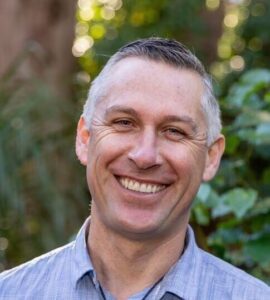
University of Waikato
New Zealand

University of Cambridge
UK
Max Planck Institute for Evolutionary Anthropology
Germany
University of California, Santa Cruz
USA
Trinity College Dublin
Ireland
University of Minnesota Twin Cities
USA
University of Oxford
UK
University of Barcelona
Spain
University of Copenhagen
Denmark
University of Tübingen
Germany

University College London
UK
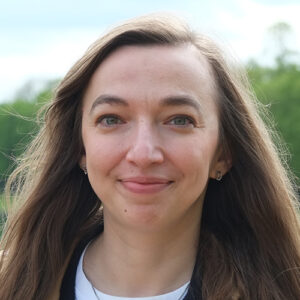
Max Planck Institute for Evolutionary Anthropology / The Francis Crick Institute
Germany / UK
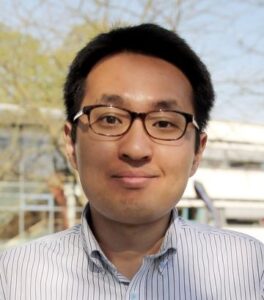
Seoul National University
South Korea
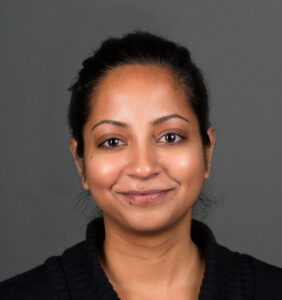
The University of Chicago
USA

The Francis Crick Institute
UK

EMBL Heidelberg
Germany
Are you on social media? Post using #EESHuman and don’t forget to tag @EMBLEvents.
| Time | Session |
|---|---|
| 12:00 – 13:30 | Arrival and registration with refreshments |
| 13:30 – 13:45 | Opening remarks by scientific organisers (Pontus Skoglund, Mateja Hajdinjak, Choongwon Jeong, Maanasa Raghavan) |
| 13:45 – 14:45 | Keynote Lecture: The genetic history of Europe: from the settlement of Europe to the medieval migration period Johannes Krause – Max Planck Institute for Evolutionary Anthropology, Germany |
| 14:45 – 17:15 | Session 1: Our closest living and extinct relatives Chairs: Pontus Skoglund, Mateja Hajdinjak |
| 14:45 – 15:15 | Genomes of late Neandertals Mateja Hajdinjak – Max Planck Institute for Evolutionary Anthropology, Germany |
| 15:15 – 15:30 | Short coffee break |
| 15:30 – 15:45 | Deep coalescent history of the hominin lineage Regev Schweiger – Tel Aviv University, Israel |
| 15:45 – 16:00 | Comparative 3D chromatin modelling reveals cell-type-specific changes in enhancer–promoter organisation associated with archaic hominin lineage-specific deletions Michal Wlasnowolski – University of Cambridge, United Kingdom |
| 16:00 – 16:15 | Hypothesis: A modern human range expansion ~300,000 years ago explains Neandertal origins David Reich – Harvard University, United States of America |
| 16:15 – 16:45 | New insights from studying Human-Neanderthal admixture Laurits Skov – University of Copenhagen, Denmark |
| 16:45 – 17:15 | Coffee break and Meet the speakers with Johannes Krause, Mateja Hajdinjak and Laurits Skov |
| 17:15 – 18:45 | Session 2: Reconstructing the genetic history of human populations Chairs: Choongwon Jeong, Maanasa Raghavan |
| 17:15 – 17:45 | Genomic contributions to understanding the history of Latin America & the Caribbean Maria Nieves-Colón – University of Minnesota Twin Cities, United States of America |
| 17:45 – 18:00 | The genomic and phenotypic legacy of the peopling of Polynesia Elise Kerdoncuff – Institut Pasteur, France |
| 18:00 – 18:30 | Reconstructing social structure in an ancient Oceanian population Lara R Araúna – University of Barcelona, Spain Not available on demand |
| 18:30 – 18:45 | Genome-wide ancient DNA data reveals five millennia of population history across the Indian Himalayas Niraj Rai – DST-Birbal Sahni Institute of Palaeosciences, India |
| 18:45 – 19:15 | Flash talk session 1 #40 Attias Batel #47 Choin Jérémy #53 Fernandes Daniel #57 Gaens Noah #59 Guevara López Juan Carlos #61 Harney Eadaoin #63 Anchieri Lucas #87 Szécsényi-Nagy Anna |
| 19:15 – 20:45 | Dinner |
| 20:45 – 21:45 | After dinner drinks |
| Time | Session |
|---|---|
| 09:00 – 12:00 | Session 2: Reconstructing the genetic history of human populations (continued) Chairs: Choongwon Jeong, Maanasa Raghavan |
| 09:00 – 09:30 | Genetics in historical genealogies Simon Gravel – McGill University, Canada |
| 09:30 – 10:00 | Decoding the genetic legacies of human history through ancient DNA Shigeki Nakagome – Trinity College Dublin, Ireland |
| 10:00 – 10:30 | From desert to Patagonia: paleogenomic perspectives across South America Constanza de la Fuente Castro – University of Chile Not available on demand |
| 10:30 – 10:45 | Ancient human DNA from chewed birch bark tar reveals the origin of the first settlers of Estonia Mait Metspalu – University of Tartu, Estonia |
| 10:45 – 11:15 | Coffee break and Meet the speakers with Simon Gravel, Shigeki Nakagome, Constanza de la Fuente Castro, Maria Nieves-Colón and Lara R Araúna |
| 11:15 – 11:30 | Genomic history of Mexico reveals bidirectional long-distance connectivity across the Americas Santiago Gerardo Medina-Muñoz – CINVESTAV, Mexico |
| 11:30 – 11:45 | 45,000 years of changes in ancestry profiles and environmental conditions as shaping forces of Homo sapiens demography worldwide Hélios Delbrassine – University of Padova, Italy |
| 11:45 – 12:00 | Gene-culture coevolution in the European Upper Palaeolithic Francesco Ravasini – Aarhus University, Denmark |
| 12:00 – 12:15 | Genetics and social practices at Mogou and surrounding Gansu sites at the onset of trans-Eurasian exchanges Han Shi – Chinese Academy of Sciences, China |
| 12:15 – 12:30 | Archaeogenomic insights into a single Islamic community buried in the Tauste necropolis (northeastern Iberia) over four centuries Laura Claudia Verdesca – Institute of Evolutionary Biology, CSIC-Universitat Pompeu Fabra, Spain |
| 12:30 – 14:00 | Lunch and Meet the Editors |
| 14:00 – 15:00 | Session 3: Research practices, data curation, and ethical considerations in paleogenomics Chairs: Maanasa Raghavan and Mateja Hajdinjak |
| 14:00 – 14:30 | Research reciprocity – engaging equitably with indigenous peoples and local communities in ancient genomics Maui Hudson – University of Waikato, New Zealand |
14:30 – 15:00 | Interactive discussion on ethical considerations in paleogenomics |
| 15:00 – 15:30 | Flash talk session 2 #65 Kim Donghee #67 Kozulin Chen Henrik #71 Brun Christine #79 Pathak Ajai K #85 Serradell Noguera Jose Miguel #95 Wang Tianyi |
| 15:30 – 17:00 | Poster Session 1 (odd numbers) |
| 17:00 | Free evening |
| Time | Session |
|---|---|
| 09:00 – 12:00 | Session 4: New methods, avenues, tools, and resources for paleogenomic data analysis Chairs:Mateja Hajdinjak and Maanasa Raghavan |
| 09:00 – 09:30 | Beyond bones and teeth – exploring alternative sources of ancient DNA for investigating the human past Matthias Meyer – Max Planck Institute for Evolutionary Anthropology, Germany Not available on demand |
| 09:30 – 09:45 | Deep learning prediction of cis-regulatory turnover in human evolution Riley Mangan – Massachusetts Institute of Technology, United States of America |
| 09:45 – 10:00 | The Ultima Ancient DNA Resource: Shotgun sequencing of 25000 ancient genomes Shop Mallick – Harvard University, United States |
| 10:00 – 10:30 | Large-scale genealogies of ancient and modern genomes Pier Palamara – University of Oxford, United Kingdom Not available on demand |
| 10:30 – 11:15 | Coffee break and Meet the speakers with Matthias Meyer, Maui Hudson and Pier Palamara |
| 11:15 – 11:30 | mixKIN: A new approach to estimate genetic kinship in admixed populations Muhammed Siddik Kiliç – University of Lausanne, Switzerland |
| 11:30 – 11:45 | Modelling temporal decay of shared haplotypes between distinct populations Florence Pautet – Max Planck Institute for Evolutionary Anthropology, Germany |
| 11:45 – 12:00 | Assessing biases of using aDNA imputation for natural selection scans Jose Rodrigo Flores Espinosa – Genomics Institute, Estonia |
| 12:00 – 13:45 | Lunch |
| 13:45 – 18:30 | Session 5: From selection signals to function, health, and disease Chairs: Choongwon Jeong and Pontus Skoglund |
| 13:45 – 14:00 | Worldwide patterns of selection and differentiation in genes linked to alcohol metabolism Francesca Carollo – University of Padova |
| 14:00 – 14:30 | Timing is everything: Delayed transitions enable human neural expansion Madeline Lancaster – University of Cambridge virtual speaker |
| 14:30 – 14:45 | Subsistence-associated DNA methylation signals in the transition to farming Youssef Tawfik – Johannes Gutenberg University Mainz, Germany |
| 14:45 – 15:00 | Adaptive introgression in Peruvians reveals temporally distinct waves of selection on archaic variation in South America Zhang Xinjun – University of Michigan, United States of America virtual speaker |
| 15:00 – 15:15 | Detecting human-specific DNA methylation changes through comparative analysis of great apes and ancient hominins Chen Leibson – The Hebrew University of Jerusalem, Israel |
| 15:15 – 15:45 | Centromere‑spanning haplotypes reveal deep ancestry and evolutionary dynamics in the human genome Karen Miga – University of California, Santa Cruz |
| 15:45 – 16:15 | Coffee break and Meet the speaker with Karen Miga |
| 16:15 – 16:45 | Flash talk session 3 #54 Flegontov Pavel #64 Jang Sara #70 Maravall López Javier #72 Michel Megan #74 Morez Adeline #82 Rodriguez Ricardo #90 Vallini Leonardo #92 Villalba-Mouco Vanessa |
| 16:45 – 18:15 | Poster Session 2 (even numbers) |
| 18:15 – 20:15 | Dinner |
| 20:15 – 23:00 | Conference Party with DJ in the Rooftop lounge |
| Time | Session |
|---|---|
| 09:30- 12:30 | Session 6: Evolution of human pathogens and microbiomes Chairs: Pontus Skoglund and Mateja Hajdinjak |
| 09:30 – 10:00 | Tracing the early evolutionary stages of plague through ancient genomics Maria Spyrou – University of Tübingen, Germany Not available on demand |
| 10:00 – 10:15 | De novo assembly of ancient metagenomic data from dental calculus to disentangle the Neolithic transition in Southern Europe Patrícia Santos – University of Ferrara, Italy |
| 10:15 – 10:30 | Tracing the emergence and global spread of hepatitis B virus through human history Ruth Boersma, Max Planck Institute for Evolutionary Anthropology, Germany |
| 10:30 – 11:00 | Coffee break and Meet the speakers with Maria Spyrou and Lucy van Dorp |
| 11:00 – 11:15 | Genomic evidence of Yersinia pestis from the Eastern Mediterranean and global phylogenomics of plague emergence Aditya Upadhyay – Indian Institute of Chemical Biology (CSIR-IICB), India |
| 11:15 – 11:30 | Reconstructing the epidemiological landscape of Venice’s plague hospital Emily Gaul – University of Tübingen, Germany |
| 11:30 – 12:00 | Uncovering the drivers of pathogen evolution from ancient DNA to modern disease Lucy van Dorp – University College London, UK virtual speaker Not available on demand |
| 12:00 – 12:15 | Closing Remarks and Poster Prize Announcements |
| 12:15 | Packed lunch and departure |
| 12:30 | Bus to Frankfurt Airport |
| 12:45 | Bus to Heidelberg Main Train Station |
Accommodation and travel are not included in the fees. Participants are expected to book and pay their own expenses.
| On-site Academia | €750 |
| On-site PhD Student | €650 |
| On-site Industry | €950 |
| On-site Journal Editors* | €300 |
* Editors from scientific journals are allowed to attend at a reduced rate, but asked to contribute to the conference in return by taking part in ‘meet the editors’ sessions or other planned activities within the programme. Please contact Adéla Graf to ask for the special registration link for editors.
| Virtual Academia | €240 |
| Virtual PhD Student | €190 |
| Virtual Industry | €290 |
Note: Accredited journalists may be eligible to register for complimentary on-site or virtual press registration. Registrants may be required to provide accreditation or equivalent proof of press membership after registration. Please contact Adéla Graf for more information.
Registration will be on a first come, first served basis. You can register and submit your abstract without paying the conference fee in advance but your place can only be confirmed after payment of the registration fee.
If you are added to our waiting list, please consider taking advantage of our offerings to participate virtually.
On-site participants: types of payments accepted are international bank transfers and credit card payments.
Virtual participants: we are only able to accept card payments. In exceptional cases we can accept bank transfers. Please contact events@embl.de for details.
If you are no longer able to take part in the conference, please inform your conference contact responsible for this event. Your registration and the submitted abstract will be deleted.
Please also check our Terms and Conditions for the cancellation policy.
Only participants registering to attend the on-site event are eligible to submit an abstract. Unfortunately, abstracts will not be accepted from virtual participants.
Please note, the extended deadline (4 August 2026, 23:59 CET) is for poster submissions only.
After registration you can submit your abstract via a separate link that will be provided in the email confirmation. Alternatively, you can access the link on the confirmation page directly after registering. The same login credentials are used for both processes.
Abstract body: The limit of 2,000 characters refers to manually typed text and excludes spaces. If an error occurs try using a different web browser (preferably Google Chrome or Mozilla Firefox).
If you copy-paste the text into the form, hidden formatting might still be included which may cause the text to exceed the 2,000 character limit resulting in an error message. We recommend you clear all formatting before pasting in the text.
If you have special symbols in your text, make sure you are using Unicode characters, otherwise these will not be recognised.
Title: The title should not exceed 20 words. Only the first word of the title should start with a capital letter and the rest should be lowercase.
Authors and affiliations: Please fill in the author’s details as requested in the online form. The compulsory fields are: First Name, Last Name, Organisation Name (Affiliation or Company), Country and Email.
Kindly mark only one author in the role of First Author and please don’t forget to indicate who will be the Presenter.
Please enter your co-authors correctly via the system by adding accounts together with their organisation/institute. Do not copy-paste them into the body of the abstract text, as they will not be indexed in the abstract book.
Presentation types: When submitting your abstract, you can apply for an oral or poster presentation. A selection process will take place with the results announced 3 weeks after the abstract submission deadline (delays may occur).
For detailed instructions on how to submit a conference abstract, follow the instructions provided in this video.
Please check our FAQs pages for further information on how to submit an abstract.
Limited financial assistance is provided by the EMBL Advanced Training Centre Corporate Partnership Programme and EMBO in the form of registration fee waivers, travel grants and childcare grants.
Your place in the meeting is only confirmed by paying the registration fee, which is mandatory even when receiving a fee waiver.
The fee waiver will cover the registration sum that you have paid to attend the course or conference.
The travel grant will cover the cost of travel to an on-site event (airfare, train, bus, taxi, accommodation, visa) and is provided up to specified caps which are normally as follows:
The organisers may reduce the grant cap to accommodate more participants. Recipients will be notified of their travel cap amount when they are informed of the outcome of their application. Receipts (and boarding passes for air travel) must be provided via email with your signature for all costs incurred within two months of completion of travel.
There is the possibility to apply for a childcare grant to offset child care costs incurred by participants, speakers and organisers when attending a conference. Eligible costs include (but are not limited to) fees for a baby-sitter or child-care facility and travel costs for a caregiver. Please note that priority will be given to early stage researchers.
You may apply for a childcare grant at the same time when submitting your abstract. There is a limited amount of funding available for the childcare grants and funds will be distributed amongst eligible applicants.
On-site participants
You may apply for financial assistance when submitting your abstract. In your application you will be asked to answer questions regarding why your lab cannot fund your attendance and how your attendance will make a difference to your career. Application for financial support will not affect the outcome of your registration application.
Virtual participants
If you are attending virtually, you can apply for financial assistance in the submission portal by the abstract deadline. Read the instructions on how to apply for financial assistance. Only submissions for financial assistance will be accepted. Presentation abstracts cannot be submitted here and will be declined.
In your application you will be asked to summarise your current work, answer questions regarding why your lab cannot fund your attendance, and how your attendance will make a difference to your career. Application for financial support will not affect the outcome of your registration application.
The scientific organisers will select the recipients of all financial assistance during the abstract selection process. Results will be announced approximately 6 – 8 weeks before the event start date, however for some events this may be delayed. Selection results do not impact your admission to the meeting. Selection for registration fee waivers and travel grants is based on scientific merit, your current work or study location, the reasons for needing financial support, and the impact this event will have on your career.
Childcare grants will be allocated in the same timeframe (6-8 weeks before the event start date). Please note that priority will be given to early-stage researchers.
Costs will be reimbursed after the meeting only once a reimbursement form and original receipts (from travel costs) have been received.
View our list of external funding opportunities or refer to the FAQ page.
At our conferences we also offer the option to become an event reporter. By attending the meeting, sharing your insights on social media, and writing a detailed report, you can offset the conference fees. Please read the instructions on how to apply.
We can send you a registration confirmation to support your visa procedure (not an official invitation letter) after you have paid the registration fee. Please contact the conference officer responsible for your event. For more information, please see here.
If you are travelling to Heidelberg via aeroplane, train, car or long-distance bus, you can find useful information here.
Accommodation is not included in the conference registration fee.
As further changes in our events are possible, you should book flights, trains and hotels with flexible options and favourable cancellation conditions.
Invited speakers please be wary of fraudulent ‘hotel services’ contacting you to ask for payments, see our Accommodation Scam Alert for more information.
The hotels below have rooms on hold for participants until 18 August 2026, in some cases at special rates. Please email the hotel directly, quoting the booking code EES26-10 to confirm the exact price of the room.
| Aparthotel Adagio Heidelberg Click to contact the hotel directly | Hotel ibis Heidelberg Click here to contact the hotel directly | Meininger Heidelberg Click here to contact the hotel directly (for this hotel please use code: EMBL2026) |
| Hotel Anlage Click here to contact the hotel directly | InterCity Hotel Heidelberg Click here to contact the hotel directly | Premier Inn Heidelberg City Zentrum Click here to contact the hotel directly |
| Hotel Bayrischer Hof Click here to contact the hotel directly | ISG Hotel Click here to contact the hotel directly | Staycity Aparthotel Heidelberg Click here to contact the hotel directly |
| B&B Hotel Click here to contact the hotel directly | Leonardo Hotel Heidelberg City Centre Click here to contact the hotel directly | Hotel Vier Jahreszeiten Heidelberg Click to contact the hotel directly |
| The Heidelberg Exzellenz Hotel Click here to contact the hotel directly | Lotte The Backpackers Click to contact the hostel directly | |
| Hilton Heidelberg Click here to contact the hotel directly |
Please note that as of 1 October 2025, Heidelberg City Council is introducing an overnight stay tax for tourists visiting Heidelberg (including work related trips). The cost will be 3.50 EUR per night for the first five nights of a consecutive stay and will be added to the hotel’s nightly rate. Please contact the individual hotel directly if you have any questions.
Conference shuttle buses are free of charge for participants, and depart from designated bus stops near the hotels to EMBL and back, mornings and evenings.
The bus stops for this conference are:
View Conference shuttle bus stops and hotels in a larger map. Please note that not every bus stop will be used for every event.
In addition to the shuttle busses, there is also the public bus 28 that serves the EMBL campus and taxis can be easily booked at any time. For more information, see here.
Address: EMBL, Meyerhofstraße 1, 69117 Heidelberg, Germany.
For more information about accommodation and travel, please refer to the FAQ page.
Here you will find useful information for when you are onsite at the event.
All meals and coffee breaks as indicated in the porgramme are included in the registration fee. Our catering staff will prepare a variety of vegetarian meals, meat and fish dishes, soups, pasta, fresh fruit and vegetables, as well as a variety of desserts.
Please wear your badge at all times when serving yourself.
No food or drinks are allowed in the auditorium.
Wi-Fi is available on campus using the EMBL-Events network and the event specific password, which will be provided on site. The eduroam network (secure, worldwide roaming access service developed for the international research and education community) is also available.
During the conference, an EMBL Photographer may be taking photos. If you would not like to appear in these, please inform the photographer or a member of the Course and Conference Office.
There are lockers available next to the stairs leading down into the Auditorium. You will find some of those equipped with sockets to charge your smartphone/tablet etc.
In most places the electricity is 220 volts AC (50 cycles). An adaptor and a plug that fits the German socket may be needed for your appliances/laptop (i.e. American, Japanese, etc.). A USB charging station for electronic devices is available at the registration desk.
We can help to print your boarding pass/train ticket. Please send it to events@embl.de and collect your print-outs at the registration desk.
There are lockers available on-site to store your luggage, which require a 2 EURO coin to operate. There is another luggage room on level E0, which is free to use but remains unlocked during the conference.
‘’Lost and Found’’ items are kept at the registration desk until the end of the conference.
There is a nursing room available in the ATC Rooftop Lounge on level A29.
There is a room for prayer, yoga, and meditation, located on level E0 behind the Auditorium. Please be respectful of others using the room.
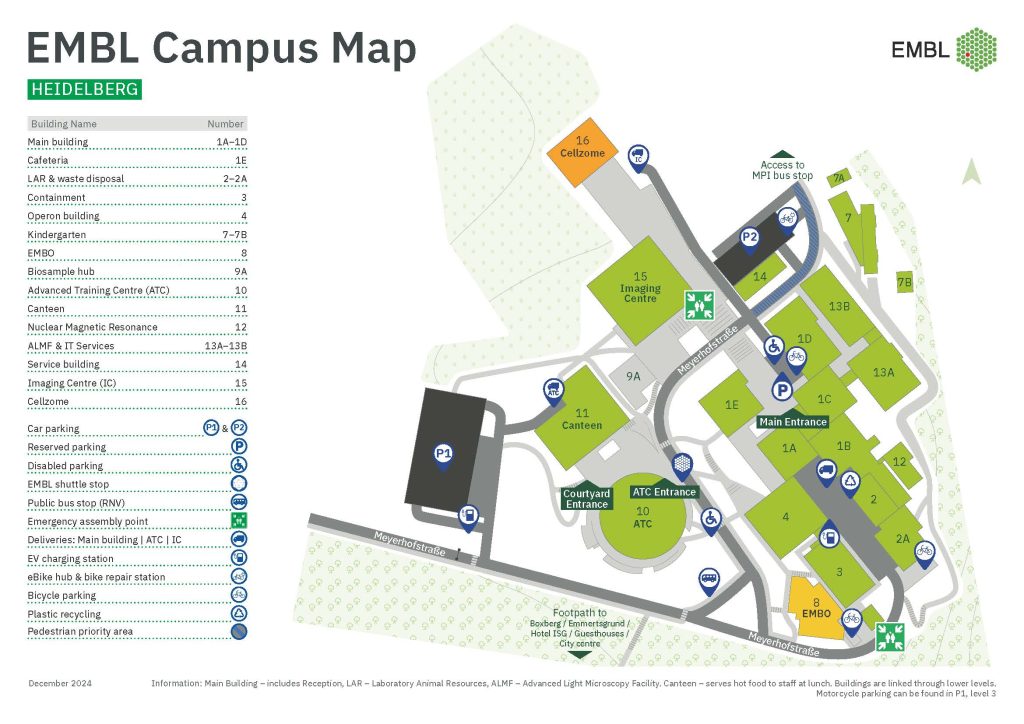
Please take a moment to read our health and safety policy.
If first aid is required
In case of fire
Beyond first aid
The Heidelberg University Hospital or ‘Universitätsklinikum‘ has a 24 hour accident and emergency facility and is at ‘Im Neuenheimer Feld 672’. It is a 8km or a 20 minute taxi ride away from EMBL. In a medical emergency, the ambulance service generally transports patients to this hospital.
Please remember to bring your own medication, if needed, to the conference. Note that the next pharmacy is a 4-minute drive from the EMBL, but for many medications you will be required to see a doctor to get a prescription.
Ensure in advance that your medical insurance will cover you during your visit in the event that you do need to see a doctor while in Heidelberg.
The EMBL course and conference office team are able to advise you on where to turn for emergency or non-emergency medical treatment in Heidelberg and can assist you in making appointments and / or arranging transport to get to the pharmacy or a doctor of your choice if necessary. Please note, we are not however permitted to personally accompany you off-campus.
A variety of activities in Heidelberg can be found on the website of Heidelberg Marketing.
Access to the event platform is given to all on-site and virtual participants.
You can use the event platform to:
More information about the platform will be shared ahead of the conference.
Additional information can be found in our Code of Conduct.
The programme is planned based on the Europe/Berlin time zone, unless otherwise stated. Please take your time zone into consideration when planning your attendance.
Please find additional information including FAQs, terms and conditions, and travelling to EMBL on our Information for participants page.
Media partners
Advanced Biology, a Wiley journal
Cancer Drug Resistance, an OAE Publishing Inc. journal
Hereditas, a Springer Nature journal
International Union of Biochemistry and Molecular Biology
Medinformatics, a Bon View Publishing journal
Molecular Systems Biology, an EMBO Press journal
Open Biology, a Royal Society journal
Sponsorship opportunities
We offer a variety of event sponsoring possibilities, with the flexibility to select a set sponsorship package or combine individual sponsorship options to suit your event budget. Discounts are available for companies sponsoring multiple events at EMBL Heidelberg. View other conferences, or contact sponsorship@embl.de for further information.
If you are interested in becoming a media partner of this event, please visit our media partnerships webpage.
EMBL advises sponsors to beware of fraudulent schemes falsely offering sponsorship opportunities. All legitimate communication about sponsorship for EMBL conferences, symposia, and courses comes directly from EMBL via official EMBL email accounts. EMBL does not use third parties for sponsorship acquisition.
– EMBL does not sell attendee lists.
– EMBL will never ask for credit card details or direct payments.
– All payments are processed by invoice only.
If you receive a suspicious message claiming to be from or on behalf of EMBL, please report it to sponsorship@embl.org.
EMBO | EMBL Symposia promote scientific communication and collaboration in the European research area. They provide scientists with a platform to discuss and exchange ideas on forward-looking topics and new developments in the life sciences.
Topics emphasise upcoming developments and the interdisciplinary nature of related fields. Jointly funded and organised by EMBO and EMBL – and complementary to their respective courses, workshops, and conference programmes – the symposia promote scientific communication and collaboration.
All symposia are held in the EMBL Advanced Training Centre (ATC) in Heidelberg, Germany, or virtually.
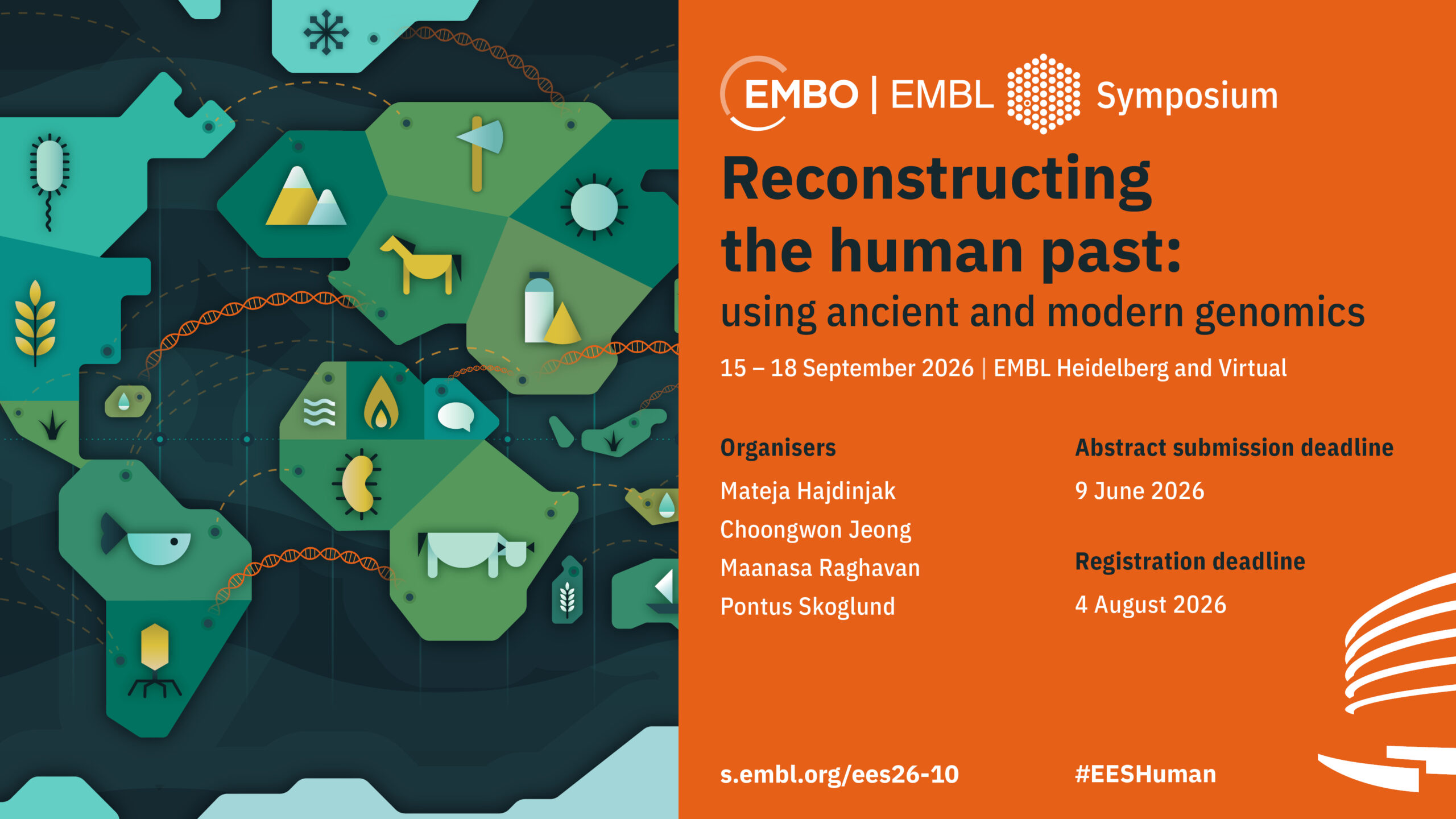
Want to let others know you’re attending this event? Take a look at our shareable media and feel free to use them in your social media channels or presentations.



Date: 15 - 18 Sep 2026
Location: EMBL Heidelberg and Virtual
Venue: EMBL Advanced Training Centre
Deadline(s):
Abstract submission: Closed
Registration (On-site): Closed
Registration (Virtual): Closed
Organisers:
Contact: Adela Graf
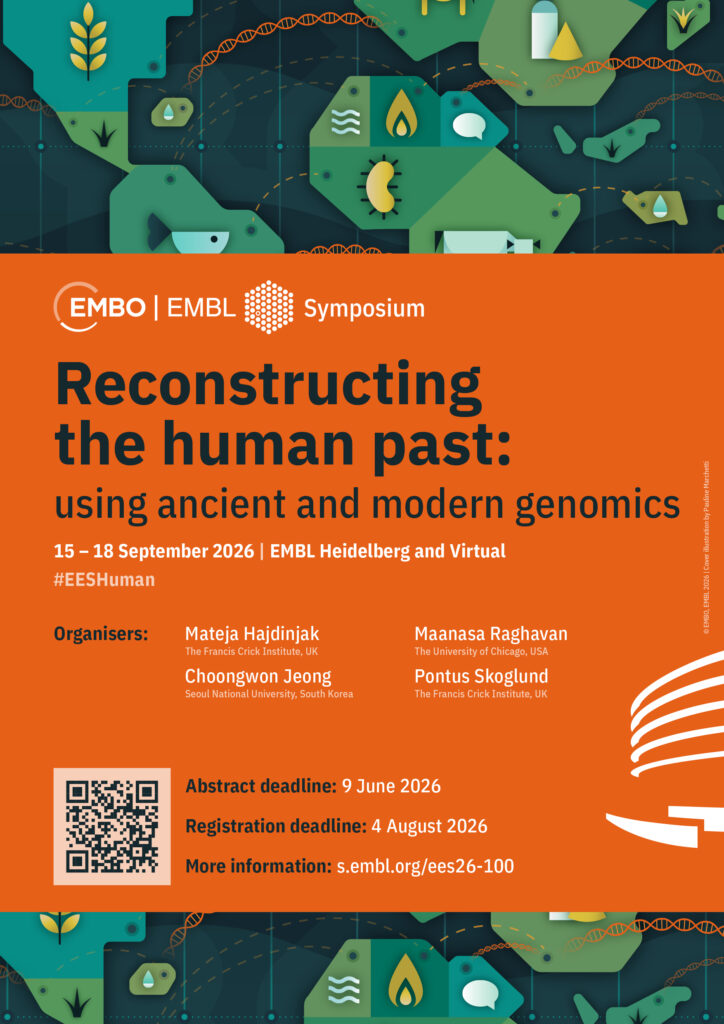
Download event poster
empty