
A year of exceptional life science research, services, training, industry collaboration, and integration of European life science research
After the deep tragedy of Peer Bork’s passing, it feels profoundly difficult to take stock of and recognise the many milestones and accomplishments EMBL saw in 2025 without him here to celebrate alongside us. Peer embodied the organisation’s curiosity and inclusive culture across all our missions, and I know he would have been proud to see the progress made by EMBL.
Peer was a wonderful man and an outstanding scientist. Always working at the frontier of science, he saw possibilities far before others – pushing new technologies, reconsidering analytical approaches to expand what questions we could now answer, and repeatedly, pushing our ignorance further back to reveal often surprising insights about the living world around us.
We had intended to write this foreword together, and I know he would be just as exuberant about the distance EMBL travelled in the past 12 months as I am. So, in his memory, let me momentarily reflect on these successes, many of which occurred during the nine months that Peer was EMBL’s Interim Director General.

“The best thing about EMBL is the way people collaborate. You are immediately connected with others here. That is what’s unique.”
– Peer Bork, 1963-2026 (A tribute to his legacy at EMBL can be found here.)
EMBL’s diverse research pushes the limits of biological knowledge, with researchers developing innovative techniques and technologies. In the current programme, seven overlapping themes facilitate collaborative, impactful work.
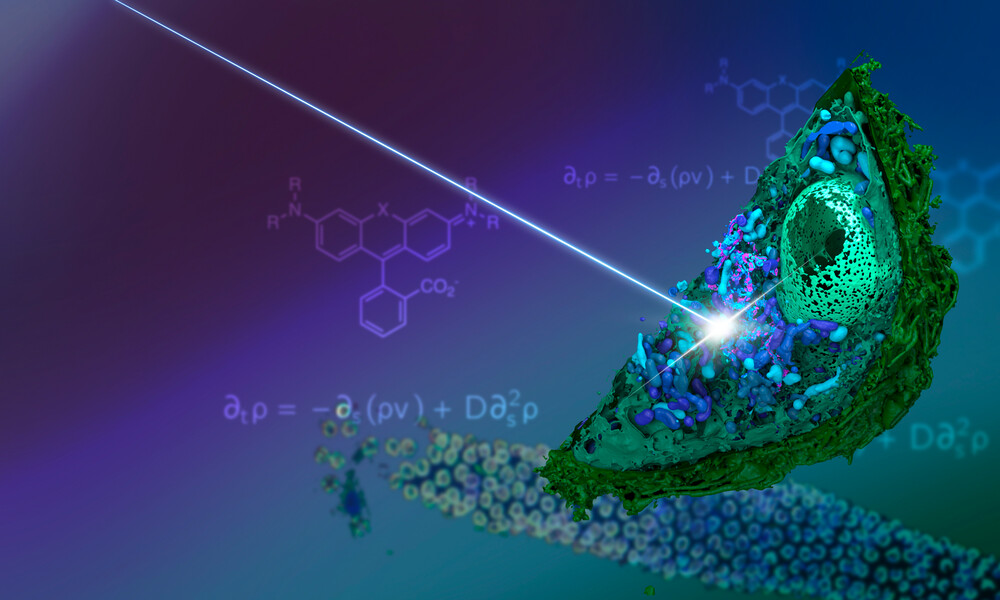
“As long as you have a feature that can be discriminated visually from a ‘regular’ cell, you can – thanks to AI – train the system to detect it. Our system, therefore, has the potential to advance future discoveries in numerous areas of biology.”
– Jan Korbel, Interim Head of EMBL Heidelberg
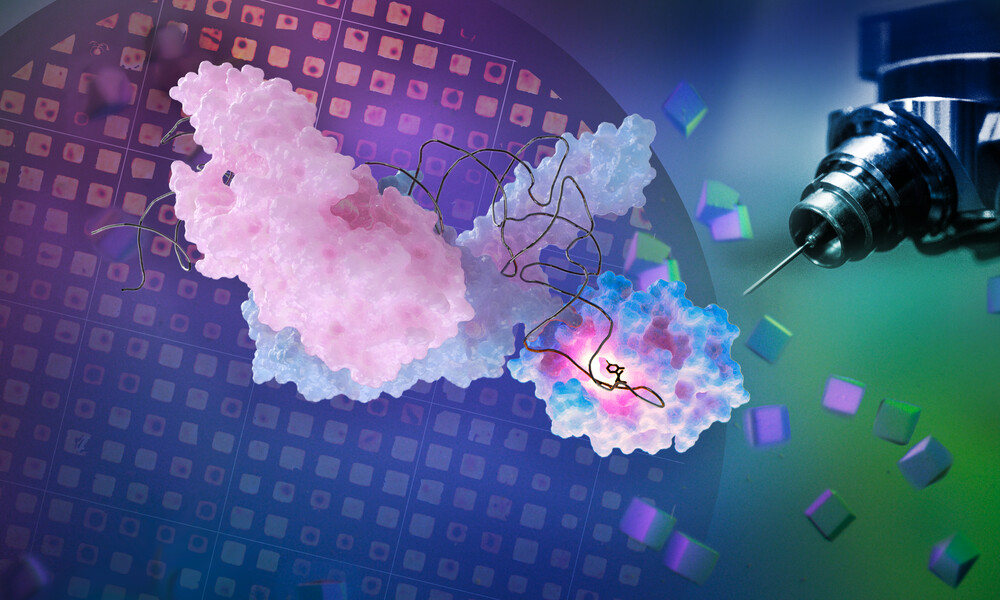
EMBL’s unique portfolio of scientific services enables researchers from member states and beyond to access a broad range of world-class infrastructures and resources through a single Europe-wide partner.
“EMBL’s Advanced Mobile Lab in Malta brought world-class research tools and expertise directly to our doorstep. This visit was a testament to Malta’s growing role in international research, and we look forward to the groundbreaking discoveries and lasting partnerships that will emerge from this collaboration”
— Melissa Formosa, Associate Professor at the University of Malta and EMBL Council Delegate
EMBL’s multifaceted training programme is committed to excellence in training at every level. Besides training scientists, EMBL has a Science Education and Public Engagement (SEPE) office that coordinates science education programmes and public engagement efforts.
“EMBL is reshaping how we explore and interpret the complexity of life. Their commitment is crucial to nurturing a new generation of scientists who can bridge computational and experimental approaches.”
— Caroline Uhler, the Andrew and Erna Viterbi Professor of Engineering, MIT; and Director, Eric and Wendy Schmidt Center, Broad Institute of MIT and Harvard
EMBL’s strengths in research, services, and training make it a perfect industry partner and a breeding ground for research that sows the seeds for technology transfer. EMBL’s tech transfer arm, EMBLEM, is pivotal to that success.
“The AlphaFold Database has been a catalyst for protein research….Our renewed partnership with Google DeepMind exemplifies how academia and industry can work together to advance scientific discovery.”
— Jo McEntyre, EMBL-EBI Interim Director
EMBL is engaged in relations with numerous institutions in its member states and beyond, maintaining and fostering close relations and dialogue with the scientific communities and government representatives. With its strong focus on scientific excellence, and through these trusted networks, EMBL forms the basis for successful multi-level science diplomacy.
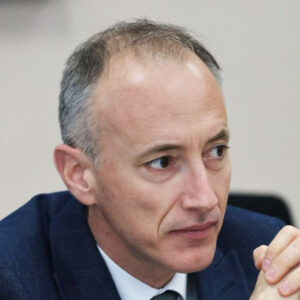
“A partnership with EMBL perfectly aligns with Bulgaria’s commitment to open-access science, knowledge exchange, and fostering collaboration. Ultimately, this will drive economic growth, technological progress, and societal well-being, reinforcing Bulgaria’s position in the global scientific community.”
– Krasimir Valchev, former Bulgarian Minister of Education and Science (2017–2021 and 2025–2026)
The year 2025 marked the 50th anniversaries of two EMBL sites: Hamburg and Grenoble. We bid farewell to our Director General, Edith Heard, former EMBL-EBI Director Rolf Apweiler, and EMBL Hamburg Head of Site, Matthias Wilmanns. We welcomed a new Chief Operating Officer, Michael Milne, and Sarah Dickinson Hyams as Head of People and Culture Development. The year also included an important pan-EMBL event on responsible research assessment.
“EMBL Grenoble has 50 years of tradition of cutting-edge science, innovative technological development, and providing excellent service. All these three activities are interwined in a virtuous cycle.”
— Kristina Djinovic Carugo, Head of EMBL Grenoble
This research unit is one of EMBL’s oldest and largest. Established in 2010, it has developed into a highly interdisciplinary department with a strong international reputation for advancing mechanistic cell biology. The Unit fosters a highly collaborative environment that has integrated discovery-driven research with pioneering technology development. This approach has positioned the Unit at the forefront of innovation in microscopy, AI-based image analysis, and quantitative cell biology.
Since 2022, Kristina Djinovic-Carugo has served as Head of EMBL Grenoble. In recent years, the research portfolio there has shifted from a focus on RNA biology to a broader range of biological investigations, along with a notable transition from X-ray crystallography to cryo-EM, a direction that will intensify with expansion into cryo-electron tomography. The instrumentation teams have achieved significant advances in automation, sample preparation, and quality control, benefitting the local research groups as well as others across EMBL and beyond.
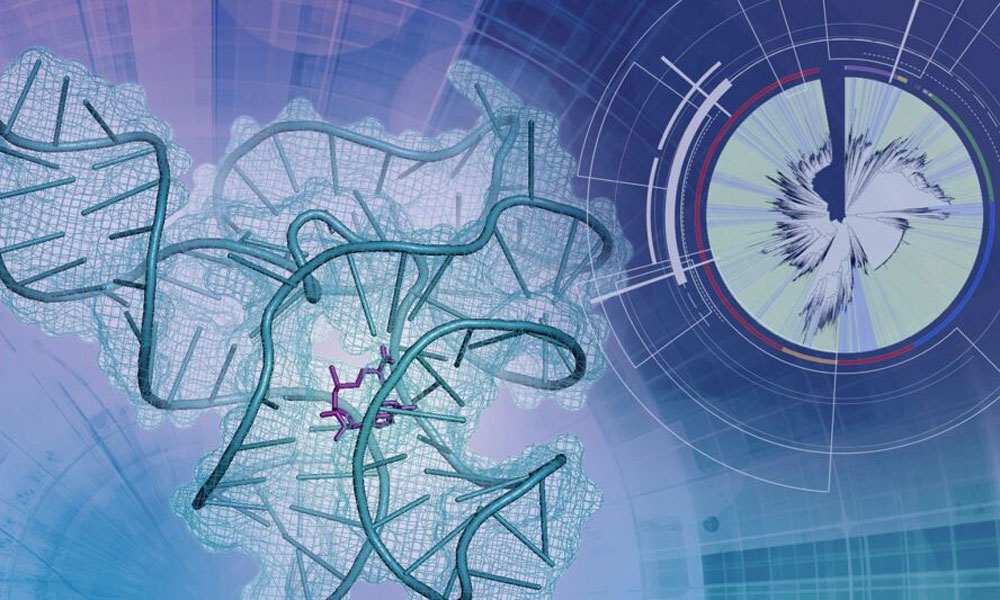
With biology becoming ever more quantitative, unprecedented opportunities exist to create innovative approaches to solve big data challenges and build practical solutions to real-world problems. These research groups regularly publish impactful works on sequence and structural alignment, genome analysis, basic biological breakthroughs, algorithms, and methods of widespread importance across the life sciences. EMBL-EBI’s central role in developing and embedding an EMBL-wide AI strategy has been a key point of recognition.
With support from more than 30 countries, laboratories at six sites across Europe, and thousands of scientists and engineers working together, the European Molecular Biology Laboratory (EMBL) is a powerhouse of biological expertise. EMBL is an intergovernmental organisation, headquartered in Heidelberg, and was founded in 1974 with the mission of promoting molecular biology research in Europe, training young scientists, and developing new technologies.
EMBL currently employs more than 1,800 people in Barcelona, Grenoble, Hamburg, Heidelberg, EMBL-EBI Hinxton (near Cambridge), and Rome.
Publishing hundreds of research articles and hosting dozens of conferences every year, EMBL is driving visionary fundamental research and training Europe’s future scientific talent.