
A menagerie of deep-learning models
EMBL scientists collaborate to build easy-to-use ‘Zoo’ of pre-trained AI models to help biologists and microscopists better analyse their biological images.
LAB MATTERS2025
lab-matters
Showing results out of
EMBL scientists collaborate to build easy-to-use ‘Zoo’ of pre-trained AI models to help biologists and microscopists better analyse their biological images.
LAB MATTERS2025
lab-matters
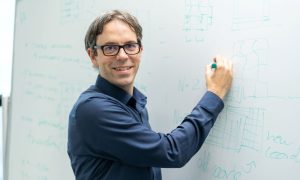
EMBL scientist Oliver Stegle explains how AI-based tools have the potential to transform our ability to better understand the complexity of life and how these tools will shape the future of life science exploration.
LAB MATTERSPEOPLE & PERSPECTIVES2023
lab-matterspeople-perspectives
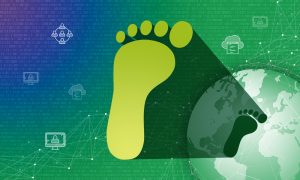
As science increasingly relies on big data and AI tools, the carbon footprint of computational work is on the rise
2023
perspectives
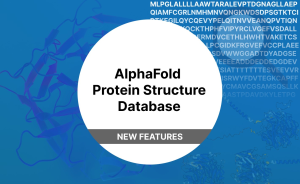
In response to user community demands, the AlphaFold Protein Structure database has introduced sequence-based search and cluster members.
2023
updates-from-data-resources
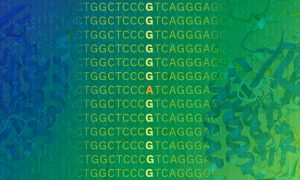
Ensembl Variant Effect Predictor integrates Google DeepMind’s new AlphaMissense Database for better predictions of genetic variant pathogenicity.
SCIENCE & TECHNOLOGY2023
science-technologytechnology-and-innovation
The AlphaFold Database boasts improved user experience, including better search filters and an improved 3D viewer.
2023
updates-from-data-resources
Researchers across EMBL are helping to make artificial intelligence (AI) models for bioimaging analysis interoperable and openly available to the scientific community.
2022
announcementsscience
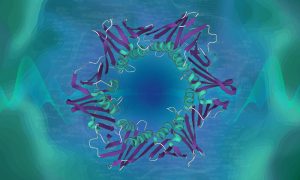
Over 40 million protein annotations have been added to the UniProt database using a Google Research natural language processing model.
2022
technology-and-innovation

Ewan Birney, Deputy Director General of EMBL and Director of EMBL-EBI, reveals the key factors that enabled AlphaFold to change the world of biology.
PEOPLE & PERSPECTIVES2022
people-perspectivesperspectivesscience
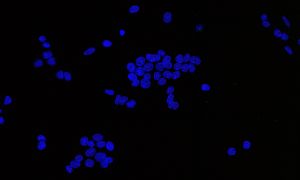
Virginie Uhlmann shares her tips for using deep learning for bioimage analysis in the life sciences.
SCIENCE & TECHNOLOGY2022
perspectivessciencescience-technology
Deep learning models can improve protein annotations and has helped expand the Pfam database.
SCIENCE & TECHNOLOGY2022
perspectivessciencescience-technology
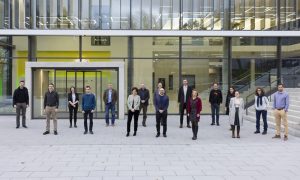
DeepMind visits EMBL Heidelberg to discuss current and future implications of Artificial Intelligence for life science research.
SCIENCE & TECHNOLOGY2022
sciencescience-technology
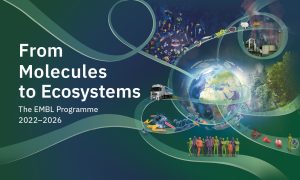
EMBL announces details about its next programme, ‘Molecules to Ecosystems’. It will guide studying life across scales and in context with changing environments.
EMBL ANNOUNCEMENTSLAB MATTERS2022
announcementsembl-announcementslab-matters
The systematic application of AI in life sciences as in the AlphaFold algorithm for predicting protein structures has been named '2021 Breakthrough of the Year' by Science magazine.
SCIENCE & TECHNOLOGY2021
sciencescience-technology
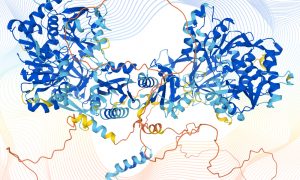
Partners use AlphaFold, the AI system recognised last year as a solution to the protein structure prediction problem, to release more than 350,000 protein structure predictions including the entire human proteome to the scientific community.
SCIENCE & TECHNOLOGY2021
sciencescience-technology
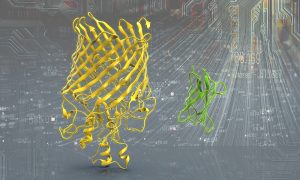
Thousands of new protein structure models, prected using deep learning, now available to explore
SCIENCE & TECHNOLOGY2021
sciencescience-technology
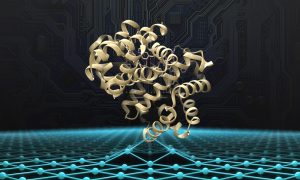
How artificial intelligence can help us solve the mysteries of the protein universe
SCIENCE & TECHNOLOGY2020
sciencescience-technology
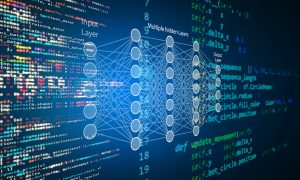
Why should researchers make artificial intelligence more transparent and how can they do it?
LAB MATTERSSCIENCE & TECHNOLOGY2020
lab-mattersscience-technology
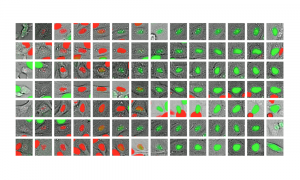
Members of an EMBL-led research group with collaborators in Estonia and Russia have built and trained a deep learning model to better understand how cells grow and divide.
SCIENCE & TECHNOLOGY2020
sciencescience-technology
No results found