Spatial Transcriptomics Portal: Seeing gene expression in a spatial context
New portal integrates imaging and gene expression data to map gene activity across tissues
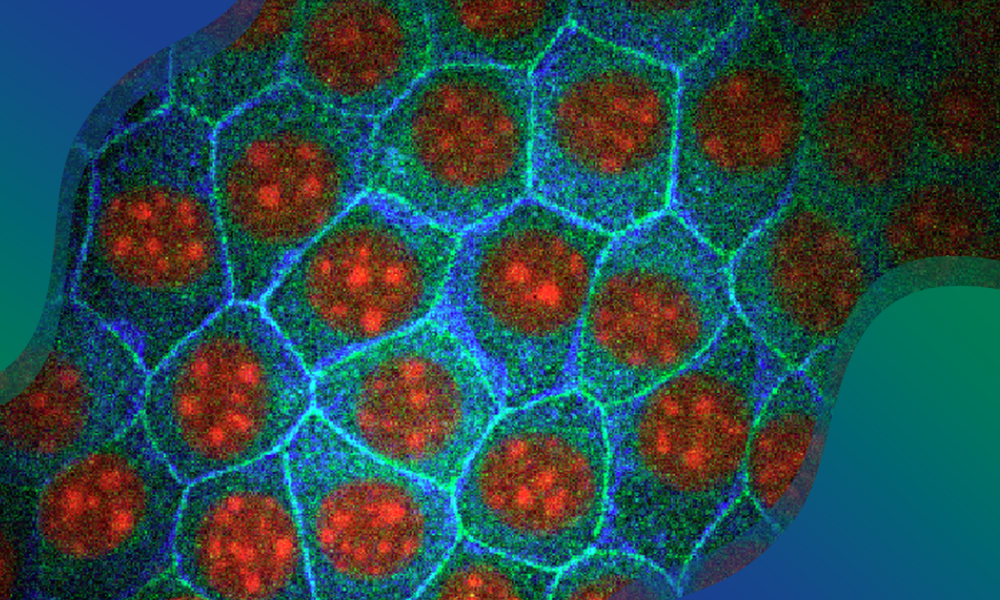
BioImage Archive accession S-BIAD1084. Credit: Lotte Bang Pedersen, University of Copenhagen
EMBL-EBI’s BioImage Archive and Functional Genomics teams have joined forces to develop the Spatial Transcriptomics Portal. This is a pilot resource that combines imaging and molecular data to show which genes are active in which cells, and precisely where those cells are located within tissues.
Until now, there has been no unified platform linking spatial information with molecular gene expression. This new resource aims to provide scientists with a single entry point for community updates, data access guidance, and existing research in spatial transcriptomics.
What is spatial transcriptomics?
Spatial transcriptomics is a molecular profiling technique that allows scientists to map gene activity across tissues. When a gene is active, a cell produces a molecule called RNA. Standard transcriptomics tells us which RNA molecules are present, but not where this activity occurs within the tissue.
Spatial transcriptomics is like having a map of a city. Previous methods could tell you the city had two hospitals and a supermarket, but not where they were. Now, we can see exactly where these ‘buildings’ are located. This allows us to understand the context. For example, if a hospital is next to a ski slope, the reason for a high rate of injuries in its emergency department becomes clear. In biology, knowing where a gene is expressed tells us how cells interact, and how diseases like cancer progress at a cellular level.
The Spatial Transcriptomics Portal
Spatial transcriptomics sits at the intersection of sequencing and imaging. The new portal acts as a unified bridge between these two domains, providing a single entry point for researchers to navigate EMBL-EBI’s diverse spatial data resources.
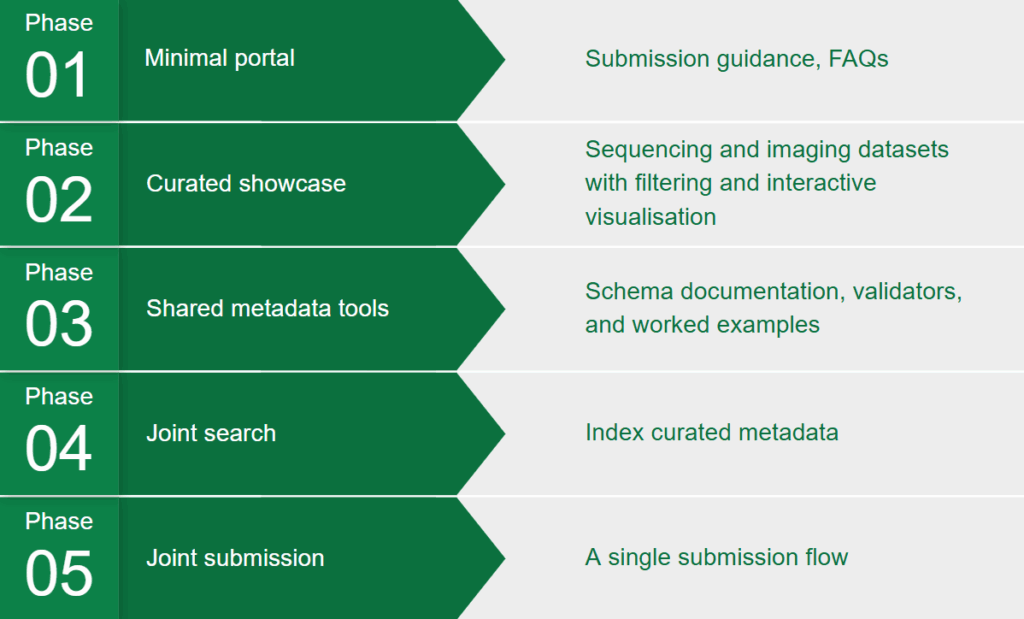
The core technical achievement of this pilot phase is the introduction of harmonised metadata standards developed jointly by the Functional Genomics and BioImage Archive teams. By defining a common framework for both imaging and sequencing technologies, these standards provide the foundation for a resource that will eventually allow diverse datasets to be retrieved and compared as a single, cohesive entity.
“This is a direct response to the community’s needs, and we welcome feedback on these standards as we work to improve integrated data management at scale,” said Christina Ernst, Functional Genomics Team Leader at EMBL-EBI.
Currently in Phase 1, the portal serves as a strategic signpost for the community. It provides immediate guidance on existing data solutions while establishing a transparent roadmap for the future of integrated spatial data at EMBL-EBI.
This approach ensures reliability and versatility while preparing the resource for broader community use.
Looking ahead
The integration of imaging and spatial gene expression data also creates opportunities for AI-driven analysis. “Spatial transcriptomics is rapidly growing in popularity in life sciences. There is a huge potential, both for enabling new biological discoveries, and for training the next generation of AI models,” said Matthew Hartley, BioImage Archive Team Leader at EMBL-EBI.
The Spatial Transcriptomics Portal represents a key step toward integrating cross-modality data in life sciences. By providing a unified, accessible resource, EMBL-EBI supports scientists to explore spatial gene expression and gain new insights into biology and disease.