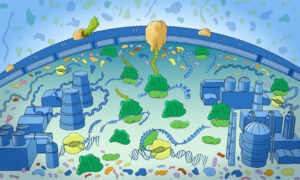
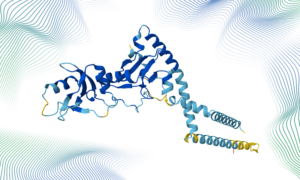
What are non-canonical Open Reading Frames?
Non-canonical Open Reading Frames (ncORFs) are DNA sequences found within regions of the human genome. Though previously dismissed as ‘junk,’ they may encode small, biologically relevant proteins.
An international consortium has found over 1,700 new proteins from noncoding DNA, many of which show potential as targets for cancer immunotherapy
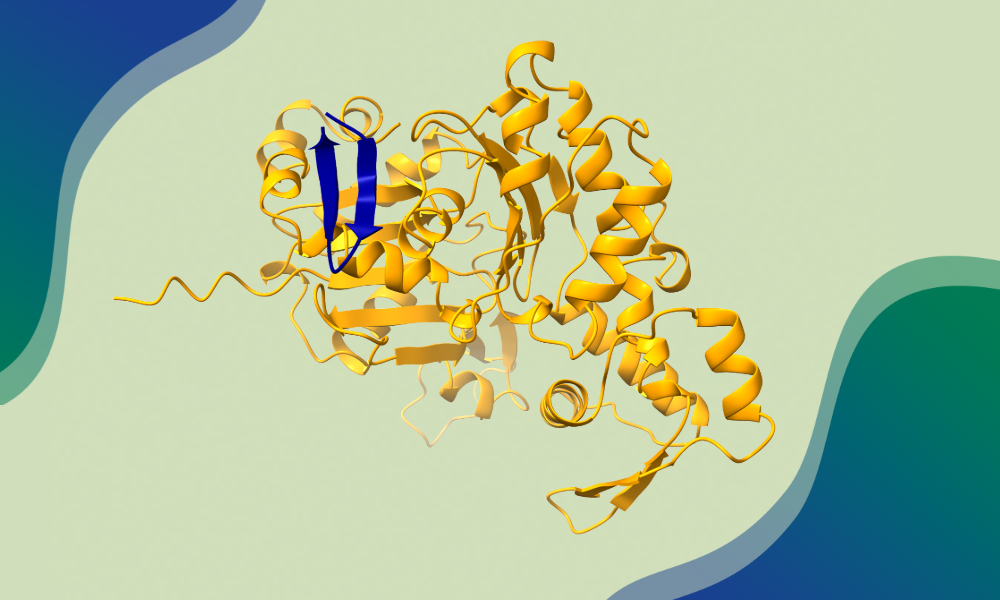
In a collaborative effort, scientists in the TransCODE consortium reveal more than 1,700 new proteins that could have implications for human diseases, including cancer. These tiny proteins were found in what’s called the ‘dark proteome’, a portion of the human genome historically thought to be nonfunctional.
The TransCODE consortium is a collaboration between experts at EMBL’s European Bioinformatics Institute (EMBL-EBI), the Princess Máxima Center for Pediatric Oncology in the Netherlands, the University of Michigan, the Institute for Systems Biology in Seattle, and the Massachusetts Institute of Technology (MIT).
In the study, published in Nature, the scientists looked at 7,264 non-canonical Open Reading Frames (ncORFs) and found that around 25% of them produce small, protein-like molecules. The team coined the term ‘peptidein’ for this new category of microproteins. All data about these new proteins have been made publicly available to accelerate research worldwide.
Non-canonical Open Reading Frames (ncORFs) are DNA sequences found within regions of the human genome. Though previously dismissed as ‘junk,’ they may encode small, biologically relevant proteins.
“What we’re now seeing is a vast set of protein-like molecules that were effectively invisible before,” said Jonathan Mudge, co-first author on the paper and Annotation Project Leader at EMBL-EBI. “In a sense, we’ve been looking at biology through an incomplete lens.”
The consortium will add peptideins to reference databases, such as GENCODE, UniProt, and PeptideAtlas. Due to their small size, ncORFs and the proteins they encode have largely been absent from these databases. “We introduced the term ‘peptidein’ as a way to bring these molecules out of the shadows and into reference annotation,” said Mudge.
These data will help researchers get a more complete picture of biological processes in and around different types of cells. Scientists could, for example, identify more precise targets for immunotherapy, or compare candidates for new therapies and analyse data more effectively. The consortium intends to continue making peptidein data open as soon as it becomes available.
As many of the newly detected peptideins are found on immune cell surfaces, they could be potential targets for cancer immunotherapy. “Cancer cells express high levels of these molecules, making them a potential new source of biomarkers and therapeutic targets,” said Mudge. A number of peptideins are already under development as drug targets.
To find out whether any of the peptideins are essential for cell survival, the consortium used CRISPR gene-editing screens. A gene called OLMALINC, which was previously thought to be noncoding, stood out. When this peptidein was made inactive, 85% of the 485 cancer cell lines tested showed impaired survival.
They also found that it plays a role in cell division and DNA damage response. Despite these promising findings, a role for the OLMALINC peptidein in normal, healthy cells remains unclear.
Previous work by members of the consortium has already identified a peptidein that plays an essential role in medulloblastoma, a particularly aggressive form of childhood brain cancer. With the new classification, the team hopes to encourage similar investigations into other diseases.
This press release was adapted from the full press release published on the Princess Máxima Center website.
The study was conducted by the TransCODE consortium, an international collaboration of more than 60 researchers from over 30 institutions worldwide. The consortium is co-led by the Princess Máxima Center for pediatric oncology in the Netherlands, the University of Michigan Medical School, EMBL’s European Bioinformatics Institute (EMBL-EBI) in Hinxton (UK), and the Institute for Systems Biology in Seattle. The consortium continues its work and collaborates with other dark proteome initiatives, such as the recently awarded Cancer Grand Challenge to Team ILLUMINE.
The study was supported by funders including the US National Institutes of Health, the National Science Foundation, Oncode Accelerator (a Dutch National Growth Fund program) and the European Union’s Marie-Skłodowska-Curie program.