Tracing environmental change through river microbiomes in Luxembourg
New TREC pilot project explores how microbial life along rivers reflects environmental change and supports ecosystem health
The European Molecular Biology Laboratory (EMBL) and regional partners, including the Luxembourg Centre for Systems Biomedicine (LCSB) at the University of Luxembourg, have launched a pilot project in the Luxembourg area to investigate how microbial life within river ecosystems responds to human-driven environmental pressures. Researchers sampled water, soils, and a wastewater treatment plant along the Moselle to investigate microbial diversity, antimicrobial resistance, and chemical pollutants. The project, which is part of EMBL’s TRaversing European Coastlines (TREC) initiative, aims to detect environmental stress and to help set up long-term ecosystem monitoring, while strengthening cross-border collaboration.
The Rhine-Moselle ecosystem: a good model to study the impact of human activities
Human activities are placing increasing pressure on ecosystems, with consequences for both environmental and human health. The Rhine, one of the major rivers of Europe, and the Moselle, one of its biggest tributaries, form a complex ecosystem spanning France, Luxembourg, and Germany. Both rivers have been heavily engineered and serve as major transport routes, carrying the fingerprints of human activity across Europe. They pass through densely populated and industrial areas, as well as regions with intensive agriculture, constituting a perfect cross-border natural laboratory to assess human impact on water quality and the environment.
The current study focuses on riverine and terrestrial environments influenced by pollution and human-induced ecosystem changes, including climate change, aiming to better understand how microbiomes reflect and shape these impacts.
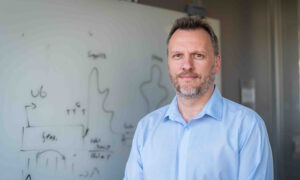
“Microorganisms are highly sensitive to environmental change and can act as early indicators of ecosystem health,” said Jan Korbel, Interim Head of EMBL Heidelberg. “Through TREC, we are building a coordinated framework to study these changes across Europe, and this project now assesses this approach in freshwater ecosystems. EMBL – with its extensive network of partners across its member states, including Luxembourg – is uniquely positioned to enable and coordinate such pan-European studies.”
Linking microbes and environmental change
As part of this project, researchers have collected samples from the two rivers, adjacent soils, and a wastewater treatment plant, as well as sites along the confluence of the Moselle and the Rhine. “In coordination with EMBL and the water agency in Luxembourg, we have selected relevant locations in Schengen and Grevenmacher,” explained Alissa Muller, postdoctoral researcher at the LCSB. “Now that we have samples from the different sites, we will contribute to their analyses, notably thanks to PathoFact, a bioinformatics tool developed by our team to identify pathogenic agents.”
Using metagenomics, environmental DNA, and detailed chemical and biogeochemical measurements, the teams will assess microbial diversity, antimicrobial resistance, and pollutants such as pharmaceuticals, heavy metals, PFAS, and pesticides. A focused study at a key wastewater treatment plant and the Moselle downstream will also investigate how antimicrobial resistance and chemical loads move from human infrastructure into the river.
By studying how microbial communities interact with their environment, the project aims to identify bioindicators that enable early detection of ecosystem stress and provide insights into ecosystem resilience. “This collaboration brings together local environmental expertise and advanced molecular analyses,” said Paul Wilmes, Professor of Systems Ecology at the University of Luxembourg and head of the Systems Ecology group at the LCSB. “It will generate actionable knowledge relevant to biodiversity, pollution, and human health, and support evidence-based environmental management.”
Marking the Luxembourg TREC stop and building a foundation for long-term monitoring
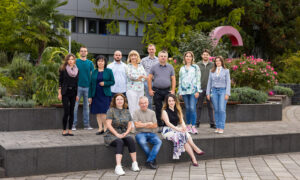
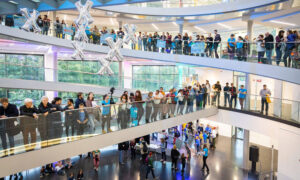
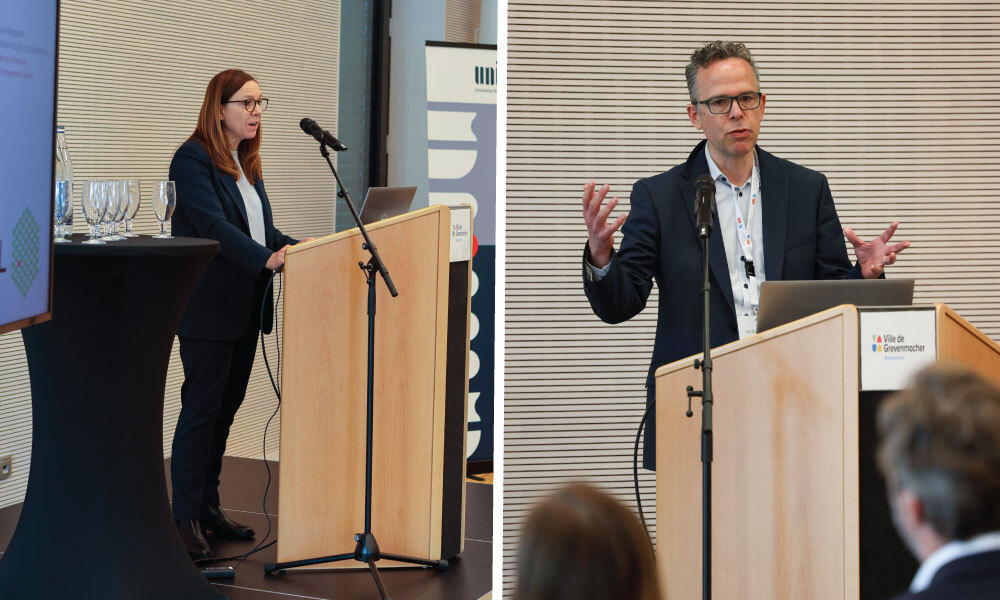
The end of the sampling campaign in Luxembourg was marked by an event on 8 June in Grevenmacher, bringing together scientists, policymakers, and regional stakeholders, including Luxembourg’s Minister for Research and Higher Education, Stéphanie Obertin who stated: “The TREC project perfectly illustrates the value of European scientific cooperation. By bringing together EMBL, the University of Luxembourg, and regional partners to study the Rhine-Moselle ecosystem, this initiative demonstrates that the major challenges of our time require interdisciplinary and cross-border approaches, built on the sharing of knowledge, expertise and data.”
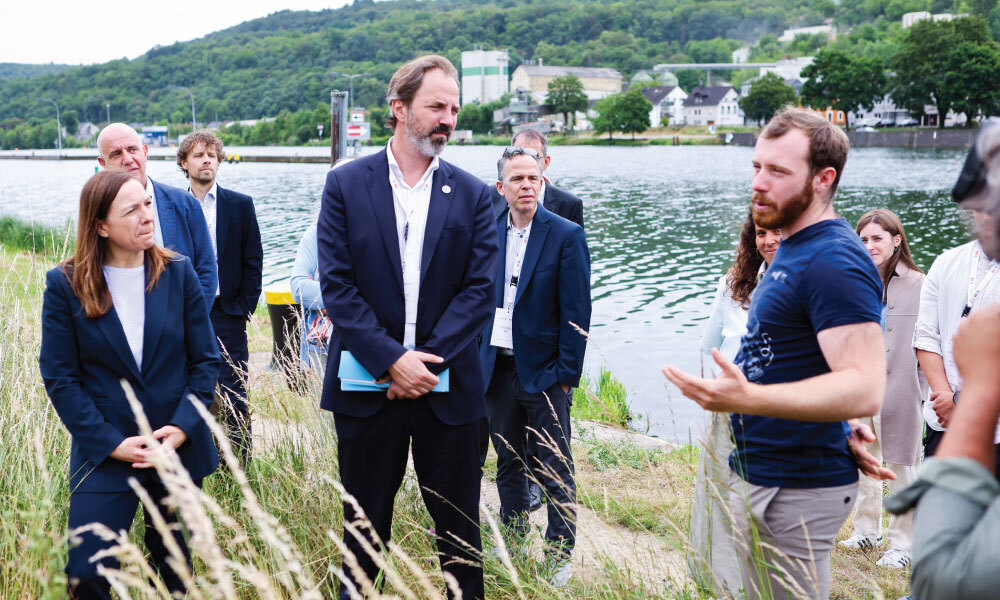
Participants had the opportunity to visit a nearby sampling site to see a live demonstration of field activities and EMBL’s mobile laboratories, giving them a first-hand view of how environmental microbiome data are collected.
These data will contribute to improved detection of antimicrobial resistance and environmental pollution, providing a better understanding of the impact of human activities on this important but fragile ecosystem. In the longer term, the results from the TREC study will help establish a basis for systematic monitoring of ecosystems and their responses to climate change and other pressures.
By ensuring standardised data collection across sampling sites, EMBL and its collaborators enable robust comparisons and contribute to setting the foundation for future frameworks for studying ecosystem health across Europe. “With this multidisciplinary study of the Rhine and the Moselle, we hope to obtain an integrated picture to better guide cross-border decision making in relation to sustainability and health policy,” concluded Paul Wilmes.
- EMBL’s efforts to expand pioneering expedition-based research into freshwater ecosystems receive support from the Klaus Tschira Stiftung.
- The Luxembourg National Research Fund (FNR) supported the sampling campaign within the framework of an FNR INITIATE funded project: “Resilience of Neurological Health in Global Change: A One Health Approach – NEUROH-CHANGE”.
Umweltveränderungen anhand von Flussmikrobiomen in Luxemburg verfolgen
Das Europäische Laboratorium für Molekularbiologie (EMBL) und regionale Partner, darunter das Luxembourg Centre for Systems Biomedicine (LCSB) an der Universität Luxemburg, haben in der Region Luxemburg ein Pilotprojekt gestartet. Ziel ist es zu untersuchen, wie mikrobielles Leben in Flussökosystemen auf vom Menschen verursachte Umweltbelastungen reagiert. Forschende entnahmen entlang der Mosel Proben aus Wasser, Böden und einer Kläranlage, um die mikrobielle Vielfalt, antimikrobielle Resistenzen und chemische Schadstoffe zu untersuchen. Das Projekt ist Teil der EMBL-Initiative TRaversing European Coastlines (TREC) und soll dazu beitragen, Umweltstress frühzeitig zu erkennen, ein langfristiges Monitoring von Ökosystemen aufzubauen und die grenzüberschreitende Zusammenarbeit zu stärken.
Das Rhein-Mosel-Ökosystem: Ein gutes Modell zur Untersuchung menschlicher Einflüsse
Menschliche Aktivitäten setzen Ökosysteme zunehmend unter Druck, mit Folgen sowohl für die Umwelt als auch für die menschliche Gesundheit. Der Rhein, einer der bedeutendsten Flüsse Europas, und die Mosel, einer seiner größten Nebenflüsse, bilden ein komplexes Ökosystem, das sich über Frankreich, Luxemburg und Deutschland erstreckt. Beide Flüsse wurden stark vom Menschen verändert und dienen als wichtige Verkehrswege. Dabei tragen sie die Spuren menschlicher Aktivitäten quer durch Europa. Sie fließen durch dicht besiedelte und industrialisierte Gebiete sowie durch Regionen mit intensiver Landwirtschaft und bilden damit ein ideales grenzüberschreitendes natürliches Labor, um unseren Einfluss auf die Umwelt und die Wasserqualität zu untersuchen.
Die aktuelle Studie konzentriert sich auf Fluss- und Landlebensräume, die durch Verschmutzung, und vom Menschen verursachten Veränderungen der Ökosysteme, einschließlich des Klimawandels, beeinflusst werden. Ziel ist es, besser zu verstehen, wie Mikrobiome diese Auswirkungen widerspiegeln und zugleich mitgestalten.
„Mikroorganismen reagieren sehr empfindlich auf Umweltveränderungen und können als Frühindikatoren für den Zustand von Ökosystemen dienen“, erklärte Jan Korbel, Interimsleiter des EMBL Heidelberg. „Mit TREC bauen wir einen koordinierten Rahmen auf, um solche Veränderungen europaweit zu untersuchen. Dieses Projekt prüft diesen Ansatz nun in Süßwasserökosystemen. Das EMBL ist mit seinem weitreichenden Partnernetzwerk in seinen Mitgliedstaaten, darunter Luxemburg, besonders gut aufgestellt, um solche paneuropäischen Studien zu ermöglichen und zu koordinieren.“
Mikroben und Umweltveränderungen miteinander verknüpfen
Im Rahmen dieses Projekts haben Forschende Proben aus den beiden Flüssen, den angrenzenden Böden und einer Kläranlage sowie an Standorten entlang des Zusammenflusses von Mosel und Rhein gesammelt. „In Abstimmung mit dem EMBL und dem Wasserwirtschaftsamt in Luxemburg haben wir relevante Standorte in Schengen und Grevenmacher ausgewählt“, erklärte Alissa Muller, Postdoktorandin am LCSB. „Da uns nun Proben von den verschiedenen Standorten vorliegen, werden wir zu deren Analyse beitragen, insbesondere mithilfe von PathoFact, einem von unserem Team entwickelten bioinformatischen Tool zur Identifizierung von Krankheitserregern.“
Mithilfe von Metagenomik, Umwelt-DNA sowie detaillierten chemischen und biogeochemischen Messungen werden die Teams die mikrobielle Vielfalt, antimikrobielle Resistenzen und Schadstoffe wie Arzneimittelrückstände, Schwermetalle, PFAS und Pestizide untersuchen. Eine gezielte Studie an einer wichtigen Kläranlage und flussabwärts in der Mosel wird außerdem untersuchen, wie antimikrobielle Resistenzen und chemische Belastungen aus menschlicher Infrastruktur in den Fluss gelangen.
Durch die Untersuchung der Wechselwirkungen zwischen mikrobiellen Gemeinschaften und ihrer Umwelt will das Projekt Bioindikatoren identifizieren, die eine frühzeitige Erkennung von Belastungen in Ökosystemen ermöglichen und Einblicke in deren Widerstandsfähigkeit geben. „Diese Zusammenarbeit bringt lokales Umweltwissen und modernste molekulare Analyse zusammen“, sagte Paul Wilmes, Professor an der Universität Luxemburg und Leiter der Gruppe Systems Ecology am LCSB. „Sie wird praxisrelevantes Wissen hervorbringen, das für Biodiversität, Verschmutzung und menschliche Gesundheit von Bedeutung ist, und so ein evidenzbasiertes Umweltmanagement unterstützen.“
Luxemburgs TREC-Stopp als Meilenstein und Grundlage für langfristiges Monitoring
Mit einer Veranstaltung am 8. Juni in Grevenmachen fand die Probenahmekampagne in Luxemburg ihren Abschluss. Sie brachte Wissenschaftler, politische Entscheidungsträger und regionale Akteure zusammen, darunter Luxemburgs Ministerin für Forschung und Hochschulwesen, Stéphanie Obertin. Sie betonte: „Das TREC-Projekt zeigt beispielhaft, welchen Wert die europäische wissenschaftliche Zusammenarbeit hat. Indem es das EMBL, die Universität Luxemburg und regionale Partner zusammenbringt, um das Rhein-Mosel-Ökosystem zu untersuchen, macht es deutlich, dass die großen Herausforderungen unserer Zeit interdisziplinäre und grenzüberschreitende Ansätze erfordern, die auf dem Austausch von Wissen, Expertise und Daten beruhen.“ Die Teilnehmenden hatten die Gelegenheit, einen nahgelegenen Probenahmestandort zu besuchen, um eine Vorführung vor Ort der Feldaktivitäten zu erleben und die mobilen Labore des EMBL kennenzulernen. So erhielten sie einen unmittelbaren Einblick darin, wie Daten zu Umweltmikrobiomen gesammelt werden.
Diese Daten werden dazu beitragen, antimikrobielle Resistenzen und Umweltverschmutzung besser zu erkennen und ein tieferes Verständnis dafür zu gewinnen, wie menschliche Aktivitäten dieses wichtige, aber empfindliche Ökosystem beeinflussen. Langfristig werden die Ergebnisse der TREC-Studie helfen, eine Grundlage für ein systematisches Monitoring von Ökosystemen und ihrer Reaktionen auf den Klimawandel sowie auf andere Belastungen zu schaffen. Durch eine standardisierte Datenerhebung an allen Probenahmestandorten ermöglichen das EMBL und seine Partner zuverlässige Vergleiche und tragen dazu bei, die Grundlage für künftige Rahmenkonzepte zur Untersuchung der Ökosystemgesundheit in Europa zu schaffen. „Mit dieser multidisziplinären Studie von Rhein und Mosel hoffen wir, ein umfassendes Bild zu erhalten, das grenzüberschreitende Entscheidungen in den Bereichen Nachhaltigkeit und Gesundheitspolitik besser unterstützen kann“, schloß Prof. Wilmes.
- Die Bemühungen des EMBL, wegweisende expeditionbasierte Forschung zu Süßwasserökosystemen auszuweiten, werden von der Klaus Tschira Stiftung unterstützt.
- Der Luxembourg National Research Fund (FNR) unterstützte die Probenahmekampagne im Rahmen des Projekts „Resilience of Neurological Health in Global Change: A One Health Approach – NEUROH-CHANGE“, das über das INITIATE-Programm des FNR finanziert wird.