What is A/B testing?
A/B testing, also known as split or bucket testing, is a randomised methodology that involves comparing two different versions of a webpage or app to see which one works better.
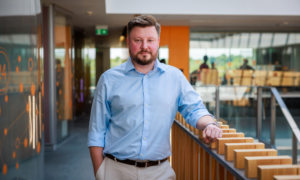
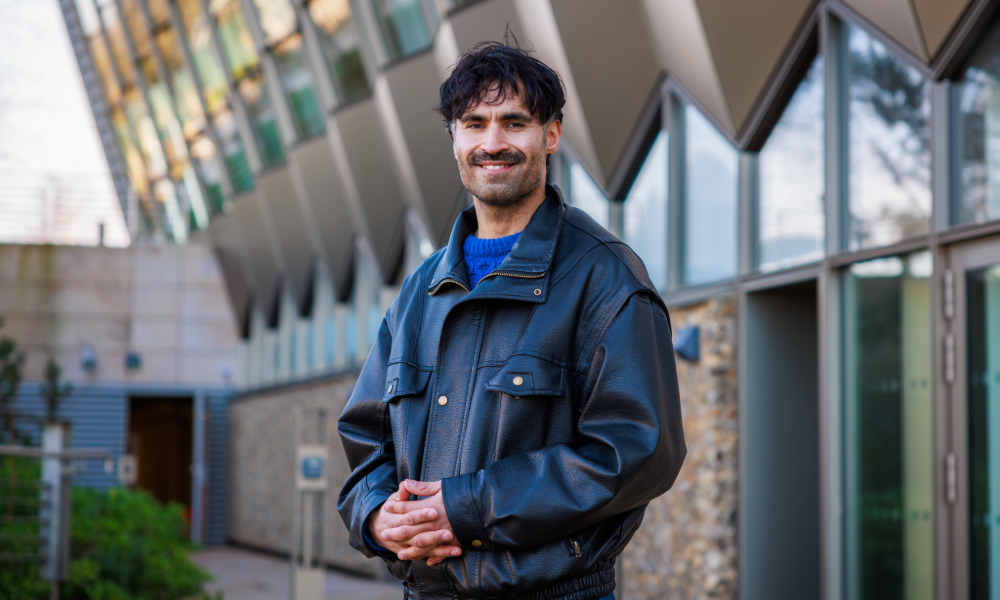
Dal Nijjer, Product Manager and Coordinator at EMBL-EBI, shares his ideas for reducing Europe PMC users’ cognitive load
Scientific discovery rarely happens in isolation; it is built on a foundation of existing knowledge. Literature search – finding, reading, and synthesising previous studies – is an important first step for any research. However, with millions of papers published globally, finding the right information can feel like searching for a needle in a haystack.
This is where Europe PMC comes in. As a vast, open-access repository for life sciences literature, Europe PMC ensures that millions of biomedical research articles and preprints remain discoverable and accessible to everyone.
Dal Nijjer is a Product Manager and Coordinator for Europe PMC at EMBL-EBI. With a background that spans affiliate marketing, housing charities, and digital transformation, Nijjer brings a user-centric expertise to Europe PMC’s infrastructure. We caught up with Nijjer to find out how he is helping researchers navigate this ocean of data.
I started my working life as a bookseller back in 2003. I slowly became interested in Digital Marketing, building small websites, ranking them using search engine optimisation (SEO) strategies and making a small side income. This taught me some of the fundamentals required for helping design, build, and develop online services throughout their lifecycle. This helped me translate what I was doing as a hobby into a career in tech.
I worked on digital transformation for local authorities, and then for Shelter, a UK housing charity. At Shelter, I helped develop digital tools and online campaigns that could galvanise support from citizens and, in turn, Members of UK Parliament.
Before joining EMBL-EBI, I also worked with the UK charity Citizens Advice. Citizens Advice gets over a million telephone calls a year. I worked on redirecting simpler enquiries to online channels so that the advisors could handle more complex queries face-to-face and by telephone. I’m interested in technology that has social value, and so my career choices reflect that.
A broad area of focus for us is reducing the cognitive load in the literature discovery workflow. Research can be mentally exhausting, with users navigating multiple tools and large volumes of information. Over the last few months, we’ve launched features to help users organise and track their searches more efficiently. Users can now save articles into custom lists and view their previous search history. The aim is to increase efficiency and remove friction in the search process.
I also help structure our product development, ensuring we test our ideas in the form of early concept launches and measuring how well these work. For this, we use analytics, A/B testing, and heatmap tracking.
The other part of my role is helping to shape and manage key initiatives on our product roadmap, keeping us focused on the next best opportunities. By relying on data throughout development, we can clearly identify the impact we’re making.
A/B testing, also known as split or bucket testing, is a randomised methodology that involves comparing two different versions of a webpage or app to see which one works better.
Heatmap tracking is an analytics tool that visually represents what users do on a webpage or app.
We are exploring AI search as a tool to improve discoverability, specifically by moving from keyword matching to intent matching, known as semantic search. This means that the search system tries to understand what the user means rather than just matching the exact words they typed. For example, many drugs have multiple names – brand names, generic names, and clinical terms – all referring to the same substance. An AI-driven search can recognise these variations and return the full range of relevant literature, even if users don’t know every term.
We are also exploring the user value of AI summaries. This would help researchers shortlist papers much faster, allowing them to assess relevance without having to click through and read the full text of every single result. As AI-driven search and summarisation become more common, features like these are increasingly becoming standard expectations for users.
Beyond the Europe PMC interface itself, there is a broader opportunity around open infrastructure for the science community. Europe PMC already supports millions of API calls each month, and we are exploring how AI-generated assets, such as vector embeddings, could be shared openly in the future. This would enable others to build new tools on top of Europe PMC data and address research challenges in ways we may not yet anticipate. This is a goal for us in the next five years.
Application programming interface (API) calls are a type of software that allows two applications to communicate with each other.
Vector embeddings convert data – such as text, images, or audio – into numbers. The numbers can then be arranged in a specific pattern so that they can be understood by machine learning algorithms.
I love the team dynamic. We have a culture of psychological safety where people can be honest, disagree, and take risks without fear. If we want to try a new way of working, we have the freedom to do so. I also enjoy the challenge of working in the open science space. Knowing we are making the platform better for the scientific community is very motivating.
I am most proud of our redesign of the Europe PMC Advanced Search. When we started the project, we established a baseline and found that only a small number of our users could successfully complete a complex query.
We released a new query builder that showed users real-time results as they typed, and we used analytics tools to watch how people interacted with it. We kept refining and re-releasing based on that data. By the end of the project, we were able to significantly raise the success rate.
I enjoy bouldering. It is amazing for my mental health. When you are on the wall, pinching a tiny hold, you physically cannot think about deadlines or work – you have to focus entirely on not falling off. It’s a great way to disconnect.
More recently, I’ve gotten into interior design. I’m really interested in the philosophy of using natural materials – wood, stone, metal, etc – to make a space feel lived-in and peaceful. I’m currently working on decluttering my own space and using lighting and natural textures to create a calmer environment.