Best poster prizes at ‘Chemical biology 2026’
The EMBO Workshop ‘Chemical biology 2026’ took place in September at EMBL Heidelberg and virtually.
The conference sets the stage for the dissemination and exchange of new developments in diverse, emerging fields within chemical biology. It is the largest and longest-standing meeting in the field, covering topics ranging from tool development to biological applications, from computational protein design to new drug modalities.
For this year’s edition of the meeting, we had 220 people attending on-site and 30 participants tuning in remotely. There were 10 financial assistance grants provided by the EMBL Corporate Partnership Programme and EMBO. With a total of 138 posters to view, we held three poster sessions during which the presenters could discuss their research; their work was then voted for by all participants. There were ten best poster prizes awarded during the meeting, and we’re pleased to share with you more information on eight of the winners and their research!
HpepTag: a 14 mer peptide tag for covalent live cell protein labeling with diverse probes
Authors: Runyu Mao, Abdinasir Adow, Nina Bukowski, Kai Johnsson
Presenter: Runyu Mao

Max Planck Institute for Medical Research, Germany
Abstract:
Visualizing proteins within their native cellular environment is fundamental to understanding protein function and physiology, requiring molecular tools that support precise, rapid labeling compatible with advanced imaging. Fluorescent proteins and self labeling proteins are broadly adopted for live cell imaging, yet their substantial molecular bulk can potentially compromise protein folding, trafficking, and activity. We developed a minimally invasive labeling platform comprising a 14 residue peptide tag (HpepTag), a catalytic domain (cpHaloD), and a high affinity HaloTag ligand. Through proximity induced, ligand directed release chemistry, the system covalently transfers the fluorophore directly onto the HpepTag. This reaction separates the fluorophore from the high affinity ligand, enabling seamless labeling while facilitating the release of the large catalytic domain from the target protein. Computationally guided co evolution yielded an enzyme mimetic transition state that reduces activation energy and accelerates on target kinetics. Live cell microscopy demonstrated robust, highly specific targeting of diverse proteins across distinct subcellular compartments. Importantly, the compact size of HpepTag makes it well suited for CRISPR mediated endogenous tagging and enabled the labeling of sterically demanding targets, including the loop region of VDAC1, alongside signal amplification via tandem peptide arrays. Collectively, the HpepTag system offers a powerful platform for interrogating proteins in living cells with minimal structural perturbation.
Due to the confidentiality of the unpublished data, we cannot share the poster.
The prize was kindly sponsored by ChemBioChem.
Investigation of cancer signalling of the phosphatase SHP2 using modulators with different modes of action
Authors: Franziska Schedel, Alina Kirchwehm, Maja Köhn
Presenter: Franziska Schedel

University of Bonn / University of Freiburg, Germany
Abstract:
SHP2 (Src homology 2 (SH2) domain containing phosphatase 2) is a ubiquitously expressed non receptor protein tyrosine phosphatase that acts as a central regulator of cell signalling downstream a wide array of growth factors and cytokine receptors. Upon stimulation of cell surface receptors, the phosphatase acts as a key mediator of signal transduction, controlling a variety of cellular functions through signalling pathways such as MAPK and PI3K/AKT, and it furthermore functions as a scaffold protein, giving it importance beyond its enzymatic activity. As aberrant SHP2 signalling has been implicated in developmental syndromes and tumour formation, it has emerged as an important therapeutic target, albeit the exact regulation and interactions of SHP2 inside cells are still not fully understood. The protein comprises not only a catalytically active phosphotyrosine (pTyr) phosphatase domain, but also two regulatory pTyr binding domains: the N SH2 and C SH2 domains.¹ Both domains are important for the function and localisation of the protein. To support studies on the involvement of these domains in SHP2 function and regulation, we report the optimization for cellular activity of a peptide modulator that selectively binds to the N SH2 domain of SHP2 and that was previously published as not cell penetrating.² The adapted peptide binder demonstrated cell permeability and was evaluated for cytotoxicity. It was further employed in MAPK signalling experiments to investigate the regulation and role of the N SH2 domain of SHP2 in this pathway across different cell lines and compared to full inhibition of SHP2 by the molecular glue type inhibitor SHP099 that traps SHP2 in its inactive conformation.
References:
[1] Biochem. Soc. Trans. 2026, 54, 15–24.
[2] J. Med. Chem. 2021, 64, 15973−15990.
Due to the confidentiality of the unpublished data, we cannot share the poster.
The prize was kindly sponsored by ChemBioChem.
Conformational caging of nucleic acid probes via bioorthogonal click chemistry
Authors: Nithyashree Babu, Anna Legado, Sarah Reindl, Barbara Herrmann, Fatima Yaghi, Marion Goldeck, Hannes Mikula, Jonathan Carlson
Presenter: Nithyashree Babu

TU Wien, Austria
Abstract:
Bioorthogonal chemistries can cross the boundaries between static chemical connectivity and active regulation of molecular function, creating new opportunities to monitor, track, and manipulate biomolecules across physiological space and time. Among these‚ the click to release reactions between tetrazines and trans cyclooctenes (TCO) have gathered significant attention due to exceptionally rapid reaction kinetics and structural versatility. We investigate the molecular tunability of these reactions to develop conformationally caged circular nucleic acid probes that can be selectively uncaged by a small and specific chemical trigger. This strategic bioorthogonal uncaging enables a controlled transition from an inactive (OFF) state to a linear, active (ON) state. These probes serve as adaptable biomolecular tools that can be seamlessly integrated into a broad range of nucleic acid biotechnology platforms, opening new possibilities for translating compact chemical tags into biological information.
Due to the confidentiality of the unpublished data, we cannot share the poster.
The prize was kindly sponsored by RSC Chemical Biology.
Mapping the interactome of stress responsive RNA binding proteins in cancer using BAP seq
Presenter and author: Rachel Chan

University of Chicago, USA
Abstract:
Cells are constantly exposed to cellular insults and undergo rapid remodeling to counteract such stressors, especially cancer cells, which have to adapt to the hypoxic tumor microenvironment. Multiple proximity labeling (PL) methods have been used to profile the intrinsic stress response at the cellular level. However, such technologies rely on the generation of radicals or singlet oxygen (1O2). Such reactive species themselves trigger the cellular stress response, making it challenging to distinguish endogenous biological stress responses from artifacts of PL. BAP seq, is a PL method that employs a bacterial esterase, BS2 and masked acid chloride probe pair to covalently modify proximal biomolecules (RNA and proteins) without radical or 1O2 generation, enabling stress response mapping in a minimally perturbative manner that better preserves the native cellular environment. Here, we apply BAP seq to profile the dynamic transcriptome and proteome of two stress responsive RNA binding proteins (RBPs): YTHDF1and G3BP1, each of which has been implicated in poor cancer outcomes. Using cancer cell lines stably expressing BS2 RBP fusion proteins, we mapped RBP proximal interactome under conditions of oxidative stress, hypoxia, and chemotherapeutic drug treatment. Notably, we identified distinct interactome compositions for YTHDF1 and G3BP1 within stress granules formed under the same oxidative stress conditions, highlighting granule level specificity for these RBPs. Our datasets reveal how RBP interactomes are dynamically remodelled in response to distinct stress stimuli, providing a rich resource for uncovering novel RNA regulators within stress response pathways and identifying new vulnerabilities in cancer.
Due to the confidentiality of the unpublished data, we cannot share the poster.
The prize was kindly sponsored by RSC Chemical Biology.
Bioorthogonally activatable iminosydnone caged drug conjugates
Authors: Gergely Cserép, Boldizsár Boczán, Kele Péter
Presenter: Gergely Cserép

HUN-REN Research Centre for Natural Sciences, Hungary
Abstract:
The last decade has seen the reinvention of bioorthogonal chemistry from a biocompatible and efficient bond forming strategy into a reaction triggered bond cleavage platform. Click to release (C2R) reactions have evolved into powerful tools in chemical biology and medicinal chemistry, particularly as promising approaches for chemically controlled drug release in living systems. One of the latest C2R platforms is the [3+2] cycloaddition of iminosydnones (ImSyds) with various cyclooctynes,1 in which the initially formed bicyclic intermediate rapidly collapses into a pyrazole product with concomitant elimination of an isocyanate derivative. Subsequent rapid hydrolysis and decarboxylation of the isocyanate leads to the release of the final payloads, i.e., amines, carbamates, sulfonamides, or carbamides. Although the versatility of ImSyd based C2R chemistry has been demonstrated through the cyclooctyne triggered release of amine type fluorogenic payloads and drugs such as apixaban, carbamazepine, and paroxetine, these studies indicate that the method is particularly well suited for caging sulfonamides, amides, and carbamates, while remaining limited in its ability to cage sterically hindered amines and incapable of masking hydroxyl containing drugs (e.g., potent chemotherapeutics such as combretastatin, CA 4 or SN38) in its current form.2 In addition, caging often requires early stage incorporation of the bioactive compound, significantly restricting the range of applicable drugs.
Therefore, we aimed to broaden the scope of cageable amine based compounds and establish a strategy for caging hydroxyl functionalized drugs. Amine derived self immolative linkers are valuable tools because they enable functional group transformation and often allow payload installation at later synthetic stages. We designed ImSyd derivatives incorporating p aminobenzyl alcohol (PABA), ethylenediamine, 3 aminomethyl 2 aminopyridine, or hemiaminal self immolative linkers suitable for the caging and release of esters, alcohols, and amines. Notably, these units also enable further modification with photolabile protecting groups for enhanced spatiotemporal control.
References:
[1] S. Bernard et al., Angew. Chem. Int. Ed. 2017, 56, 15612.
[2] M. Feng et al., Chem. Commun. 2022, 58, 8500.
View the poster.
Three color photopharmacology: chromatically orthogonal photocages for precision optical control of G protein coupled receptors
Authors: Orsolya Ember, Attila Kormos, Máté Pusztai, Attila Kunfi, Sonia Gyopár Postoaca, Lilla Hodik, Márton Bojtár, Eszter Kozma
Presenter: Orsolya Ember

HUN-REN Research Centre for Natural Sciences, Hungary
Abstract:
Photopharmacology offers a powerful approach for controlling biological activity with high spatial and temporal precision through light triggered release of bioactive molecules. However, most photolabile protecting groups can be cleaved by light in the UV or short wavelength visible range, where limited tissue penetration and phototoxicity restrict biological applications. In addition, achieving true multiplexed control – in which different wavelengths of light can independently activate multiple compounds – remains a major challenge due to spectral overlap among photocages.
Here, we use a recently developed family of xanthenium photocages to establish multiplexed photopharmacological control of G protein coupled receptors (GPCRs). These rhodamine derived photocages combine favorable biological compatibility with efficient uncaging across the visible spectrum. We prepared a series of photocaged ligands targeting the α1A adrenergic receptor (α1A AR), a GPCR involved in diverse physiological processes and a promising target for both pharmacological studies and therapeutic intervention.
Photochemical characterization and cellular assays showed that the photocaged ligands display excellent chromatic orthogonality, enabling selective release of individual compounds with minimal cross activation. This wavelength selectivity was maintained across multiple combinations of photocage–ligand conjugates and could be extended to three color photorelease. We further translated this strategy into optical control of receptor signaling by combining photocaged agonists and antagonists, allowing two and three color regulation of intracellular calcium responses in living cells.
View the poster.
From design to function: click triggered bioorthogonal double release and traceless cleavage
Authors: Barbara Herrmann, Martin Wilkovitsch, Nithyashree Babu, Tori Demuth, Jonathan Carlson, Hannes Mikula
Presenter: Barbara Herrmann

TU Wien, Austria
Abstract:
Bioorthogonal chemistry has become a key tool in bioorganic and biomedical research. In particular, click to release reactions between 1,2,4,5 tetrazines (Tz) and trans cyclooctenes (TCO) enable controlled bond cleavage in vitro and in vivo.[1] In these reactions, TCO linked groups are released upon reaction with Tz, enabling spatial and temporal control.[2] However, achieving rapid and quantitative release, which is critical for regulating the function of (bio)molecules, has remained elusive for several years.[3] To overcome this limitation, we developed the C2 symmetric trans cyclooctene C2TCO, equipped with two releasing groups at both allylic positions, enabling instantaneous and complete omnidirectional release.[4]
Further investigation of C2TCO revealed its unique capability to not only release one linked moiety quantitatively upon reaction with Tz but also to undergo a second cleavage event, eliminating two molecules from the TCO scaffold. This novel mechanism introduces new opportunities to control post click processes, thereby unlocking unprecedented possibilities for the precise modulation of biomolecular functions. We explored this using fluorescent probes and designed caged drug conjugates to use the double release concept in biological systems, leveraging its unique potential to activate two molecules upon a single trigger. Finally, we explored the considerable potential of double release within the framework of traceless cleavage, enabling spatiotemporally controlled modification and release of biomolecules that remain unperturbed by prior bioorthogonal handles, thereby fully restoring native biological function.
References:
[1]E. M. Sletten, C. R. Bertozzi, Angewandte Chemie International Edition 2009, 48, 6974 6998
[2]R. M. Versteegen, R. Rossin, W. ten Hoeve, H. M. Janssen, M. S. Robillard, Angewandte Chemie International Edition 2013, 52, 14112 14116.
[3]J. C. T. Carlson, H. Mikula, R. Weissleder, Journal of the American Chemical Society 2018, 140, 3603 3612.
[4]M. Wilkovitsch, M. Haider, B. Sohr, B. Herrmann, J. Klubnick, R. Weissleder, J. C. T. Carlson, H. Mikula, Journal of the American Chemical Society 2020, 142, 19132 19141.
Due to the confidentiality of the unpublished data, we cannot share the poster.
A chemical proteomics method to uncover the novel metabolic regulatory mechanisms in Escherichia coli
Authors: Kejia Li, Nico Hüttmann, Isabelle Becher, Dimitris Papagiannidis, Mikhail M. Savitski
Presenter: Kejia Li

EMBL Heidelberg, Germany
Abstract:
Metabolite–protein interactions are fundamental to virtually every biological process. Metabolites serve as enzyme cofactors, substrates, and products, forming the essential building blocks of cellular metabolism. Beyond their metabolic roles, they also function as signaling molecules that orchestrate cellular responses to environmental cues. Understanding these interactions is therefore critical to deciphering how cells regulate growth, adaptation, and survival. Despite their importance, the vast majority of such interactions remain uncharacterized at the proteome scale.
To address this gap, we developed HT PELSA a high throughput adaptation of the Peptide centric Local Stability Assay (PELSA) as a powerful platform for detecting small molecule–protein interactions and localizing potential binding sites. Compared to the original PELSA, HT PELSA achieves a 100 fold increase in sample processing efficiency without compromising sensitivity or reproducibility.
Leveraging HT PELSA, we conducted a systematic, proteome wide screen of protein ligand interactions of 120 selected metabolites incubated across a range of concentrations with E.coli lysates. This resulted in the identification of more than 6000 unique interactions spanning more than 2,500 proteins and 120 metabolites by far the most comprehensive metabolite–protein interaction map reported in E. coli to date, surpassing previous efforts that were limited to a handful of proteins or metabolites. Critically, our dataset not only identifies interaction partners but also resolves the binding regions of metabolites on their target proteins and provides quantitative estimates of binding potency. We demonstrate that this structural and thermodynamic information is important for understanding regulatory mechanisms and for establishing the order of regulatory events.
Beyond recapitulating a broad range of known interactions, our data reveals extensive previously uncharacterized connections between cellular metabolic states and cellular dormancy, suggesting a prevalent and widespread role for metabolite mediated regulation in coordinating physiological state transitions.
Due to the confidentiality of the unpublished data, we cannot share the poster.
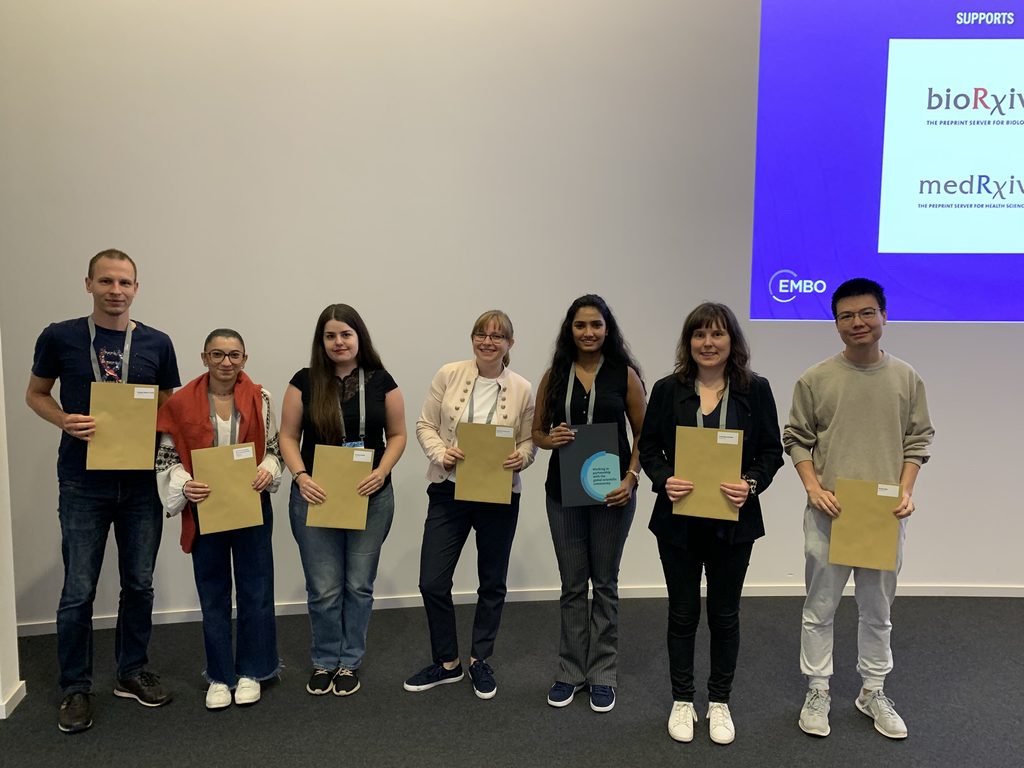
The EMBO Workshop ‘Chemical biology 2026’ took place from 8 – 11 September 2026 at EMBL Heidelberg and virtually.
Find out more about the #EMBOChemBio meeting from the blog post written by Krishnasalini Gunanathan, who participated as an event reporter.