Besides training scientists, EMBL has a Science Education and Public Engagement office that coordinates science education programmes and public engagement efforts.

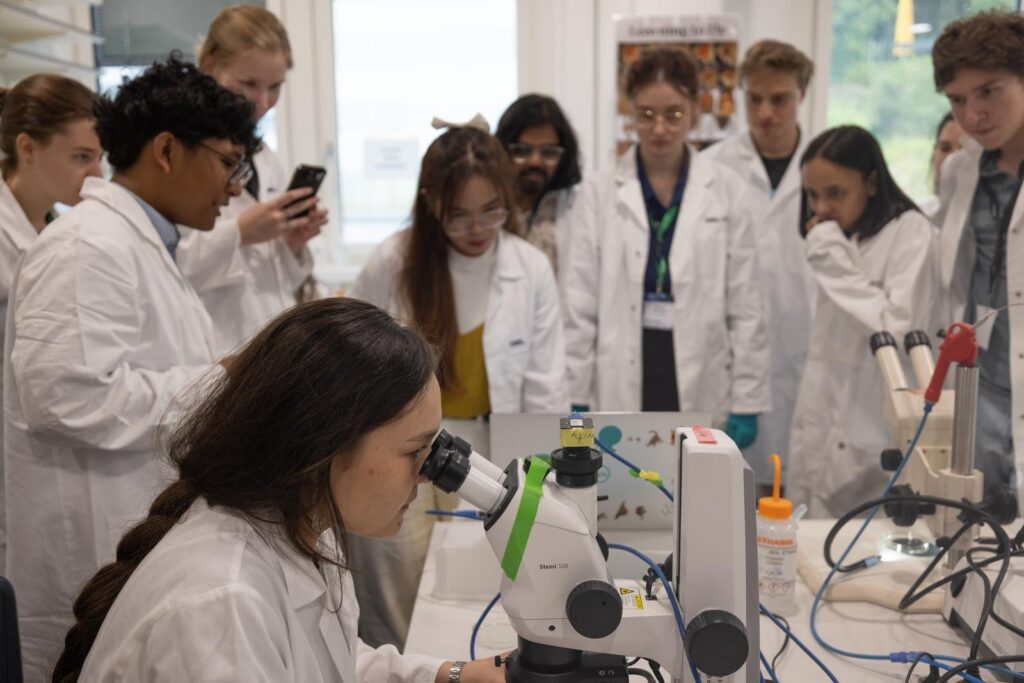
“From hands-on sessions to insightful lectures, the Summer School created a rich environment of learning and exchange. What I’ll carry with me forever are the knowledge gained, the friendships built, and the renewed certainty that I want to be part of the future of science.”
– Monique Borges Seixas, a student at Universidade Tecnológica Federal do Paraná, Brazil, and participant in the 2025 EMBL Lautenschläger summer school
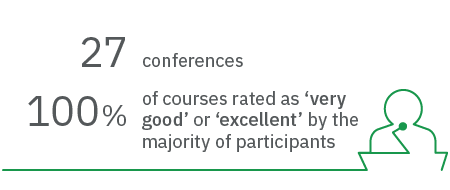
EMBL’s formalised sabbatical programme gained momentum on multiple sites. One conference at the frontier explored the increasingly expansive world of model organisms that scientists use in research. EMBL’s Corporate Partnership Programme industry members funded the highest number (270) of fellowships for courses and conferences since this programme began in 2009. And the EMBL Lautenschläger summer school, supported by a donation from the Manfred Lautenschläger Stiftung, celebrated its fifth year of introducing a diverse group of undergraduates to cutting-edge life science research.
Supported by funding from the Manfred Lautenschläger-Stiftung, the summer school introduced undergraduates from a range of scientific backgrounds to cutting-edge life science research.
An EMBL | EMBO Symposium explored the ‘wild frontiers’ of model organisms, from phytoplankton to sea anemones, waterstriders, roundworms, and more.
EMBL’s sabbatical programme continued to attract participants as scientists saw opportunities for collaboration, top-notch technology, and research advancement.
“Nowadays, there is still a clear gap for researchers to gain experience and training opportunities that help them transition their career into research infrastructures in the academic or private sectors. In this way, ARISE is a unique programme aiming to cover that gap.”
– Edward Avenell, ARISE program manager
EMBL’s ARISE programme continued to increase opportunities, providing training for the diverse skills required in infrastructure management. These fellows continue to go beyond EMBL’s doors for a well-rounded experience, and one such fellow shared thoughts about his experiences in Sweden, gaining practical experience in cloud orchestration and production-grade software development. Additionally, a new doctoral network began training fellows while potentially pioneering a new way to explore the cellular genotype–phenotype link.
A new doctoral network is training fellows as it potentially pioneers a whole new way of exploring the cellular genotype-phenotype link.
A week-long series shared key aspects of research infrastructure management, scientific service provision, and entrepreneurship to ARISE fellows.
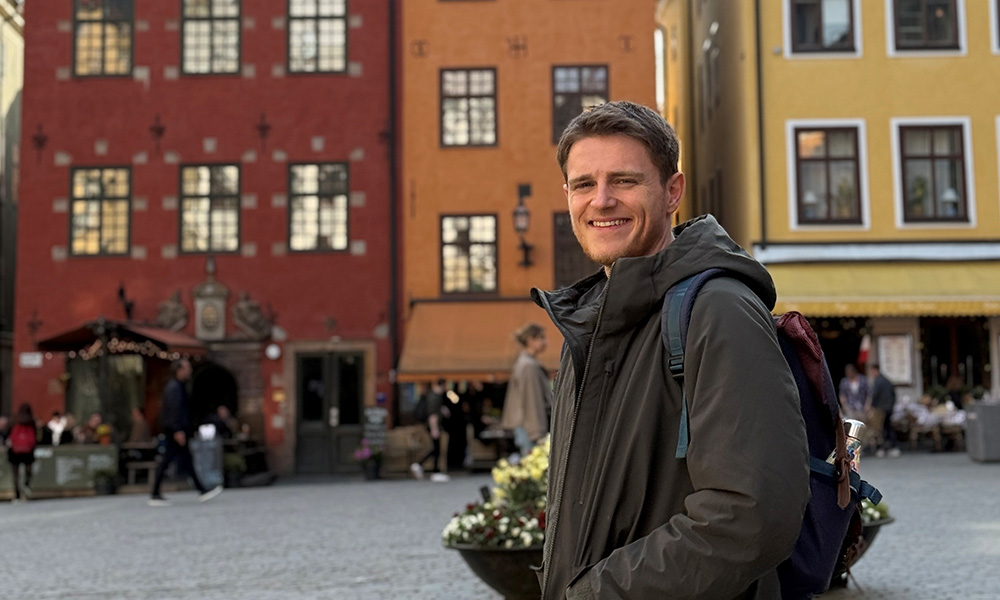
An ARISE fellow gained practical experience in cloud orchestration and production-grade software development in Sweden.
“When people keep coming back, that’s when we know we are doing things well.”
– Dorothea Deschermeier, Exhibition Manager at EMBL, talking of the EMBL exhibition ‘The World of Molecular Biology’
EMBL Grenoble participated in Parvis des Sciences, highlighting the importance of the human factor in AI development. SEPE introduced a new ‘Summer of Science’ event in Heidelberg and celebrated Oceans Day with the German-American Institute, bringing the underwater world closer to families in Heidelberg.
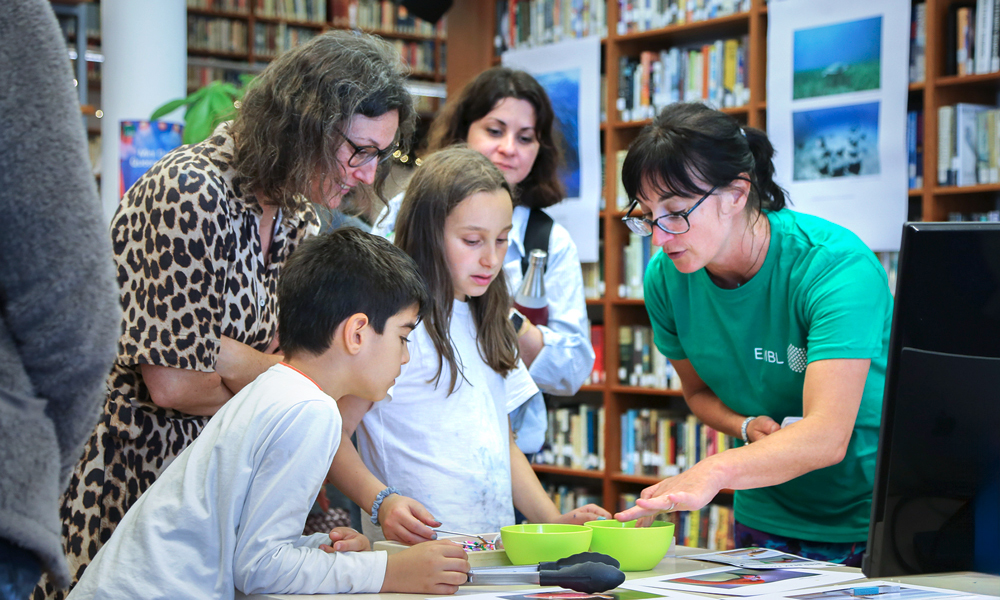
On Oceans Day, EMBL’s Science Education and Public Engagement Team joined forces with the German-American Institute in Heidelberg to bring the underwater world closer to families.
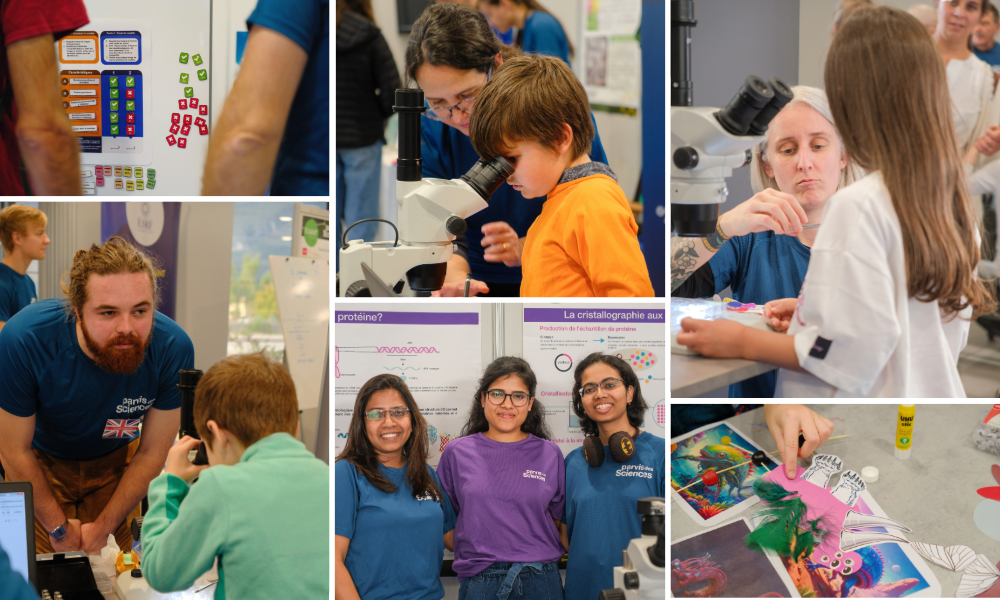
EMBL Grenoble took part once again in Parvis des Sciences, highlighting EMBL’s efforts towards engaging with the general public and the importance of the human factor in AI development.
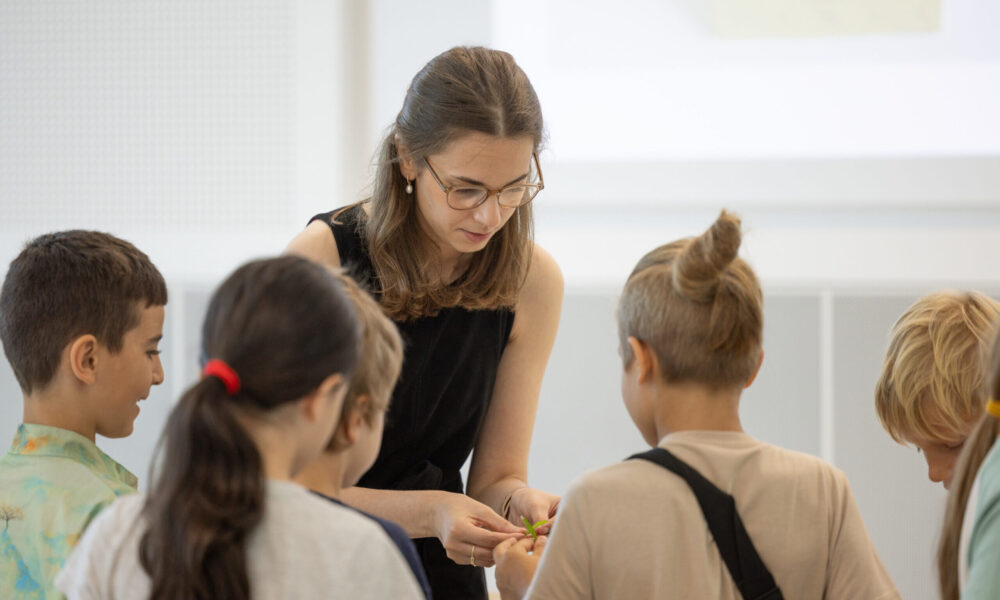
A ‘Summer of Science’ event engaged families with a variety of science-centric, hands-on activities.


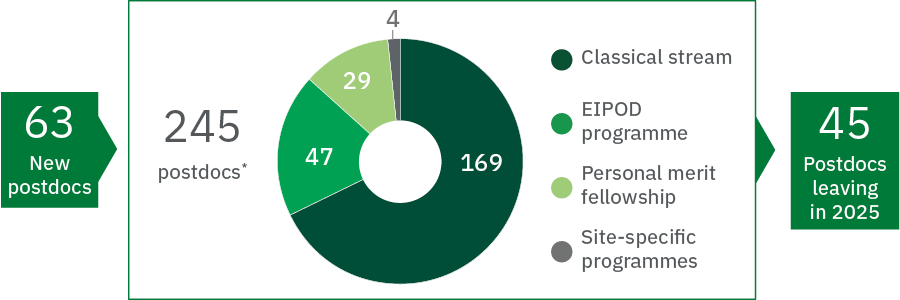
* Does not include former PhD students finalising their projects via a bridging postdoc contract.


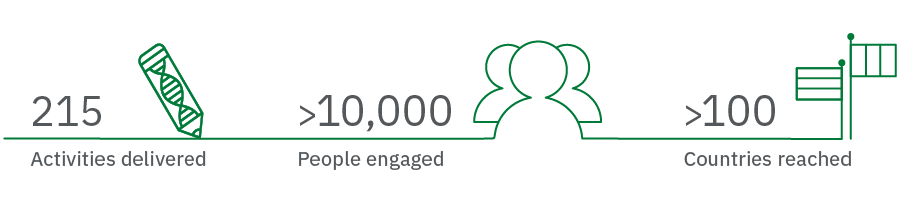
EMBL’s public engagement is aimed at fostering a pipeline of scientists and building community awareness of the role molecular biology plays in understanding themselves and the planet.