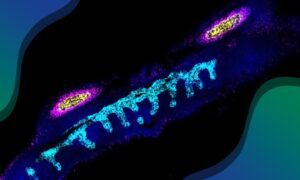
Cell map unlocks secrets of how reproductive organs form
A new single-cell map reveals how human reproductive organs form and respond to environmental influences.
SCIENCE & TECHNOLOGY2025
research-highlightsscience-technology
Showing results out of
A new single-cell map reveals how human reproductive organs form and respond to environmental influences.
SCIENCE & TECHNOLOGY2025
research-highlightsscience-technology
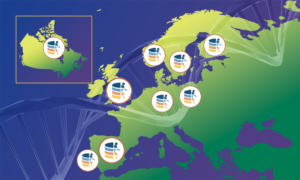
The Federated European Genome-phenome Archive (FEGA) has expanded its network and continues to evolve by embracing emerging technologies.
SCIENCE & TECHNOLOGY2025
science-technologytechnology-and-innovation
Addition of data from more diverse populations to the Polygenic Score (PGS) Catalog and a new software tool for PGS calculation could help produce more equitable disease risk predictions.
SCIENCE & TECHNOLOGY2024
science-technologytechnology-and-innovation

The new Team Leader for Human Genomics at EMBL-EBI shares how curiosity and maths shaped her career and what it takes to be a community builder.
PEOPLE & PERSPECTIVES2024
people-perspectivesperspectives
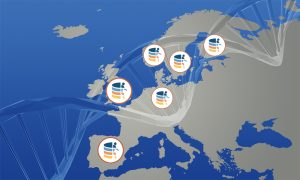
The Federated European Genome-phenome Archive (FEGA) marks a significant milestone with the release of its first datasets.
2024
announcements
The human pangenome – one of the most complete collections of genome sequences released so far – captures rich human diversity.
SCIENCE & TECHNOLOGY2023
announcementssciencescience-technology
On the 20th anniversary of the Human Genome Project, we look back at its history, wonder and potential.
LAB MATTERSPEOPLE & PERSPECTIVES2023
lab-matterspeople-perspectivesperspectives
Researchers from the MANE collaboration bring you the most comprehensive human genome annotation dataset to date.
SCIENCE & TECHNOLOGY2022
research-highlightssciencescience-technology
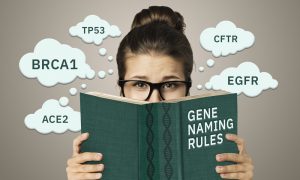
The human genome harbours about 19 000 protein-coding genes, many of which still have no known function. As scientists unveil the secrets of our DNA, they come across novel genes that they need to refer to using a unique name. The Human Genome Organisation’s Gene Nomenclature Committee (HGNC) at…
SCIENCE & TECHNOLOGY2020
sciencescience-technology
Today we celebrate the 20th anniversary of the first draft of the entire human genome.
SCIENCE & TECHNOLOGY2020
sciencescience-technology
In a nutshell: 1st map combining human genetic variation at different scales – from single letters to large chunks Based on genomes of 1092 healthy people from Europe, the Americas and East Asia Could help identify genetic causes of disease, rather than just links Data made freely available in…
SCIENCE & TECHNOLOGY2012
sciencescience-technology
The 1000 Genomes Project, a major international collaboration to build a detailed map of human genetic variation, has completed its pilot phase. The results are now published in the journal Nature and freely available through the European Molecular Biology Laboratory’s European Bioinformatics…
SCIENCE & TECHNOLOGY2010
sciencescience-technology
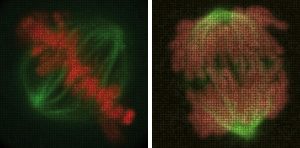
Name a human gene, and you’ll find a movie online showing you what happens to cells when it is switched off. This is the resource that researchers at the European Molecular Biology Laboratory (EMBL) in Heidelberg, Germany, and their collaborators in the Mitocheck consortium are making freely…
SCIENCE & TECHNOLOGY2010
sciencescience-technology
Once the human genome was sequenced in 2001, the hunt was on for the genes that make each of us unique. But scientists at the European Molecular Biology Laboratory (EMBL) in Heidelberg, Germany, and Yale and Stanford Universities in the USA, have found that we differ from each other mainly because…
SCIENCE & TECHNOLOGY2010
sciencescience-technology
The ENCyclopedia Of DNA Elements (ENCODE), an international research consortium organised by the National Human Genome Research Institute (NHGRI), part of the National Institutes of Health (NIH), today published the results of its exhaustive, four-year effort to build a “parts list” of…
SCIENCE & TECHNOLOGY2007
sciencescience-technology
No results found