Three scientific communities involved
- European Reference Genome Atlas (ERGA)
- International Barcode of Life Europe (iBOL Europe)
- Consortium of European Taxonomic Facilities (CETAF)
A landmark alliance of DNA experts across Europe signals the start of an effort to build a continent-wide system that applies genomics to protecting European biodiversity
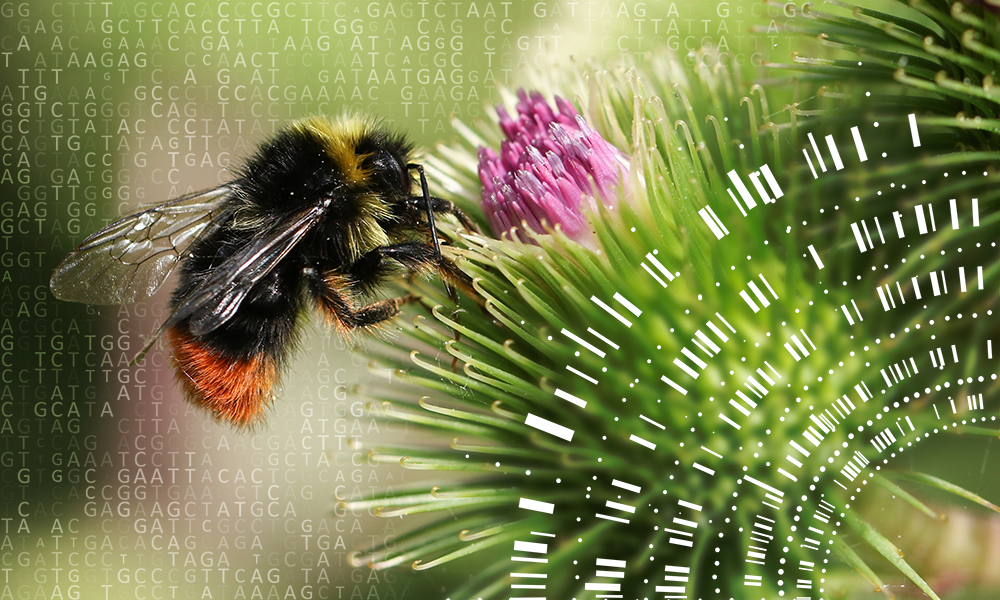
Three major European scientific communities have signed a historic agreement to protect European biodiversity through the Biodiversity Genomics Europe plus (BGE+) project.
Backed by the European Commission and EU Commissioner for Fisheries and Oceans Costas Kadis, this initiative aims to establish harmonised protocols and generate comparable data for biodiversity research across Europe. BGE+ will build the interconnected infrastructure needed to scale up biodiversity genomics, integrate DNA barcoding with genome sequencing, and promote standardisation across the field.
Today, DNA-based science allows us to identify species, monitor ecosystems, and understand genetic diversity both cheaply and efficiently. Yet, as scientists race against unprecedented biodiversity loss, they face a fundamental challenge: millions of species are still estimated to be unknown to science. Simply put, we cannot protect what we do not know exists.
Discovering and documenting species is only the first step. Scientists also need to understand how different species adapt to environmental change and respond to emerging threats. To achieve this, BGE+ brings together two complementary strands of genomics: DNA barcoding, to identify species quickly and accurately, and genome sequencing, to provide deeper insights into adaptation, evolution, and resilience. Combined with taxonomic expertise and advanced data systems, these tools open up new possibilities for understanding and protecting the natural world.
EMBL’s European Bioinformatics Institute (EMBL-EBI) serves as the data coordination and public repository layer, ensuring these datasets are shareable, reusable, and openly accessible to the global scientific community. Beyond simply housing this information, EMBL-EBI runs extensive analysis on these genomes, adding further value to the underlying data.
Managing these data requires seamless integration and a highly resilient infrastructure. EMBL-EBI is currently streamlining its existing services and pipelines to increase their reach and utility. When scientists come across previously unknown DNA sequences, for example in a soil or water sample, the International Nucleotide Sequence Database Collaboration (INSDC) catalogues it. After registration, the sequence data becomes available in public databases. By standardising these environmental data through EMBL-EBI’s updated pipelines, the institute ensures they are completely open, searchable, and future-proof.
“We expect the data produced across Europe to grow significantly in the coming years. Through this project, we are adjusting our systems and strengthening technical links across databases to be able to cope with the increasing data production,” said Joana Pauperio, biodiversity project manager at EMBL-EBI.
EMBL-EBI is also strengthening technical links with other specialised repositories, like Canada’s Barcode of Life Data System (BOLD), expanding the global reach and connectivity of these vital resources.
This infrastructure is powered by collaborations across multiple EMBL-EBI resources to ensure raw DNA sequences translate into actionable tools.
“We are entering a new phase,” said Dimitris Koureas, director of BGE+. “Europe already has extraordinary expertise in taxonomy, genomics, bioinformatics, biodiversity collections, and environmental monitoring. The challenge now is bringing these strengths together in a way that allows us to work at scale in an interconnected system, beyond geographic and political limitations.”
The European Nucleotide Archive (ENA) team at EMBL-EBI archives DNA and RNA sequence data and annotations. Through this project, the team will improve linkages between sequence and biodiversity databases, and facilitate access to DNA barcoding and genomic data outputs.
Working alongside them, the Ensembl team develops and refines automated annotation pipelines for complex plant and animal genomes to help scientists interpret evolutionary traits. Finally, the Agriculture and Biodiversity Coordination team will maintain the public-facing ERGA Data Portal that pulls together these diverse data streams, ensuring up-to-date information about genomic resources for European biodiversity tracking is clearly displayed for researchers and environmental policymakers.
Ultimately, by standardising, cataloguing, and openly displaying these data assets, EMBL-EBI provides the vital link required to turn raw laboratory data into public, interconnected knowledge that can actively inform environmental monitoring and European policy.
Read the full press release on the BGE+ website.