What I’ve Learned: Christoph Müller
Exploring the structure and function of a structural biologist
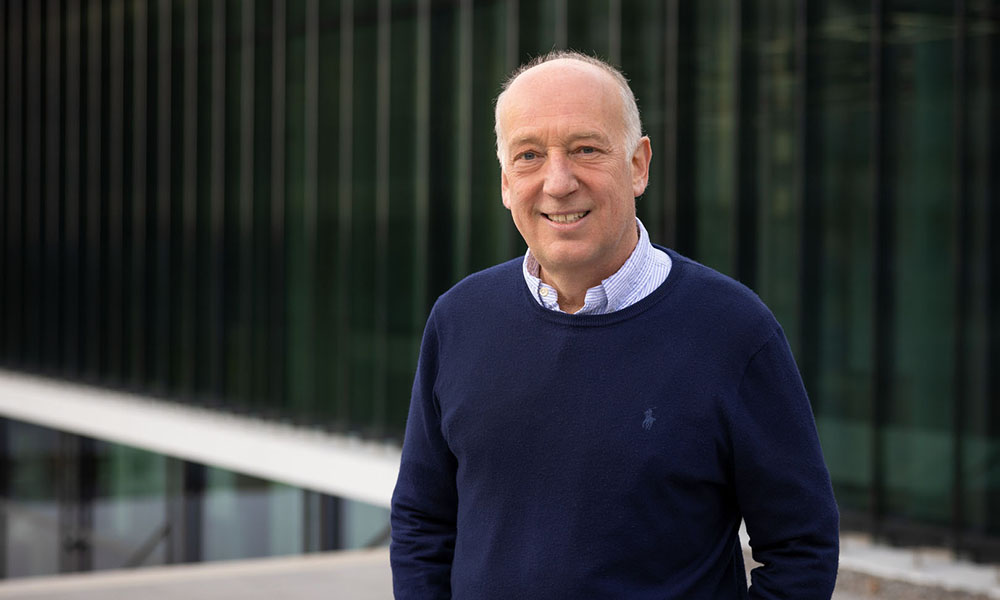
One might say that Christoph Müller has always been drawn to understanding structure.
At an early age, he was experimenting with building structures with pieces of wood he found. The experiences allowed him to appreciate the intricacies of functional construction. So after initial academic forays into pharmaceutical science and chemistry, he found his place within the realm of structural biology and crystallography.
Müller spent the past 19 years in his Heidelberg lab, but his story didn’t start there. He did a PhD in Freiburg, where he was introduced to EMBL Hamburg, using the synchrotron to collect data for his PhD.
“It was very labour-intensive. We often had to work through the night, develop films in darkrooms while collecting data, and coordinate everything manually,” he recounted. “We spent many nights with almost no sleep just to complete a dataset at a synchrotron.”
The U.S. then posed opportunities for him.
“At that time, it was also much easier to move to the U.S.,” he said. “For example, I don’t think an application like mine for a postdoctoral fellowship would have quite the same outcome today. I said I wanted to go to a major lab on the U.S. East Coast, but I didn’t know which one. They gave me the fellowship, asking that I just tell them later which lab I chose.”
The postdoctoral fellowship led to a position at EMBL Grenoble in July 1995. It was there that Müller and his scientist wife, Florence Baudin, started their family of three daughters.
Looking back, Müller has made an indelible mark in structural biology, identifying some of the cell’s most important molecular machines and how they work. His work has resulted in detailed structures that help us understand RNA polymerases better, as well as structures of proteins that control immune responses, inflammation, and cell growth.
Recently, he shared stories and some of his wisdom as he winds down his time in Heidelberg and begins the life of an Emeritus Scientist at EMBL. The following are highlights from that discussion:
The early years
As a child, I really liked being outside, running around, being very active, but I also liked building things. That probably connects to my interest in structural biology. We structural biologists even use physical models. You can hold them and see the three-dimensional structure and shape.
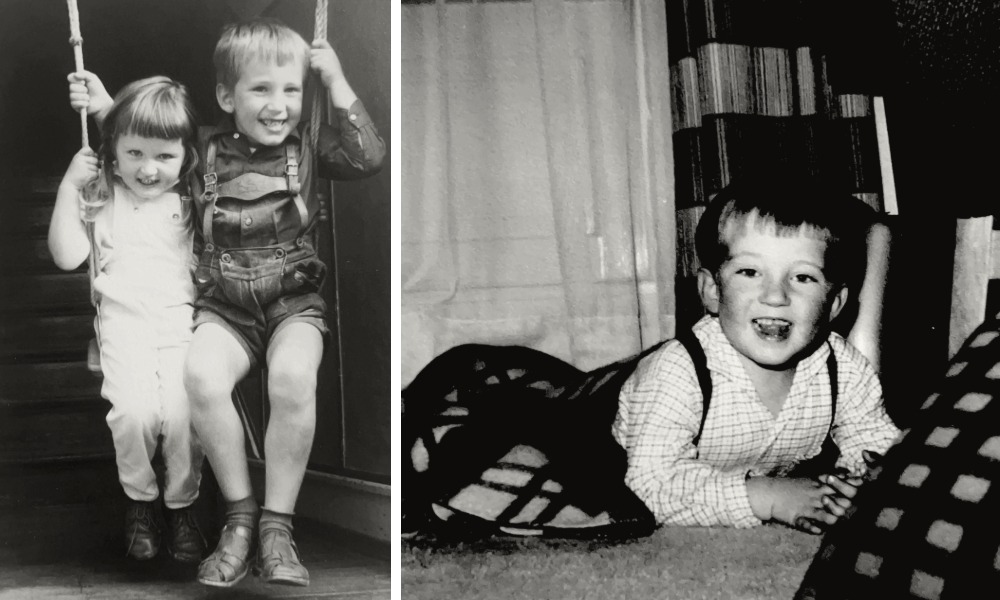
My father was a pharmacist with a laboratory. So when I was old enough, I also had a small laboratory. First in my room, but after two adventurous experiments, my parents moved me into a separate part of the house.
My father trained young pharmacists in botany. They would go out, collect plants, dry them, and identify them carefully, making teas and other remedies.
Physics interested me, even though I didn’t fully understand it at the time – things like atoms and molecules, and how everything is structured.
I initially studied pharmacy, but I realised that pharmacy wasn’t what I wanted to do, so I switched to chemistry. Then, a new professor arrived in Freiburg, bringing structural biology and crystallography into the department. That was the turning point. I was drawn to crystallography and then to structural biology more broadly.
The beauty of structural biology
You have real discovery moments. In structural biology, especially crystallography, some moments are very clear. When you solve a structure, there is a moment where you know: this is right. That gives you confidence. You realise this is not something you invented; it is how the molecule actually is.
Determining a new structure is a pinnacle moment for structural biologists. For me, it was importin β, a crucial nuclear transport receptor responsible for moving macromolecules through the nuclear pore complex into the cell nucleus and which binds together other molecules. It’s a fascinating structure because it wraps around another molecule, and you immediately understand how it works.
In some cases, structure immediately gives you insight into function. That is rather rare. Many structures don’t tell you much, but sometimes you see one and immediately understand how it likely works. That was the case with Importin β.
Structural biology allows you to see the building blocks of a cell, parts of a larger assembly.
Crystallography is still an important technique, but now we also have cryo-electron microscopy (cryo-EM) and other methods. With cryo-EM and related approaches, we can study larger complexes and even observe molecular behaviour in more native cellular contexts. It’s broadened structural biology and made it more powerful.
And now there is AlphaFold, which essentially builds on all this accumulated knowledge and can predict new structures – even design new binders and molecules.
Structural biology has long been seen as very concrete and very important. The structure of DNA – the double helix – was, of course, a foundational example of structural biology, and protein structures like those solved by pioneers such as Perutz and Kendrew also established its importance. However, as more structural biology studies were done, people also became more aware of its limitations. You cannot always directly infer function from structure. It does not solve all biological problems. Today, many structural biology laboratories are still thriving – far more than in the past, so it continues to have a huge impact.
The Grenoble years
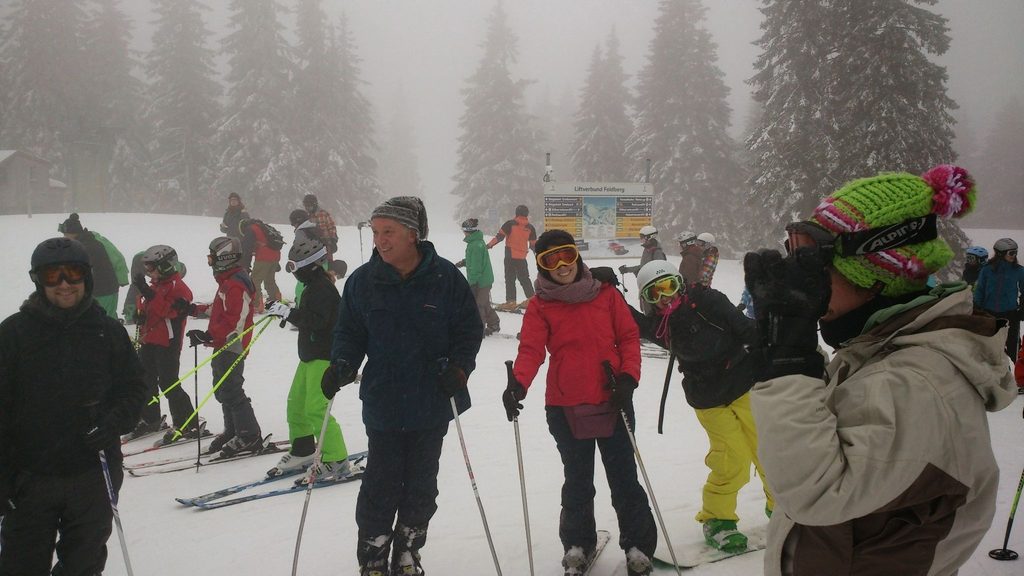
EMBL was a remarkable combination – excellent science in a stunning environment.
When I arrived in Grenoble, the ESRF synchrotron had just opened for use. It was a third-generation synchrotron, using undulators and producing an extremely bright beam. It was essentially the best synchrotron in the world then.
People in the U.S. were quite envious that I could start my group there.
Most memorable activity? If I’m honest, probably the skiing excursions, but the research was also very important. But what was really fantastic was being in such a beautiful location, surrounded by mountains, while also having access to cutting-edge scientific instruments like the synchrotron.
The synchrotron was extremely important for my work. The high-brilliance beamlines were particularly valuable at the beginning of my research. When I started, people were still using very simple diffractometers, measuring one reflection at a time using home sources. That was extremely slow and cumbersome.
When I was asked whether I would be interested in moving to EMBL Heidelberg, we thought about it carefully. We liked Grenoble and enjoyed living there, but I was offered the opportunity to become joint head of a unit together with Peer Bork in Heidelberg.
At the same time, electron microscopy was increasingly important, and we already had projects involving EM and data collection. There was a sense that Heidelberg would open new possibilities and directions for the research.
Heidelberg during the ‘resolution revolution’
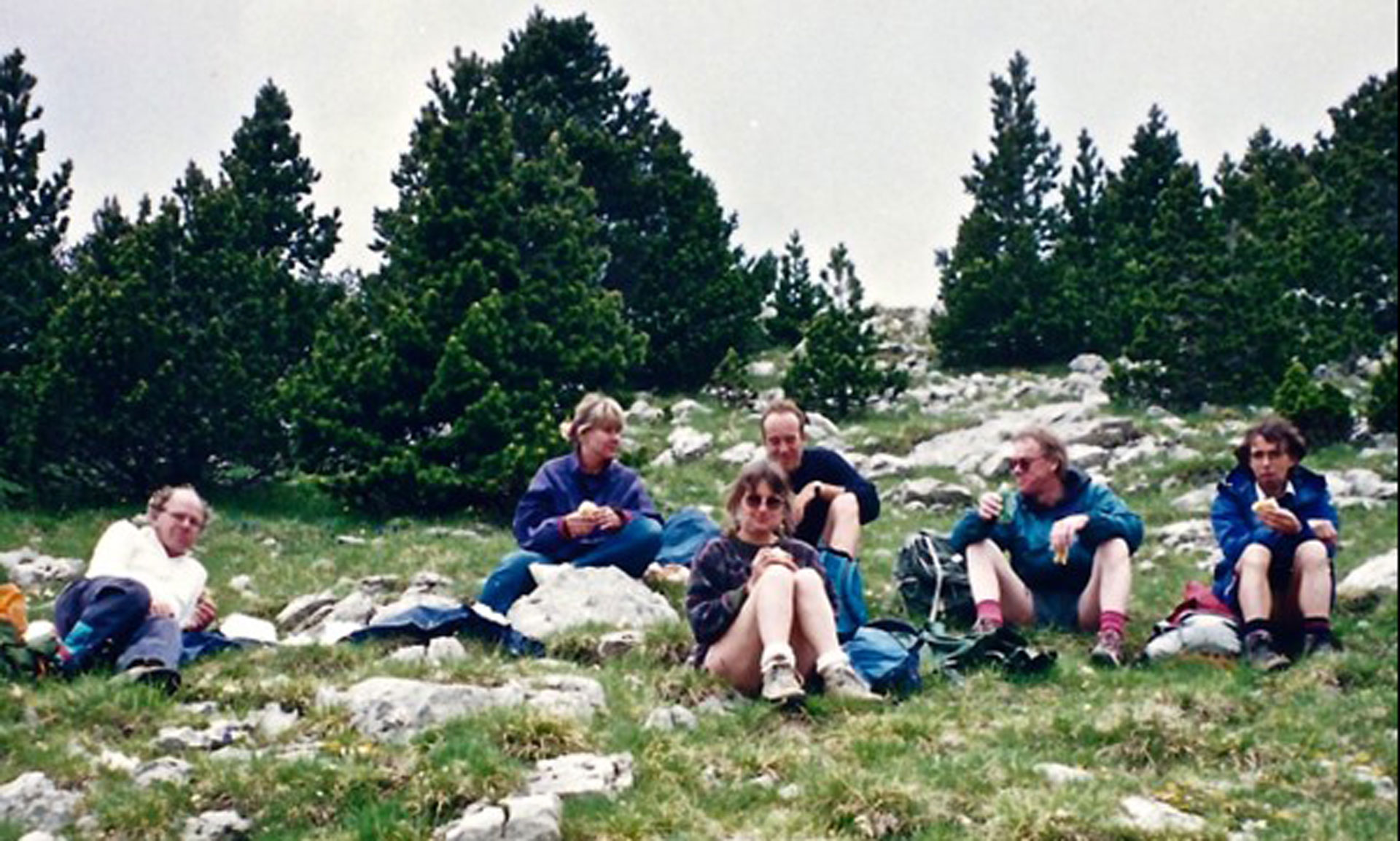
Electron microscopy was much more established in Heidelberg, with more instruments, and we could invest in new high-end microscopes.
It was a time of major leaps in electron microscope capability, appropriately referred to as the ‘resolution revolution’.
When I arrived, we acquired the latest, very expensive, high-end microscope. It became clear that the scientific community wanted not just access, but training. That led to the idea of creating an imaging centre.
Life lessons
I remember Iain Mattaj saying, never hire someone who walks slower than you. That was, of course, difficult advice to follow literally; he always walked very fast. But I understood what he meant. One shouldn’t be afraid to hire people who are better than themselves – more brilliant, more creative, and more energetic.
Science is difficult. You have to be passionate about what you do. Things often don’t work, and it can be frustrating. So you need a community that supports you and believes in what you are doing. And you also need persistence, especially when things are difficult. And you need to be collegial – willing to collaborate, reach out to others, and build alliances where possible.
I remember a Christmas dinner with my group where I thanked everyone for their excellent work and their contributions to our research. A student looked at me and said, “Christoph, we are not doing this for you. We are doing this for ourselves.” And that person was right! But at the same time, individual goals have a way of merging into a collective goal. It’s also true that you are not doing everything just for others. We shouldn’t think of students as doing things simply to help a supervisor, like children pleasing their parents.
Conferences and courses have always been a highlight. I started a course in 2002, and it is still running more than 20 years later, which makes me very happy. It is good to see that it continues.
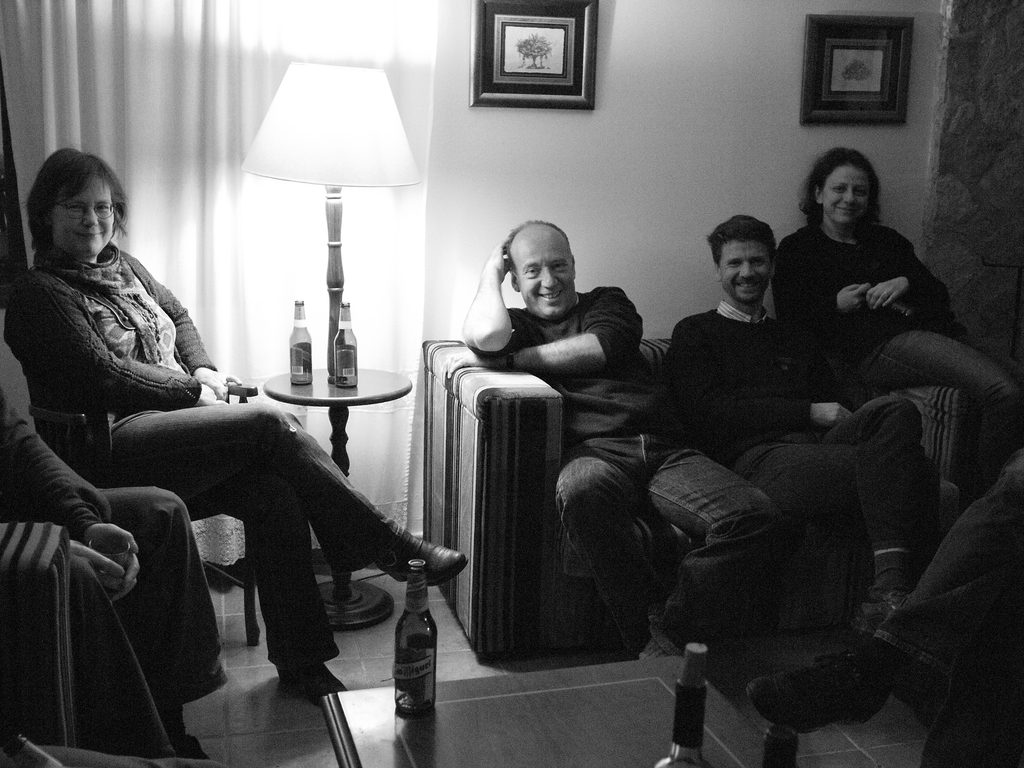
One key principle has been not sticking to a single technique. I learned that at EMBL. You choose the technique that fits the problem. I was fortunate to be in an environment where that was possible. Not many places offer that flexibility.
Some of my most important discoveries came from mistakes or small errors that unexpectedly opened new directions. You cannot plan everything. I have had several serendipitous discoveries that led to very nice papers, and I am proud of those.
I am very proud of the Imaging Centre. When I walk through it, I think it is a great initiative and a beautiful facility. I am proud that we managed to build it. I think it will become a hub for technology development and a magnet for users who want access to cutting-edge methods.
Building the Partnership for Structural Biology in Grenoble was another important moment. We created a shared structure where different institutions came together. It was about bringing people and institutes together, aligning efforts, and creating a shared scientific platform.
As a scientist, you have the privilege of meeting very bright people. They are often not only highly intelligent but also very open, friendly, and interesting to talk to. That interaction – and the ideas and energy that come from it – is what I will miss most.
The future that awaits
From here, we will return to Grenoble for a couple of years. It’s always been a home to us, and we really do look forward to going back.
You always think you could have done more. In recent years, I’ve been too distracted by political and administrative issues that take energy away from research.
I often come back to my early woodworking days as a child, even building a chair then, but without any formal plans and questionable results. I may go back to building furniture. I haven’t built much recently mostly because I didn’t have time. But even when I was a student, I sometimes had access to workshops and would build things there. One of the last things I built was a large desk made from old wood. I still use it today.
I hope I will be remembered for helping to create a collegial, friendly, and supportive environment, one where people can grow, develop their talents, and flourish. That was always important to me.