Understanding tropical forest health from above and below
An EMBL-led collaboration, COMADRE, is linking airborne and satellite observations with soil microbial data to uncover the hidden biology that underpins tropical forest health
By Santiago Lago, Thomas Haize, Josipa Billic Zimmerman, Caroline Juery, and Haipeng Zhou
Every day, towering cargo ships pass through the Panama Canal, one of the world’s busiest trade routes. Just a short boat ride away, on forested islands hidden from most visitors, lies one of the world’s oldest continuously studied tropical forests. Satellites can monitor the rainforest canopy in remarkable detail, but they cannot see one crucial part of the ecosystem: the soil microbes beneath the forest floor.
To help bridge that gap, researchers from EMBL, NASA, the Smithsonian Tropical Research Institute (STRI), and the University of Zurich came together in Panama this May for a microbiome sampling campaign. The project, named Cross-scale Earth Observation and Microbiome Biodiversity Assessment for Exploring Drivers of TRopical Forest Ecology, or ‘COMADRE’, combines DNA and RNA sequencing of soil microbes with airborne and satellite observations of the forest canopy. The collaboration aims to give satellites a ‘microbial sense’ of forests, helping researchers understand not only what tropical forests reveal from above, but also how healthy and resilient they are from the ground up.
How it all began
The collaboration traces its origins to the 2025 workshop ‘Cross-scale Planetary Biology: from Outer Space to Inside Cells’ organised by EMBL’s Planetary Biology Transversal Theme. The workshop evaluated opportunities and challenges for integrating Earth observation and omics data, with a focus on identifying methodological solutions and fostering collaboration between EMBL and other organisations.
David Schimel, Research Scientist at NASA’s Jet Propulsion Laboratory and the convening lead author of the Intergovernmental Panel on Climate Change (IPCC) report (which led to the IPCC receiving the Nobel Peace Prize in 2007 alongside Al Gore), was the keynote speaker. Schimel invited EMBL to participate in the AVUELO campaign, bringing their molecular biology expertise to this mission.
AVUELO (Airborne Validation Unified Experiment: Land to Ocean), meaning ‘flight’ in Spanish, is a NASA-led campaign that uses research aircraft and field measurements to help satellites more accurately monitor tropical forests and other ecosystems. It is like calibrating a camera before using it for a serious job. By comparing airborne observations with samples collected on the ground and in the water, scientists can calibrate satellite measurements, turning images into more reliable information on forest health, biodiversity, and environmental change.
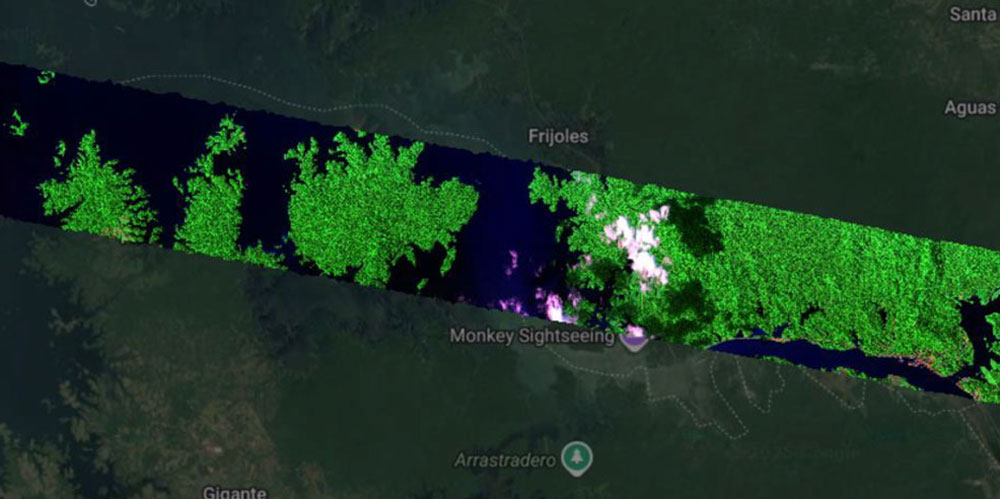
What satellites can’t see
Current satellite and airborne remote-sensing methods can measure forest traits from above, such as canopy structure, leaf chemistry, and plant diversity. However, they do not directly measure the biological processes belowground that shape forest ecosystems.
Soil microbes, including bacteria, archaea, and fungi, are often called the ‘hidden majority’ because they drive many of the processes that keep forests functioning. They help forests get nutrients, store carbon, cycle nitrogen, and recover from stress. Yet despite their importance, tropical soil microbial communities remain poorly sampled, making it difficult to understand which microbes matter most and how they influence the trees above them.
This is where the COMADRE project comes in: it aims to understand tropical forest health by connecting what satellites can see from above with what microbes do underground, and more specifically, by adding microbial DNA sequencing to NASA’s AVUELO campaign. As Meredith Schuman, Professor at the Department of Geography and the Department of Chemistry at the University of Zurich, explained, “A handful of remote sensing studies have established links between aboveground canopy chemistry and soil microbial activity. The data collected during COMADRE should now solidify such links and connect them to microbial community composition.”
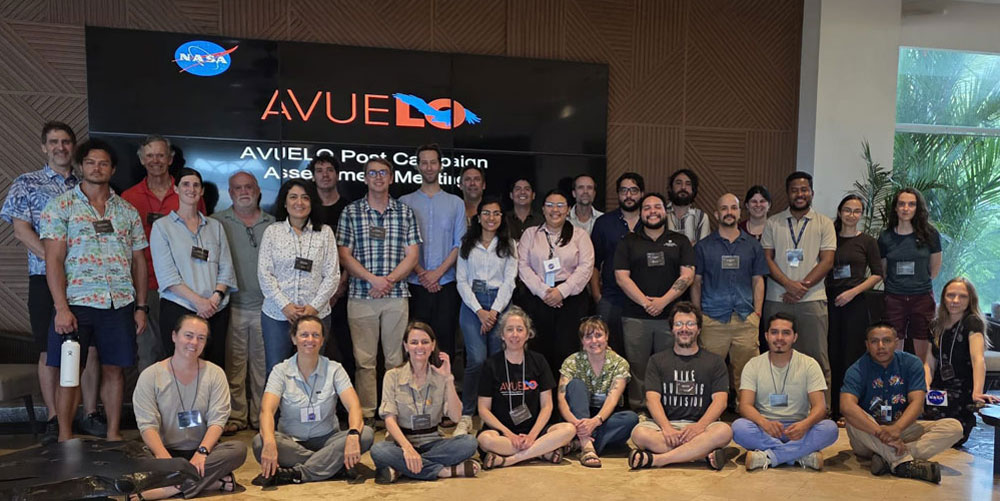
The COMADRE team collected soil samples for metagenomic and metatranscriptomic analyses, sequencing all DNA and RNA present in each sample. These data will help identify new species of bacteria, archaea, and fungi that are absent from current databases and reveal how microbial genes respond to environmental triggers such as nutrient limitation, drought, and temperature.
By combining this molecular information with airborne observations, researchers hope to better understand how microbial communities influence tropical forest health and resilience. Rather than treating the forest canopy and the soil as separate systems, COMADRE will enable researchers to study their interactions.
“I knew tropical forests were immensely diverse. Still, the biodiversity we encountered during this sampling campaign came as a wonderful surprise, and I am very curious to see what we will discover about the functional diversity of the soil microbiome,” said Caroline Juery, Postdoctoral Fellow in EMBL’s Bork Group.
A living laboratory for tropical forest science
The soil sampling for COMADRE took place at the Barro Colorado Nature Monument (BCNM), which encompasses the Barro Colorado Island and five adjacent mainland peninsulas in Lake Gatun, formed when the Chagres Valley was flooded to create the Panama Canal in 1913. It preserves the remaining crowns of an ancient rainforest and is accessible only to researchers through the Smithsonian Tropical Research Institute (STRI).
STRI Senior Scientist Joseph Wright described the historical 50-hectare plot on Barro Colorado Island as harbouring 325 tree and shrub species, roughly 70% of the total number found across all of Europe. As one of the world’s most studied tropical sites, BCNM has served as a living laboratory to test essential ecological models and calibrate satellite observations of tropical forests worldwide.
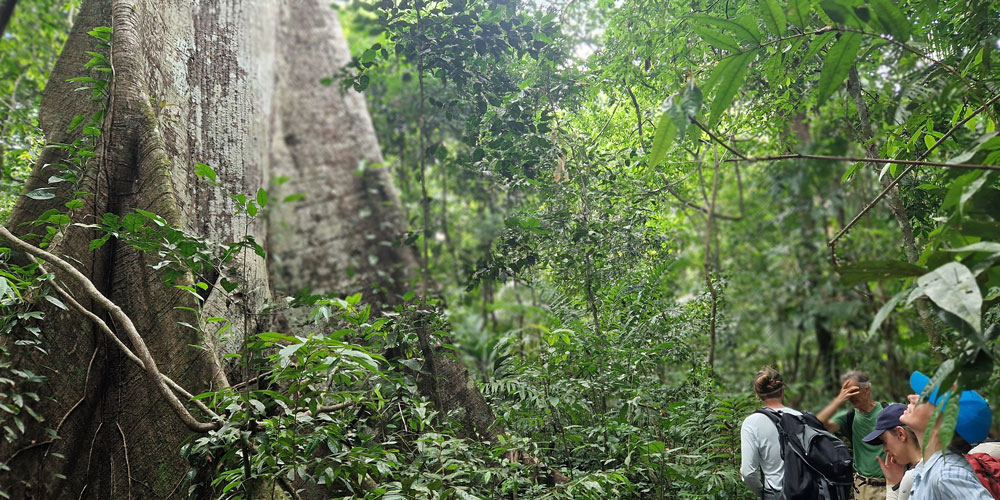
Working with STRI hosts Helene Muller-Landau, Joseph Wright, Hernan Capador, Kristin Saltonstall and collaborators, the EMBL team gained exclusive access to 85 long-term intervention plots. These include nutrient (nitrogen, phosphorus, potassium, or micronutrient) enrichment, leaf litter removal and accumulation, rainfall exclusion, and soil warming experiments, some of which have been running continuously since the late 1990s, providing an unrivalled window into the dynamics of tropical forests over time.
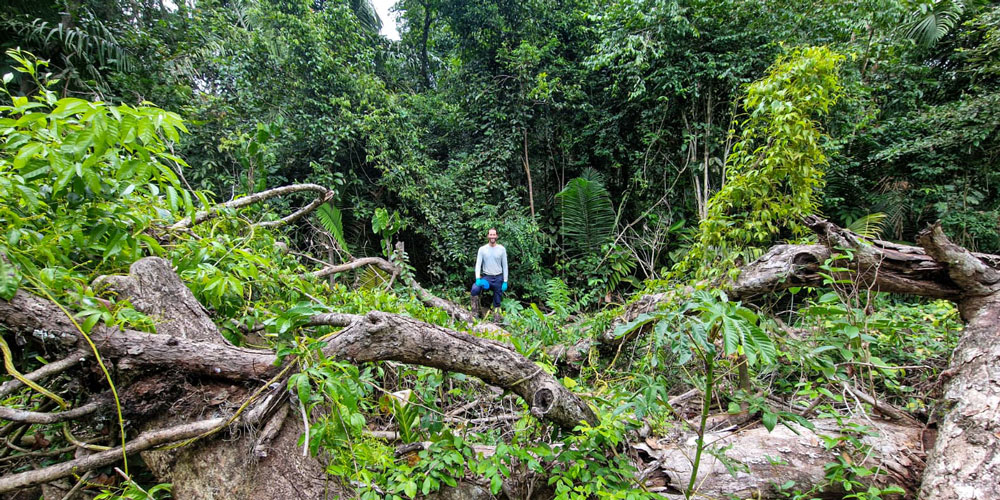
During the expedition, the team collected 146 topsoil and humic-layer samples. The resulting dataset could help scientists better interpret satellite imagery, predict forest health, identify biodiversity hotspots, and prioritise areas for future research and conservation.
Life in the field
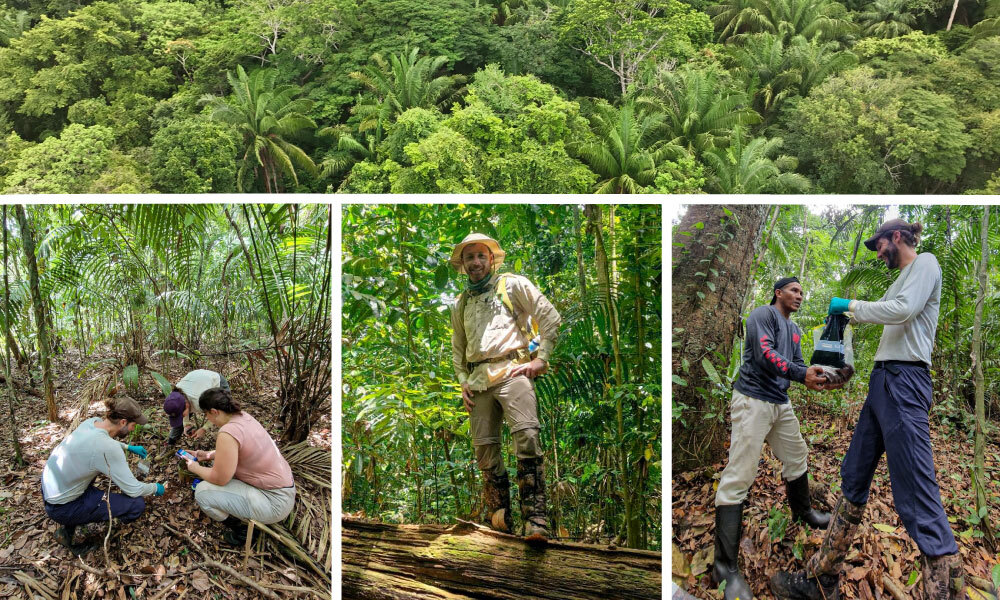
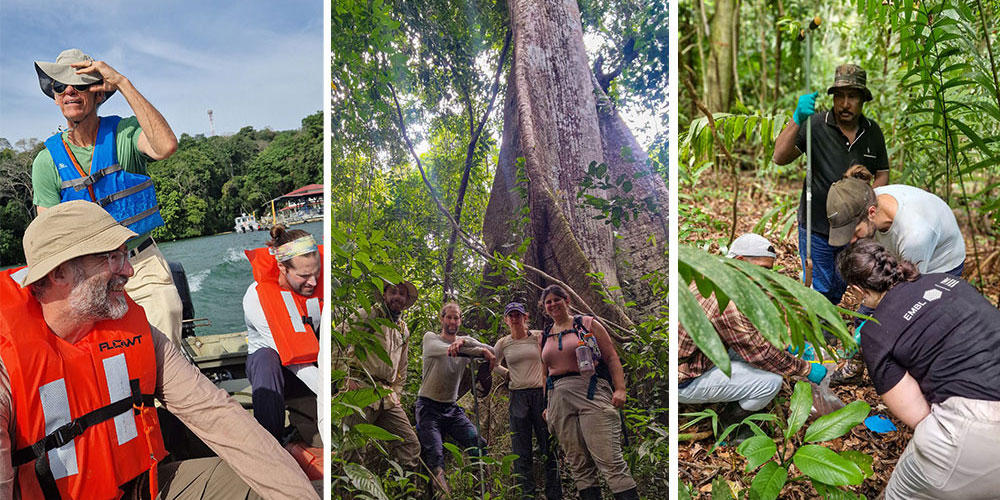
A typical day in the field began before dawn with the calls of Howler monkeys, followed by a skiff ride past crocodiles and freshwater turtles, and then a strenuous trek through old-growth rainforest to reach the sampling sites. “The humidity and elevated temperatures are extremely challenging, not to mention a plethora of insects constantly getting into your clothes,” said Thomas Haize, Expedition Biology Engineer at EMBL. Working against the clock, the team often found themselves waist-deep in plant debris as they rushed to preserve precious samples in DNA-extraction buffer.
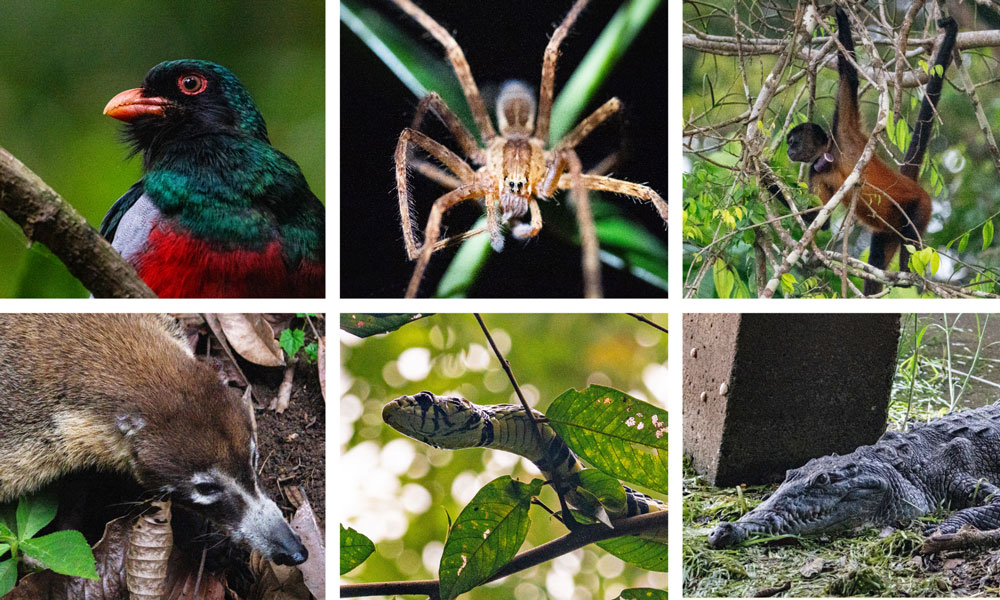
Protocols developed during EMBL’s Traversing European Coastlines (TREC) expedition, together with the expertise of STRI guides Sebastian Bernal, Rodolfo Perez, Omar Hernandez, Eric Valdès, and Julio Rodriguez, and scientific coordinators Yacksecari Lopez, Lourdes Vargas and Mirna Samaniego, proved invaluable in the challenging rainforest environment. Along the way, the team encountered colourful toucans, leaf-cutter ants, bioluminescent fungi, and numerous other plants and animals, constant reminders of the extraordinary biodiversity surrounding every sampling site.
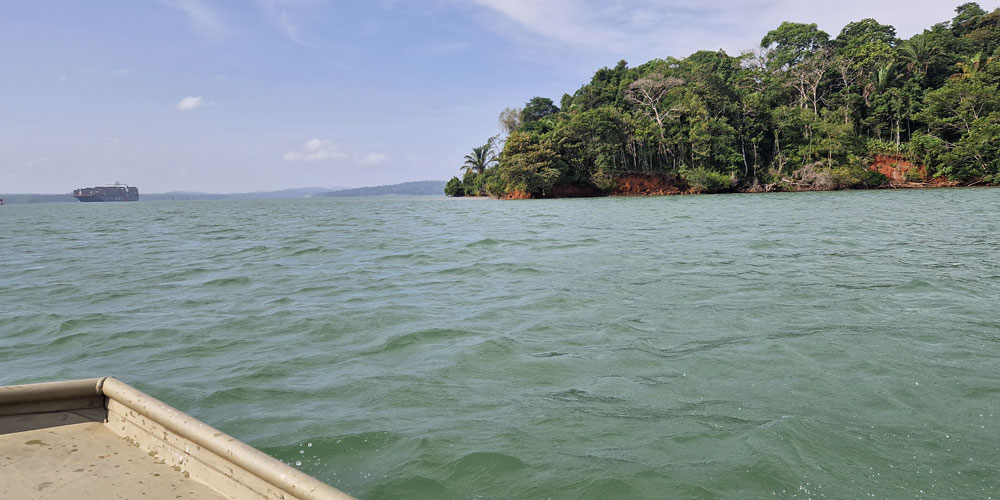
Each evening, the journey back took the team through the Panama Canal alongside 100,000-tonne Panamax cargo ships travelling between the Atlantic and Pacific oceans. “You are literally in the wake of the world’s largest supply chain. It is a relentless and slightly daunting place to be,” recalled Santiago Lago, ARISE2 Fellow at EMBL.
Looking ahead: from samples to satellite insights
The urgency of this work is clear. Tropical forests account for approximately 40% of global CO₂ sequestration and 50% of terrestrial biodiversity. Yet, they are disappearing at a rapid rate. In 2025 alone, an area of primary tropical forest roughly the size of Switzerland was lost. As these ecosystems disappear, scientists face a race against time to understand not only the trees above ground, but also the hidden microbial communities beneath them that help forests function and recover.
Back at EMBL, the work is only just beginning. Over the coming months, researchers in the Bork and Stegle Groups at EMBL Heidelberg, together with the Garcia Alai Team at EMBL Hamburg and collaborators at NASA’s Jet Propulsion Laboratory, the University of Wisconsin–Madison, and STRI, will analyse DNA and RNA from the soil samples and integrate these molecular data with AVUELO’s airborne and satellite observations. The goal is to test if molecular mechanisms measured underground could explain tree canopy health observed from space.
If successful, the work could improve how NASA satellite models interpret tropical forests by incorporating EMBL’s in-house databases, helping satellites better detect changes in forest health across the tropics. “Integrating the largest views of our planet (from space) with some of the smallest (microbial DNA) is a truly exciting first step towards a new generation of Earth system models such as Digital Twin Earth,” said Lago.
Beyond the initial scientific outcomes, the campaign represents the beginning of a promising collaboration with partners, including STRI and NASA, to truly understand life in context. As Josipa Bilic, EMBL’s Planetary Biology Program Manager, highlights: “Connecting scales that have traditionally been studied separately, this project underscores the importance of both scientific and human collaboration in advancing the study and conservation of complex ecosystems.”