The scientists behind the data: investing in Europe’s data stewardship workforce
EMBL brings together international partners to professionalise research data management across domains and sectors
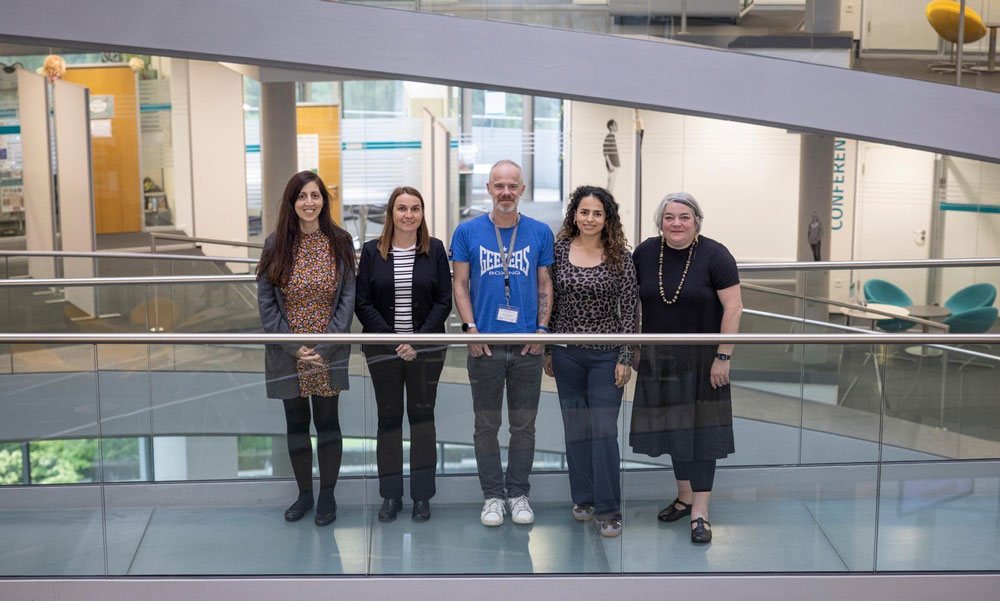
By Isabela Paredes Cisneros and Lisa Vollmar
Research data is only as valuable as the expertise and culture that support it. Yet across Europe, the professionals most responsible for enabling high-quality, reusable research data – data stewards – often work without standardised career paths, consistent training, or formal recognition. A new Horizon Europe project is designed to change that.
STARDAST – STewardship And Recognition for DAta Science Talent – is a four-year, €8 million Coordination and Support Action coordinated by the European Molecular Biology Laboratory (EMBL) and set to begin in September 2026.
Bringing together 19 partner institutions across nine countries, including research infrastructures, universities, and companies, STARDAST combines expertise from life sciences, particle physics, linguistics, translational medicine, biodiversity, digital humanities, and industry R&D within a single, coordinated framework.
EMBL will coordinate the project and lead its management and cascading grants operations, drawing on the expertise of its Data Science Centre, a dedicated hub for managing, analysing, and sharing research data at scale. The centre supports researchers at EMBL through providing data management infrastructure, consulting, training, and community-building in data science.
“Through STARDAST, we aim to bring visibility, structure, and career perspectives to the data stewardship profession, while fostering a broader conversation about how scientific support roles are recognised and valued across disciplines and sectors,” said Lisanna Paladin, Community and Internal Support Lead at EMBL’s Data Science Centre.
“In biology, discovery increasingly depends on connecting data across experiments, technologies, institutions, and biological fields,” said Jan Korbel, EMBL’s Head of Data Science and interim Head of EMBL Heidelberg. “This can only work if we invest in the people who ensure that research data are managed responsibly, described consistently and openly, and made AI-ready. STARDAST recognises data stewardship as an essential foundation for the future of data-driven biology.”
With its innovative approach, STARDAST places data stewards at the centre of the project: as co-creators of curricula, infrastructure tools, and policy frameworks. A central objective of STARDAST is to strengthen career development by establishing clear, structured pathways from entry-level roles to advanced positions for data stewards across sectors. At the same time, it equips researchers at all career stages with the open science competencies required in modern research.
“A strong data culture and upskilling are key elements of our company’s Data & AI strategy,” said Boris Adryan, Director of Data & AI Academy for Merck, one of the industry partners of the project. “We’re hoping to bring the experience of the past five years to STARDAST, focusing on essential skills for data stewards in academia and industry.”
The project will develop a coordinated cross-disciplinary curriculum for data steward training, support competence centres across Europe, and embed open science and FAIR (Findable, Accessible, Interoperable, Reusable) principles throughout the research workforce. Beyond the consortium itself, STARDAST’s reach extends through the membership networks of EMBL, CERN, Euro-BioImaging, CLARIN, and DARIAH to more than 25 European countries and over 70 countries globally.
The project pursues three long-term impacts: to establish sustainable pan-European infrastructure for FAIR and open science data practices, to improve research quality through standardised data stewardship, and to drive a cultural shift in which data curation and open science are formally recognised and rewarded within research careers.
STARDAST is funded by the European Union under Horizon Europe Grant Agreement No. 101268773. Views and opinions expressed are those of the author(s) only and do not necessarily reflect those of the European Union or the European Research Executive Agency.