We are EMBL: Bertha Rueda-Zarazua on reducing health inequalities
Bertha Rueda-Zarazua, a postdoctoral fellow working in cancer genomics, shares her insights on making science more accessible and supporting historically underserved groups
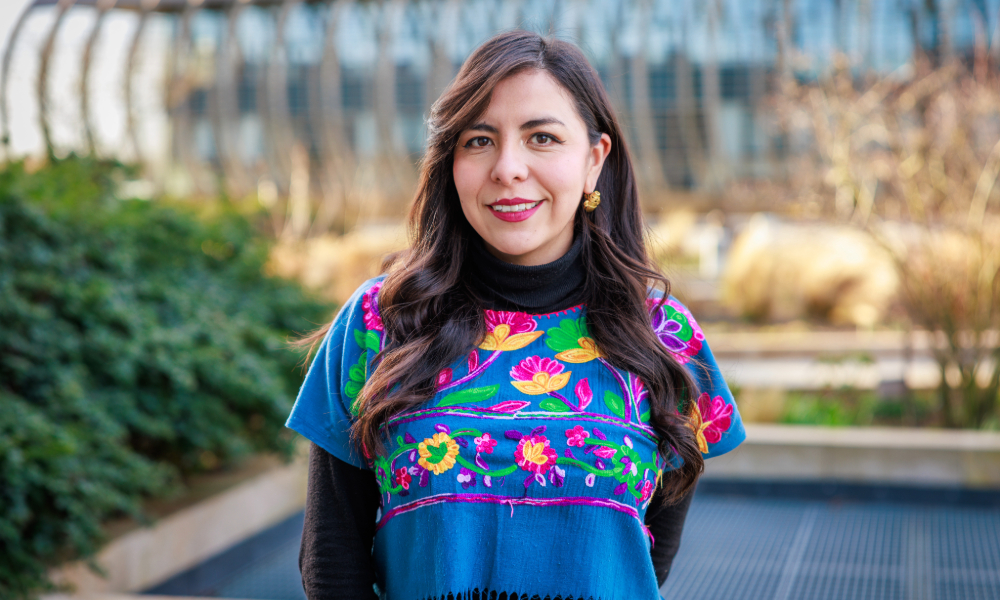
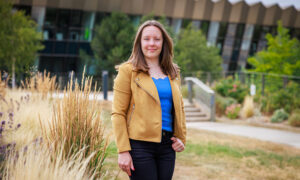
Bertha Rueda-Zarazua, Postdoctoral Fellow in the Cortes Ciriano Group at EMBL-EBI, is working to make science fairer through the SAMBAI project, supported by the Cancer Grand Challenges partnership funded by Cancer Research UK (award reference: CGCATF-2023 / 100026). Her research focuses on identifying factors that influence cancer outcomes in African-ancestry communities.
Beyond science, her world moves to the rhythm of salsa, painting, and short films.
Tell me about your background.
I hold a Bachelor’s degree in pharmaceutical biology. I specialised in pharmaceutical care because it allowed me to work closely with patients. I then pursued a Master’s degree in neurobiology, which introduced me to human genomics, especially mitochondrial genomics. During my PhD at the National Autonomous University of Mexico, I focused on cancer genomics and became especially interested in cancer inequities.
What brought you to EMBL-EBI?
Back in Mexico, I always wanted to study genetics, but my access to this field was limited. During my Master’s degree, I realised I wanted to do bioinformatics, and I completely fell in love with computational genomics.
When I finally had the chance to choose postgraduate studies, I decided to reconnect with genomics, and EMBL-EBI is the best place to grow in this field.
Tell me about your work at EMBL-EBI.
I’m part of the SAMBAI Project, which stands for Social, Ancestry, Molecular and Biological Analysis of Inequalities. This work is supported by the Cancer Grand Challenges partnership funded by Cancer Research UK. Our goal is to identify the factors that can cause or influence different cancer outcomes in underserved populations, particularly those of recent African ancestry.
SAMBAI is a unique opportunity to contribute to more equitable science. My role in the project is to analyse large-scale patient data to understand the biological and social factors shaping cancer outcomes – a discovery process I find very exciting.
Why is it important to consider population-specific differences in cancer outcomes?
I like to use a simple example: just as children and adults cannot receive identical treatments, we cannot assume that medical findings apply equally to all populations.
Previously, I studied adenocarcinoma in Mexican patients and compared our findings with European data. Historically, medicine has been built on European ancestry populations, and there hasn’t been enough research on what this means for other demographics.
What differences did you observe in Mexican patients?
We wanted to understand whether conclusions from European data could be generalised. We discovered that Mexican patients lacked a well-known tobacco-related mutational signature, which is commonly seen in European groups. None of our patients showed this signature, even those with long smoking histories.
This is just one example showing how essential it is to study population-specific genomic features to design better therapies, identify relevant molecular targets, and produce evidence-based public health policies.
We must explore underserved populations to create fairer medicine. I hope to contribute to reducing inequalities in access to health, knowledge, and science. I truly believe this will shape the future of medicine.
What personal experiences led you to develop this passion for biology and research?
During my PhD, teaching reignited my passion for biology, pushing me to fully understand the topics I was discussing. One question led to another, and soon I recognised in my students the same curiosity I remember from when I discovered science as a child.
It expanded my knowledge and triggered my love for research. It enabled me to question and contribute, in my own way, to modern science.
Did you always know you wanted to become a scientist?
Not at all. As a child, I wanted to be a fashion designer. Later, as a teenager, I dreamed of studying communication. In the end, a New Year’s Eve coin toss pushed me toward science.
Still, I hope to explore communication someday. Many people believe science isn’t for them, but science is part of everyday life. Sharing this idea is very important to me.
Besides science, what are your passions?
Dancing, especially salsa. For me, it’s pure joy and has always helped me connect with people. I like to call that my superpower.
I also love art in all forms. I enjoy painting and designing posters, presentations, and anything colourful. And I’m a big fan of cinema. As a teenager, I used to make short films with my friends.