ERC Proof of Concept grants awarded to EMBL scientists
Jamie Hackett and Robert Prevedel have been awarded ERC Proof of Concept grants to support the translation of innovative ideas arising from their ERC-funded projects into tangible therapeutic and imaging tools.
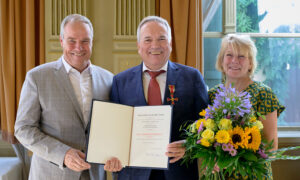
Jamie Hackett and Robert Prevedel, ERC Proof of Concept grant awardees, announced in January 2026. Credit: Photolab/EMBL
The European Research Council (ERC) Proof of Concept grants provide supplementary funding to existing ERC grant holders, enabling them to explore the commercial or societal potential of their breakthrough research. These grants support the translation of innovative ideas arising from ERC-funded projects into tangible innovations, products, or services.
Jamie Hackett, Group Leader at EMBL Rome, and Robert Prevedel, Group Leader at EMBL Heidelberg, have been awarded Proof of Concept grants to support projects focused on the development of a modular epigenome editing platform to reverse diseases and the creation of a novel microscope prototype to study embryonic development and disease progression, respectively.
Reversing diseases through epigenetic modifications
Many human diseases are caused by insufficient gene activity, which leads to the level of the corresponding proteins falling below the threshold required for health. Current therapeutic approaches, including gene replacement, CRISPR-based genome editing, or small molecule drugs, are poorly suited to restore gene dosage: they overshoot physiological ranges, introduce irreversible genetic modifications, or have side effects, leaving a clinical need unmet for many diseases.
With the EPIC-THERAPY project, the Hackett group aims to utilise a novel epigenome editing platform to achieve programmable and tunable upregulation of specific genes in vivo, with the goal to reverse disease. Epigenome editing leverages the cell’s own regulatory mechanism – histone modifications – to boost gene expression within physiological ranges, while minimising risks of toxicity or DNA mutations.
The modular design of the technology allows different molecules (called epigenetic effectors) to be combined and tested for their ability to programme histone modifications, and achieve the desired expression response at each target gene. By demonstrating accurate delivery and precise target upregulation in vivo, the project aims to establish a platform technology with curative potential across diseases.
Advanced microscopy to study mechanics in development and disease progression
Understanding the mechanical properties of biological systems is crucial for unravelling key processes in development, disease progression, and cellular function. However, current techniques used in the field to assess such properties are limited in various ways.
Brillouin microscopy offers a unique, non-contact, and label-free method to measure the elastic and viscous properties of biological materials with subcellular spatial resolution in 3D. However, this approach has traditionally been constrained by its weak scattering, resulting in slow acquisition speeds and potential photodamage, which hinder its use in living systems.
Building on the Prevedel group’s extensive expertise in Brillouin microscopy, the BRIGHT project aims to develop a next-generation Brillouin microscope to enable ultra-fast, high-resolution, and label-free imaging of mechanical properties in live biological samples.
The project will focus on developing, validating, and demonstrating a truly versatile Brillouin light-sheet microscope prototype, thereby paving the way for broader applications to enable new biological discoveries.
The BRIGHT technology has the potential to revolutionise the study of biomechanical dynamics in real time, from embryonic development to cancer progression, with unprecedented temporal and spatial resolution.