Two EMBL scientists awarded ERC Consolidator Grants
EMBL group leaders Isidro Cortes-Ciriano and Wojciech Galej received ERC Consolidator Grants for their work on how genome structure and gene regulation shape human disease.
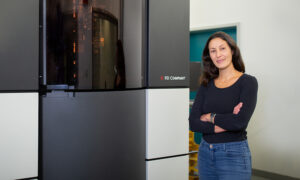
Picture of Cortes-Ciriano and Wojciech Galej, ERC consolidator grant awardees, announced in December 2025.
The European Research Council (ERC) has awarded Isidro Cortes-Ciriano, Group Leader at EMBL-EBI, and Wojciech Galej, Group Leader at EMBL Grenoble, prestigious ERC Consolidator Grants worth €2 million each to support research projects aimed at understanding how disruptions in genome structure and RNA processing lead to human disease.
Decoding how scrambled genomes help cancer survive
Cancer cells often contain extremely tangled chromosomes generated by complex genomic rearrangements, or CGRs, whereby large pieces of DNA are deleted, duplicated, or stitched together in abnormal ways. These changes are especially common in some of the most aggressive human cancers, where they are linked to drug resistance, rapid evolution, and poor patient outcomes. Yet, despite their importance, scientists still know little about how CGRs help tumours grow, spread, and evade the immune system.
The ERC-funded project BrokenChromosomes, led by Isidro Cortes-Ciriano at EMBL-EBI, aims to investigate this. Building on the team’s recent discovery that CGRs drive the evolution of osteosarcoma and the development of novel methods to analyse cancer genomes using long-read sequencing technologies, the researchers will look at how CGRs reshape a tumour’s biology and surrounding immune environment as cancer evolves. By combining state-of-the-art approaches, including spatial multi-omic profiling, single-cell technologies, and long-read genome sequencing, the researchers will map how these rearrangements influence cancer cell behaviour, fitness, and plasticity during tumour growth and metastasis.
“Thanks to the ERC’s support, we can now take a comprehensive look at how complex chromosome rearrangements shape tumour evolution and immune escape,” said Cortes-Ciriano. “Our goal is to uncover the mechanisms that allow these tumours to adapt, spread, and resist therapy. As part of this, we will also examine how T cells respond to mutations generated by CGRs and explore whether disruptions at centromeres fuel ongoing chromosome instability.
Ultimately, by deciphering how genetic and epigenetic factors maintain chromosome integrity, we hope to uncover vulnerabilities that could inform the design of novel therapeutic strategies for cancers driven by CGRs. Moreover, BrokenChromosomes might also help us gain fundamental insights into biological processes that extend far beyond cancer, including ageing and the effects of environmental exposure on the epigenome.”
Deciphering the editing process that makes our genes functional
Understanding how cells remove non-coding introns from precursors of messenger RNAs is essential for explaining how genes are accurately expressed, how different protein variants arise through alternative splicing, and how errors in RNA processing can lead to disease. This task, carried out by the spliceosome, is so intricate that even small mistakes can lead to serious diseases ranging from developmental disorders to cancers. Although recent structural studies have offered remarkable snapshots of this molecular machine in action, researchers still know surprisingly little about how splicing is fine-tuned inside living cells or how it coordinates with other cellular systems.
The SPRING project – SPlicing Regulation In context: Next-Generation mechanistic studies – aims to address this knowledge gap by investigating three closely related biological processes, using cutting-edge structural biology methodologies, including cryo-EM, in situ cryo-ET and computational AI-based modelling. This work, led by Wojciech Galej, will benefit from the state-of-the-art facilities at EMBL Grenoble. Building on previous work by the Galej Group on pre-mRNA splicing, the team will use an integrative structural biology approach to explore the mechanisms governing splicing regulation and quality control. They will examine the interplay between transcription and splicing, as well as how these regulatory phenomena are influenced by interactions with the local environment in the native cellular context.
“I feel truly honoured to receive this grant. Thanks to the ERC’s support, we will be able to pursue new and exciting research that pushes the boundaries of current knowledge in the splicing field,” said Galej. “Our goal is to uncover how splicing is carried out and regulated within the cellular context. Our new approaches to studying this problem have the potential to open new research avenues and ultimately benefit human health.”
Uncovering these missing pieces isn’t just about filling gaps in basic biology; it could open the door to new ways of diagnosing, preventing, and treating diseases that arise when essential biological processes go wrong.