TREC partner snapshot: European Marine Biological Resource Centre (EMBRC)
As a core partner of the TREC expedition, EMBRC provides access to a vast network of marine stations across Europe, allowing researchers to study coastal and marine ecosystems at scale
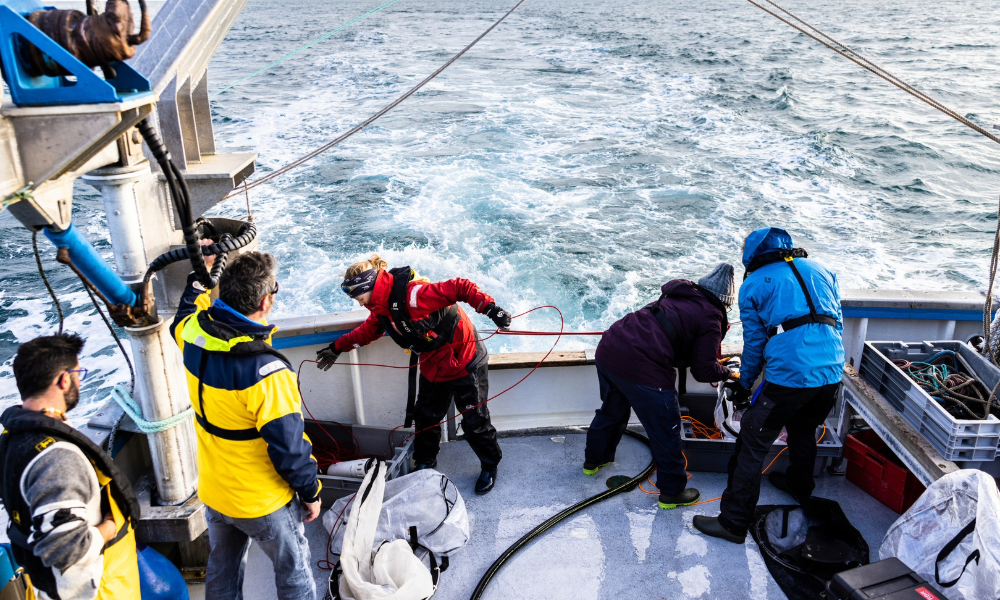
TREC team collecting samples at sea in Roscoff, France. Credit: Kinga Siring/EMBL
If you were a marine scientist in the early nineteenth century, you had no choice but to be resourceful. Lacking infrastructure, equipment, and consistent access to the sea, it was virtually impossible to do anything other than collect and preserve specimens. For Pierre Joseph Van Beneden, a Belgian marine zoologist, this was a bit of a predicament. Trying to disprove that parasites didn’t simply appear within their hosts, he needed to use fresh marine organisms.
With all other options proving insufficient, Van Beneden came up with an effective solution: a small, single-story research laboratory on his in-laws’ oyster farm in Ostend, Belgium. Purported to be the world’s first marine station, it served as a blueprint for the wave of facilities that would soon emerge across Europe.
While marine stations gave scientists a permanent, dedicated space, it wasn’t long before other challenges, such as competition and resource hoarding, emerged. When it was established in 2013, the European Marine Biological Resource Centre (EMBRC) made breaking down these barriers one of its founding principles.
EMBRC currently operates in more than 80 research institutes and marine stations across Europe, encouraging collaboration and knowledge-sharing among the marine scientific community.
The power of partnership
After collecting ~70,000 samples of water, soil, sediment, aerosols, and select species, EMBL finished the lion’s share of the field sampling from its Traversing European Coastlines project. However, none of that work – as well as work to come – would be possible without a wide variety of partners.
“TREC is pan-European. It is multidisciplinary. And it has been one of the most collaborative scientific projects aimed at studying coastal ecosystems across scales with a holistic approach at an unprecedented scale,” said Paola Bertucci, EMBL’s Head of Scientific Expeditions. “No institution can do this alone; project success relies on a shared vision, motivation, and extraordinary knowledge from TREC partners who share our commitment to excellence. Together, we ensure that TREC is carried out at the highest standards, creating an impact that resonates across Europe’s scientific landscape.”
Thus far, more than 90 institutions have joined the TREC mission, lending their expertise, while also reaping benefits from EMBL’s experts and unique technological tools. As scientists now pore through the massive amount of data they have in their midst, scrutinising materials with cutting-edge technology and tools, we present a series of short articles reflecting on the collaborative work the project cultivated.
So, it comes as no surprise that EMBRC became one of three core partners of EMBL’s Traversing European Coastlines (TREC) expedition, a first-of-its-kind, continent-wide project looking at how coastal ecosystems adapt to natural and human-made changes in their environment. Through its Europe-wide network of marine stations, EMBRC was uniquely poised to support such an ambitious project.
Along with providing site access, EMBRC also offers researchers a broad range of services and resources, including culture collections, research vessels, scientific dive teams for collecting marine samples, and an extensive suite of facilities for studying them on site.
Nicolas Pade, a marine scientist and executive director of EMBRC, saw how TREC could contribute to expanding what we know about Europe’s marine environment. We reached out to him for his thoughts on this ambitious project and the role his organisation played.
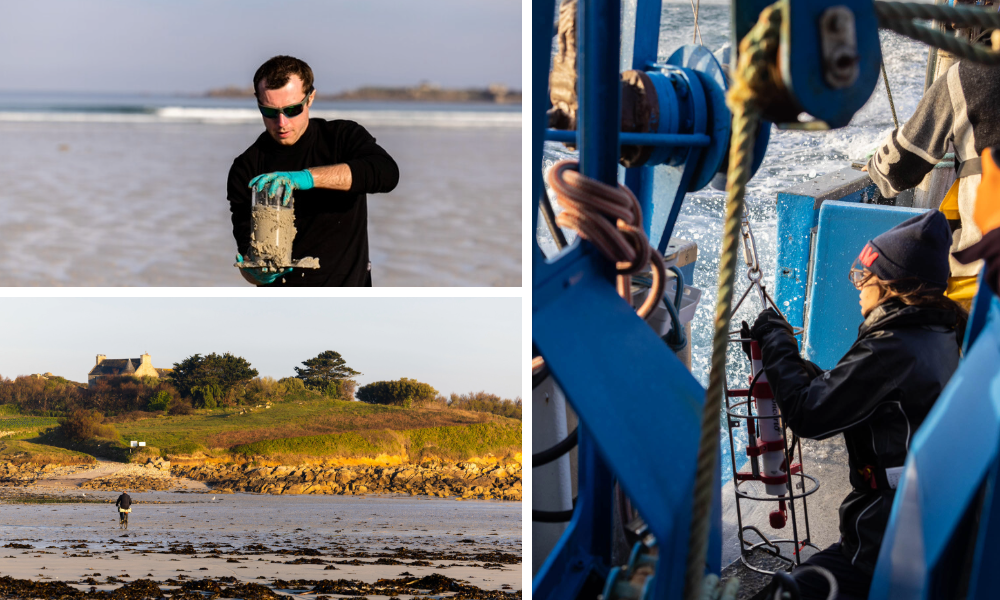
Launched in April 2023, the TREC expedition’s first stop was Roscoff, a charming French town on the northern coast of Brittany. Credit: Kinga Siring/EMBL
How was your organisation involved with TREC, and what benefits have you already seen?
We provided a lot of input to the expedition before it started, such as what our EMBL colleagues could expect from marine stations, how they work, what is feasible, and what is not. We were able to improve the sampling location choices, as we know the areas very well, and we have sampled them for decades. We could also provide the necessary infrastructure to support the mobile labs’ stays and provide guidance on which permits were needed and other pertinent rules. It’s been really interesting to work with non-marine biologists, and we’ve learned a lot.
TREC team sampling in Roscoff, France. Credit: Kinga Siring/EMBL
What outcomes are you most looking forward to from TREC?
I’m looking forward to seeing where we go next. I would love to continue to work with EMBL and TREC on longer-term aspects and on the experimental parts (hypothesis testing). To me, those are also scientifically the most interesting parts.
What was a memorable moment from your TREC experiences?
Though I wasn’t part of the field expedition, the best moment for me was seeing the TARA schooner for the first time coming up the river in Bilbao, and all the excitement from everyone there. I enjoyed meeting the field crew and learning more about what they were doing. They really put in a tremendous effort over the past two years and are the heart of the expedition. At the dinner in Bilbao, everyone had the chance to meet, exchange ideas, and share stories from the expedition.
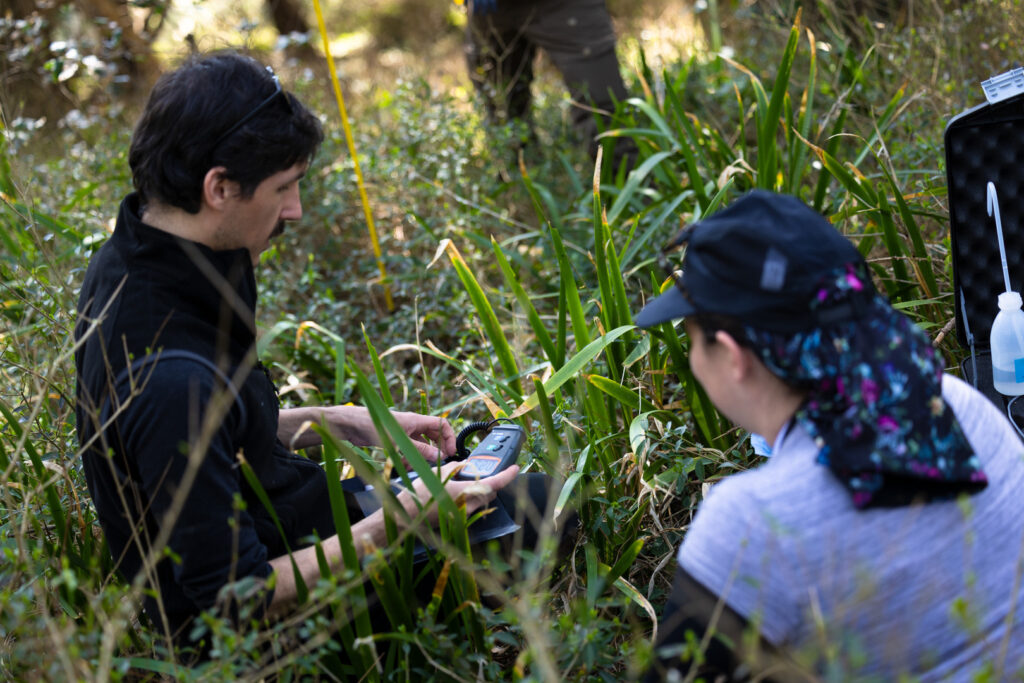
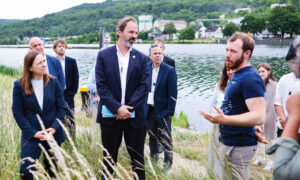
EMBL TREC expedition stop in Naples, 2024. Credit: Massimo Del Prete and Photolab/EMBL
What makes TREC special and/or important?
The project is important to us because it was the first time a big expedition used our research infrastructure, so it really tested our ability to support such a big endeavour. We cover a huge geographical area, but our staff levels are not high, so we had to mobilise a lot of people, create working groups, coordinate meetings, and then provide support 24/7 while the expedition was on site, often addressing last-minute issues. We are very proud of our contribution to EMBL’s science. I think it is too early to estimate the overall contribution to science and society. I do think it will open up new, exciting lines of inquiry, but it all depends on how deeply the data is explored and also how openly it is shared. The TREC expedition created some enormous datasets that will be challenging to analyse and exploit to the fullest extent. There is now a very exciting opportunity to mobilise a lot of scientists around the TREC data and develop long-lasting collaborations.
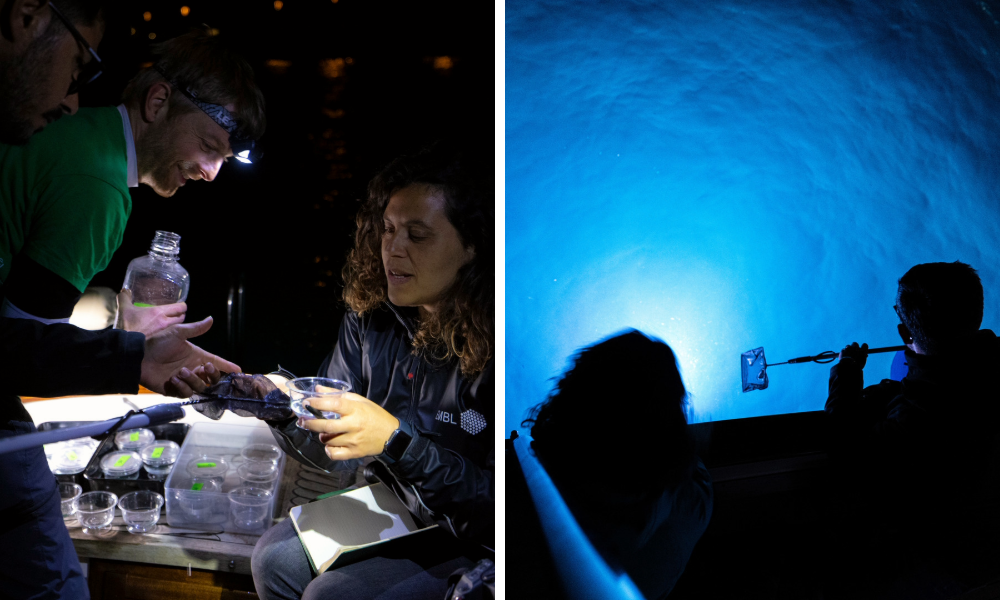
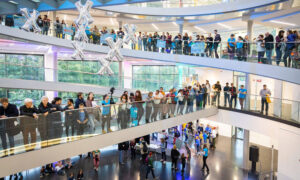
TREC coordinated a widespread outreach initiative to share the science behind the expedition. Pictured here is an EMBL/TREC public outreach activity in Lorient, France. Credit: Kinga Siring/EMBL
Any parting thoughts?
The TREC expedition opened the eyes of many people in EMBRC about the scale of research and the ambitious science we can support as a research infrastructure. We would love to have projects, such as ERC grantees, use our facilities all over Europe. We can provide access and facilities in most habitats and regional seas in Europe, so we could support any research team wanting to explore phenomena over large geographical ranges and diverse habitats and ecosystems.
13 EMBRC marine stations and institutions hosted TREC
A total of 13 EMBRC marine stations and institutions hosted the TREC team during the field-sampling phase of the expedition: Station Biologique de Roscoff (SBR) in France, Flanders Marine Institute (VLIZ) in Ostend, Belgium, Kristineberg Marine Station in Fiskebäckskil, Sweden, University of Bergen (UiB) in Norway, Plentzia Marine Station (PIE) in Spain, Interdisciplinary Centre of Marine and Environmental Research (CIIMAR) and Centre for Marine Sciences (CCMAR) in Porto and Faro, Portugal, Observatoire Océanologique de Banyuls-sur-mer (OOB) and Observatoire de Villefranche sur Mer (Sorbonne University) in France, Stazione Zoologica Anton Dohrn (SZN) in Naples and Calabria, Institute for Marine Biological Resources and Biotechnology, Lesina (CNR IRBIM), and the Hellenic Centre for Marine Research (HCMR) in Athens, Greece.