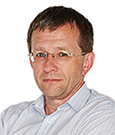
Vladimir Benes
EMBL Heidelberg
Germany
EMBO Practical Course
Core facilities are evolving from service providers into leadership hubs for good research practice: they train users, safeguard quality standards, establish workflows, and are accountable for measurable impact. This evolution has expanded the scope of core facility roles, creating new demands that have not been previously adequately addressed.
This course addresses these needs; empowering participating scientists and strengthening the research ecosystem. It is people-focused using flow cytometry as a practical context to develop worksystems that promote scientific excellence.
This course is designed for flow cytometry core facility staff, team leads, and aspiring managers who seek to strengthen their technical troubleshooting capability and their effectiveness as research partners.The objective is to improve the quality, consistency, and impact of flow cytometry core facilities by combining advanced technical expertise with operational insight and interpersonal competence.
Note: this course is specifically for staff working in a flow cytometry core facility. If you are working in a core facility but not within flow core then we would not recommend applying as much of the course will be targeting flow core related issues.
The programme is built around three integrated themes:
Participants gain hands-on tools for conflict resolution, negotiation, motivation, and feedback; learn to work effectively with diverse personalities and support team wellbeing; and practice translating technical issues into clear and constructive guidance.
This event has been granted the following EMBO sustainability badge:
EMBL Heidelberg
Germany
EMBL Heidelberg
Germany
University of Zurich
Switzerland

Waters
Germany

EMBL Heidelberg
Germany
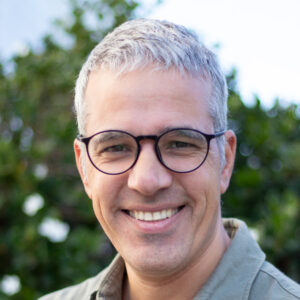
Technion – Israel Institute of Technology
Israel
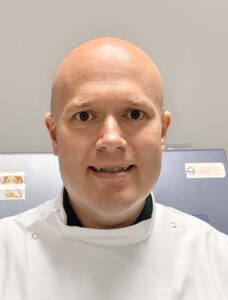
The University of Edinburgh
United Kingdom
Berlin Institute of Health at Charite Berlin
Germany
EMBL Rome
Italy
Max Planck Institute for Molecular Genetics
Germany
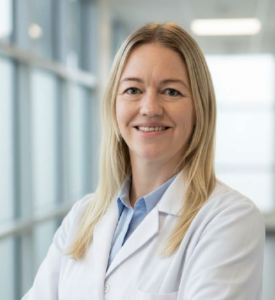
Malaghan Institute of Medical Research
New Zealand

EMBL Heidelberg
Germany

University of Oslo
Norway
Waters
Germanyter
University of Zurich
Switzerland
Leadership Sculture
Germany
Technion – Israel Institute of Technology
Israel
The University of Ediburgh
United Kingdom
EMBL Heidelberg
Germany
Scientific Training Officer
EMBL Heidelberg
Germany
Course and Conference Manager
EMBL Heidelberg
Germany
Are you on social media? Post using #EMBOInsideFlowCore and don’t forget to tag @EMBLEvents.
Time to be confirmed
| Time (Europe/Berlin) | Speaker | Location |
|---|---|---|
| 08:40 – 08:50 | Bus from hotel to EMBL ATC Entrance | ISG Hotel |
| 09:00 – 09:30 | Welcome and house notes and course overview Beáta Ramasz – EMBL Heidelberg, Germany | Flex Lab A & B |
| 09:30 – 10:15 | Ice breaker games | Flex Lab A & B |
| 10:15 – 10:45 | Coffee Break | Outside Training Lab area |
| 10:45 – 11:45 | Interactive session 1: Data quality, instrument performance tracking Christopher Hall – The University of Edinburgh, UK | Flex Lab A & B |
| 11:45 – 12:30 | Lecture 1: Performance assessment and goal setting: how are we doing and where do we go from here? Kylie Price – Malaghan Institute of Medical Research, New Zealand | Flex Lab A & B |
| 12:30 – 13:30 | Lunch | Canteen |
| 13:30 – 14:30 | Flash talks (3 mins / person) | Flex Lab A & B |
| 14:30 – 15:15 | Lecture 2: Data management Daniel Gimenes – EMBL Heidelberg, Germany | Flex Lab A & B |
| 15:15 – 15:45 | Coffee break | Outside Training Lab area |
| 15:45 – 17:15 | Interactive session 2: Troubleshooting instruments and samples Idun Rein – University of Oslo, Norway | Flex Lab A & B |
| 17:15 – 18:00 | Practical session 1 Writing SOPs Amir Grau – Technion – Israel Institute of Technology, Israel and Christopher Hall – The University of Edinburgh, UK supported by 2 additional trainers | Flex Lab A & B |
| 18:00 – 19:00 | Interactive session 3: Start over once and then again Alex Cabrera – EMBL Heidelberg, Germany | Flex Lab A & B |
| 19:00 – 20:00 | Dinner with Meet the Speakers | Canteen |
| 20:00 – 20:10 | Departure to ISG Hotel | EMBL ATC entrance |
| Time (Europe/Berlin) | Speaker | Location |
|---|---|---|
| 08:40 – 08:50 | Bus from hotel to EMBL ATC Entrance | ISG Hotel bus stop |
| 08:55 – 09:00 | Overview of the day Beáta Ramasz – EMBL Heidelberg, Germany | |
| 09:00 – 10:30 | Lecture 3 and demo (RCR) : Troubleshooting data: why does it look like THAT? Christopher Hall – The University of Edinburgh, UK | Flex Lab A & B |
| 10:30 – 11:00 | Coffee break and Group Photo | Outside Training Labs area |
| 11:00 – 12:15 | Interactive session 4: Core facility guidelines, how to set rules and how to enforce them Beáta Ramasz – EMBL Heidelberg, Germany | Flex Lab A & B |
| 12:15 – 13:15 | Lunch | Canteen |
| 13:15 – 14:15 | Interactive session 5 Can we do it all? Balancing service, projects, tech- and personal development Erin Tranfield – University of Zurich, Switzerland | Flex Lab A & B |
| 14:15 – 15:15 | Lecture 4: Cost calculation, budgets Desiree Kunkel – Berlin Institute of Health at Charite Berlin, Germany | Flex Lab A & B |
| 15:15 – 15:45 | Coffee break | Outside Training Labs area |
| 15:45 – 16:45 | Lecture 5: Core facility structure, career progression paths Kylie Price – Malaghan Institute of Medical Research, New Zealand | Flex Lab A & B |
| 16:45 – 18:00 | Practical session 2 What do YOU want? Self development, aligning personal goals with facility goals Amir Grau – Technion – Israel Institute of Technology, Israel supported by 3 additional trainers | Flex Lab A & B |
| 18:00 – 19:00 | Dinner in ATC Rooftop-Lounge | RTL |
| 19:00 – 19:45 | Discussion: Responsibilities of scientific core facilities Mark Dessing – Waters, Germany | RTL |
| 19:45 – 19:55 | Departure to Hotel | EMBL ATC entrance |
| Time (Europe/Berlin) | Speaker | Location |
|---|---|---|
| 08:40 – 08:50 | Bus from hotel to EMBL ATC Entrance/to BD | ISG Hotel bus stop |
| 08:55 – 09:00 | Overview of the day Beáta Ramasz – EMBL Heidelberg, Germany | Flex Lab A & B |
| 09:00 – 10:00 | Group A Lecture 6: Mental health literacy Beáta Ramasz – EMBL Heidelberg, Germany Group B Lecture 7: Risk assessment Gerald Pfister – EMBL Rome, Italy | Flex Lab A & B |
| 10:00 – 13:00 | Group B1 Practical session 3: Instrument and sample troubleshooting Mark Dessing – Waters, Germany Idun Rein – University of Oslo, Noway Alex Cabrera – EMBL Heidelberg, Germany Claudia Dumrese – University of Zurich, Switzerland Group B2 Practical session 3: Instrument and sample troubleshooting Tim Schenkel – Waters, Germany Amir Grau – Technion – Israel Institute of Technology, Israel Gerald Pfister – EMBL Rome, Italy Desiree Kunkel – Berlin Institute of Health at Charite Berlin, Germany (with flexible coffee break) Group A Practical 4: Negotiation CJ Fitzsimons – Leadership Sculpture, Germany supported by Erin Tranfield – University of Zurich, Switzerland Beáta Ramasz – EMBL Heidelberg, Germany Kylie Price – Malaghan Institute of Medical Research, New Zealand | Waters |
| 13:00 – 14:00 | Lunch | Canteen EMBL / Canteen Waters |
| 14:00 – 15:00 | Group A Lecture 8: Workplace diplomacy Vladimir Benes – EMBL Heidelberg, Germany Group B Lecture 9: New technologies, how to choose instruments for the facility Claudia Dumrese – University of Zurich, Switzerland | Flex Lab A & B |
| 15:00 – 18:00 | Group A Practical session 5: Conflict management CJ Fitzsimons – Leadership Sculpture, Germany supported by Erin Tranfield – University of Zurich, Switzerland Beáta Ramasz – EMBL Heidelberg, Germany Kylie Price – Malaghan Institute of Medical Research, New Zealand Group B1 Practical session 3: Instrument troubleshooting Mark Dessing – Waters, Germany Idun Rein – University of Oslo, Noway Alex Cabrera – EMBL Heidelberg, Germany Claudia Dumrese – University of Zurich, Switzerland Group B2 Practical session 3: Instrument troubleshooting Tim Schenkel – Waters, Germany Amir Grau – Technion – Israel Institute of Technology, Israel Gerald Pfister – EMBL Rome, Italy Desiree Kunkel – Berlin Institute of Health at Charite Berlin, Germany (with flexible coffee break) | Waters |
| 18:00 – 20:00 | Free evening |
| Time (Europe/Berlin) | Speaker | Location |
|---|---|---|
| 08:40 – 08:50 | Bus from hotel to EMBL ATC Entrance/to BD | ISG Hotel bus stop |
| 08:55 – 09:00 | Overview of the day Beáta Ramasz – EMBL Heidelberg, Germany | Flex Lab A & B |
| 09:00 – 10:00 | Group A Lecture 7: Risk assessment Gerald Pfister – EMBL Rome, Italy Group B Lecture 6: Mental health literacy Beáta Ramasz – EMBL Heidelberg, Germany | Flex Lab A & B |
| 10:00 – 13:00 | Group B Practical 4: Negotiation CJ Fitzsimons – Leadership Sculpture, Germany supported by Erin Tranfield – University of Zurich, Switzerland Beáta Ramasz – EMBL Heidelberg, Germany Kylie Price – Malaghan Institute of Medical Research, New Zealand Group A1 Practical 3: Instrument and sample troubleshooting Mark Dessing – Waters, Germany Christopher Hall – The University of Edinburgh, UK Gerald Pfister – EMBL Rome, Italy Melanie Piedavent-Salomon – Max Planck Institute for Molecular Genetics, Germany Group A2 Practical 3: Instrument and sample troubleshooting Tim Schenkel – Waters, Germany Idun Rein – University of Oslo, Norway Daniel Gimenes – EMBL Heidelberg, Germany plus one additional Trainer TBC (with flexible coffee break) | Waters |
| 13:00 – 14:00 | Lunch | Canteen EMBL / Canteen Waters |
| 14:00 – 15:00 | Group B Lecture 8: Workplace diplomacy Vladimir Benes – EMBL Heidelberg, Germany Group A Lecture 9: New technologies, how to choose instruments for the facility Claudia Dumrese – University of Zurich, Switzerland | Flex Lab A & B |
| 15:00 – 18:00 | Group B Practical 5: Conflict management CJ Fitzsimons – Leadership Sculpture, Germany supported by Erin Tranfield – University of Zurich, Switzerland Beáta Ramasz – EMBL Heidelberg, Germany Kylie Price – Malaghan Institute of Medical Research, New Zealand Group A1 Practical 3: Instrument troubleshooting Mark Dessing – Waters, Germany Christopher Hall – The University of Edinburgh, UK Gerald Pfister – EMBL Rome, Italy Melanie Piedavent-Salomon – Max Planck Institute for Molecular Genetics, Germany Group A2 Practical 3: Instrument troubleshooting Tim Schenkel – Waters, Germany Idun Rein – University of Oslo, Norway Daniel Gimenes – EMBL Heidelberg, Germany plus one additional trainer TBC (with flexible coffee break) | Waters |
| 18:00 – 18:30 | Bus downtown via ISG Hotel | EMBL ATC entrance |
| 18:30 – 22:30 | Dinner and bowling | Downtown Heidelberg |
| Time (Europe/Berlin) | Speaker | Location |
|---|---|---|
| 08:40 – 08:50 | Bus from hotel to EMBL ATC Entrance | ISG Hotel bus stop |
| 08:55 – 09:00 | Overview of the day Beáta Ramasz – EMBL Heidelberg, Germany | Flex Lab A & B |
| 09:00 – 10:30 | Interactive session 6: How to build a great team, working with different personalities Erin Tranfield – University of Zurich, Switzerland | Flex Lab A & B |
| 10:30 – 11:00 | Coffee break | Outside TL area |
| 11:00 – 12:00 | Lecture 10: How to set up a user training program Claudia Dumrese – University of Zurich, Switzerland | Flex Lab A & B |
| 12:00 – 13:00 | Lunch | Canteen |
| 13:00 – 14:00 | Lecture 11: How to create visibility for your facility? Internal and external Melanie Piedavent-Salomon – Max Planck Institute for Molecular Genetics, Germany | Flex Lab A & B |
| 14:00 – 15:00 | Wrap up/ feedback time | Flex Lab A & B |
| 15:00 | Departure to downtown | EMBL ATC entrance |
The course is limited to 16 participants. For selection purposes, please note that your application will not be considered without a letter of motivation.
Your registration for the event includes:
For this EMBO course, the fees include accommodation and transportation to and from the ISG Hotel to the venue
| Academia | €450 |
| PhD Student | €450 |
| Industry | €1000 |
The registration fee should be paid only after acceptance to the course. The results will be announced approximately 2-3 weeks after the application deadline.
If you are no longer able to take part in the course, please inform your course contact responsible for this event. Your registration and the submitted motivation letter will be deleted.
Please also check our Terms and Conditions for the cancellation policy.
After you have logged in and successfully registered, you will receive an email asking you to submit your motivation letter. Click on the link provided and enter your motivation letter in the text box provided. Alternatively you can submit your motivation letter by clicking on the link on the confirmation page directly after registering.
Instructions
Please note:
For detailed instructions, please watch our video on how to submit a course motivation letter.
Please note it is not possible to apply after the motivation letter deadline!
The selection results will be announced by email to all applicants. We aim to announce 3 weeks (21 days) after the motivation letter submission deadline but delays may occur.
For further information about registration and motivation letter submission please refer to the FAQ page.
Limited financial assistance is provided by the EMBL Advanced Training Centre Corporate Partnership Programme and EMBO in the form of travel grants, childcare grants, and accessibility grants.
Your place in the meeting is only confirmed by paying the registration fee, which is mandatory even when receiving a fee waiver.
The travel grant will cover the cost of travel (airfare, train, bus, taxi, and visa) and/or registration fees and is provided up to specified caps which are normally as follows:
The organisers may reduce the grant cap to accommodate more participants. Recipients will be notified of their travel cap amount when they are informed of the outcome of their application. Receipts must be provided via email with your signature for all costs incurred within two months of completion of travel.
There is the possibility to apply for a childcare grant to offset child care costs incurred by participants, speakers, trainers, and organisers when attending a course. Eligible costs include (but are not limited to) fees for a babysitter, child-care facility, or travel costs for a caregiver. Please note that priority will be given to early-stage researchers. There is a limited amount of funding available for the childcare grants and funds will be distributed amongst eligible applicants.
Applies to selected courses only. Availability will be indicated during the abstract or motivation letter submission process.
This grant covers costs related to your attendance to the course (registration, travel, and accommodation costs). The grant is restricted to PhD students and postdocs who conduct basic biomedical research.
Whether you are eligible to apply for a travel grant, depends on when you received your university entrance qualification (e.g. Abitur, A-Levels, High School Diploma, Final State Examination):
For EMBO Practical Course participants with accessibility needs, there is the possibility to apply for an accessibility grant to offset costs incurred by participants or speakers when participating at a course. Eligible costs include costs incurred for equipment or adaptations to the course environment, or travel costs for an event companion to assist the participant or speaker during the course where necessary. While we do our best to accommodate needs, please note that extensive changes to the course environment might not be possible. Priority will be given to early-stage researchers.
A maximum amount of €500 can be awarded per participant applying for an EMBO accessibility grant. In order to apply for this grant for EMBO Practical Courses, you must be registered by the application deadline.
You may apply for financial assistance when submitting your motivation letter. In the application system, you will be asked which type of grant you want to apply for.
Applications for financial support will not influence the outcome of the selection results.
Grant allocations are announced by email to all applicants after the selection results.
Selection for financial assistance is based on scientific merit, your current work or study location, the reasons for needing financial support, and the impact this event will have on your career.
Please note that for childcare grants, priority will be given to early-stage researchers.
Check out this list of external funding opportunities.
For further information about financial assistance please refer to the FAQ page.
We can send you a registration confirmation to support your visa procedure (not an official invitation letter). Please contact the Conference Officer responsible for your event. Read our FAQ for more information.
If you are travelling to Heidelberg via aeroplane, train, car, or long-distance bus, you can find useful information on our travel information page.
Accommodation in twin rooms, including breakfast is also part of the registration fee. Accommodation will be booked for the selected participants at the ISG Hotel for the default dates of Sunday 11 April to Friday 16 April (5 nights).
In case you would like to have a single room, please contact us so we can arrange this with the hotel – note that you will be required to pay a surcharge per night (availability of single rooms may be limited). This should be paid by you directly to the ISG Hotel during your stay.
We recommend that all course participants stay at the ISG Hotel for the course.
Shuttle buses will go from the ISG Hotel to EMBL and back, mornings and evenings. A bus schedule and location of the bus stops will be made available prior to the meeting.
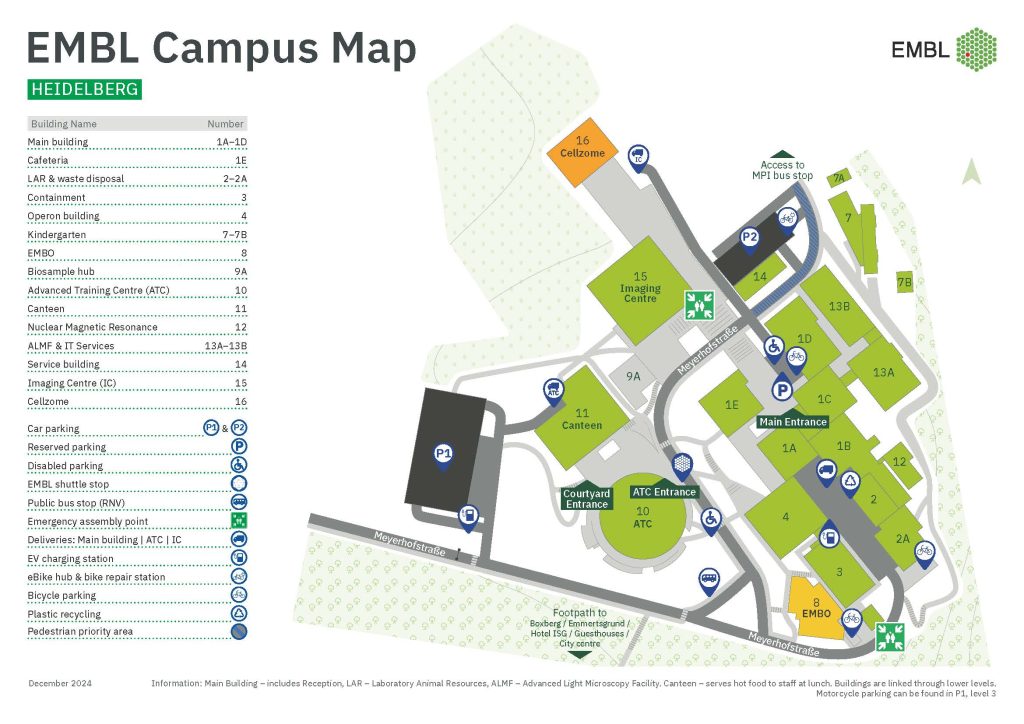
In addition to the shuttle busses, there is also the public bus 28 that serves the EMBL campus and taxis can be easily booked at any time. For more information, please refer to the local transportation (RNV) website.
You may also walk from the ISG Hotel to EMBL (takes up to 30 minutes)
Map to walk from ISG Hotel to EMBL
Address: EMBL Heidelberg, Meyerhofstraße 1, 69117 Heidelberg, Germany
For more information about accommodation and travel, please refer to the FAQ page.
Here you will find useful information for when you are onsite at the event.
All meals and coffee breaks are included in the registration fee. Our catering staff will prepare a variety of vegetarian meals, meat and fish dishes, soups, pasta, fresh fruit and vegetables, as well as a variety of desserts.
Please wear your badge at all times when serving yourself.
No food or drinks are allowed in the computer training lab or wet labs.
Wi-Fi is available on campus using the EMBL-Events network and the event specific password, which will be provided on site. The eduroam network (secure, worldwide roaming access service developed for the international research and education community) is also available.
During the conference, an EMBL Photographer may be taking photos. If you would not like to appear in these, please inform the photographer or a member of the Course and Conference Office.
There are lockers available next to the stairs leading down into the Auditorium. You will find some of those equipped with sockets to charge your smartphone/tablet etc.
In most places the electricity is 220 volts AC (50 cycles). An adaptor and a plug that fits the German socket may be needed for your appliances/laptop (i.e. American, Japanese, etc.). A USB charging station for electronic devices is available at the registration desk.
We can help to print your boarding pass/train ticket. Please send it to events@embl.de and collect your print-outs at the registration desk.
There are lockers available on-site to store your luggage, which require a 2 EURO coin to operate. There is another luggage room on level E0, which is free to use but remains unlocked during the course.
‘’Lost and Found’’ items are kept at the registration desk until the end of the course.
There is a nursing room available in the ATC Rooftop Lounge on level A29.
There is a room for prayer, yoga, and meditation, located on level E0 behind the Auditorium. Please be respectful of others using the room.
Please take a moment to read our health and safety policy.
If first aid is required
In case of fire
Beyond first aid
The Heidelberg University Hospital or ‘Universitätsklinikum‘ has a 24 hour accident and emergency facility and is at ‘Im Neuenheimer Feld 672’. It is a 8km or a 20 minute taxi ride away from EMBL. In a medical emergency, the ambulance service generally transports patients to this hospital.
Please remember to bring your own medication, if needed, to the conference. Note that the next pharmacy is a 4-minute drive from the EMBL, but for many medications you will be required to see a doctor to get a prescription.
Ensure in advance that your medical insurance will cover you during your visit in the event that you do need to see a doctor while in Heidelberg.
The EMBL course and conference office team are able to advise you on where to turn for emergency or non-emergency medical treatment in Heidelberg and can assist you in making appointments and / or arranging transport to get to the pharmacy or a doctor of your choice if necessary. Please note, we are not however permitted to personally accompany you off-campus.
A variety of activities in Heidelberg can be found on the website of Heidelberg Marketing.
(delete if no technical requirements for this course!)
Below you will find the software and technical requirements for this course. You will need admin rights to be able to install the software on your computer and we recommend you try this before the course. If you do not have admin rights, please contact your technical support team in advance to make sure the software can be installed.
Add a descritpion about your software here and any other important info
The EMBL eCampus learning platform will be used to collaborate, communicate and network with all of the course participants. All participants will receive information on how to join shortly before the course. We recommend using Chrome, Safari or Mozilla Firefox browsers for eCampus.
Zoom will be used for the live talks and Q&A sessions. More information will be provided closer to the start of the course.
While using the software during the course, please make sure you have nothing else using your bandwidth. We recommend using a wired connection.
DELETE THIS TAB IF COURSE IS NOT HYBRID!!
Additional information can be found in our Code of Conduct.
Questions during and after the talks can be asked in the live streaming platform. If time runs out or you think of a question later, you can use the EMBL eCampus forum or send a direct message to the speaker/trainer.
The programme is planned based on the Europe/Berlin time zone, unless otherwise stated. As many virtual participants are attending from around the world, we do our best to accommodate as many time zones as possible when creating the programme. Please take your time zone into consideration when planning your attendance.
Please find additional information including FAQs and terms and conditions on our Information for Participants page.
Sponsorship opportunities
We offer a variety of event sponsoring possibilities, with the flexibility to select a set sponsorship package or combine individual sponsorship options to suit your event budget. Discounts are available for companies sponsoring multiple events at EMBL Heidelberg. View other conferences, or contact sponsorship@embl.org. for further information.
If you are interested in becoming a media partner of this event, please visit our media partnerships webpage.
EMBL wishes to warn sponsors of EMBL conferences and courses of fraudulent schemes purporting to offer sponsorship opportunities on behalf of EMBL or affiliated with EMBL officials. One current scam campaign of which we are aware is conducted using the name ‘Judy Eastman’ (judy@gopcontact.a2hosted.com) and entails approaches to sponsors offering sponsorship opportunities on EMBL’s behalf. Please be kindly advised that all relevant communication regarding sponsorship of EMBL conferences, symposia and courses is handled by EMBL directly and is sent from an official EMBL account. EMBL does not work with any external providers on sponsorship acquisition.
Please also note that:
Suspicious communications purportedly from, for or on behalf of EMBL should be reported to EMBL at the following email address sponsoring@embl.de.
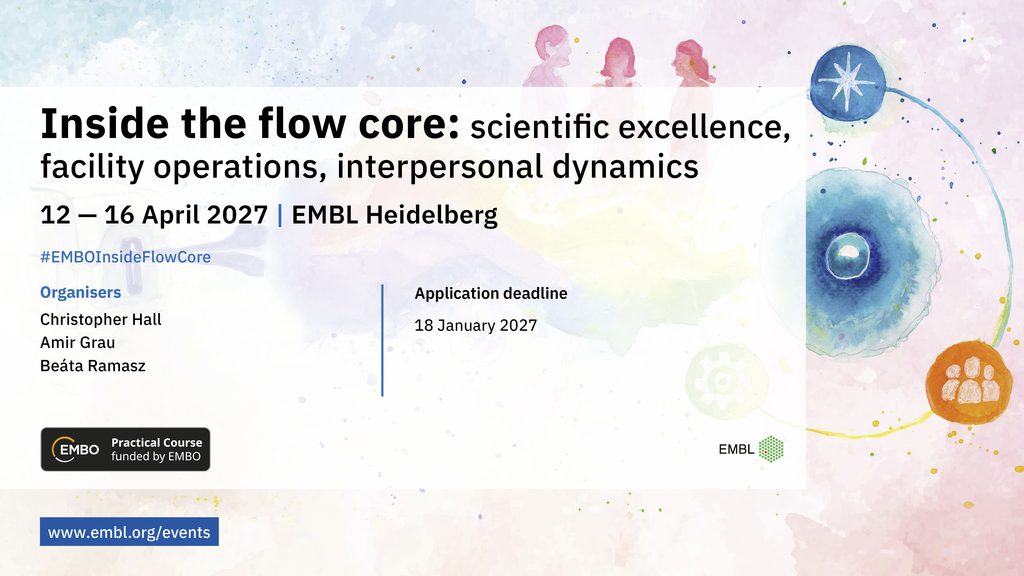
Want to let others know you’re attending this event? Take a look at our shareable media and feel free to use them in your social media channels or presentations.

Date: 12 - 16 Apr 2027
Location: EMBL Heidelberg
Venue: EMBL Advanced Training Centre
Deadline(s):
Application: 18 Jan 2027
Organisers:
Contact: Nathalie Sneider
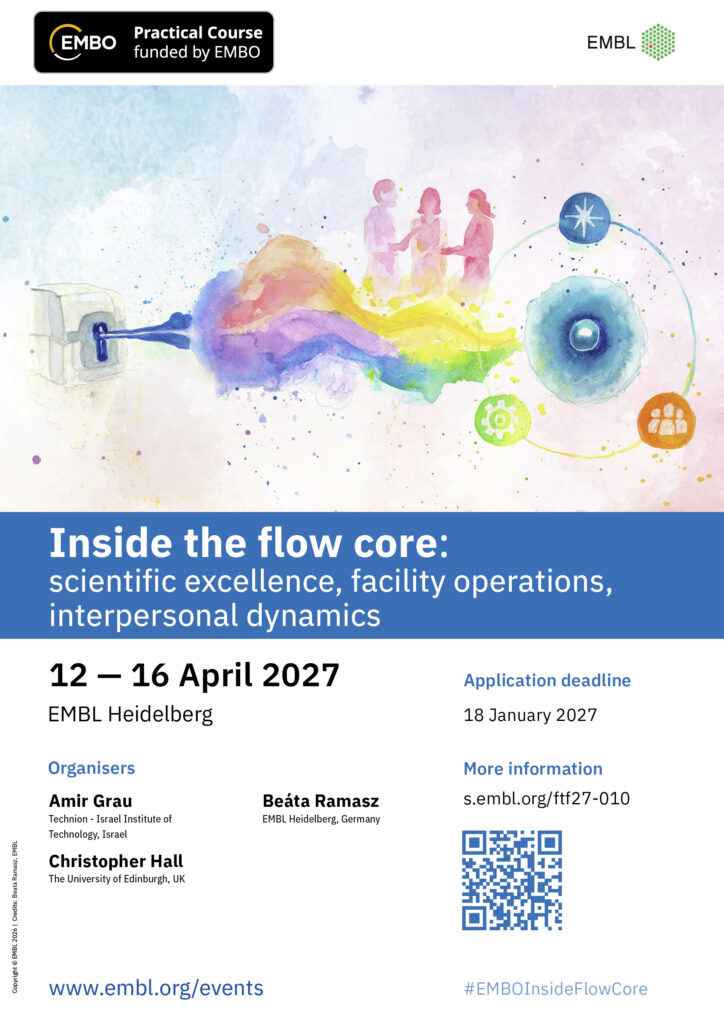
Download event poster
empty