Four decades of discovery at EMBL
2026 Lennart Philipson Award recipient Stephen Cusack reflects on his 46 years at EMBL Grenoble and how his work in and out of the laboratory has shaped structural biology
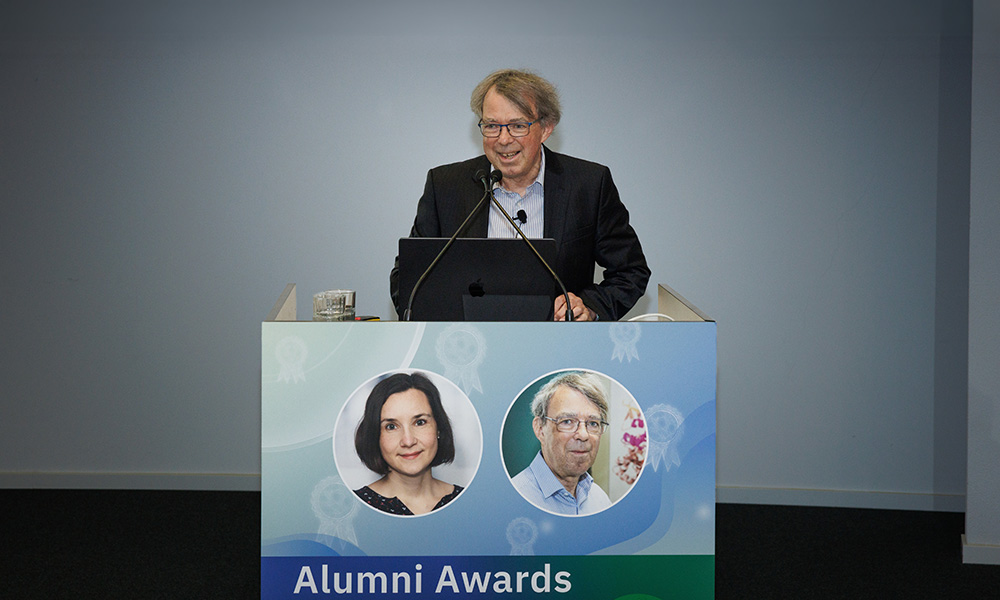
Some scientists find their calling later in their lives; for Stephen Cusack, it could be said that ‘science was in his genes’ from the beginning.
Although he initially pursued a research career as a theoretical physicist, his fascination with biology was deeply rooted in his childhood. Whether it was spending time birdwatching with his family or listening to his mother’s enthusiasm for biology, Cusack’s curiosity for the living world seemed almost second nature. It was this curiosity that eventually led him to switch careers, beginning a postdoctoral fellowship at EMBL Grenoble in 1977.
From there, Stephen Cusack became a pillar of EMBL, achieving major breakthroughs in structural biology with his team while also serving as Head of the Grenoble Site from 1989 to 2022. His extensive research, ranging from studies on aminoacyl-tRNA synthetases, the influenza virus RNA polymerase to the innate immune receptor retinoic acid-inducible gene (RIG-I), demonstrated how structural biology explains fundamental processes of genetic fidelity, viral replication, and host defence.
For his immense body of work, which has also contributed significantly to structure-guided drug development against major human pathogens, Cusack received the 2026 Lennart Philipson Award. His research on bacterial tRNA synthetases underpinned the development of improved antibacterial agents, contributing to an FDA-approved drug and additional compounds in clinical trials. His structural studies of the influenza virus cap-binding and endonuclease domains identified the first ligands targeting these proteins, work that ultimately supported the development of baloxavir marboxil (Xofluza), the first new anti-influenza treatment in decades.
We recently caught up with him about his over four decades at EMBL Grenoble, his view on the future of structural biology in the age of AlphaFold, and what advice he would give to the next generation of scientists.
What initially drew you to science, and how did your transition from physics to biology shape the way you approach research?
My father was a physics professor and my mother a biology teacher, so science was the natural starting point for my brothers and me, although I was the only one who stuck to a research career. After a PhD in theoretical solid-state physics at Imperial College London, UK, I chose to switch to molecular biology, as explaining how life works seemed to me a more interesting challenge!
I joined EMBL Grenoble as a postdoc in 1977 and never looked back. With my physics background, I found little trouble in learning biophysical techniques, such as Brillouin scattering – my first project – and small-angle neutron scattering. But there was a lot of biology to learn! Early collaborations in the small-angle scattering field led to my lifelong interest in viruses. In 1985, I learnt X-ray crystallography during a sabbatical in the Wiley-Harrison lab at Harvard, working on crystals of influenza virus haemagglutinin, the surface glycoprotein that binds to cellular receptors. To become able to determine and admire atomic structures of complex proteins was a key turning point in my career.
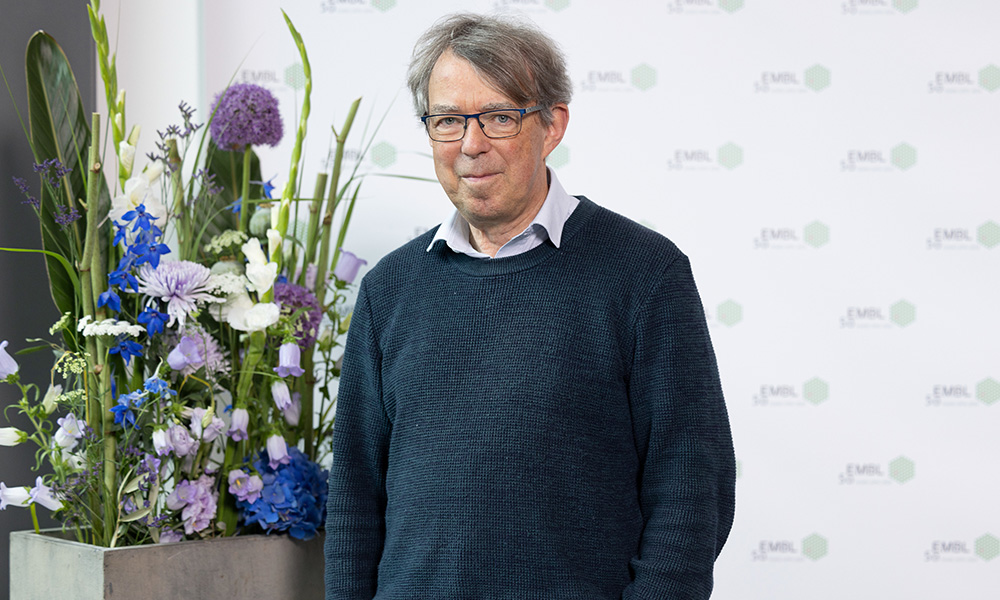
Structural biology has undergone enormous changes during your career. With advances such as AlphaFold, how do you see the relationship between computational prediction and experimental validation evolving in the years ahead?
X-ray crystallography used to be the most powerful method of experimental structure determination, but it has now been matched by electron cryo-microscopy (cryo-EM). On top of that, we now have a very powerful structure prediction method in AlphaFold, a Nobel-Prize-winning AI tool that lets us predict a protein’s structure, in most cases, with precision. Structural biologists have embraced AlphaFold as a generator of hypotheses, ideas that then need to be developed further and validated experimentally.
For instance, in one of my latest papers, we used AlphaFold extensively to predict how adapter proteins interact with the nuclear cap-binding complex. We then verified these predicted complexes using cryo-EM structure determination, along with biochemical, biophysical, and cell-based studies. This allowed great progress in a project that had seemed stalled up until then. However, on another project, involving newly discovered, evolutionarily diverged influenza-like viruses, AlphaFold was useless, failing completely to predict the correct structures. I think this dual relationship will continue well into the future, unless structure prediction methods move beyond the plateau they currently seem to be on and overcome their present limitations.
Your work has revealed fundamental mechanisms of viral replication and host–virus interactions. Which discoveries have had the greatest impact on the field, and what questions remain unanswered?
Two projects stand out for me. The first is on the innate immune receptor retinoic acid-inducible gene (RIG-I), which acts as a warning sensor in our cells. It recognises a particular RNA structure unique to many RNA viruses, resulting in interferon signalling and triggering the body’s antiviral defences. We were the first to propose a structure-based mechanism for how the binding of viral RNA to RIG-I induces a conformational change that enables signalling. This discovery has had an ongoing, significant impact.
The second project is our extensive work on the influenza virus RNA-dependent RNA polymerase. In 2014, we published the first structures of the complete polymerase, the first from this class of RNA viruses. Ever since, we have led the field in understanding how this complex, multifunctional molecular machine works to transcribe into viral messenger RNA or replicate the viral RNA genome, and how it can be targeted for anti-viral drug development. This is a good example of a bigger point: obtaining the structure of something, whether solved experimentally or predicted by AlphaFold, is only the beginning of a complex biological story. While many aspects of influenza polymerase function have now been elucidated, there are still frontiers to explore. For instance, how it teams up with a host protein called ANP32 to copy and package the virus’s genetic material, and how newly packaged genomes are exported from the nucleus of the infected cell.
Beyond your own research, you played a major role in developing European structural biology infrastructure, including initiatives such as INSTRUCT-ERIC. Why is this kind of collaborative infrastructure so important for scientific progress?
Yes, I was involved in facilitating the development of European structural biology instrumentation and infrastructure, as well as user access mechanisms, from the mid-1990s onwards. This was in line with one of EMBL’s core missions: to provide scientific services to member states and beyond. Frontier research depends on advances in methods and technologies, so it was important to roll out access to advanced EMBL-developed services to the broader community, particularly member states with more limited resources. We did this in collaboration with like-minded groups around Europe, led by Dave Stuart from Oxford, unlocking considerable EU funding, and with each such project including technology development, networking, training, and user access components.
EMBL Grenoble was particularly strong in instrumentation for synchrotron crystallography (see the work of last year’s LP Award laureate, Florent Cipriani), as well as protein expression technologies. INSTRUCT-ERIC (the European Infrastructure for Integrated Structural Biology) was meant to be the pinnacle of this effort, though a lack of funding has perhaps limited its impact. That said, if you need access to synchrotrons, high-end cryo-EM and cryo-ET, or other specialised technologies — such as nanobody production — that you don’t have yourself because of the expense, or if you require advanced training, INSTRUCT-ERIC is the way to go.
You led EMBL Grenoble for more than three decades. What are you most proud of from your time as Head of Site, and what did you learn about building successful scientific communities?
I am most proud of defining a long-term role for EMBL Grenoble that kept it firmly on the European structural biology map during my time there. There were three pillars to this: a strong research programme, focused mainly on protein–nucleic acid complexes and infection structural biology, a unique combination of advanced instrumentation development and ESRF-oriented service activities, and a key role in continent-wide initiatives to integrate European structural biology.
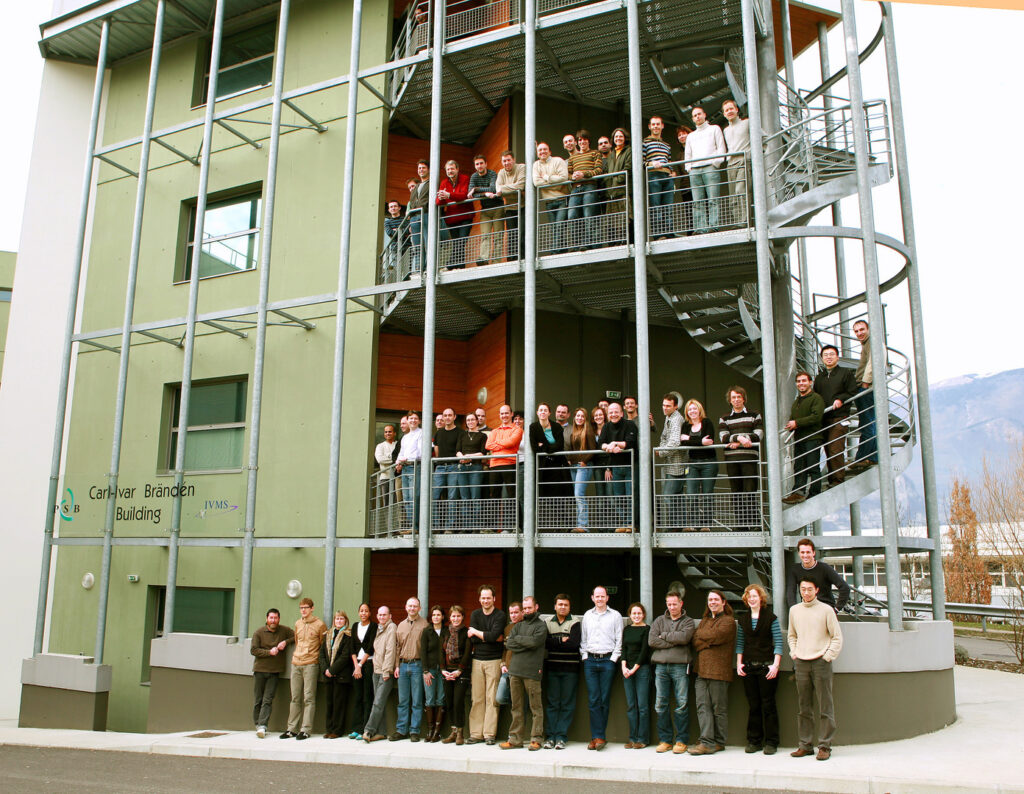
A particularly successful community that we built was the Partnership for Structural Biology. Starting in 2002, it provided a solid framework for integrating the structural biology activities of the European Photon and Neutron (EPN) Science Campus International Organisations: EMBL, the European Synchrotron Radiation Facility (ESRF), the Institut Laue-Langevin (ILL), as well as the French Institut de Biologie Structurale (IBS), and, to some extent, Grenoble University. Rather than acting competitively, the partners co-planned investments and allowed mutual access to each other’s technical platforms, and a large, interactive research community was created. For such an action to be successful, it requires positive momentum based on mutually perceived benefits and respect for each organisation’s particularities.
What role has EMBL played in your scientific and professional development, and how has it shaped your perspective on innovation and collaboration?
My whole professional career was spent at EMBL, so I am pretty much a pure product of the EMBL philosophy. It has been a real privilege to have been able to benefit from the rich resources and opportunities of EMBL and its unique international perspective. Regarding innovation, the establishment of EMBLEM was an important turning point for EMBL, since I remember a time when certain people thought that translational research was ‘impure’ and a distraction from fundamental discoveries. In my experience, translational research can enrich your basic research, not least by providing additional funding, and can also be a lot of fun. I am very thankful to EMBLEM for all the support they have given me over the years, without which my forays into translational research would never have happened.
Looking back on your career, what advice would you offer to young scientists who want to pursue research with lasting scientific or societal impact?
I would say: choose subjects that really interest you; be ready to learn and use new techniques; be ambitious, rigorous and perseverant; communicate and exchange ideas with others; stay aware of developing trends, but don’t become obsessed about them; and don’t hide away in your lab!