Sagar Bhogaraju receives prestigious grant to study ubiquitin signalling in health and disease
The €2.3 million Impulscience® grant will enable the EMBL Grenoble team to advance research on ubiquitin signalling, cancer mechanisms, and therapeutic targets.
Picture of Sagar Bhogaraju, 2025 laureate of the Bettencourt Schueller Impulscience® award.
Sagar Bhogaraju, a group leader at EMBL Grenoble, has been awarded the Impulscience® grant by the Fondation Bettencourt Schueller for his work on ubiquitin signalling in disease and physiology. This prize comes with €2.3M of grant money, which will support Bhogaraju and his team as they investigate novel cell signalling mechanisms involved in diseases such as cancer.
The Bhogaraju Group studies ubiquitin signalling mediated by a specific class of human proteins known as Melanoma antigens (MAGEs). Most MAGE genes are only expressed in the testis in healthy individuals but are aberrantly overexpressed in different cancers, making them a strong indicator of diseased states. Scientists use structural biology, cell biology, and proteomics-based methods to understand how MAGEs mediate their cancer-promoting signalling. Surprisingly, some MAGE proteins also participate in neuronal signalling and play important roles in normal animal behaviour. All MAGE proteins interact with a class of enzymes known as ubiquitin ligases to form MAGE-RING ligases.
“It is a great honour to receive this award. I thank the Fondation Bettencourt Schueller for this amazing support to our research. This will strengthen our team and will enable us to tackle this understudied family of human ubiquitin ligases, which have amazing therapeutic potential,” said Bhogaraju. “But in order to leverage their potential, we first have to understand what precisely is their role in human diseases.”
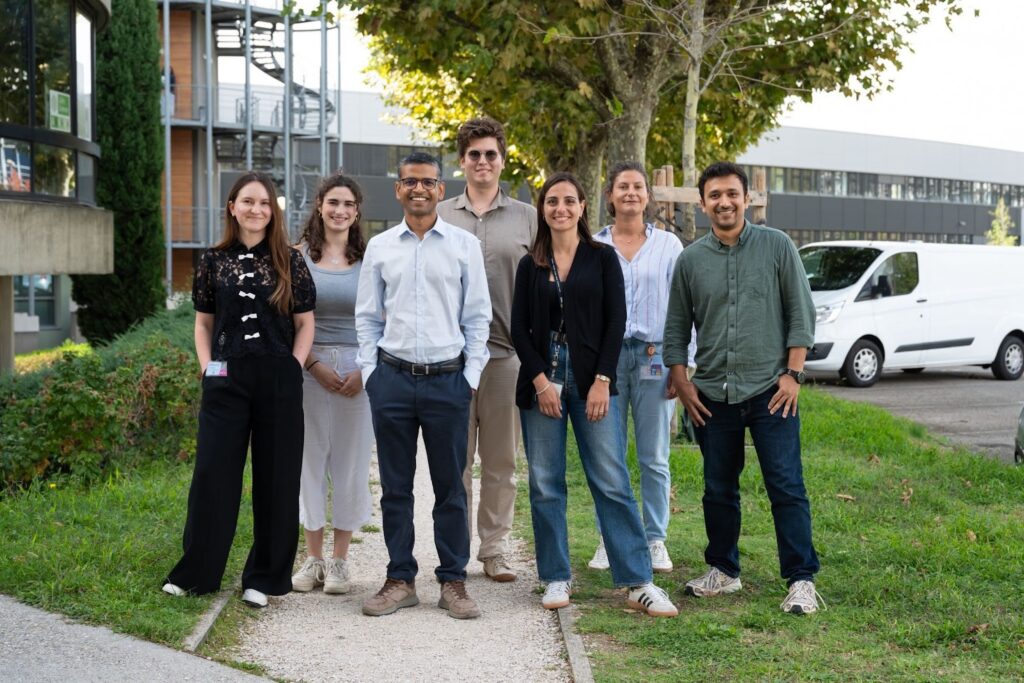
Group photo of the Bhogaraju research group, from the left to the right: Anna-Mariya Anastasova, Hannah Murillo, Sagar Bhogaraju, Lucas Wilson, Teresa Carusone, Sarah Gharb and Vinay Dayaratna. Credit: Alexandre Darmon/ Art in Research for the Fondation Bettencourt Schueller
For this reason, the seven researchers in the 2025 Impulscience® cohort embody the momentum of innovation tackling today’s major challenges. Their interdisciplinary work will deepen knowledge of women’s health, cancer, and brain function through evolutionary biology.