EMBL participates in two new European Commission-funded widening research initiatives
EMBL teams up with leading Latvian and Portuguese institutes to enhance wastewater monitoring and genomic medicine
The European Commission has helped make ‘excellence’ the middle name for two new collaborative projects in which EMBL will play a key role.
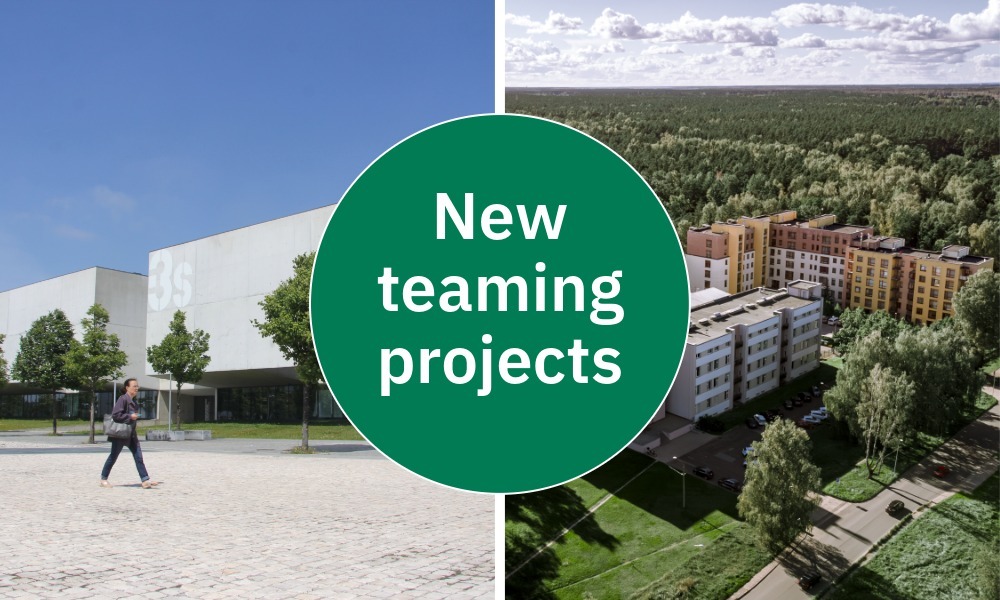
Building on its strong track record in Horizon Europe Widening actions, EMBL will continue to strengthen the institutional and scientific capacity of the European research ecosystem in two new collaborative projects in Latvia and Portugal:
- In Latvia, EMBL is working with the Latvian Biomedical Research and Study Centre (BMC, with which it has signed an MoU); Riga Technical University (RTU); the Institute of Food Safety, Animal Health, and Environment BIOR; and the University of Dundee to establish IntegroHEALTH – a Centre of Excellence in Integrative One Health Ecosystem.
- In Portugal, EMBL is participating in a collaboration led by i3S, which also includes other Portuguese partners, such as Ipatimup Diagnósticos and CGPP‑IBMC, and will create the country’s first Centre of Excellence in Genomic Medicine.
“These two new Teaming projects demonstrate the power of strategic partnerships to build excellence and strengthen research capacity in our member states,” said Plamena Markova, EMBL’s Chief of International Relations. “At EMBL, we see our role not only as a leading research institution, but also as a partner in building excellence. We are proud to support our partners in Latvia and Portugal as they establish centres of excellence that will strengthen their research ecosystems and deliver meaningful benefits for health and society across Europe.”
From wastewater to public health: a unique monitoring platform to emerge in Latvia
What can a country learn from what ends up in its sewers? Quite a lot, as it turns out.
The Latvian initiative will establish an integrated environmental and human health monitoring and research platform that enables systematic environmental monitoring and provides insights into how various environmental factors affect human health. A key component of the project is linking environmental data with observations from human populations, including cohort studies and clinical research, to gain a more comprehensive understanding of how environmental factors influence disease risks, health status, and quality of life.
Latvia already has a solid foundation for developing such an approach, based on previous efforts on SARS-CoV-2 monitoring in wastewater, involving several national institutions, including RTU and BIOR. This collaboration has demonstrated that by combining laboratory analysis, data modelling, and interinstitutional coordination, one can create an effective early warning system. Within the project, Latvia’s experience will be significantly expanded by developing a unified, long-term platform that goes beyond wastewater monitoring to include broader environmental factor analysis, its linkage with human health data, and real-time digital system representation. EMBL will serve as an advanced partner and support the project not only scientifically, but also operationally to ensure a successful implementation and realisation of the Centre of Excellence in Integrative One Health.
For Latvia, this Centre of Excellence represents an opportunity to become one of the first countries in Europe to implement such a comprehensive approach to integrating environmental and health data over the next six years. This system will support not only public health monitoring and safety but also evidence-based decision-making, prevention, and the development of new research directions.
With the European Union providing EUR 15 million in funding, Latvia must provide an equivalent level of funding. The national co-financing will be covered from the European Union Structural Funds allocated to Latvia for science, with part of these resources strategically directed towards the development of new research and monitoring infrastructure.
i3S to create Portugal’s first Centre of Excellence in genomic medicine
The new Centre of Excellence in Genomic Medicine planned for Portugal will give rise to a state‑of‑the‑art Genomic Medicine Centre, integrating next‑generation DNA sequencing, computational biology, artificial intelligence‑driven bioinformatics, and high‑throughput functional genomics to enhance the use of genomics for public health and disease prevention, as well as to support innovation and diagnosis in Portugal and in Europe.
As Claudio Sunkel, Director of i3S, explains, “The goal is to accelerate the discovery of new pathogenic genetic variants with an impact on healthcare through more accurate and personalised diagnostics. This will be the first multidisciplinary platform in Portugal to structurally link advanced genomic research with clinical practice, bringing research and diagnosis closer together.”
The project will be developed in close collaboration with EMBL’s experts in human genomics and bioinformatics, who will guide i3S-HEALTH in building the first large-scale interoperable clinical genome database in Portugal. This will help transform genomic medicine and genome-based innovation in the country and place Portugal in the international human genome map. Among the main expected outcomes of the i3S‑Health project are increased diagnostic capacity and accuracy, the training of new specialists, the development of predictive algorithms for complex genetic diseases, and the identification of multi‑omics biomarkers with clinical application.
The project also envisages strong engagement with industry through public–private partnerships to co-develop new diagnostics and therapeutics. The initiative’s sustainability will be ensured through the expansion of advanced diagnostic services, strategic partnerships, new projects, intellectual property development, and the creation of spin‑offs in the field of genomics.
With €15 million from the European Commission, €15 million from the Portuguese government, and €6 million in private investment, the collaboration can create a European reference infrastructure for innovation and excellence in genomic health research, with long‑term impact on science and sustainable healthcare.
EMBL as a model and catalyst of excellence in Europe
Both projects are powerful examples of EMBL serving as a blueprint for excellence across Europe and the transformative potential of EU Teaming Grants. These grants serve as important funding instruments under the Horizon Europe programme, designed to help create or modernise centres of excellence in ‘widening’ countries through strategic partnerships with leading, established scientific institutions.
EMBL is playing a pioneering role in this widening process. By partnering with institutions across Europe, EMBL is a mentor and a benchmark institution for member states that aim to build sustainable scientific capacity, develop world-class research infrastructures, attract and train talent, and embed international standards of excellence. These collaborations strengthen national research ecosystems while contributing to a more balanced and competitive European Research Area.
Launching in early 2027, the new Teaming projects will support long-term capacity building and excellence development through 2033.