We are EMBL: Leonie Johanna Lorenz on bringing mathematical modelling to microbes
Predoctoral Fellow Leonie Johanna Lorenz combines genomics with equations to predict how bacteria evolve and adapt to vaccines
Mathematical modelling allows scientists to test their assumptions and simulate complex scenarios that are difficult to observe in real time. By translating biological mechanisms into equations, researchers can predict how biological systems might adapt to new challenges or evolve over time.
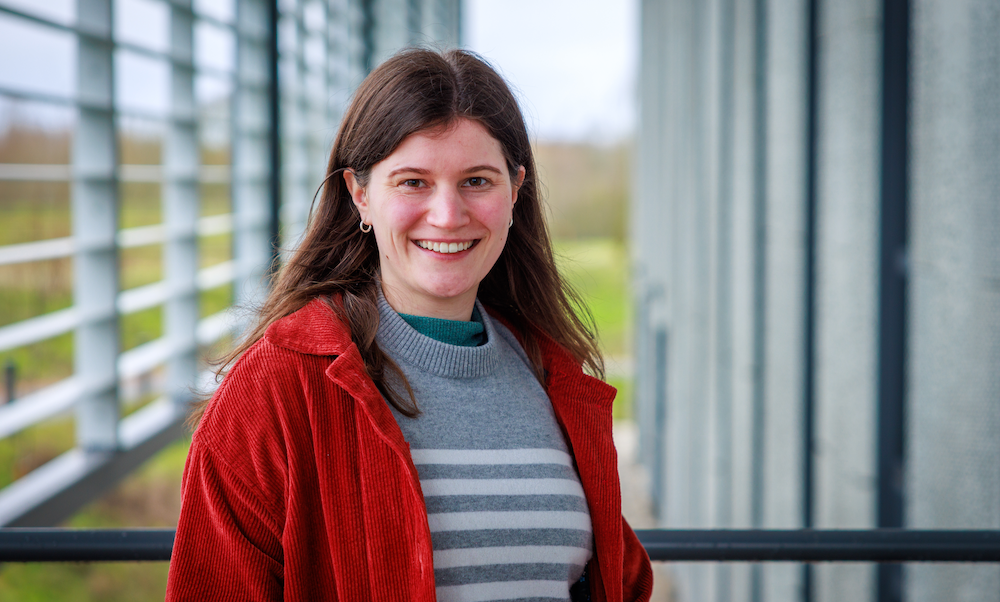
Leonie Johanna Lorenz, a Predoctoral Fellow at EMBL-EBI, applies this mathematical lens to bacterial genomics. Her research focuses on Streptococcus pneumoniae, a bacterium that causes pneumonia. She uses mathematical models to untangle how vaccination alters bacterial diversity and drives the evolution of new strains.
Tell me a little bit about your background.
I was born in Hamburg in northern Germany. For university, I moved to a small town called Greifswald to study biomathematics. It was a combined degree focusing on biology, maths, and coding. For my master’s thesis, I worked on a mathematical modelling project at the Max Delbrück Center for Molecular Medicine in Berlin. That is where I first heard about EMBL. When I applied for the EMBL PhD programme, I thought I would have to choose between informatics and modelling, but in the Lees Group at EMBL-EBI, I get to do both.
What does your research focus on?
I use genomics and mathematical modelling to study bacterial evolution and selection, looking at the bacterium Streptococcus pneumoniae.
My work focuses on the impact of vaccination on bacterial population dynamics. A vaccine introduces a new selection pressure to the population, meaning the bacterial strains targeted by the vaccine decrease in frequency, but they eventually get replaced by other strains.
I use mathematical models to understand which bacterial strains are most likely to replace the ones targeted by the vaccine. Understanding the mechanisms behind this replacement could be useful for predicting which vaccines might work best in scenarios where bacterial diversity varies a lot.
How does mathematical modelling differ from using AI or machine learning?
It is very tempting nowadays to use machine learning to infer things from data. While machine learning can give good predictions, you don’t always fully understand or appreciate the underlying biological mechanisms driving the results you get.
Mathematical modelling is different because you bake your assumptions and ideas about the mechanisms directly into the equations. You then check if those assumptions align with the data. From this, you can reveal hidden biases, missing mechanisms, or dynamics that no one had fully appreciated before.
What do you enjoy most about working at EMBL-EBI?
I really enjoy living in the UK and working in EMBL-EBI’s incredibly international environment.
Research-wise, I love being able to chat with other people at the institute working on other topics – from cancer signalling to human genetics – who face similar data problems to me, even though I work on bacteria. We get to solve these issues together.
I also value the connection with the different teams that run EMBL-EBI’s data resources. Having both research and bioinformatics services in one place creates a unique ecosystem where you can learn from experts in almost any technical niche just by walking down the corridor.
What are you most proud of from your time at EMBL-EBI?
I am really proud of bringing my love for mathematical modelling to the bioinformatics community. When I talk about my work, it’s great to see people get excited about equations and get them thinking about how they can use modelling for their own research.
During my PhD, I also helped to develop an online learning resource for the EMBL-EBI training catalogue on mathematical modelling. It has been great to see it being used and to have an impact beyond my PhD project.
What advice would you give someone who is thinking of applying to the EMBL International PhD programme?
Just do it! When you apply, be clear about your priorities.
For me, the priority was the environment and the supervisor. I hadn’t worked with pathogens before, but I didn’t mind trying something new. Don’t be afraid to change direction for your PhD; you bring transferable skills that allow you to adapt to new fields.
Do you have any hobbies or other interests?
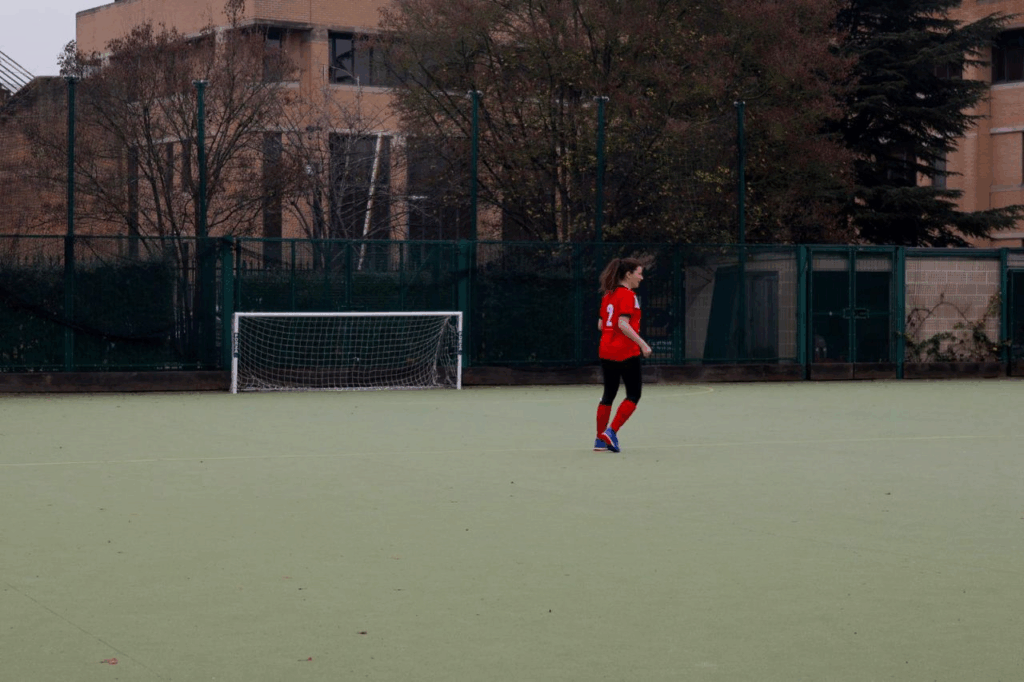
I play badminton on campus, and I started playing football. I recently played for my college against Oxford, which was very fun.
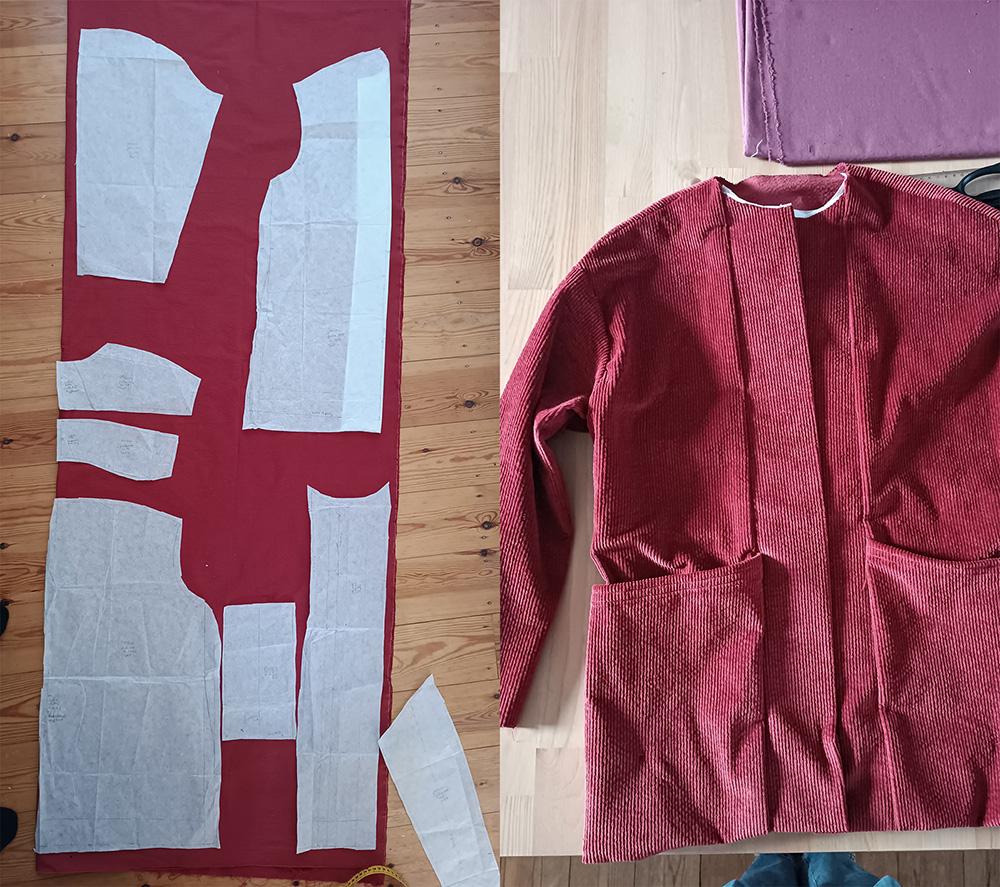
Perhaps more unusual is that I sew a lot of my own clothes. I make skirts, dresses, trousers, a bit of everything. It is a fun hobby for the winter when you are sitting inside, and it actually requires a lot more brain power than you would think.