Remembering Peer Bork (1963—2026)
A career and life noted by remarkable impacts at every level
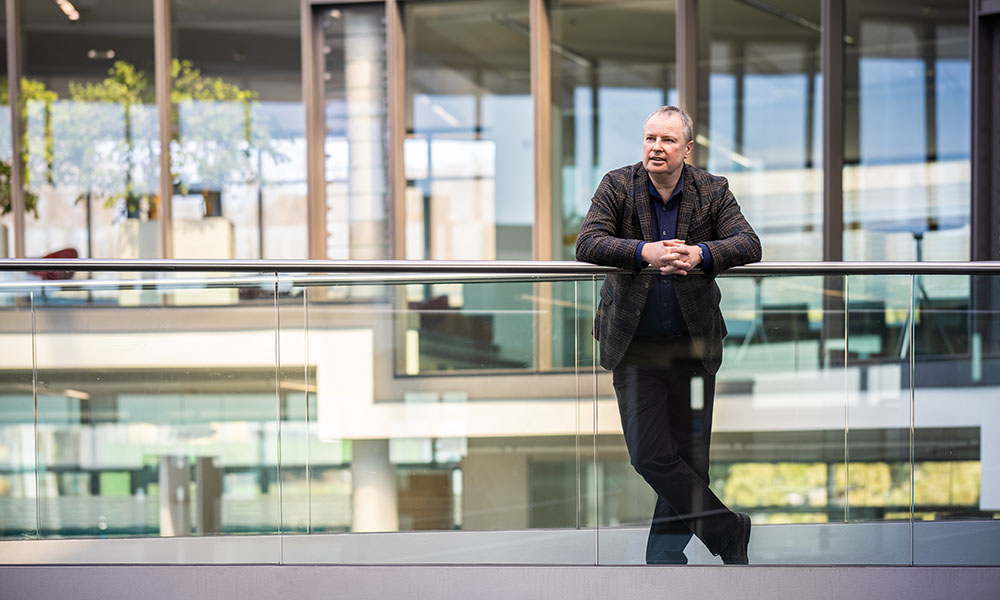
It was with profound sadness that EMBL shared with the scientific community the news of the passing of our Interim Director General, Professor Peer Bork, last week. Here, we reflect on the extraordinary impact Peer had on EMBL and the world of science – not only through his visionary research and leadership, but through the kindness, curiosity, and generosity that defined him as a person.
Peer passed away from natural causes on 16 January 2026, leaving behind an immense scientific legacy. He leaves a lasting imprint on the fields of bioinformatics, metagenomics, and computational biology, and an enduring spirit of open, curiosity-driven exploration. For so many in the scientific community, he was more than a brilliant scientist — he was a mentor, a friend, and an inspiration whose guidance and warmth helped shape countless careers and lives.
His passion for discovery and his belief in collaboration will continue to inspire our community for years to come.
Early years
Born in the former East Germany (GDR) in 1963, Peer started his scientific career as a research assistant in Jens Reich’s group at the Central Institute for Molecular Biology of the Academy of Sciences of the GDR. He went on to complete a PhD in Biochemistry at the University of Leipzig and his Habilitation (the highest academic qualification level in Germany) in Theoretical Biophysics at Humboldt University, Berlin. He joined EMBL with an EMBO fellowship in 1991, becoming a visiting scientist in 1992. On more than one occasion, he noted the unique environment that allowed for openness and the research freedoms he found here. At this point in his career, he simultaneously worked as a project leader at the Max Delbrück Center for Molecular Medicine, Berlin, where he later continued as a visiting scientist.
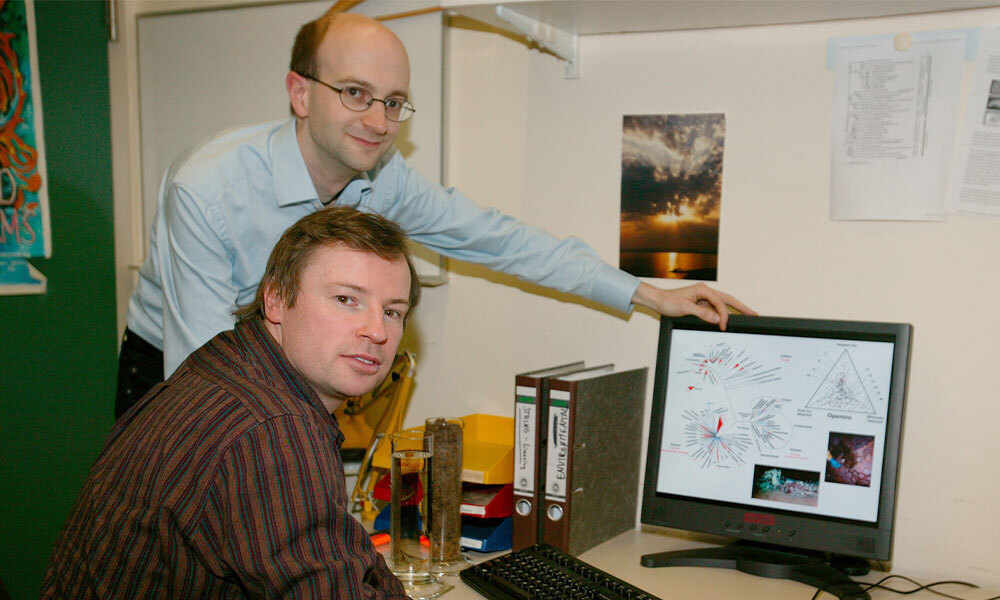
In his over 30 years at EMBL Heidelberg, Peer held several leadership roles and played a critical role in the organisation’s evolution. He served as Head of the Structural and Computational Biology Unit (2001–2021) and the Director of EMBL Heidelberg (2020–2025). In March 2025, he took up the role of Interim Director General, working closely with Interim Executive Director Ewan Birney and many colleagues across EMBL’s six sites to lead the organisation.
From genomes to metagenomes
Peer started working in bioinformatics at a time when the field was still finding its feet. Over the next few decades, he both witnessed and contributed to its development into a discipline that now pervades nearly every aspect of life science research. His work was instrumental not only in obtaining key biological insights, but also in creating tools, methods, and workflows that have become a cornerstone for researchers all over the world, allowing them to analyse and interpret their biological datasets.
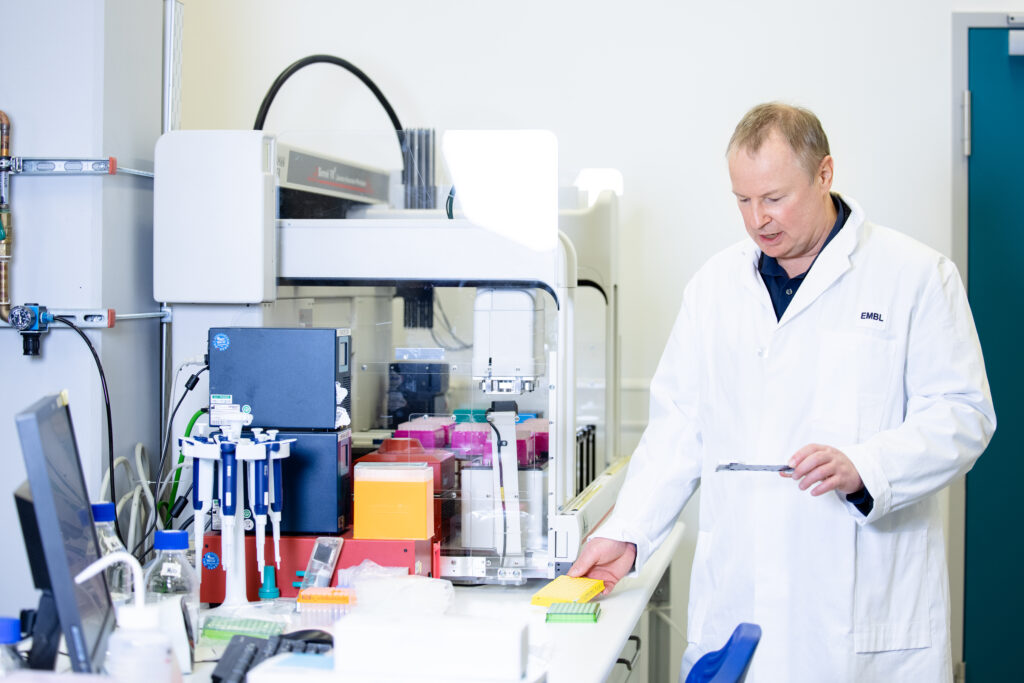
Among Peer’s most notable scientific contributions are foundational studies of the functional annotation of protein sequences, protein interaction networks, exploration of drug–target interactions, identification of ‘enterotypes’, i.e. gut microbial community compositions in humans, development of an automatable procedure for reconstructing the tree of life, and identification of microbial markers for a number of diseases, including colon cancer, pancreatic cancer, and obesity. Many of these studies were relevant to our everyday lives and attracted public interest internationally, through their uncovering of novel insights into human biology and health.
Peer also worked with multiple international research consortia, championing the need for large-scale collaborative research in frontier research areas. These include participation in the Human Genome Project, working with the MetaHIT consortium on one of the first large metagenomics studies looking at population-level gut microbiome characteristics, and with the Tara Oceans Consortium for studying the microbiome of specific environments across the globe.
His recent work substantially enhanced data sharing and integration in metagenomics, leading to global, freely accessible databases and tools to accelerate the work of the scientific community in this area, including for the advancement of the health of our planet.
Bringing European science together through leadership
Peer’s death has deeply affected the life science community within Europe and beyond, as so many collaborators and colleagues remember his foresight and pioneering outlook towards scientific endeavours. He was not just a leading scientist, but a mentor to next-generation scientists and a collegial researcher who sought to make science connect Europe and the world.
As EMBL’s Strategic Head of Bioinformatics, Peer fostered bioinformatics infrastructure that supported genomic and microbiome studies across Europe. Additionally, he was a central figure in European microbiome research, shaping both the scientific and organisational landscape of the field as a bioinformatician and EMBL leader. He played key roles in several major European collaborative research initiatives funded under frameworks like the European Union’s FP7 and Horizon 2020, such as the MetaCardis project, where he led work on integrating complex omics data and building annotated gut microbiome profiles to study disease associations.
His participation in such large projects helped shape coordinated European approaches to microbiome research, bringing together clinical, computational, and ecological perspectives.
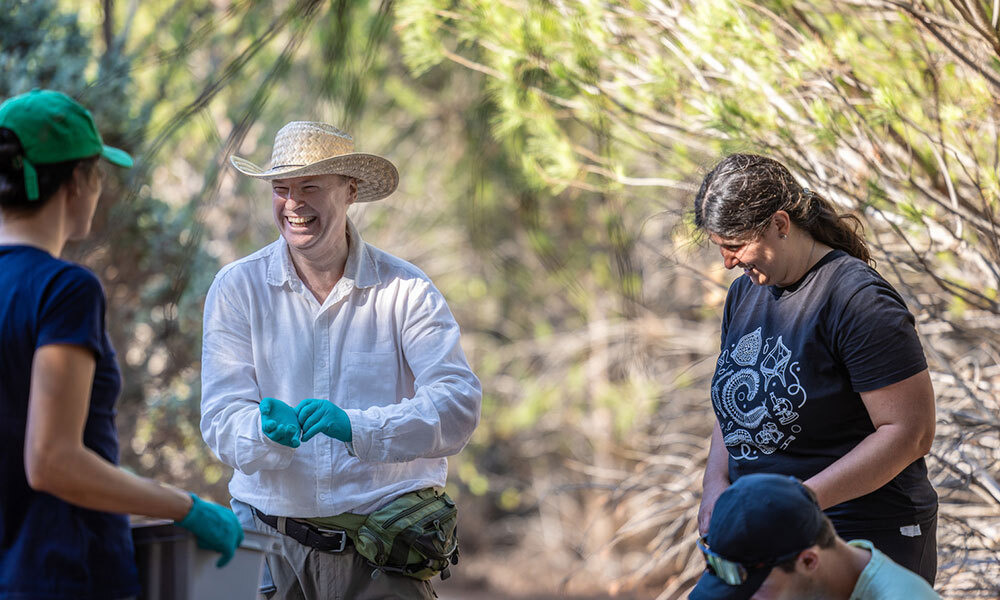
More recently, Peer led EMBL’s Traversing European Coastlines (TREC) programme that circumnavigated Europe, doing systematic field sampling along the coastline while drawing in and capitalising on expertise from both new and familiar collaborators. The initiative engaged not only scientists across disciplines but also people of all ages and from all walks of life, through integrated public engagement activities. He compared this community-centric look at Europe’s coastlines to the way life scientists study interactions within microbial communities. As he would have liked, the sampling will continue in his memory and with his inspiration, expanding across borders, not fading but rather serving as a driving force.
A lifetime of achievements
Throughout his scientific career, Peer worked at the frontiers of research, constantly pushing the boundaries of what was possible. He had an almost uncanny ability to see where the field would go next, and then proactively take it there through his relentless enthusiasm and pursuit of new knowledge.
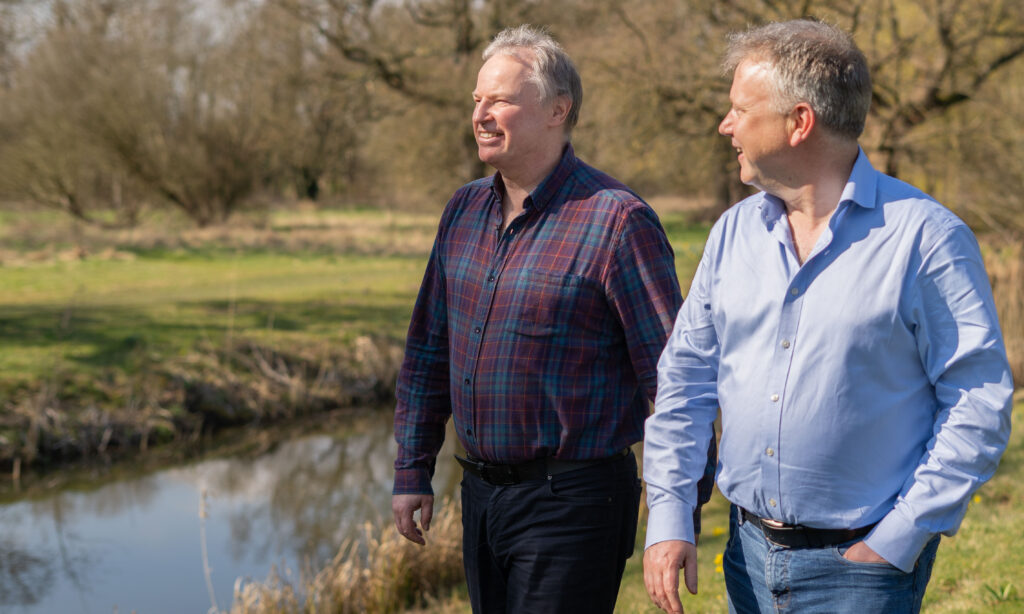
Peer was among the most cited European life-science researchers, and he helped train more than one generation of scientists. His legacy lives on in the large community of scientists he mentored, both in his lab and outside it. Since leaving the lab, over 40 PhD students or postdocs have gone on to take up senior positions in prominent academic and research organisations worldwide. In 2008, Nature recognised this with an Award for Creative Mentoring.
Peer’s work has received numerous awards, including the Novo Nordisk Foundation Novozymes Prize for outstanding contributions to biotechnology (2021), the ISCB Accomplishments by a Senior Scientist Award (2021), and the Royal Society and Académie des Sciences Microsoft Award for the advancement of science using computational methods (2009). He was also an elected member of the German national academy of sciences (Leopoldina), the European Molecular Biology Organization (EMBO), and the Academia Europaea. He received honorary doctorates from the universities of Utrecht and Copenhagen, and held honorary professorships at the universities of Heidelberg and Würzburg in Germany and the Fudan University of Shanghai in China. In addition, he has held two ERC Advanced Grants and co-founded five successful biotech companies, two of which went public.
His loss will be felt keenly by the global scientific community. We extend our deepest condolences to his family, his friends, his colleagues, and the many people whose lives and research he influenced.