Festival of Science & Curiosity: a day full of science, curiosity, and connection
For European Researchers’ Night, EMBL welcomed over 1,800 visitors to its Heidelberg campus for an exciting day of exploring science through fun activities, tours, talks, and theatre
By Dorothea Deschermeier, Science Education and Public Engagement Team, EMBL
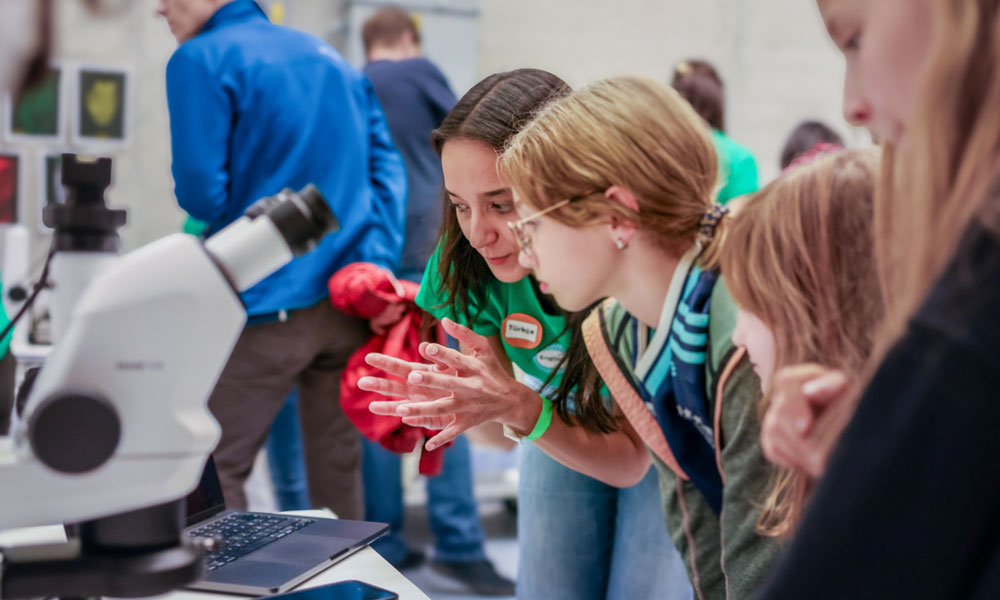
On 25 September, EMBL Heidelberg opened its doors for the Festival of Science & Curiosity as part of the European Researchers’ Night. Under bright late-summer skies, 1,662 visitors of all ages from the public, alongside around 145 EMBLers attending as visitors, filled the Advanced Training Centre (ATC), Imaging Centre (IC), and campus grounds. With activities taking place across the site, including many areas normally hidden from public view, the campus buzzed with excitement throughout the day.
The Curiosity Fair: something for everyone
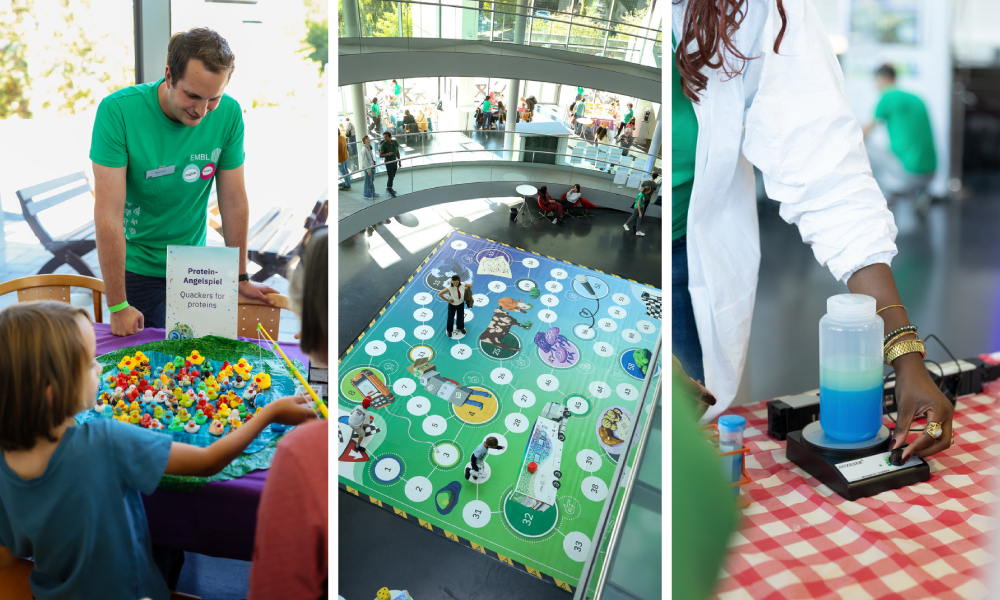
The Curiosity Fair, hosted in the ATC foyer, provided a space where visitors could drop in, explore, and join in a range of science-themed activities at their own pace. Families and visitors participated enthusiastically in interactive experiences like Quakers for proteins, the Lab Kitchen, DNA building blocks, and a tattoo parlour with science-themed tattoo designs from EMBL research groups. A particular highlight was the giant Run Scientist, Run! game from the TREC expedition, laid out on the floor of the ATC foyer, which everyone – from toddlers to grandparents – could enjoy.
Theatre of Curiosity: science on stage
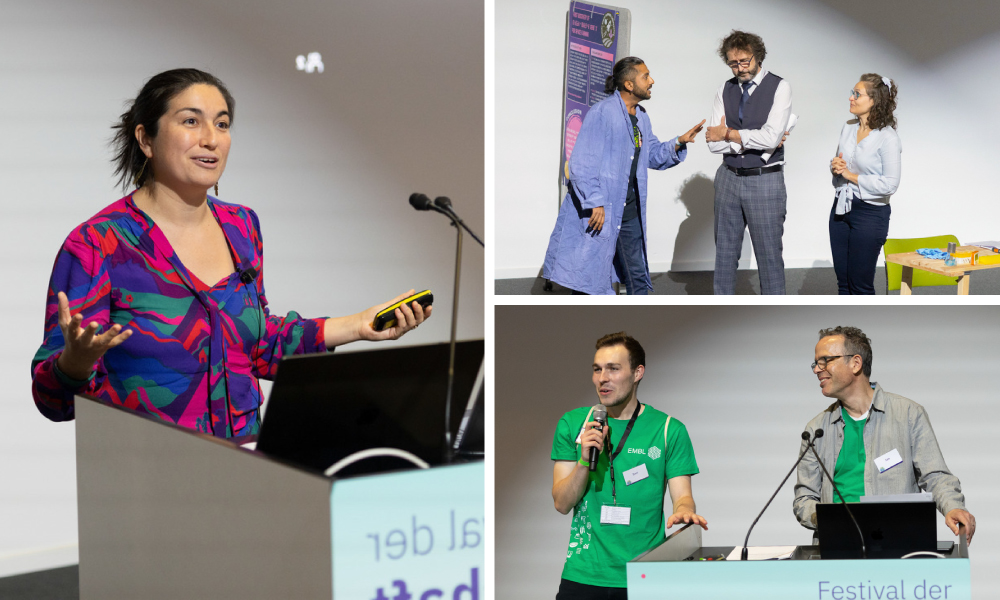
Science also took centre stage through a lively programme of talks and performances. Visitors enjoyed The Physicist by the EMBL Theatre Club and Romeo and Juliet: A Tardigrade Tale by Idea Nurturing e.V., alongside talks from EMBL scientists exploring topics ranging from DNA to the microscopic life found in our oceans.
Workshops: getting hands-on with science
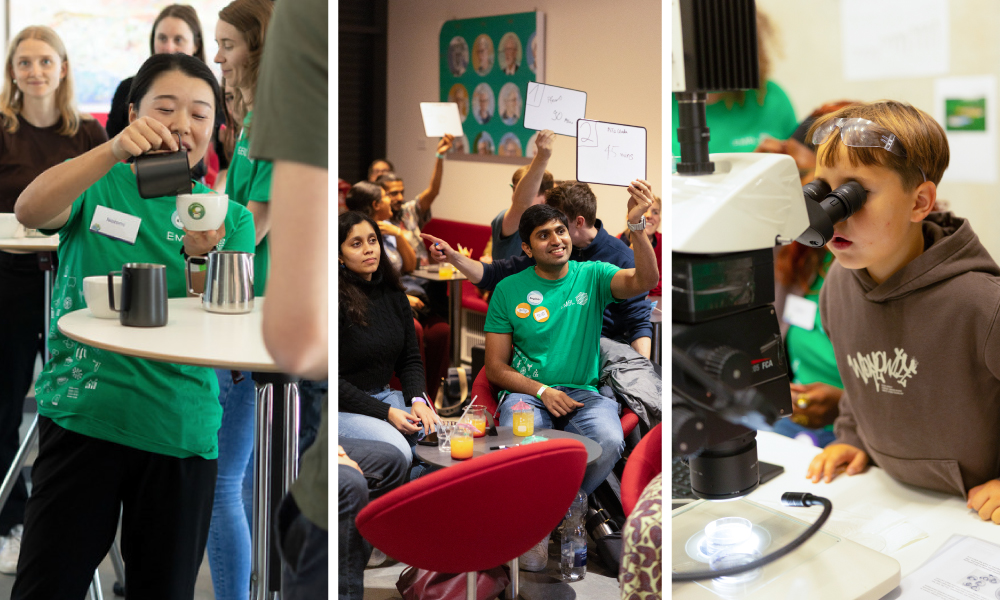
The workshops offered visitors many opportunities to experience science first-hand, sometimes in an unexpected way. Activities ranged from creating latte art to meeting the diverse organisms used in research, testing knowledge in a Science Pub Quiz, and embarking on the ocean-inspired investigation Ocean Detectives.
Tours: a look behind the scenes
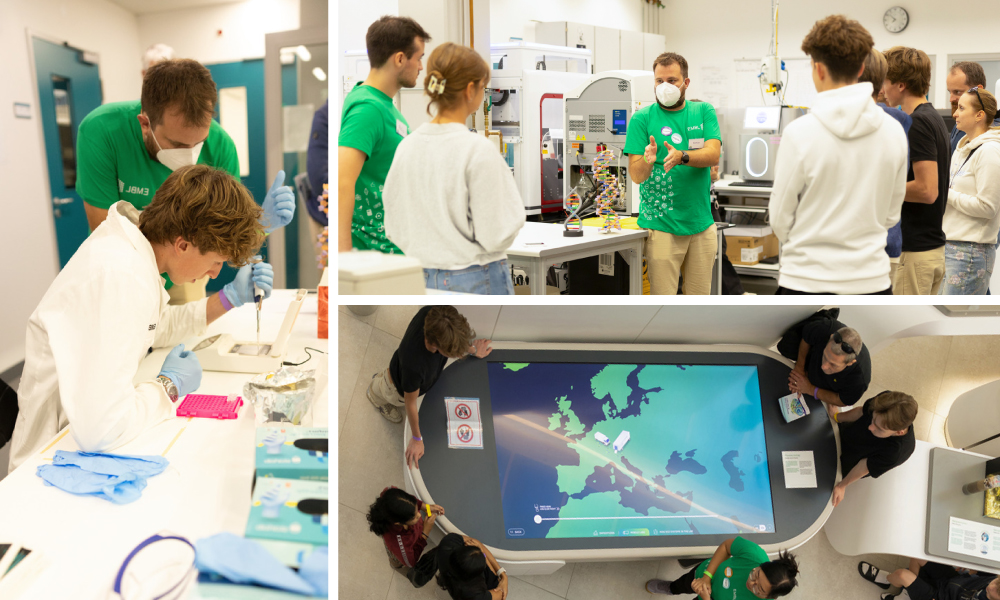
The tours gave visitors a rare opportunity to explore parts of EMBL they wouldn’t normally get to see. Participants tried their hand at pipetting during the GeneCore Facility tour, admired the petabyte-scale data infrastructure and backup diesel generator of the EMBL Data Centre, and learned how the Mechanical Workshop designs and manufactures precision components and custom-built instruments that support cutting-edge research. During the Imaging Centre tour, visitors also got a glimpse of state-of-the-art electron microscopes and advanced imaging technologies. Tours through the in-house World of Molecular Biology exhibition were offered in a variety of languages.
All tours proved incredibly popular and were fully booked almost immediately.
Exploring science through imaging and microscopy
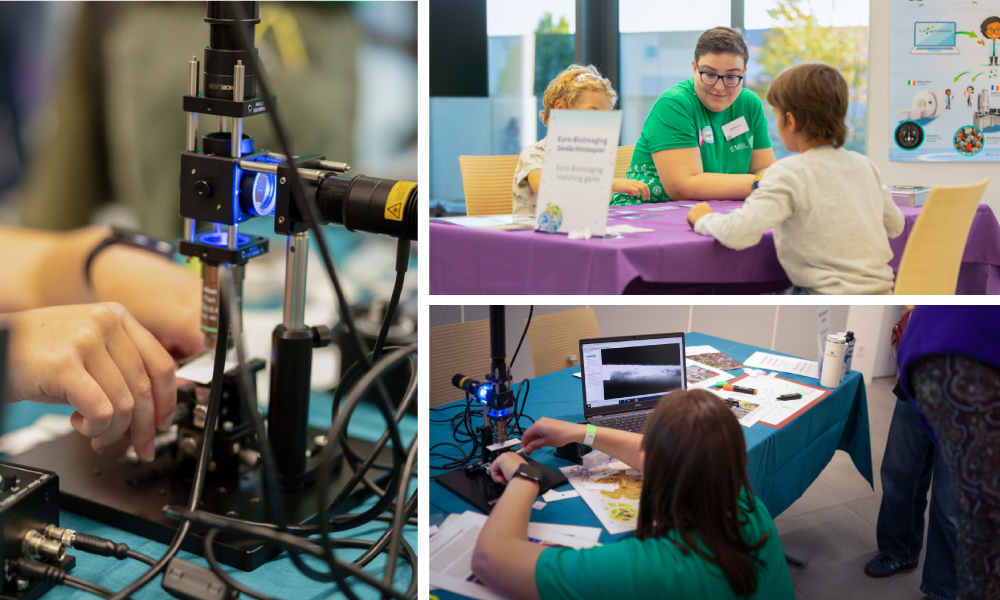
At the Imaging Centre, visitors were invited to discover the remarkable structures and details that scientists can reveal using advanced imaging techniques. The Foldscope and Microscope in Action stations offered opportunities to explore microscopy, while at the Euro-BioImaging stall, visitors tested their observation skills through a matching game featuring microscopic details. Many visitors were particularly amazed by the fully functioning LEGO® atomic force microscope.
Within The World of Molecular Biology exhibition, visitors could also enjoy photographs created during a Foldscope Photography Workshops for 8-10 year olds led by EMBL and photographer Jochen Steinmetz, in collaboration with Kulturfenster, Stadtteilbüro Boxberg, and Quartiersmanagement Bergheim.
Merck’s Curiosity Cube™
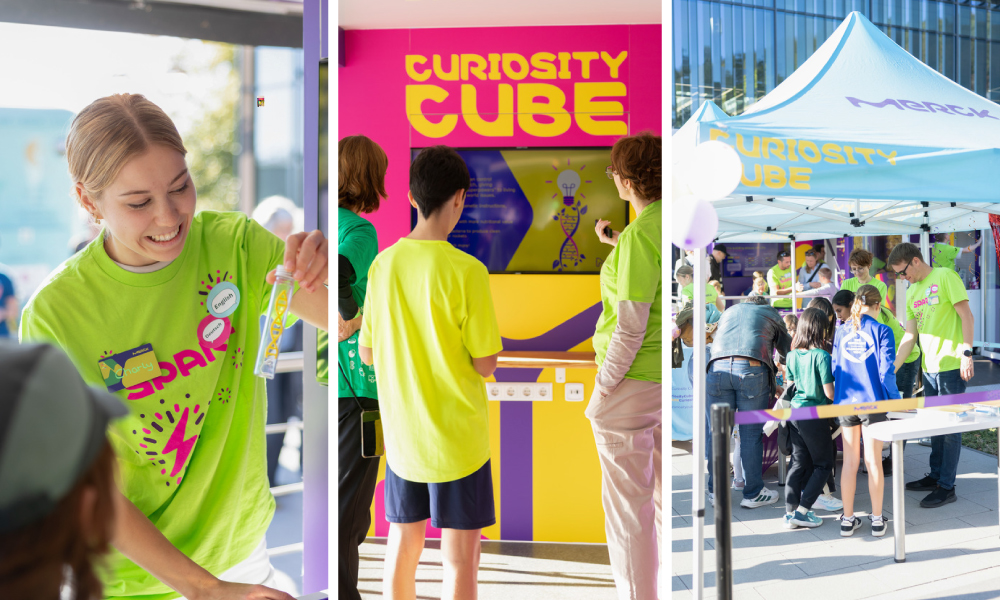
Our funding partner Merck brought their Curiosity Cube™ mobile science lab to campus. Housed inside a converted shipping container and packed with hands-on experiments, it added another exciting dimension to the Festival. Visitors were able to explore scientific concepts through direct experimentation, discovering for themselves that science is something to do, not just to observe.
Partners on the Helix: science across the region
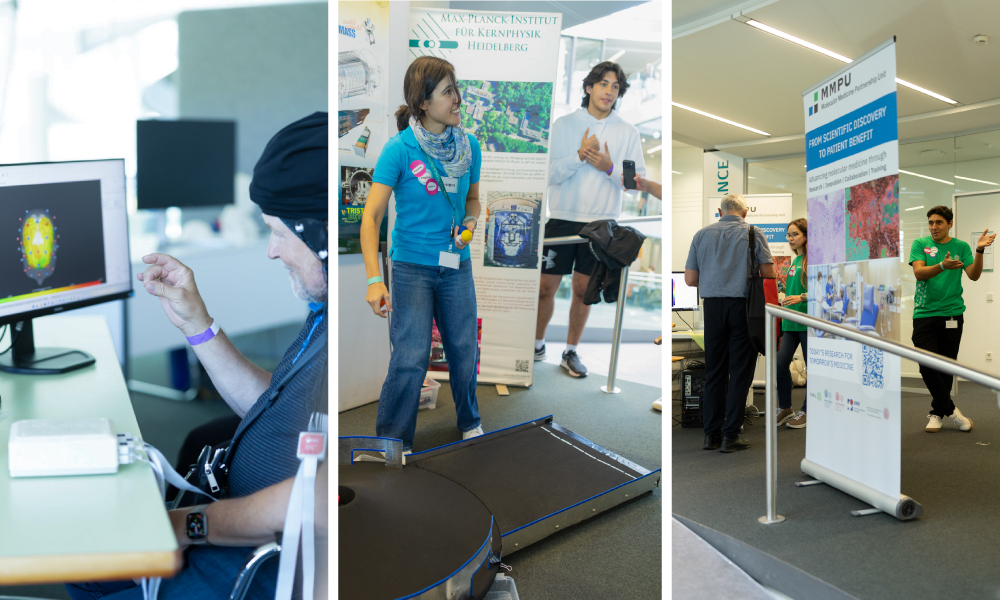
The festival also highlighted EMBL’s strong connections with scientific partners across the region. The four Heidelberg Max Planck Institutes, GSK, the Health + Life Science Alliance Heidelberg Mannheim, Heidelberg University Hospital and the Heidelberg Faculty of Medicine, the Molecular Medicine Partnership Unit (MMPU), Core Facility for Neurocognitive Systems Research (CNSR), Planetarium Mannheim, and TECHNOSEUM all contributed to the programme. Together, they showcased the breadth and strength of the scientific community surrounding EMBL and invited visitors to engage with a wide range of topics, from light and space science to cells, health research, and questions of international law, all through fun activities.
A huge thank you to everyone involved
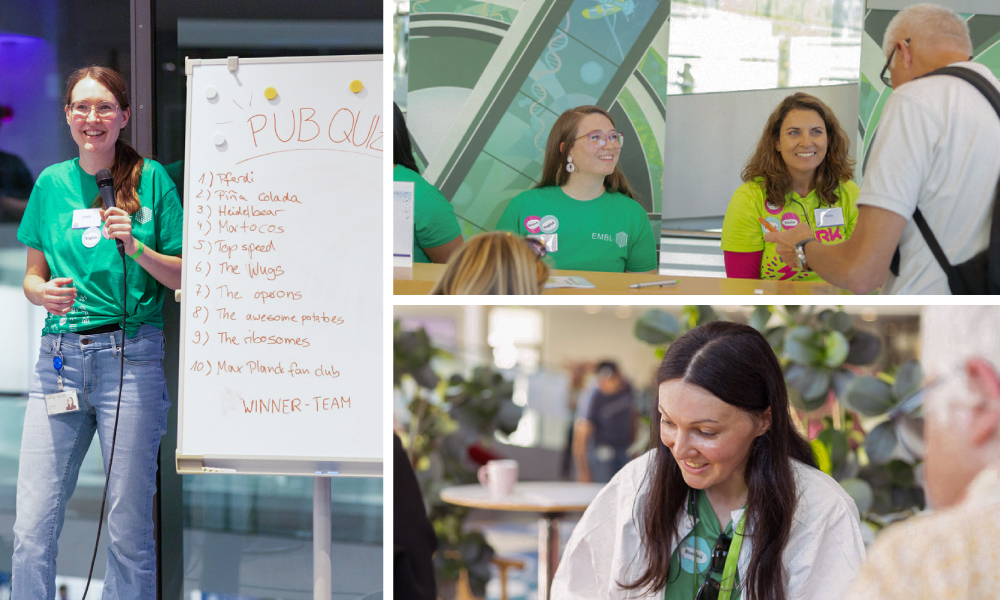
A festival of this scale can only happen thanks to the commitment, creativity, and enthusiasm of a large number of people. A remarkable 190 colleagues contributed to making the day such a success, whether by developing activities, welcoming visitors, guiding tours, setting up spaces, supporting logistics, or helping behind the scenes. Their impact was impossible to miss, with supporters proudly wearing their bright green EMBL T-shirts, creating a sea of green throughout the campus and making it easy for visitors to find help wherever they went.
On 24 September 2027, the Festival of Science & Curiosity will return. Mark your calendars and join us again for another exciting celebration of science and discovery!

The European Researchers’ Night is funded by the European Union. Views and opinions expressed are however those of the author(s) only and do not necessarily reflect those of the European Union. Neither the European Union nor the granting authority can be held responsible for them.