Programme

Drop-in activities (15:00-22:00)
Come along and have a go! These activities are available throughout the event. No registration needed, and everyone is welcome.
The World of Molecular Biology
Location: Imaging Centre
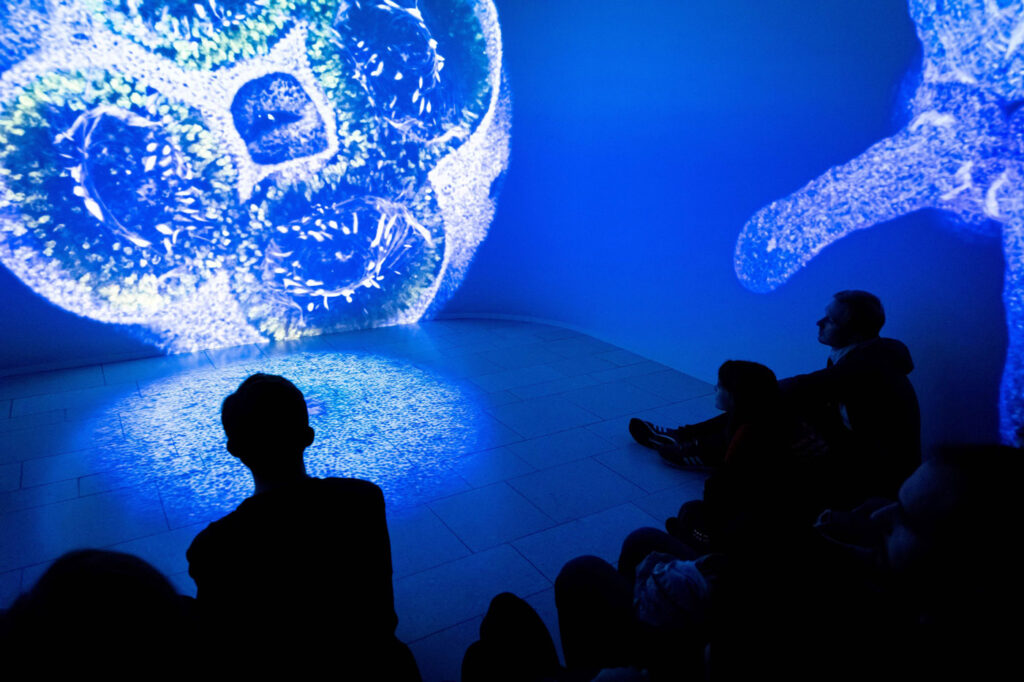
Our vibrant, interactive permanent exhibition celebrates molecular biology with a focus on the work, people, and technologies of the European Molecular Biology Laboratory (EMBL). A combination of images, animations, film, and interactive games will take you on an exciting journey through the inner workings of life at all scales.
Microscopy activities
Location: Imaging Centre, lower floor
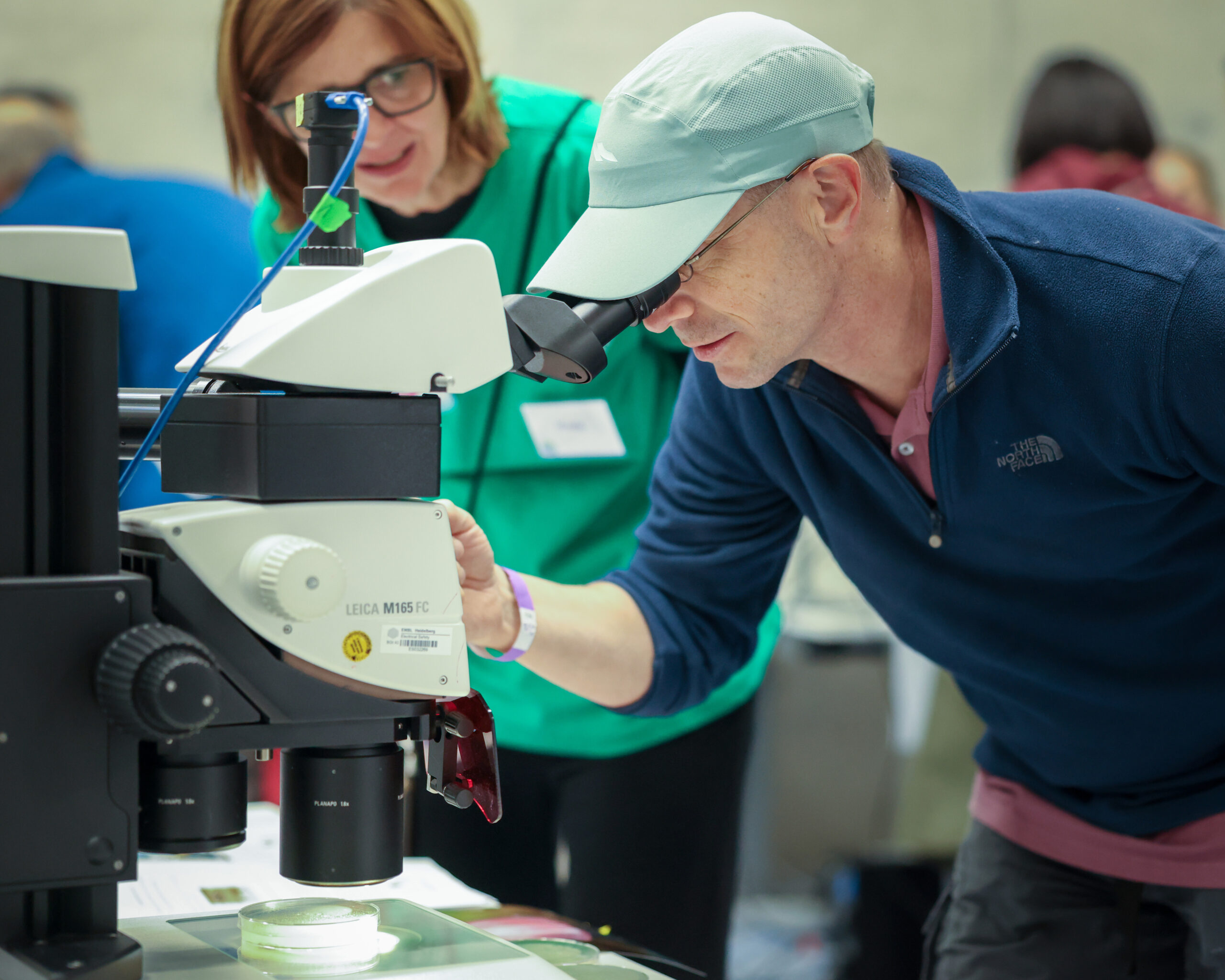
Get curious about the microscopic world. Explore structures that are far too small to see with the naked eye, from individual cells and plant structures to the details of individual hairs. Get hands-on with microscopes, games and models, and discover fascinating things that are normally hidden from view.
Explore the microscopic world through:
Foldscope station
Take a closer look at the microscopic world with Foldscopes, lightweight paper microscopes that make tiny structures and patterns visible.
Microscope in Action
Discover how fluorescence microscopy reveals the details that are normally invisible, from individual cells and the vascular bundles inside plant roots to the structure of individual hairs.
Euro-BioImaging matching game
Can you match the organism to its microscopic image? This fun matching game connects the visible world of organisms with their hidden microscopic details.
LEGO® atomic force microscope
Step into the world of atomic force microscopy through our LEGO®-built model, bringing the fascinating world of nanoscale (really, really small!) imaging to life.
Foldscope Photography Exhibition
Location: Imaging Centre, lower floor
Explore the microscopic world through the eyes of young participants (8-12 years old) from Foldscope Photography Workshops led by EMBL and photographer Jochen Steinmetz with local partners Kulturfenster, Stadtteilbüro Boxberg, and Quartiersmanagement Bergheim.
EMBL Archives
Location: Imaging Centre, upper floor
Explore EMBL’s past through a display of historic instruments, documents and photographs. Meet the archivists and discover more about their work and the role of the Archive.
Quiet Room
Location: Imaging Centre, upper floor
Take a moment to pause and recharge in this calm, sensory-friendly space.
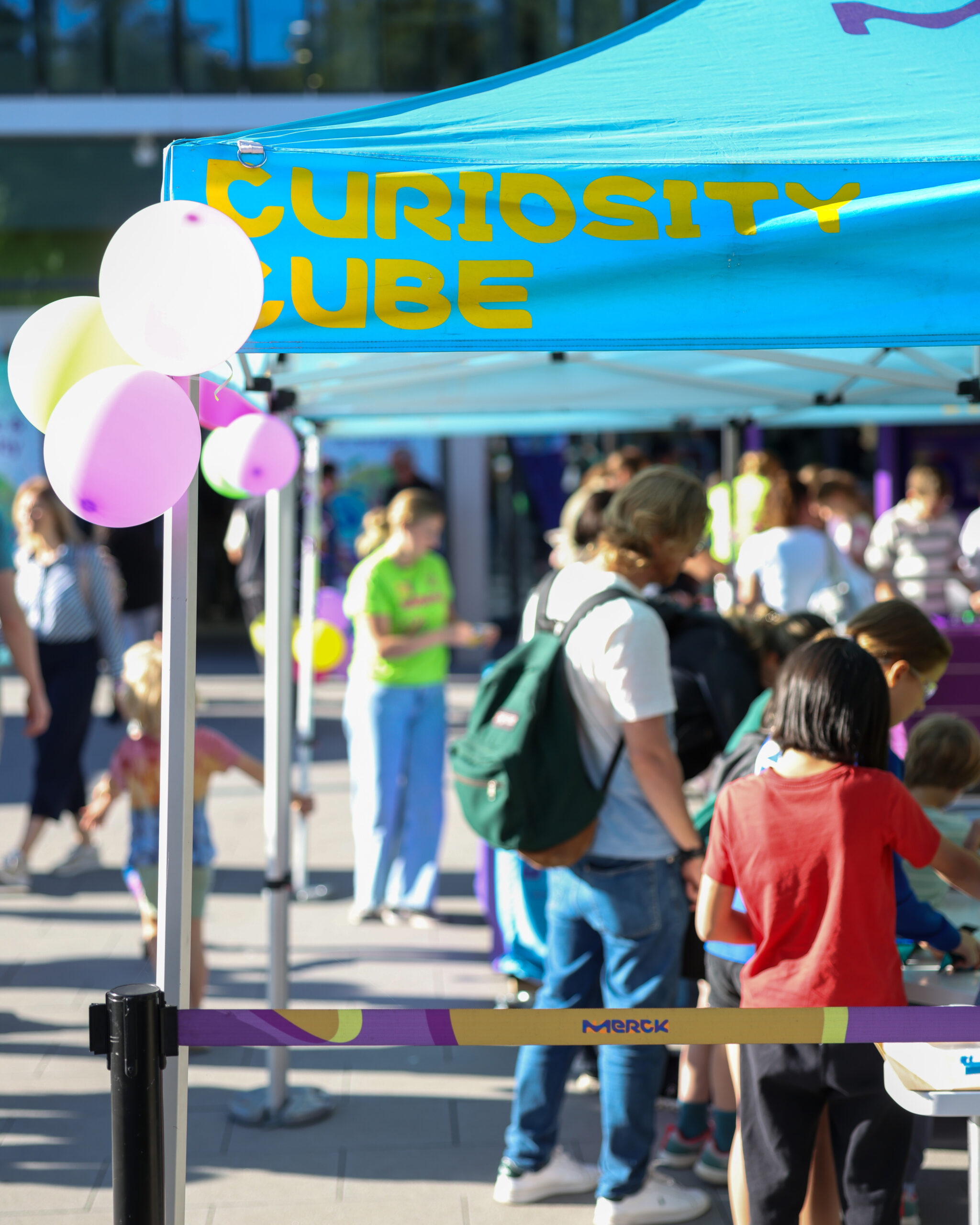
Merck’s Curiosity Cube™
Location: In front of the Imaging Centre
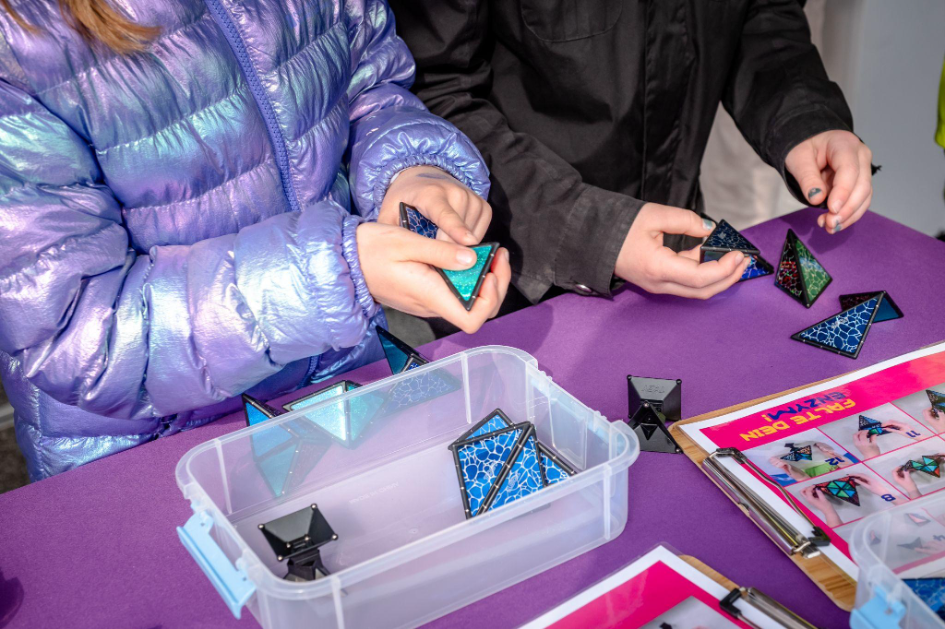
Step inside Merck’s Curiosity Cube™ mobile science lab and you’re not just a visitor, you’re a scientist! Roll up your sleeves and experience hands-on science through exciting experiments.
You can read more about Merck’s Curiosity Cube™ here.
Curiosity fair
Location: ATC, lower level
Join us at the Curiosity Fair to explore the world of science through hands-on activities and games. Build, create, play, and experiment while discovering how scientists investigate life on Earth, from DNA and microbes to life in the oceans and beyond.
Explore the world of science through:
DNA building blocks
Discover the “code of life” by building and decoding secret messages using colorful building blocks and learn how DNA stores information.
Cell cookies
Build your own edible cell with sweets, then discover the amazing structures hidden inside cells and how they work together to keep it alive.
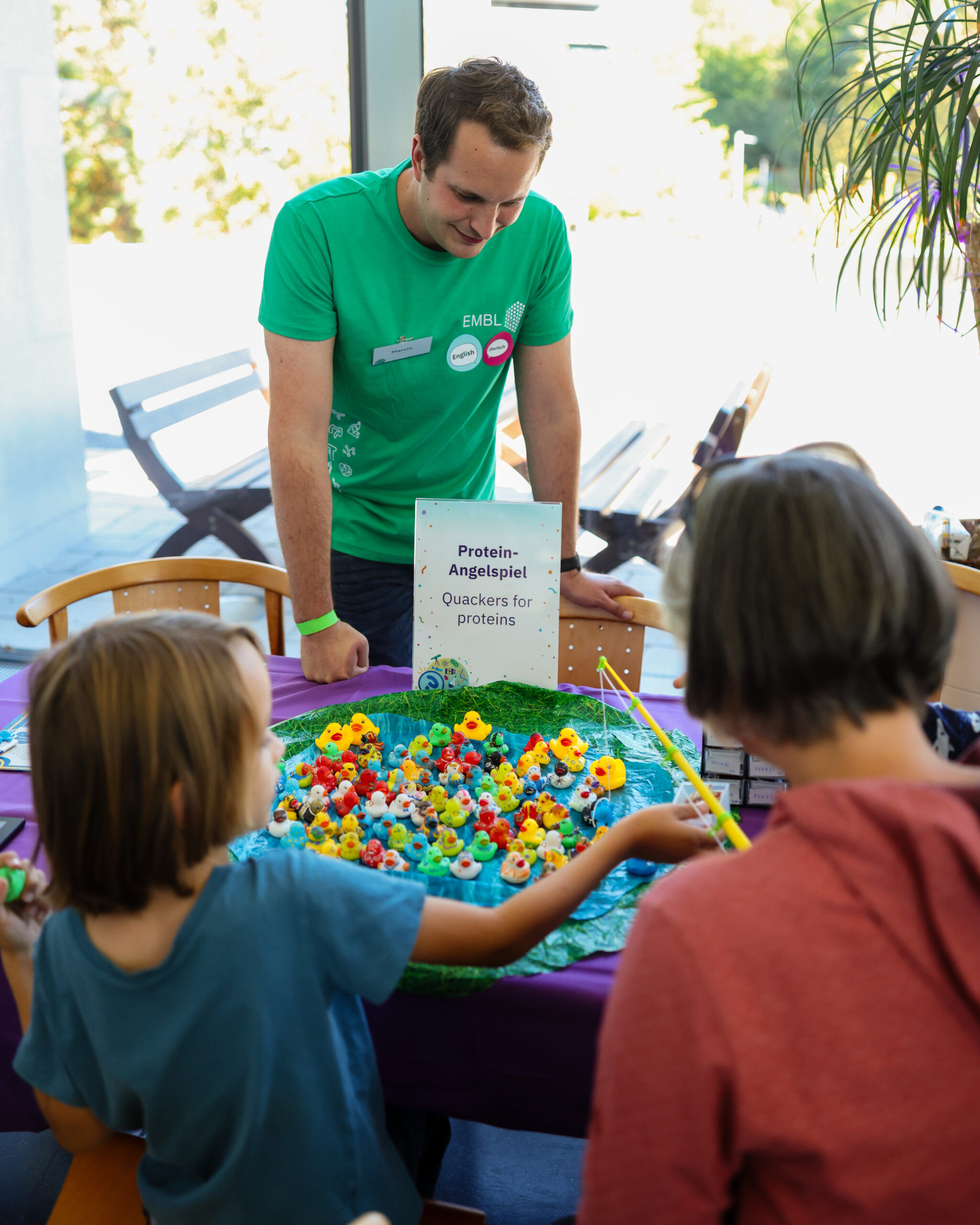
Quackers for proteins
Roll up, roll up, let’s get quackers for proteins and hook some (rubber) ducks! Uncover how scientists organise and explore the vast amounts of information hidden in the living world around us.
Phytoplankton key chains
Make your own plankton keyring using clay and learn about the tiny creatures that live in our oceans.
DNA bracelets
Make your own DNA bracelet and discover how DNA’s four building blocks fit together to make the instructions for life.
Explore the microbiome
Pick your character and race to the finish in this fun board game, discovering how scientists turn samples into scientific discoveries along the way.
Microbiome memory game
Find matching pairs and discover how the microbes in our gut support our health.
Anaerobic challenge
Just like a real-life scientist, test how it feels to do quick-fire tasks in an oxygen-free chamber – and discover more about the bacteria that live in our bodies.
Lab kitchen
Enter the lab kitchen and discover how equipment used in a lab is not so different to everyday items used at home.
DNA base matching
Test your reactions in this fast-paced card game and discover how the four bases of DNA pair together to carry genetic information.
Tattoo parlour
Visit our tattoo parlour to get your very own science-inspired temporary tattoo, designed by researchers at EMBL.
Run, Scientist, Run!
Come play and experience coastal ecology research for yourself through a life-size game inspired by the Traversing European Coastlines (TREC) expedition.
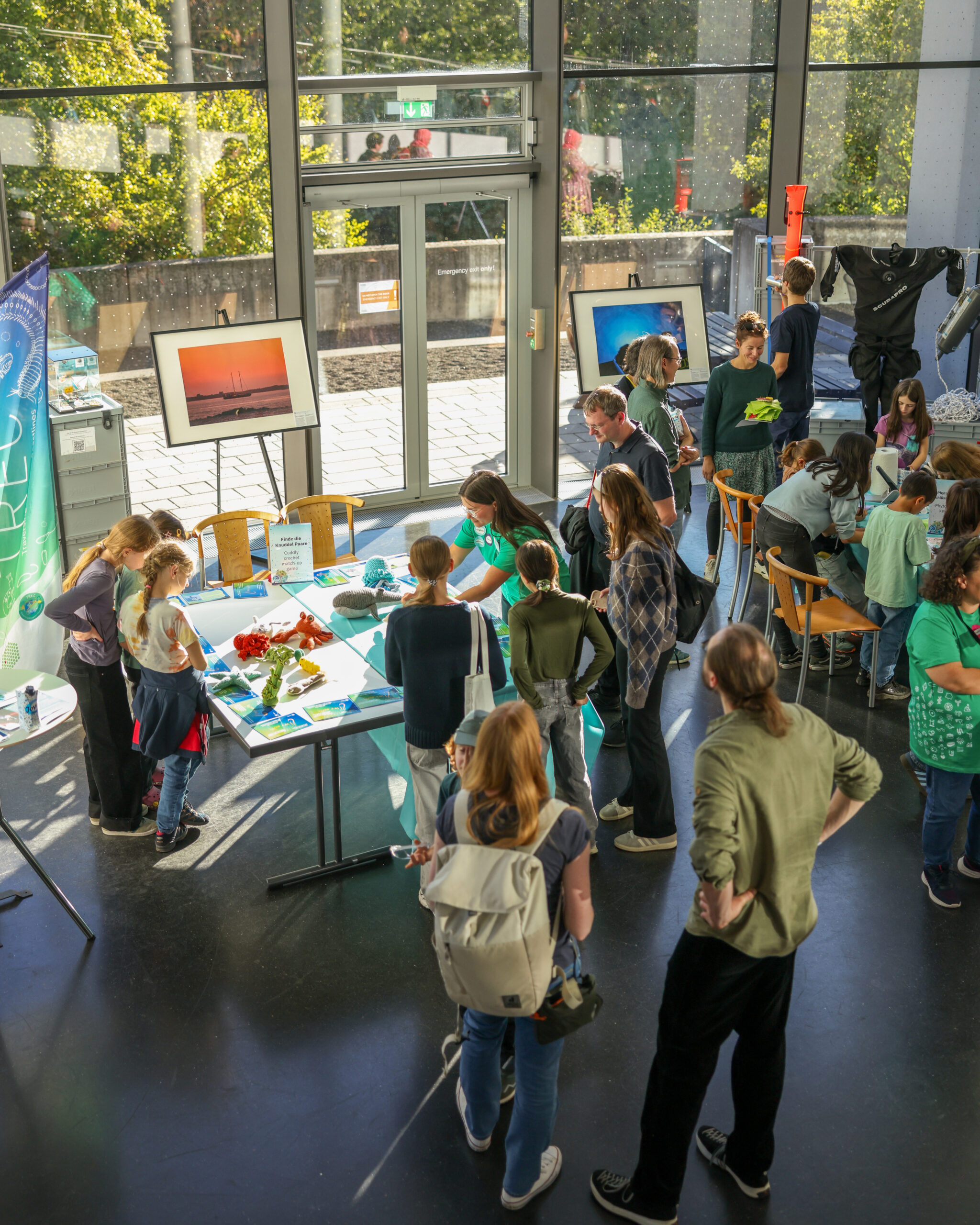
Cuddly crochet match-up game
Meet our cuddly crocheted organisms and discover the amazing creatures and tools used to explore the living world.
EMBL Sustainability
Location: ATC, lower level
Discover sustainability at EMBL and explore how small actions can support science and the environment.
Moments of exploration: TREC – a gallery
Location: ATC, lower level
Explore this photography exhibition to discover the people and places behind TREC, a Europe-wide expedition that travelled Europe’s coastlines to advance our understanding of coastal life.
About EMBL
Location: ATC, entrance level
Drop by our information stand, located by reception in the ATC, to discover EMBL, Europe’s laboratory for the life sciences, and explore what happens across our six research sites.
The Helix
Location: ATC, Helix
As you walk up our Helix, you will meet people from research institutes, universities, museums and other organisations from in and around Heidelberg, showcasing the incredible innovation happening in our region. Once you reach the top of the Helix, step out onto the rooftop to explore the stars.
The Max Planck Institutes in Heidelberg
Insight must precede application
Heidelberg is home to four Max Planck Institutes, where researchers investigate very different questions – from subatomic particles and the molecular and cellular foundations of life to the mysteries of the universe and questions of international and public international law. We invite you to discover our research through a range of fun experiments – from the secrets of light from the depths of space and cells to the big questions of international law.
Health + Life Science Alliance Heidelberg Mannheim
The Alliance
How can collaboration help turn scientific ideas into discoveries that can improve our health? Discover how researchers from different fields and institutions work together, combining knowledge, technologies and ideas to better understand human disease and develop new approaches to treatment.
Core Facility for Neurocognitive Systems Research (CNSR), Heidelberg University & Health + Life Science Alliance Heidelberg Mannheim
How to make your thoughts visible?
What does thinking actually look like? Explore brain and eye-movement research through live, interactive demonstrations. See your brain activity in real time and discover how relaxation affects your brain. At our eye-tracking stations, play chess using only your eyes, discover how your eyes process text, and be amazed during “mind-reading” at just how much your visual attention reveals about your next chess move.
Planetarium Mannheim
Meteorites under the microscope
How can you tell an ordinary rock from a genuine meteorite? Get a close-up look at meteorites under the microscope and discover the fascinating visitors from space.
TECHNOSEUM
The beginnings of mobile communication – Marconi’s legendary invention
How was it possible for the first time to send messages through the air without wires? At TECHNOSEUM’s working replica of the Marconi apparatus, you can experience the fascinating technology that made wireless communication possible more than 100 years ago. Discover how simple sparks transmitted signals over great distances, laying the foundation for radio, mobile communications, and Wi-Fi.
Heidelberg University Hospital / Heidelberg Faculty of Medicine at Heidelberg University
Hands-on anatomy: from fingertips to 3D models
Our anatomy box contains different bones – now it’s time to put your sense of touch to the test. Feel the bone, work out which one it is, then check your answer using digital 3D anatomy models on a tablet. This makes anatomy tangible in a special way – medical students in Heidelberg learn in much the same way, just on a larger scale using a virtual dissection table.
Robotics meets cardiology: exploring future technologies
A robot dog equipped with an emergency kit invites visitors to give robotics a try. Discover how advanced technologies could transform cardiology at the digital Heidelberg Heart Center and its research institute “Informatics for Life”, where data and AI will help detect heart disease earlier and tailor treatments more closely to individual patients.
GSK
The Journey of a Medicine
How is a medication made? Follow the journey from identifying a disease target to testing a potential treatment in people. Like a giant board game, drug discovery is full of progress, setbacks and unexpected challenges. Discover why developing a new medication can take more than a decade and requires science, creativity, persistence and a little luck.
Molecular Medicine Partnership Unit (MMPU)
From molecular research to medicine
What happens when you bring molecular research and medicine together? MMPU researchers from EMBL and Heidelberg and Mannheim University Hospitals work side by side to understand what goes wrong in disease and how this knowledge could lead to better diagnosis and treatment. Explore how research can move from the laboratory towards real-world healthcare.
Explore the day and night sky with Planetarium Mannheim
Location: ATC, science rooftop
Look up and discover the sky above EMBL. During the day, use a solar telescope to safely observe the Sun, then return after dark to explore the night sky through telescopes and discover what you can see beyond our planet.
Please note that this activity is weather-dependent.
Theatre of Curiosity
Location: ATC, lower level
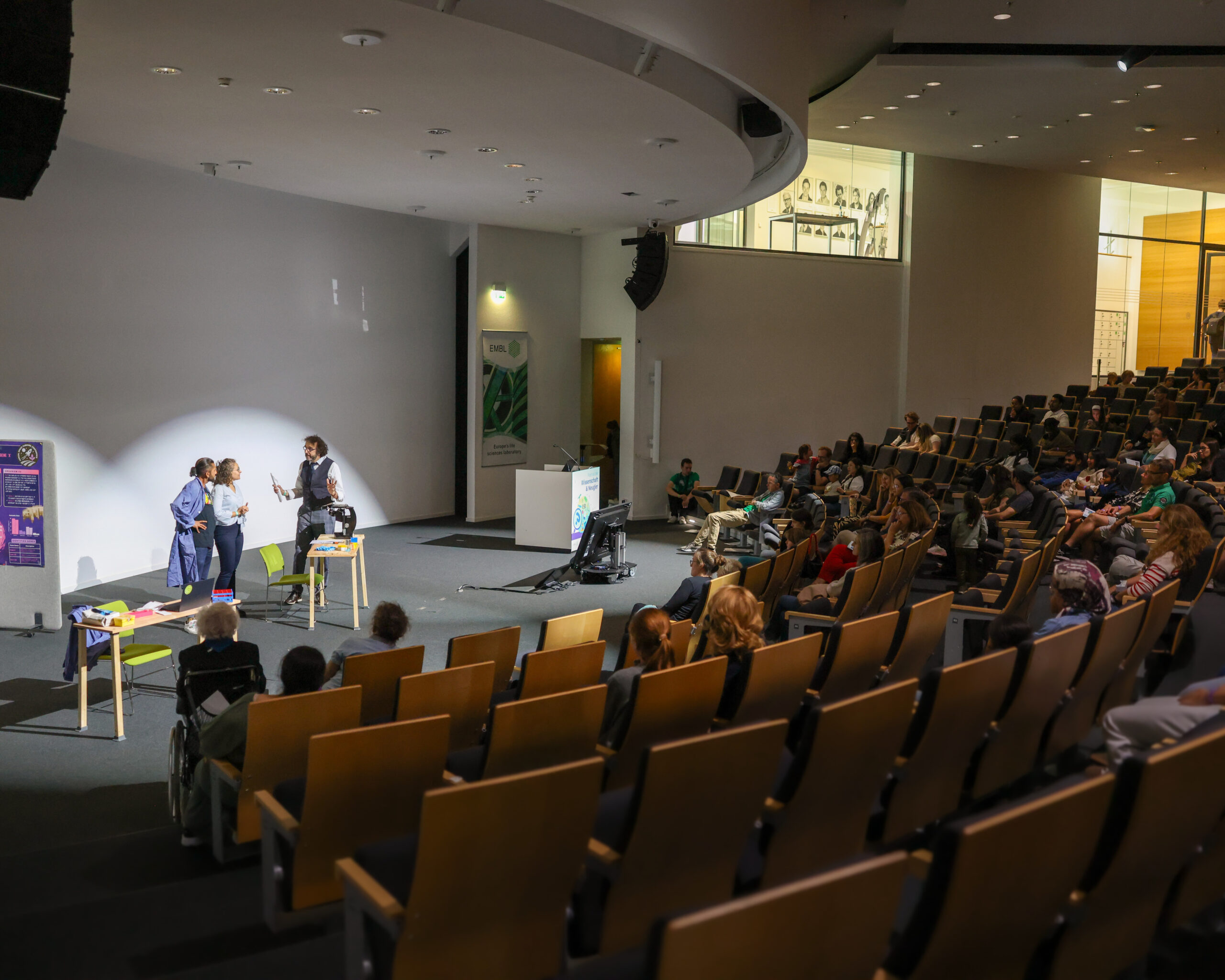
Step into the Theatre of Curiosity for a programme of talks, performances and conversations exploring the fascinating world of science. Hear scientists share their work and ideas, discover science beyond the lab, and enjoy performances that bring scientific themes to life. With something for curious minds of all ages, there’s plenty to discover throughout the evening.
15:30 Bitesize biology
Duration: 25 mins | English | Suggested age: 8+
Speakers: Soraya Zwahlen, Jakub Jezowski, Ana Cobos, Ivana Osredek
Start the night off with some bitesize biology, engaging lightning talks covering the world of biology. From jumping DNA to exploring the impact of chemicals in our oceans, come and hear from four students studying at EMBL about the amazing work they do.
16:05 Our microscopic oceans
Duration: 25 mins | English | Suggested age: 8+
Speaker: Flora Vincent
Our oceans are filled with countless microscopic organisms, yet for many we still have much to understand. Join us as we explore how research is uncovering the hidden roles of these tiny lifeforms and the part they play in supporting large marine ecosystems and our planet’s health.
16:40 Exciting expeditions – exploring science outside the lab
Duration: 25 mins | English | Suggested age: 8+
Speakers: Cristian Tambley, Thomas Haize, Flora Vincent, Kiley Seitz, Kerstin Leberecht
Science doesn’t just have to happen in a laboratory. Join us for an exciting conversation with five expedition experts as they share their stories of discovery out in the field as we go behind the scenes and explore what it takes to take science out of the lab to across Europe and beyond!
17:30 Romeo and Juliet, a Tardigrade Tale
Duration: 30 mins | English | Suggested age: 8+
Performed by: The Idea Nurturing e.V.
Two PhD students meet at a scientific conference and fall in love at first sight. But as their supervisors race to create the world’s first tardigrade–potato, the young researchers are forbidden from seeing each other. Can love survive the ruthless world of academic competition, or will it become another casualty of the publish-or-perish culture?
18:10 Genetics through Genomics – You can run but you can’t hide
Duration: 25 mins | English | Suggested age: 8+
Speaker: Vladimir Benes
Hidden inside every cell is a remarkable instruction manual called DNA. Join us as we uncover what this extraordinary molecule can tell us about ourselves, the living world around us and the amazing discoveries still to come!
19:00 The Physicists
Duration: 1 hr 15 mins | English | Suggested age: 12+
Performed by: the EMBL Theatre Club
At Les Cerisiers Mental Health Clinic, nothing is quite what it seems. After the murder of a nurse shatters the institution’s fragile calm, secrets unravel, identities blur and everyone struggles to keep their masks from slipping.
Blending suspense, dark humour and sharp social commentary, Dürrenmatt’s celebrated classic explores scientific ethics, responsibility and the consequences of knowledge. Join the EMBL Theatre Club for a performance of mystery, wit and thought-provoking theatre.
Trigger warnings: Simulated firearms and staged violence. Younger viewers may find some scenes distressing.
20:45 Beer: Social Chemistry
Duration: 30 mins | English | Suggested age: 12+
Speaker: John Hawkins
Beer. What is it exactly and why do we love it? We’ll explore how the key steps in brewing beer create its unique chemistry, and how generations of brewers have developed a dazzling variety of flavours and styles from just a few primary ingredients. Along the way we’ll take a look back at a bit of beer history, and a peek into the future of beer.
Scheduled activities and workshops
Places are limited for these activities. Registration will be available during the Festival on a first-come, first-served basis.
Science behind latte art
Location: ATC, Science rooftop | Duration: 30 mins | Age: 16+ only
English: 15:15 | German: 16:00, 16:45
Put your coffee under the microscope and discover the science behind the perfect cup. Uncover the secrets of latte art, then have a go at creating your own designs.
Ocean detectives
Location: ATC, Helix, Seminar room A01 | Duration: 30 mins | Age: 8+ only (family session), 16+ only (adult session)
Family, English: 15:30, 16:00 | Family, German: 16:30, 17:00 | Adults, English: 20:30, 21:00
Dive into an ocean mystery and follow the clues to uncover what’s happening beneath the waves. Solve puzzles, investigate marine evidence, and discover how scientists study and protect our oceans and the incredible life they contain.
Accessibility note: We’re sorry that this room does not have step-free access. There are three steps to enter the room. If you need any support, please speak to a member of our team.
Microscopy escape room
Location: ATC, lower level, Flex lab | Duration: Up to 45 mins | Age: 15+ only
German: 15:30, 16:30, 17:30, 18:30 | English: 19:45, 20:45
A mystery is waiting to be solved! Use microscopes to inspect evidence, piece together clues, and discover how scientists explore the tiny worlds hidden all around us.
Strawberry DNA
Location: ATC, lower level, Flex lab | Duration: 30 mins | Age: 8+
German: 15:30, 16:30, 17:30, 18:30 | English: 19:30, 20:30
Get hands-on in the lab and do an experiment to reveal the DNA hidden inside a strawberry.
Let’s code
Location: ATC, lower level, Computer lab | Duration: 45 mins | Age: 8+ only
English: 15:45, 16:45 | German: 20:00, 21:00
Discover how a few simple lines of code can create some amazing things. You’ll have a chance to explore some of the fundamentals of programming, learn how scientists at EMBL use these skills every day and write your very first programs in a fun, supportive environment.
Sounds of the lab
Location: ATC, Helix, Seminar room B11 | Duration: 30 mins | Age: 12+ only
German: 16:00, 16:45, 17:30, 18:15
Create your own music – no experience needed! Mix, layer, and transform real lab noises into unique beats while exploring the unexpected connection between science and music. This workshop is led by artist Stefan Wilczynski.
Accessibility note: We’re sorry that this room does not have step-free access. There are three steps to enter the room. If you need any support, please speak to a member of our team.
Discover our research organisms
Location: Imaging Centre reception | Duration: 45 mins | Age: 8+ only
German: 15:30, 19:00 | English: 17:00, 20:30
Visit our six hands-on stations and meet the diverse organisms that EMBL researchers use to study life in context, ranging from plankton and sea anemones to fish.
Science pub quiz
Location: ATC, Science rooftop | Duration: 30 mins | Age: 12+
German: 20:00 | English: 21:00
Join us for a fun, science-themed pub quiz with science-themed non-alcoholic drinks!
Tours
Registration is required for all tours.
Data Centre
Location: Meet at the tour meeting point | Duration: 45 mins | Age: 8+ only
German: 16:00, 18:00, 20:00 | English: 17:00, 19:00
Go behind the scenes at EMBL’s Data Centre and explore the technology powering modern life science. See how computing, data storage, cloud technologies and AI help scientists process vast amounts of biological data and turn it into new discoveries. This tour is particularly suited to visitors aged 15+.
World of Molecular Biology
Location: Meet at the Imaging Centre reception | Duration: 30 mins | Age: 8+ only (recommended 14+)
German: 15:30, 19:30 | Bosnian/Croatian/Serbian: 16:30 | Italian: 17:30 | English: 18:30, 20:30
Dive into the world of molecular biology! Join a guided tour of EMBL’s permanent exhibition, the World of Molecular Biology and discover fascinating insights into cutting-edge research and the building blocks of life. This tour is particularly suited to visitors aged 14+.
Genomics lab
Location: Meet at the tour meeting point | Duration: 30 mins | Age: 12+ only
English: 16:00, 19:30, 20:00 | German: 16:30, 17:00, 19:00 | French: 17:30 | Spanish: 18:00 | Turkish: 18:30
Join us for a closer look at EMBL’s GeneCore Facility and discover how tiny biological samples become vast amounts of genetic information. See how advanced sequencing technologies help scientists explore DNA and RNA and reveal new insights into how living systems work.
Mechanical Workshop
Location: Meet at the tour meeting point | Duration: 30 mins | Age: 8+ only
German: 15:45, 16:15, 17:15 | English: 16:45
Take a behind-the-scenes look at the EMBL Mechanical Workshop! Discover how precision components and custom-built instruments are designed and manufactured to support cutting-edge research, and learn about the craftsmanship that makes scientific innovation possible.
Imaging Centre
Location: Meet at the Imaging Centre reception | Duration: 45 mins | Age: 10+ only
German: 17:00, 18:00 | English: 20:00
Come with us behind the scenes to discover how scientists at the EMBL Imaging Centre use powerful imaging technologies to reveal the hidden world inside cells and tissues. Learn how our microscopes create images that help researchers to better understand life and disease.
Your Visit
Your visit starts now!
How to get here
Shuttle bus
A free bus will run between Heidelberg Central Station and EMBL every 30 minutes from 2:30pm to 10.00pm, making it easy to travel to, and home from, the Festival of Science & Curiosity.
The bus will be stopping at:
- Heidelberg Central Station (Platform R in the Kurfürsten-Anlage street). The Central Station map is available from VRN.
- Hans-Böckler-Straße bus stop, near Rohrbacher Str. 22
- Alois-Link-Platz
- EMBL
Public transport
Public bus line 28 drives directly to EMBL Campus (bus stop “EMBL”).
Car
Free Parking available in the Parking Garage 1, directly to the left of the campus entry gates.
Bike
Bike parking available on campus.
Map
The map of the campus with all relevant locations marked on it is available.
Arrival
Please collect a wristband at the Advanced Training Centre (ATC) reception when you arrive at the Festival and keep it on at all times.
For children, please write the mobile phone number of the responsible adult and the child’s spoken languages directly on the wristband. This will help with reunification if a child becomes separated from their accompanying adult.
Please note: Children and adolescents aged 15 and under may only attend the Festival if accompanied by an adult.
Food and drink
Feeling hungry?
Grab a free snack and water from the snack table on the entrance floor of the ATC while supplies last.
Fancy something more substantial?
Three local food trucks will be serving delicious food outside the Imaging Centre. You are welcome to enjoy food purchased from the food trucks or brought from home in the dining area or at the tables outside.
These foodtrucks will be on site during the Festival:
- Feast Heidelberg – specialising in burgers and hotdogs, including meat-free alternatives (cash and card accepted)
- Hase Im Mond – specialising in Sri Lankan cuisine, with vegetarian, vegan and gluten-free options (cash only!)
- Crêperie – specialising in crepes (both sour and sweet) with vegetarian options (cash and card accepted)
Thirsty?
You can refill your water bottle at the water station in the Curiosity Fair on the lower floor of the ATC.
Please help us keep our indoor spaces clean and safe by enjoying food and drinks only in the designated dining area or outside.
Accessibility & inclusion
Hearing loop
Available in the Theatre of Curiosity using Sennheiser receivers and neck loops.
Language support
Look for language stickers worn by staff to see which languages they speak.
Quiet room
Located in Room 218, Imaging Centre upper floor. A calm space with dim lighting and sensory items.
Accessible toilets
Located on the lower levels (E0 and E1) of the ATC and on the upper and lower levels of the Imaging Centre.
Diaper changing
Diaper-changing facilities are located on the lower levels (E1) of the ATC.
Nursing
A nursing room is located in the science rooftop.
Prayer room
Located on the lower levels (E0) of the ATC.
How to book tours and workshops
Book your place
All workshops and tours have limited places, so reservation is essential. Reservations can only be made on the day of the Festival. You will be able to book your place for our activities through the booking tab on the webpage at that time.
New sessions open for booking throughout the event at the following times:
- 14:45 for sessions starting between 15:00 and 17:00
- 16:30 for sessions starting between 17:00 and 19:00
- 18:30 for sessions starting between 19:00 and 22:00
Need some help? Our friendly team at the help desks will be happy to help you book.
Help desks
Help desks are located at the reception desks inside the ATC and Imaging Centre.
If you require any help or support during the Festival, please ask any staff member wearing a green EMBL T-shirt or visit a help desk.
Wi-Fi
Connect to: EMBL-Events
Password: #festival
Discover science in more languages
Alongside our German and English sessions, you can also explore selected activities in Bosnian/Croatian/Serbian, Italian, French, Spanish and Turkish.
Bosanski/Hrvatski/Srpski
World of Molecular Biology tour
16:30 | 30 mins | Age 8+
Italiano
World of Molecular Biology tour
17:30 | 30 mins | Age 8+
Français
Genomics lab tour
17:30 | 30 mins | Age 12+
Español
Genomics lab tour
18:00 | 30 mins | Age 12+
Türkçe
Genomics lab tour
18:30 | 30 mins | Age 12+
Places are limited. On the day of the Festival, go to the booking tab to find a session and book your place.
Emergency and safety information
Emergency information
First aid
Medical first responders are based in the medical room on the entrance level of the ATC (E2). Contact any staff member if assistance is needed.
Evacuation
If the alarm sounds, follow staff wearing green T-shirts to the nearest exit. Assembly points are located outside the ATC and the Imaging Centre. Do not use elevators and do not re-enter the building unless you are told that it is safe.
Health and Safety
EMBL has working laboratories and workshops that may contain hazardous materials and other hazards. Please do not enter any areas that are not open to the public, and follow the instructions of staff at all times.
Children’s attendance
Children and adolescents aged 15 and under may only attend the Festival if accompanied by an adult.
Smoking
Smoking and vaping are only permitted in the designated smoking area behind the ATC.
Alcohol
The consumption of alcohol is not permitted at the Festival.
Pets
Pets are not permitted except for service animals.
Eating and drinking areas
Eating and drinking is not allowed in any buildings other than the dining area.
Weapons
Weapons are not allowed on campus.
Video sureillance
The Campus is under video surveillance.
Event terms and conditions
You can download the Festival terms and conditions using this button.
Curiosity CubeTM
At the European Researchers’ Night, everyone – especially our young explorers – gets to roll up their sleeves and experience hands-on science through exciting experiments. Merck’s Curiosity Cube™ mobile science lab travels across North America, Europe, and Southern Africa, increasing access to hands-on science opportunities in communities around the world. The company’s local employees serve as volunteers and role models, showcasing the diversity of the STEM workforce and inspiring young students by showing them that scientists all over the world, who look just like them, are working to create a better tomorrow.
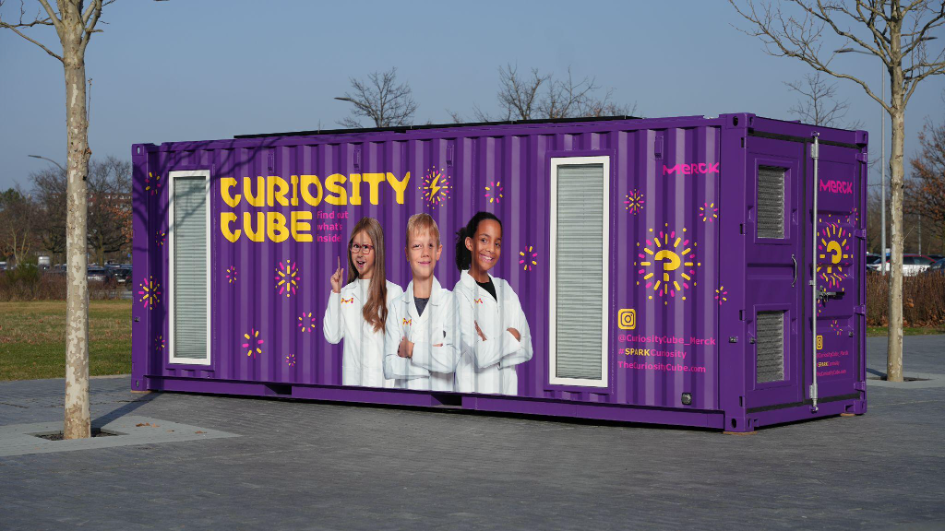
The Curiosity Cube™ isn’t just a space, it’s a hands-on science adventure designed to SPARK™ curiosity in the next generation of scientists. Research shows that early exposure like this helps children see themselves as future scientists, especially those who might not otherwise have access to cutting-edge learning.
Equipped with the latest technology, the Curiosity Cube™ provides a learning environment that allows visitors of all ages to become immersed in specific science topics. Step inside, and you’re not just a visitor, you’re a scientist! You’ll have the opportunity to participate in hands-on science experiments, explore new technologies, and let your curiosity run wild. You’ll also have the chance to ask questions, make discoveries, and see what science is really all about!
Easy read
When?
25. September 2026
3 pm to 10 pm
Where?
The Festival is at the EMBL campus in Heidelberg.
Address
Meyerhofstraße 1
69117 Heidelberg
Germany
How do I get to the Festival?
Shuttle bus
A free shuttle bus will run from Heidelberg Central Station and Alois-Link-Platz to EMBL.
Click for the Shuttle bus schedule.
Bus
Bus number 28 goes directly to EMBL.
Car
Free parking is available.
Bicycle
There are bicycle parking spaces on the campus.
Accessibility
More accessibility information will be available soon.
A map of campus is available here.
Who is the Festival for?
Everyone is welcome.
You can be young or old.
You do not need to know anything about science.
What can I do?
- You can discover science.
- There are many hands-on activities.
- You can do simple experiments.
- There are live demonstrations and other exciting activities.
- You can join guided tours.
- You can see where scientists work.
- You can visit the exhibition “The World of Molecular Biology.”
- You can enjoy theatre performances and art.
Quiet Room
There is a Quiet room.
It is for people who need a calm and quiet space.
The Quiet room is in the Imaging Centre (the building with the exhibition).
Mobile Laboratory
You can visit the Curiosity Cube™ from Merck.
It is a mobile laboratory inside a converted shipping container.
You can take part in fun science experiments.
Food and drinks
You can buy food and drinks at the Festival.
About the Festival
The event is called the Festival of Science & Curiosity.
It takes place in Heidelberg.
The Festival is part of the European Researchers’ Night 2026.
European Researchers’ Night happens every year.
It started in 2005.
Many cities across Europe take part.
Research institutes and universities across Europe open their doors to visitors.
They invite everyone to learn more about science and research.
The aim is simple:
Science is part of everyday life.
Science is for everyone.
Who organises the Festival?
The Festival is organised by EMBL and Merck.
EMBL
EMBL stands for the European Molecular Biology Laboratory.
It is an international research organisation.
Scientists at EMBL study how living things work.
Merck
Merck is a global science and technology company.
Its work includes:
- Healthcare
- Life Science
- Electronics
Working together
EMBL and Merck work together because good science needs teamwork.
Together, we can achieve more.
Media kit
Press hour will take place on the day of the Festival from 4pm to 5pm.
The press release “Festival Announcement” and the press release “Programme Publication” are available for download (only in German).
The Festival flyer and Festival poster are available for download.
The programme overview is available as a schedule timetable.
Detailed information about the Merck Curiosity Cube™ can be found in this Information Leaflet.
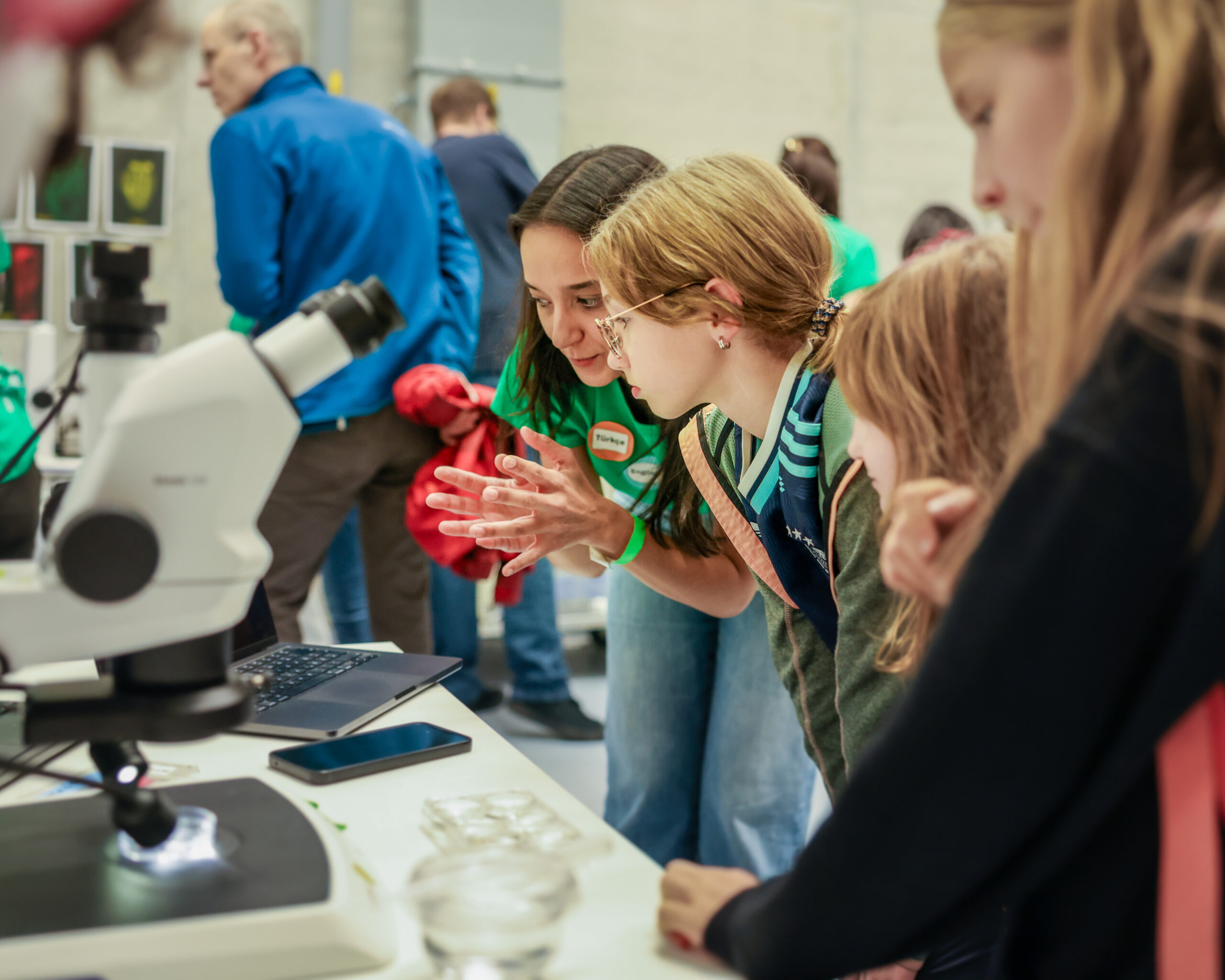
First Impressions from the Festival of Science & Curiosity 2026
(Copyright: Chantal Höhmann / EMBL)
About
European Researchers’ Night 2026: Science for Everyone
The Festival of Science & Curiosity is a European Researchers’ Night event in Heidelberg that will bring science and research to life through an inspiring, accessible programme of free events. Our region is diverse and so is our Festival! We are planning a range of multilingual activities and experiences to help make the Festival welcoming to as many people as possible. Check back when the full programme is published to discover the different languages and activities on offer. Join us at the Festival – let’s be curious together!
Every year, scientific institutions across Europe open their doors and welcome the public to experience the diversity, excitement and relevance of modern research. Since 2005, European Researchers’ Night has showcased the breath of European research and innovation, bringing science out of the lab and into society for one evening each year and connecting researchers and citizens of all ages. European Researchers’ Night aims to show that science is part of our everyday lives and open to everyone.
The European Researchers’ Night is a pan-European event funded by the European Union to bring science and society closer and heighten young people’s interest in science. The European Researchers’ Night takes place in 40 countries and more than 460 cities all over Europe and beyond simultaneously.
About us
The Festival of Science & Curiosity – European Researchers’ Night 2026 is jointly organised by the European Molecular Biology Laboratory (EMBL), a research laboratory for molecular biology and Merck, global science and technology company in the fields of health, life sciences, and electronics. Together, we welcome you to explore want to create an experience that showcases science in its many forms from basic research to industrial innovation. Our partnership demonstrates how science advances through cooperation and shared commitment.
The European Researchers’ Night is funded by the European Union. Views and opinions expressed are however those of the author(s) only and do not necessarily reflect those of the European Union. Neither the European Union nor the granting authority can be held responsible for them.
When?
25 September 2026
3pm - 10pm
Where?
EMBL Heidelberg
Meyerhofstraße 1
69117 Heidelberg
A European Researchers’ Night event. Meet researchers, enjoy hands-on activities, workshops and talks.Explore science in new ways and different languages.
The event is free and open to everyone!
Contact: festival@embl.org
Instagram: embl_festival_of_science