ERC Starting Grant for Florian Wollweber to investigate the origins of eukaryotic cell complexity
Florian Wollweber, Group Leader at EMBL Grenoble, has received a grant to explore the origins of eukaryotic cells using cutting-edge multi-scale imaging
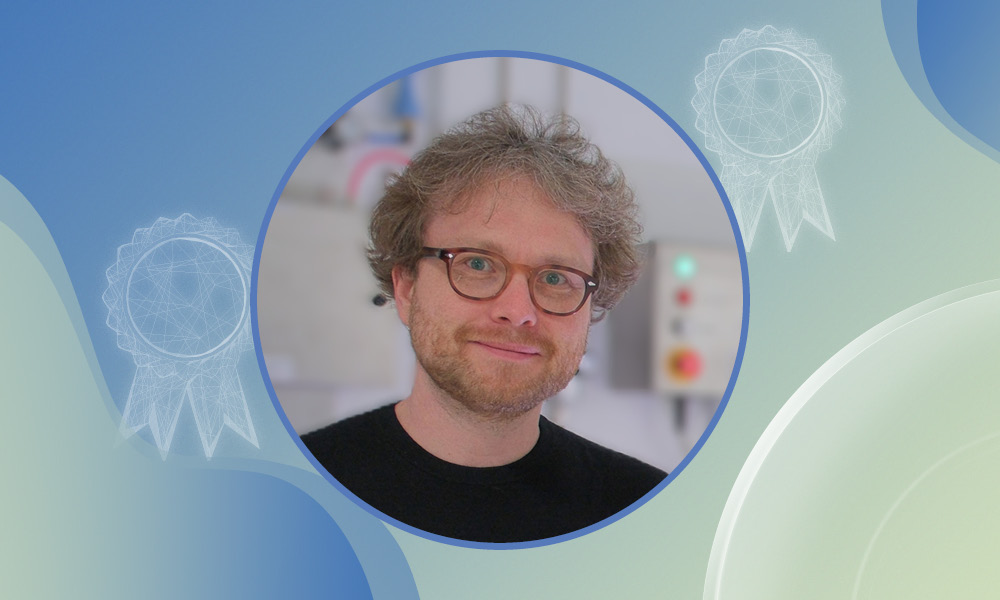
Florian Wollweber, EMBL Grenoble Group Leader and recipient of 2026 ERC Starting Grant. Credit: Kim Nalin/EMBL
The European Research Council (ERC) has awarded an ERC Starting Grant to Florian Wollweber, a newly appointed Group Leader at EMBL Grenoble. The grant will support his research into the origins of eukaryotic cells by investigating the cellular organisation of Asgard archaea using advanced multi-scale imaging approaches.
ERC Starting Grants support talented early-career researchers in developing ambitious research programmes at the frontiers of their fields. Over the next five years, Wollweber and his team will receive funding worth ~€2 million. This will help the Group combine ultrastructural and in situ imaging approaches to explore how spatial organisation may have contributed to the emergence of eukaryotic cell complexity.
Exploring the origins of eukaryotic cells through a new lens
Around two billion years ago, life on Earth underwent one of its most profound evolutionary transitions. The merger of simple cells gave rise to the first eukaryotes – organisms whose cells contain membrane-bound compartments. How this leap in cellular complexity occurred remains one of biology’s greatest unanswered questions. Asgard archaea, a lineage of microbes first discovered a few kilometres from Loki’s Castle, a field of hydrothermal vents in the deep sea, appeared to be the closest living relatives of eukaryotes. Their cell biology could hold important clues to resolving this mystery.
However, scientists’ understanding of Asgard archaea relied largely on genomic data until recently. With the first representatives of this archaeal lineage now successfully grown in the laboratory, researchers from the Wollweber Group can directly investigate how these cells are organised and what this might reveal about the emergence of eukaryotic cellular complexity.
Through the ARCHAEAOLOGY project, Wollweber and his Group will combine advanced imaging approaches to create a high-resolution molecular atlas of an Asgard archaeon. This map could explain where fundamental processes such as transcription and protein production take place, and uncover the function of the cells’ unusual protrusions.
The organisms studied by the Wollweber Group were enriched from deep-sea sediment and are exceptionally difficult to grow in the laboratory. To make the most of these rare samples, Wollweber and his team will combine high-end imaging techniques across different scales to build a detailed picture of Asgard cell organisation. Cryo-electron tomography(cryo-ET) will provide a high-resolution 3D atlas of cellular architecture and reveal where key processes take place, while expansion microscopy(ExM) will map the distribution of specific molecules.
“Understanding the origin of eukaryotes is one of the fundamental challenges in biology,” said Wollweber. “Asgard archaea provide an extraordinary opportunity to study this transition. We now finally have the tools to investigate not only which genes these organisms possess, but how their cells are organised at the molecular level.”