
Ilya Osterman
Group Leader
ORCID: 0000-0001-7748-980X
EditMetabolism-driven immunity
The Osterman Group investigates bacterial defense and phage counter-defense strategies to discover new enzymes, metabolites, and pathways linking metabolism and immunity across the tree of life.
Group Leader
ORCID: 0000-0001-7748-980X
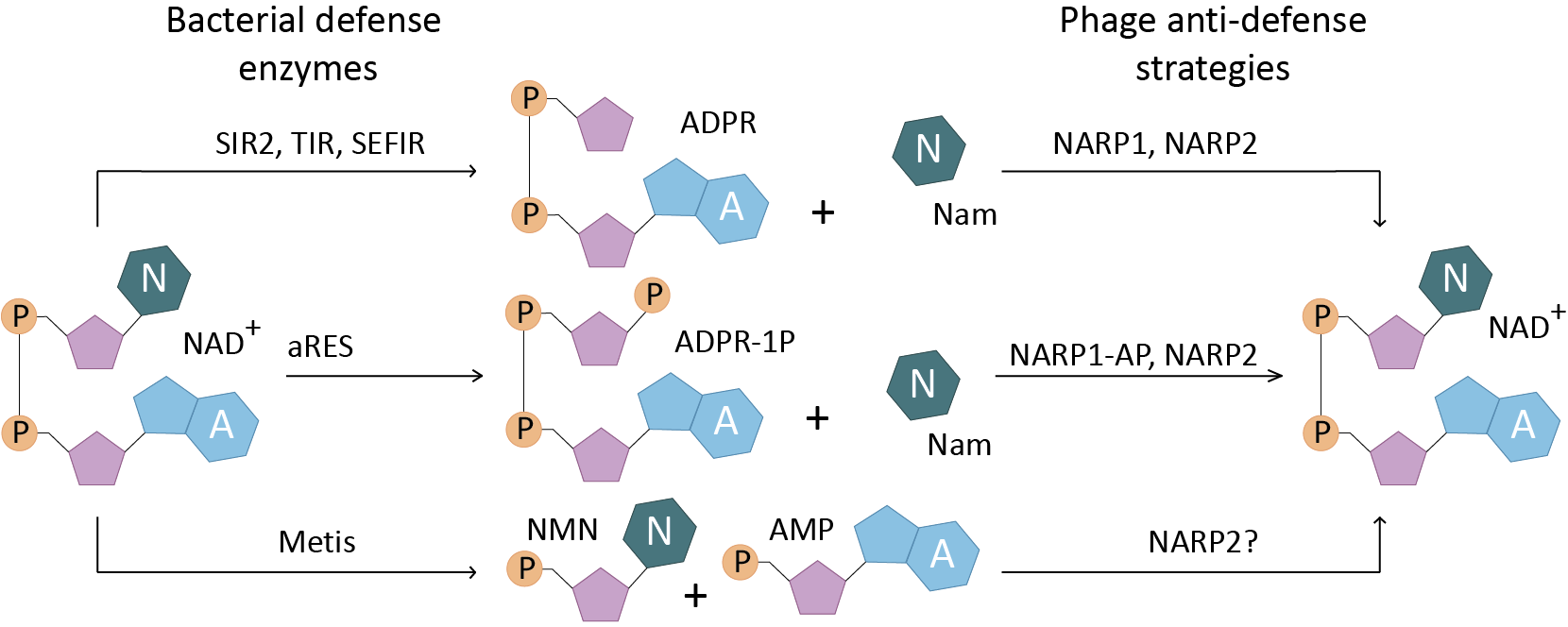
EditIn recent years, our understanding of bacterial immunity against bacteriophages has expanded dramatically. One prominent class of anti-phage defense systems operates by depleting essential metabolites such as nicotinamide adenine dinucleotide (NAD⁺), leading to growth arrest or cell death.
Recent work has shown that phages can overcome these defenses by rebuilding NAD⁺ using previously unknown enzymes and biochemical reactions, as well as by producing novel small molecules.
At the same time, increasing evidence points to shared principles between bacterial and eukaryotic innate immunity, including conserved protein domains, signaling molecules, and regulatory logic (Rousset* & Osterman* et al., Science 2025).
Together, these findings suggest that metabolic conflict is a fundamental and evolutionarily conserved mechanism of immunity.
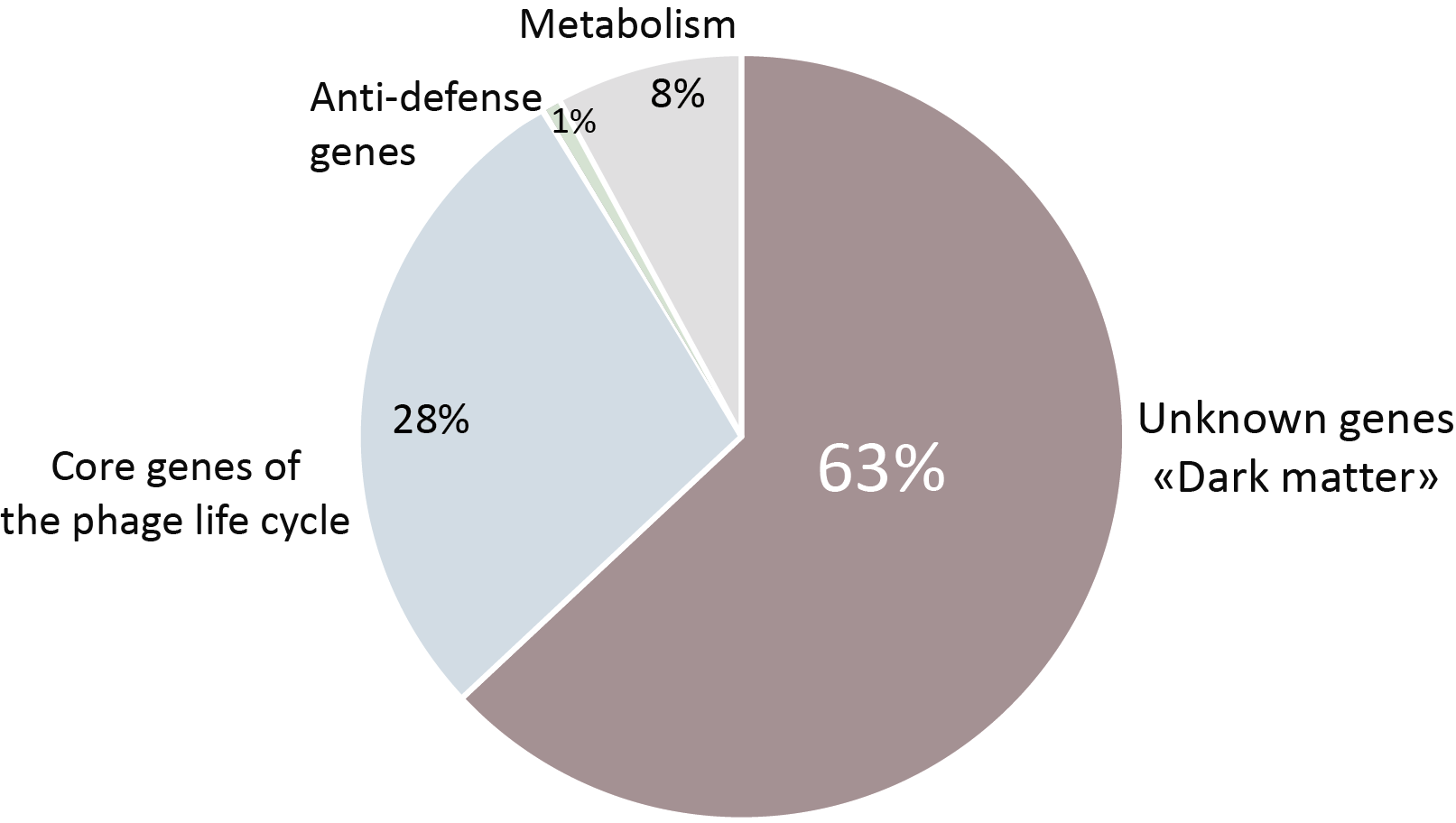
Despite their relatively small genomes, phages are the most abundant biological entities on Earth (~10³¹ particles globally). As a result, phage genomes represent the largest reservoir of genetic diversity, yet most phage genes remain uncharacterized or misannotated. Our goal is to systematically explore this “dark matter” of phage genomes to uncover new enzymes, metabolites, and metabolic pathways.
Phage–bacteria interactions are not limited to nucleic acids and proteins; they also unfold at the level of metabolism. Both organisms depend on a shared pool of essential metabolites, including NAD⁺, nucleotides, SAM, FAD, and amino acids.
We hypothesize that metabolite depletion and rebuilding represent a general framework of phage–host conflict. A central goal is to create a “metabolic atlas of infection” and show how essential metabolites are produced, degraded, and rebuilt during phage-bacteria conflict.
Metabolism is universal: all living systems rely on a conserved set of small molecules, even when their proteins and regulatory networks diverge.
Many key components of human innate immunity have deep evolutionary roots in bacteria, suggesting that fundamental principles of immunity may be encoded at the level of metabolites and metabolic regulation.
By combining:
We aim to establish a mechanistic framework for metabolism-driven immunity.
Phages, as the richest source of genetic and enzymatic diversity, provide a powerful entry point into this problem. Our goal is to translate molecular discoveries into general principles linking metabolism and immunity across biological systems.