From molecular mechanisms to ecological interations: highlights from our event reporter Noopur Dubey
Report written by Noopur Dubey, PhD Student, University of Graz, Austria
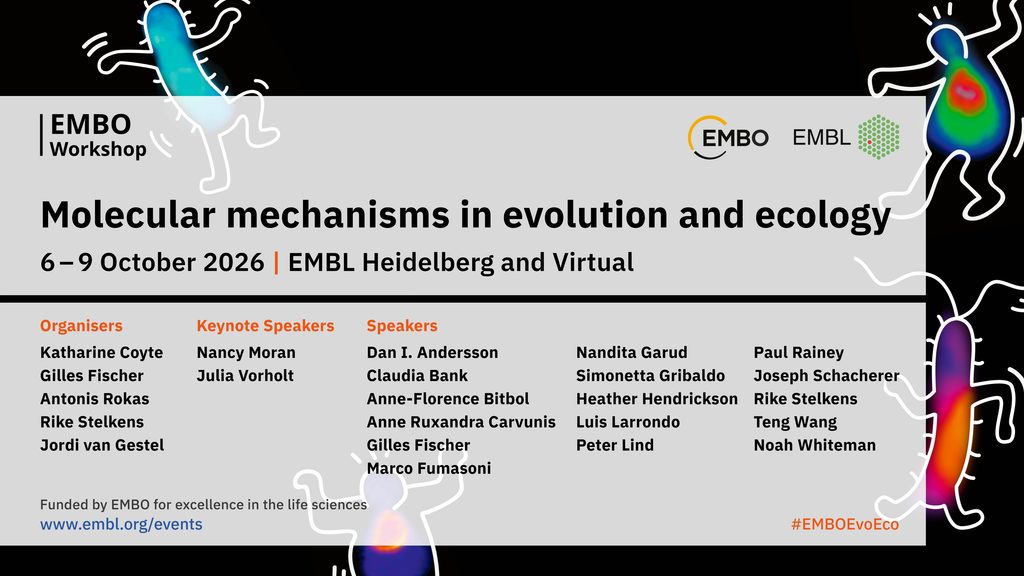
The EMBO Workshop ‘Molecular mechanisms in evolution and ecology’, held from 6 to 9 October 2026 at the European Molecular Biology Laboratory (EMBL) in Heidelberg, brought together researchers exploring how molecular processes shape evolutionary change and ecological interactions. The workshop covered a broad range of topics, from the emergence of new genes and the evolution of cellular traits to microbial adaptation, symbiosis, and interactions between organisms and their environments.

As a PhD student at the University of Graz, Austria, I attended the workshop online. The interactive platform allowed me to follow the scientific presentations and participate in discussions through its question-and-answer (Q&A) feature. This made the experience more engaging than simply watching the talks, as I could submit questions, follow exchanges between speakers and participants, and gain further insight into the research being presented.
The poster flash talks were another highlight of the workshop. Their concise format provided an engaging introduction to a diverse range of research projects and emerging ideas. I particularly appreciated the opportunity to explore different approaches and perspectives within the fields of evolution and ecology.
Across the four days, the workshop offered a valuable opportunity to learn about current research and reflect on how molecular mechanisms contribute to the diversity, adaptation, and complexity of life.
Day 1: Connecting Molecular Mechanisms with Biological Complexity
The first day introduced the central theme of the workshop: understanding evolution and ecology through the molecular processes that underpin biological systems. The presentations highlighted how molecular biology can help explain phenomena beyond individual molecules, including the emergence of new cellular relationships and the adaptation of organisms to their environments. One particularly fascinating topic was the possibility of inducing endosymbiosis. This research direction raises important questions about how interactions between organisms can become increasingly integrated and how new biological relationships might emerge. It also illustrates how experimental approaches can help researchers investigate processes that have played important roles in evolutionary history.
The opening sessions established a useful framework for the days that followed. Rather than treating molecular biology, evolution, and ecology as separate disciplines, the talks demonstrated how closely connected they are. Molecular mechanisms influence the traits of organisms, while environmental conditions and interactions with other organisms shape which traits are maintained or altered over evolutionary time.
Day 2: Biological Rhythms, New Genes, and the Evolution of Cellular Traits
The second day explored how molecular and cellular properties change and contribute to biological diversity. One topic that stood out was the study of circadian clocks and the molecular mechanisms that regulate biological timing. Circadian systems allow organisms to coordinate cellular and physiological processes with daily environmental cycles. Studying these rhythms can help explain how organisms respond to predictable environmental changes and how timing mechanisms contribute to adaptation.
Another important theme was the origin of new genes. Research on de novo gene birth addresses a fundamental question in evolutionary biology: how can new genetic material acquire a biological function? The emergence of genes from previously non-coding sequences offers an intriguing perspective on evolutionary innovation. It also raises questions about how newly emerging sequences become integrated into cellular systems.
The evolution of cell size was another interesting topic, explored through research on yeast. Cell size is connected to many aspects of cellular physiology and fitness. Investigating its evolution can reveal how genetic variation, cellular constraints, and environmental conditions interact to
shape biological characteristics. Together, these presentations illustrated different routes through which biological systems can evolve. Changes in biological timing, the emergence of new genes, and variation in cellular traits may involve distinct mechanisms, but each demonstrates how molecular processes contribute to larger evolutionary patterns.
Day 3: Natural Variation, Adaptation, and Microbial Evolution
The third day focused on variation within populations and how organisms respond to environmental pressures. These topics are particularly relevant to understanding evolution in real-world settings, where populations encounter changing conditions and must adapt. Research on natural variation in yeast highlighted the value of studying diversity within a species. Naturally occurring genetic differences provide opportunities to investigate how
genotypes relate to phenotypes and how populations respond to different environments. Yeast is especially useful for connecting genetic variation with measurable biological traits.
Another important topic was antibiotic resistance, which illustrates how populations respond to strong selective pressures and how genetic changes can influence survival. Understanding the mechanisms underlying resistance is important for evolutionary biology as well as for
addressing challenges in medicine and microbiology. The programme also explored thermal adaptation and the relationship between environmental
conditions and evolutionary change. Temperature influences many aspects of organismal performance, making adaptation to thermal environments a useful way to investigate how populations respond to selection.
The poster flash talks were a particularly interesting part of the workshop for me. Their concise format made it possible to encounter a variety of research questions and approaches in a short time. They complemented the longer presentations by introducing additional projects and highlighting the breadth of research being conducted across the field. I found this format especially valuable because it offered an engaging overview of emerging ideas and encouraged me to think about the different ways researchers approach related scientific questions.
Day 4: Evolutionary Innovation, Horizontal Gene Transfer, and Symbiosis
The final day returned to the broader question of how evolutionary processes generate biological complexity. The presentations considered mechanisms that allow organisms to acquire new capabilities and develop lasting relationships with other organisms. Horizontal gene transfer was one of the important themes, highlighting how genetic material can move between organisms rather than being inherited only from parent to offspring. This process can introduce new genetic functions and influence how organisms interact with their environments. It also adds complexity to our understanding of evolutionary history by showing that genetic innovation can occur through routes beyond conventional vertical inheritance.
Another major theme was ancient endosymbiosis and its evolutionary significance. Endosymbiotic relationships have played a major role in the history of life, demonstrating that interactions between distinct biological entities can become deeply integrated over evolutionary time. Studying these relationships helps researchers investigate how cooperation, dependency, and cellular integration can contribute to major evolutionary transitions.
Considered together, these topics illustrated that evolution is not driven solely by gradual changes within isolated organisms. It can also involve the acquisition of genetic material, the establishment of interactions between organisms, and the long-term integration of biological systems. Molecular mechanisms provide the foundation for understanding these processes, while ecological relationships and environmental conditions influence their consequences.
The final sessions brought together many of the workshop’s central themes: the emergence of new biological functions, the importance of natural variation, adaptation to environmental pressures, and the evolutionary consequences of interactions between organisms. They reinforced the value of studying evolution and ecology across multiple biological scales.
Conclusion
The EMBO Workshop “Molecular Mechanisms in Evolution and Ecology” provided a broad and stimulating overview of how molecular processes contribute to evolutionary change and ecological interactions. Across the programme, the presentations demonstrated how research on gene birth, circadian clocks, antibiotic resistance, thermal adaptation, horizontal gene transfer, and endosymbiosis can contribute to a more integrated understanding of biological systems.
As a PhD student at the University of Graz, Austria, I found attending the workshop online to be a rewarding learning experience. The interactive platform allowed me to participate in Q&A sessions and engage with the scientific discussions, making the remote format feel more participatory. The poster flash talks were another highlight, offering concise and engaging introductions to a wide range of research projects and ideas.
One of the main lessons I took away from the workshop was the importance of connecting molecular mechanisms with the evolutionary and ecological contexts in which they operate. Biological traits do not evolve in isolation; they emerge from interactions between genes, cells, organisms, and environments. Understanding these connections requires approaches that cross disciplinary boundaries and bring together different perspectives.
Overall, the workshop was an excellent opportunity to learn about current research at the intersection of molecular biology, evolution, and ecology. The combination of diverse scientific presentations, interesting poster flash talks, and interactive online discussions made the experience informative and engaging. It also encouraged me to reflect on new questions about how molecular processes shape the diversity and complexity of life.
Did you know that you can become an event reporter and receive a conference fee waiver in exchange? Find out how to do that by visiting our Become an event reporter page.