BioMalPar XXII from the perspective of event reporter Joy Kabagenyi
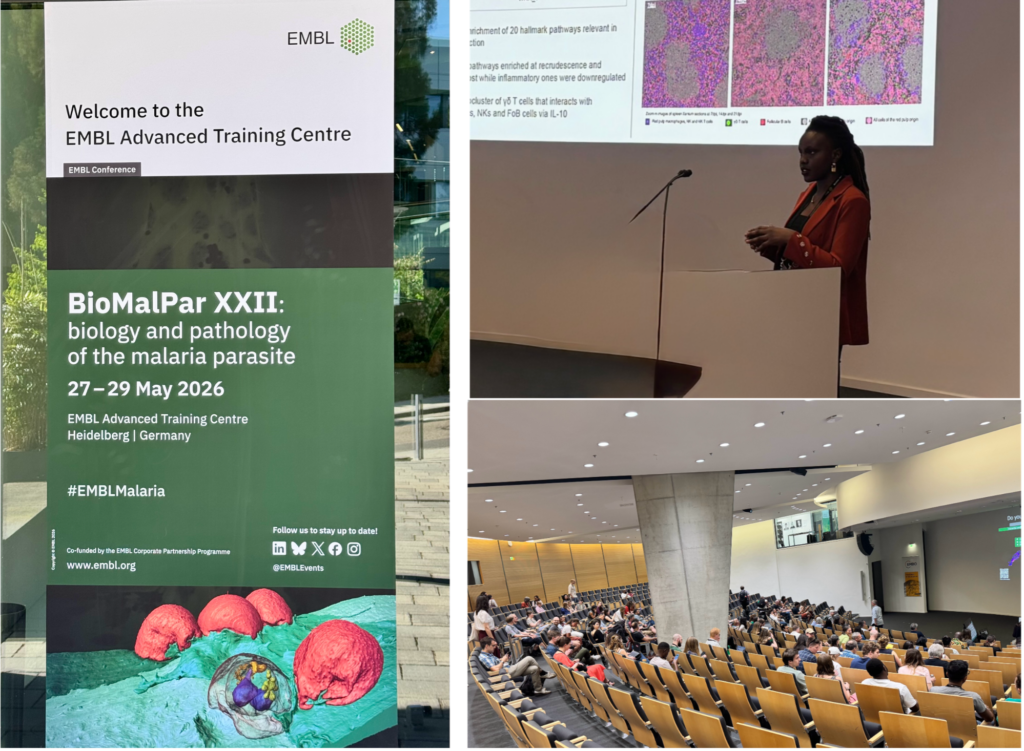
The EMBL Conference brought together scientists from around the world to understand the biology of the malaria parasite and drive forward innovations and strategies.
Written by Joy Kabagenyi, PhD student, University of Glasgow, Scotland
BioMalPar, one of the leading international meetings dedicated to malaria research and one of my personal favourites, took place again this May 2026, and I was thrilled to be a reporter for it. Each year, it brings together researchers from academia, industry, and health institutions from across the globe to share and discuss groundbreaking advances in parasite biology, host-parasite interactions, vector biology, genome-scale approaches, and translational interventions in the field. What makes the meeting especially distinctive, however, is that it offers much more than an outstanding scientific programme. BioMalPar places strong emphasis on networking and connection; something clearly reflected in the non-scientific spaces and moments strategically woven throughout the programme.
Another precious characteristic of this conference is the platform it creates for early-career scientists. From postgraduate students to early postdoctoral researchers, BioMalPar provides opportunities to present work, gain recognition and encouragement through prizes, and engage directly with senior scientists in the field. This creates opportunities not only for visibility and immediate connection, but also for meaningful professional relationships and potential long-term mentorship within the community.
The science that stayed with me
As is the norm every year, this year’s talks and speakers did not fall short of delivering an elegant and compelling learning experience through groundbreaking, field-advancing research shared. Across the sessions, speakers demonstrated how advances in functional genomics, cell biology, and chemical genetics are providing unprecedented insight into parasite development, host-parasite interactions, and antimalarial resistance.
The research shared underscored a central message: understanding the parasite at the molecular level, what enables its survival, what novel vulnerabilities can be exploited to develop more effective antimalarial drugs and strategies, and how we overcome drug resistance. Several talks highlighted the growing importance of defining the molecular mechanisms underlying Plasmodium biology and identifying new opportunities for therapeutic intervention.
Opening the conference, Tania De Koning-Ward, Deakin University, Australia, showcased how proteomic approaches are transforming our understanding of rhoptry biology, revealing essential molecular processes required for parasite invasion and survival. Translational research was equally prominent, with Omar Janha, Keltic Pharma Therapeutics, UK, presenting a rationally designed PfCLK3 inhibitor with exciting potential as a next-generation antimalarial capable of achieving a radical cure.
The conference also offered a timely reminder of the challenges facing malaria control, as Isabelle Henshall (Bernhard Nocht Institute for Tropical Medicine, Germany) demonstrated how repeated artemisinin exposure can drive the emergence of hyper-resistant parasites through complex cellular adaptations. A complementary standout presentation from Dr Isabella Oyier (KEMRI-Wellcome Trust Research Programme, Kenya) showed how genomic surveillance can track the evolutionary footprint of antimalarial drug pressure in endemic settings, underscoring the growing role of genomics in informing malaria control strategies.
The tech behind the discoveries
Beyond the fascinating biological questions and innovative research approaches showcased throughout BioMalPar XXII, what captivated me most was the remarkable diversity of advanced technologies now driving malaria research. Across the conference, it was clear that the field is undergoing a technological revolution, with researchers increasingly leveraging high-resolution and multidimensional approaches to interrogate parasite biology at an unprecedented level of detail.
Hannah Fleckenstein, EMBL Heidelberg, for example, demonstrated how targeted volume electron microscopy combined with sophisticated three-dimensional vascular models can visualise host-pathogen interactions during cerebral malaria with remarkable spatial resolution. Equally compelling was Sabrina Absalon’s presentation, “Expanding Our View of Plasmodium: From Organelle Division to Host Pathogenesis”, which illustrated how advanced imaging, parasite cell biology tools, and functional genomic approaches can be used to reveal Plasmodium organelle dynamics and uncover their broader implications for parasite development and host disease progression in the host.
Beyond these oral presentations, the conference showcased how spatial transcriptomics, single-cell sequencing, cryo-electron microscopy, functional genomics, and computational biology are enabling researchers to move beyond descriptive observations. These approaches unravel the molecular and cellular mechanisms underlying parasite survival, immune evasion, transmission, and drug resistance. Together, these technological advances are reshaping malaria research, equipping scientists with powerful new tools to accelerate the discovery of vaccines, therapeutics, and strategies that may bring us closer to malaria elimination.
The environment and experience
BioMalPar also stood out for the environment in which the science was experienced. As one attendee, Joyce Nyirongo, a PhD student at the University of Glasgow, put it: “I loved the ambience, the double helix building especially! This goes to show that the environment matters as much as the science.”
That sentiment was widely shared. Conversations with both young scientists and principal investigators reflected a deep appreciation for the atmosphere created by the conference setting. From the conference rooms to the break and lunch areas, and the dinner set-ups that encouraged relaxed interaction, the physical environment played an important role in fostering openness and connection. The DNA double-helix architecture of the EMBL hosting centre added another memorable dimension, drawing visible excitement from participants and becoming a point of shared delight throughout the meeting.
Beyond the physical setting, two moments were particularly impactful for me outside the scientific programme. The Women in Malaria (WiM) workshop, delivered by Elena Gomez, focused on identifying and addressing “imposter syndrome” and was deeply powerful. Listening to scientists at different career stages openly share experiences of self-doubt, external doubt, and resilience was a reminder that vulnerability and courage can coexist, and that support within the scientific community matters deeply.
Secondly was the lifetime achievement award session honouring Robert Sinden. Hearing senior scientists reflect on his influence on their early careers highlighted a legacy that extends far beyond publications, one grounded in the lasting impact a scientist can have on people, mentorship, and the shaping of future generations.
The people who make it special
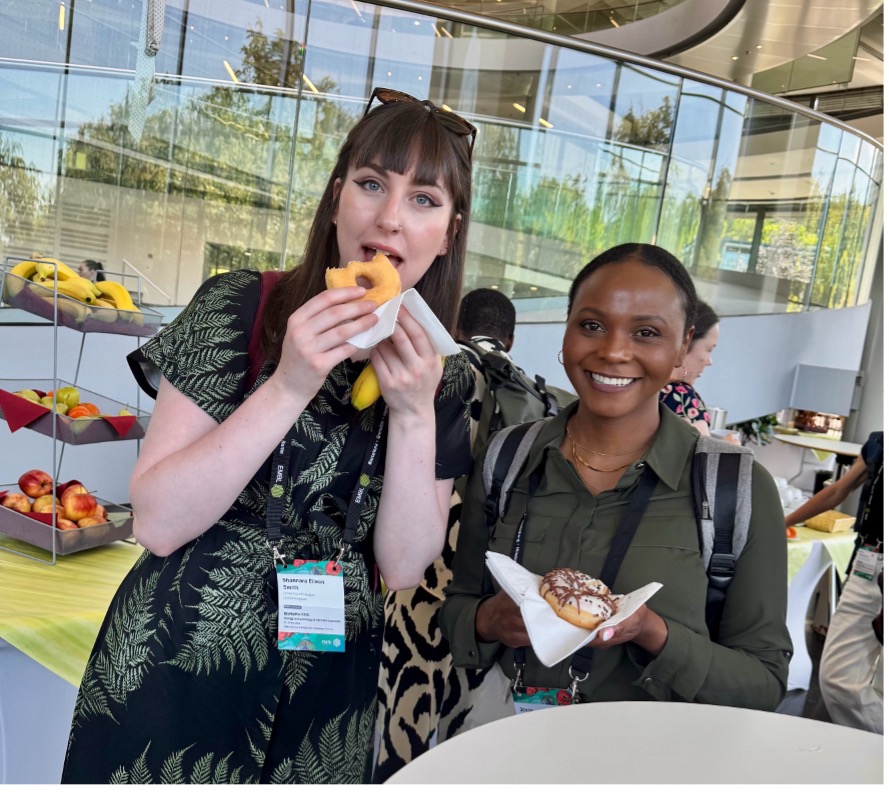
What continues to make BioMalPar exceptional is its sense of community. From day one, you quickly realise that this conference is more than just a place where research is presented, but a gathering of family united by a shared purpose. It is a space where people freely share knowledge, support and collaborate, and protect and respect each other’s research. Senior researchers interact openly and generously with junior scientists, exchanging ideas in a way that feels natural and sincere. It is also a place where professional relationships grow into enduring connections, with many participants returning year after year. I first attended BioMalPar in 2024, during its 20th anniversary celebration since inception, a fact I found both fascinating and an honour to be part of.
As a first-year PhD student, I experienced this spirit of community personally when I gave my talk and Friedrich Frischknecht, one of the PIs, took my picture and shared it with my supervisors, expressing how proud he was of me. It was a simple but deeply heartwarming gesture that made me feel genuinely welcomed into the community. My rector once said, “we are a family before we are an army,” and that sentiment is effortlessly embodied by the community of scientists at BioMalPar.
My reflection
BioMalPar XXII was a reminder that scientific conferences can be at their most powerful when they bring together not only outstanding research, but also the people, spaces, and conversations that allow a field to thrive. It was a meeting defined by scientific excellence, technological innovation, and a deeply human sense of connection. For early-career scientists especially, it offered something rare: the chance to learn, to be seen, and to feel part of a community working collectively toward a vital global goal.
The EMBL Conference ‘BioMalPar XXII: biology and pathology of the malaria parasite’ took place between 27 – 29 May 2026 in Heidelberg, Germany, and virtually.
Did you know that you can become an event reporter and receive a conference fee waiver in exchange? Find out how to do that by visiting our Become an event reporter page.