Five senses, one science
By Lina Mahl
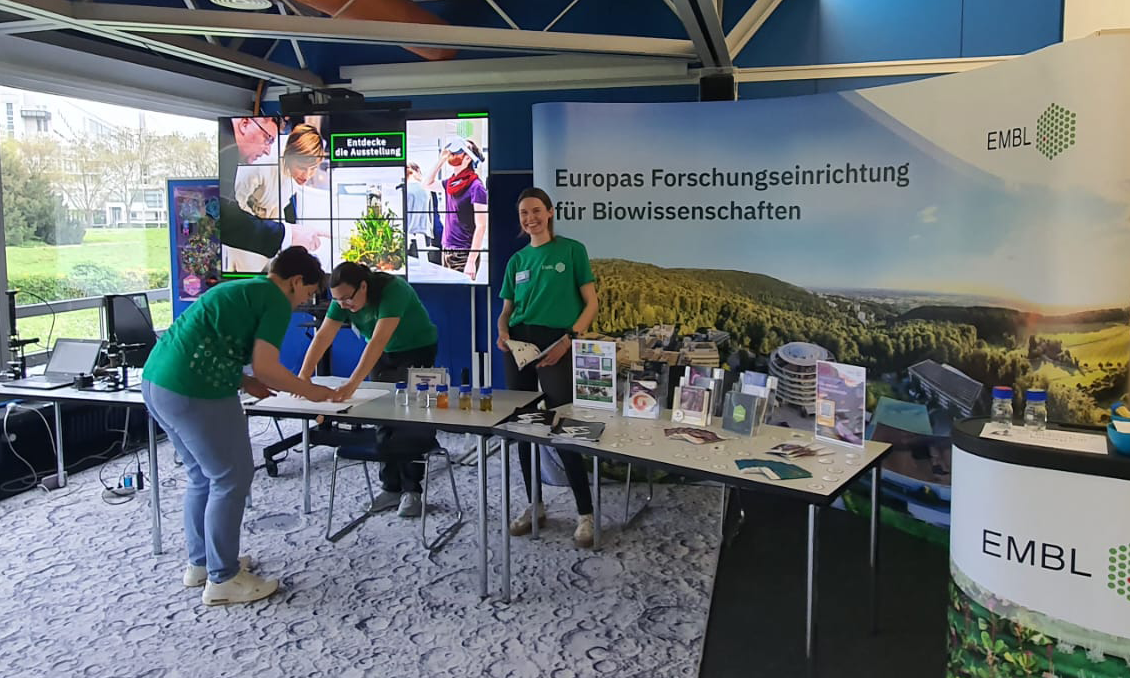
Science is inherently explorative and tries to answer questions we have about life. At EMBL, scientists investigate fundamental questions of molecular biology: What constitutes the basis of life and which technologies can we use to study even its smallest components? Visitors to the EMBL campus in Heidelberg can explore how the institution approaches these questions in The World of Molecular Biology (WMB) exhibition. Through many visual and digital exhibits, such as LED screens showcasing microscopic images or text relaying important information, they can engage with science in an educational and fun way.
But what about people who navigate the world without visual input? Are they excluded from interacting with scientific research in the context of the exhibition but also in general? Ultimately asking: is our experience of science limited to seeing? Or can we feel it, hear it or even smell it? Is there only one door through which science can be accessed?
These questions intrigued the scientific minds at EMBL. After all, there was room for innovation. So they embarked on a journey with one goal: to open new ways of experiencing EMBL research and thereby making it tangible and fun for everyone, including visually impaired and blind people. What better way to reach this goal and as many people as possible than through the WMB exhibition. Thus, the idea of a multisensorial exhibit was born.
Even though at EMBL, there are experts in molecular biology as well as people experienced in translating a scientific topic into an informative exhibit, this inclusive project required venturing in an area uncommon to everyone involved.
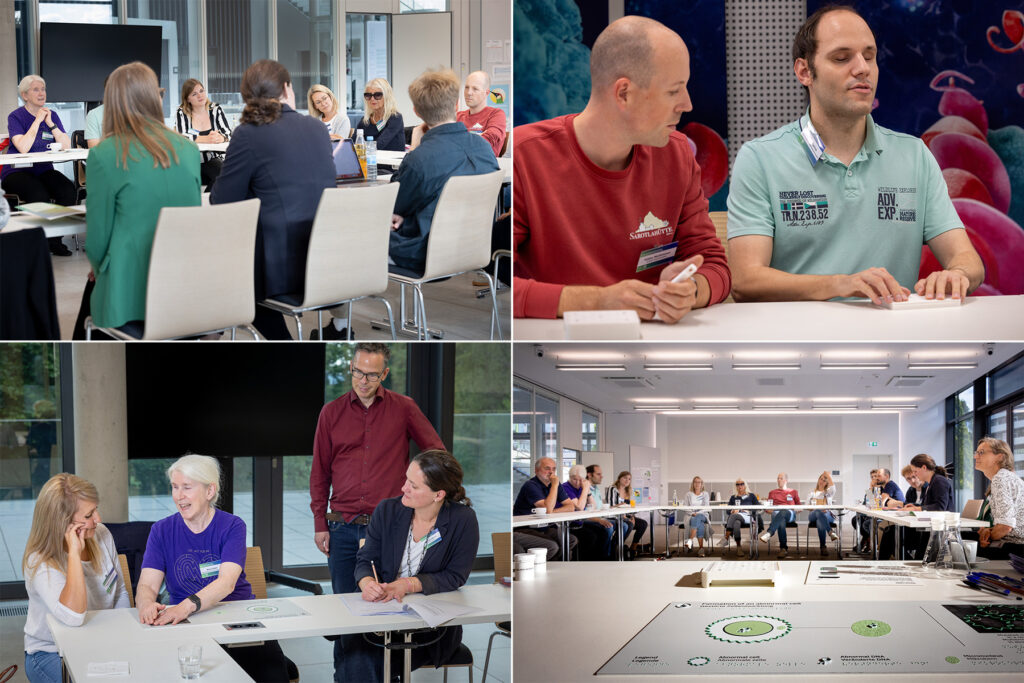
Many people and rounds of discussion and improvements were needed to realize the idea of a multisensorial exhibit.
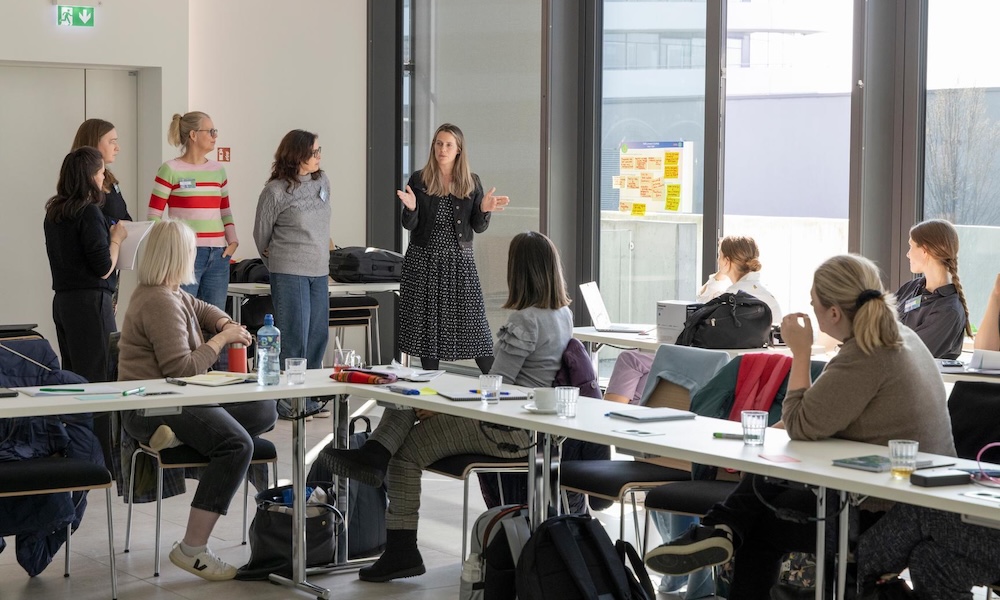
Therefore, we joined forces with experts in designing exhibits involving senses other than seeing and delivering educational content to the visually impaired and blind community. To also fulfil the responsibility of creating a piece which reflects the point of view and experience of its target audience as well as meets all their needs, visually impaired and blind people were invited to share their thoughts on prototypes of the table. Together, all partners formed a focus group motivated to bring more inclusivity to science.
All of the work and learnings during this intense and collaborative development process culminated in an authentic and inclusive exhibit, which was introduced to the WMB exhibition in April. The people that accompanied and delivered this project, were among the first to be able to experience the multisensorial table in its finished form. They were also among the first, to find answers to their questions of what does science feel like? What does science smell like? And what does science sound like?
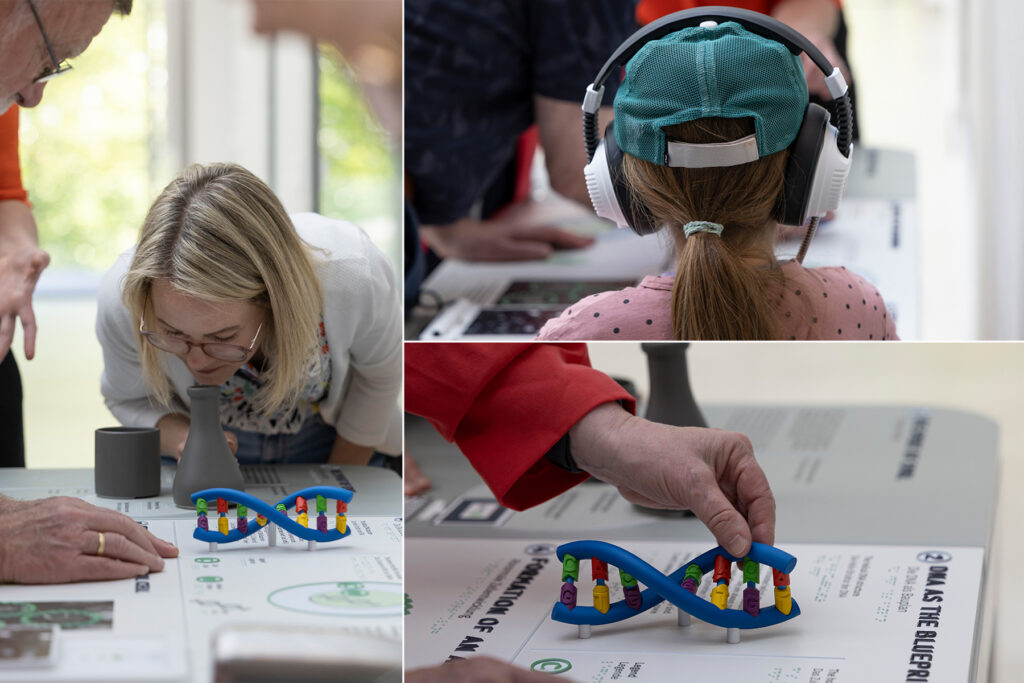
The new exhibit is a multisensorial experience exploring EMBL science through a different lens, thereby opening new doors to the research of the institution.
Would you like to know as well? Come visit the exhibition and find out for yourself! Everyone is welcome to experience this new access to science, regardless of which senses you mainly rely on in your day to day life. You might even discover new ways of exploring your surroundings. To find out more about visits for the general public and schools visit the exhibition website (in English or in German).