
EMBL sustainability measures march forward in 2025
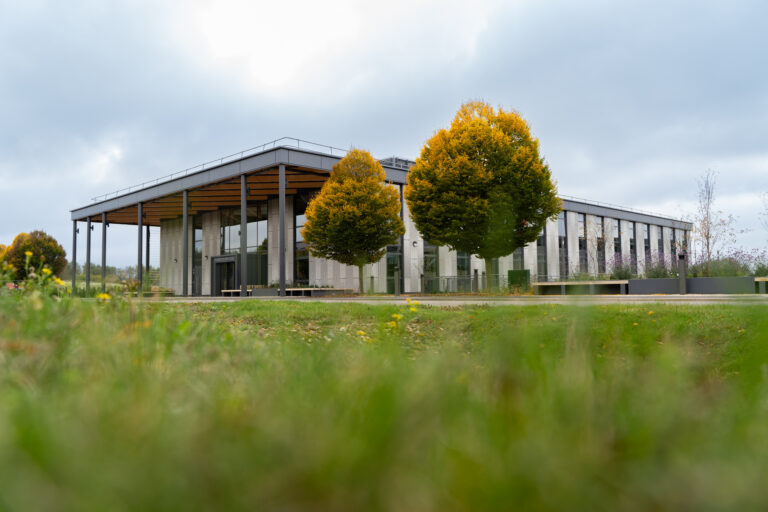
Sustainability work at EMBL in 2025 is best summarised as making important progress at every level. Guided by our ‘Molecules to Ecosystems’ programme and a collective drive to transition toward a more sustainable organisation, we have achieved significant milestones across our three pillars: doing environmentally responsible research, doing environmentally relevant research, and promoting sustainable science.
Minimising our environmental impact
As we continue to push to achieve our target of a 50% reduction in our energy based and business travel emissions by 50% by 2030 (compared to 2019), we have hit the halfway mark and achieved a 25% reduction in CO2 emissions from energy use (Scope 1 and 2) in 2025.
Our commitment to promoting greener travel and video conferencing has also transformed our approach to travel. By embracing hybrid collaboration and promoting lower-carbon alternatives, we have successfully reduced our business travel footprint by 29%.
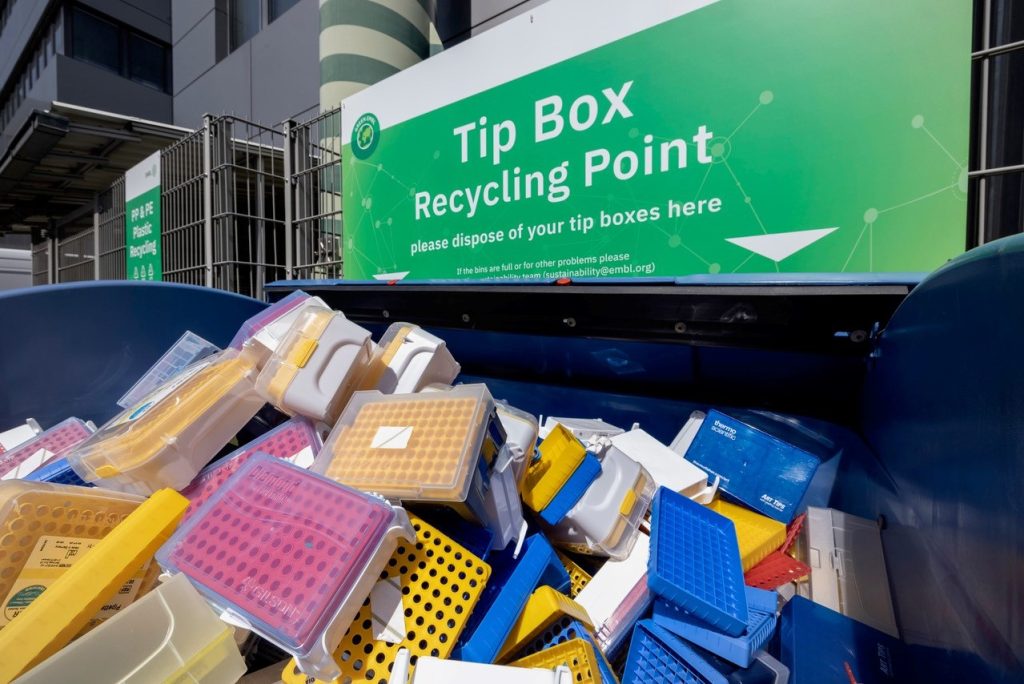
In 2025 we continued to introduce new waste ‘streams, primarily through office-based recycling and a dedicated waste stream for the many culture media bottles . Our dedicated recycling streams for pipette tip boxes have now diverted 8 tonnes of pipette tip boxes from incineration to local recycling plants, demonstrating how small, daily changes in the lab can lead to massive collective impact.
Gold Standards in the Lab
The Laboratory Efficiency Assessment Framework (LEAF) has become the heartbeat of our green lab movement across our sites. In 2025, the dedication of our research groups reached a new peak, with 20 labs awarded Gold certificates; 23 Silver; and 21 Bronze.
Grenoble became our first site to achieve a Gold award, a recognition of the strong and widespread culture of “wanting to do the right thing” when it comes to reducing the environmental impact of research and laboratory work in Grenoble.
This achievement reflects the strong commitment of our Unit and the power of effective teamwork of unit staff in integrating sustainability into daily research practice. At EMBL Grenoble, we believe that scientific excellence goes hand in hand with responsible resource use, and and this award highlights how our collective effort can drive meaningful change.
Thornton Building
A major highlight of 2025 was the Thornton Building opening at EMBL-EBI in Hinxton. Named after bioinformatics pioneer Dame Janet Thornton, the building is a model for sustainable scientific infrastructure. It features one of the largest timber frames in the UK – significantly reducing its embodied carbon – and is powered by air-source heat pumps and solar panels. Achieving a BREEAM Excellent score, the Thornton Building proves that world-class data science can thrive in a low-carbon, biophilic environment.
Promoting Sustainable Science
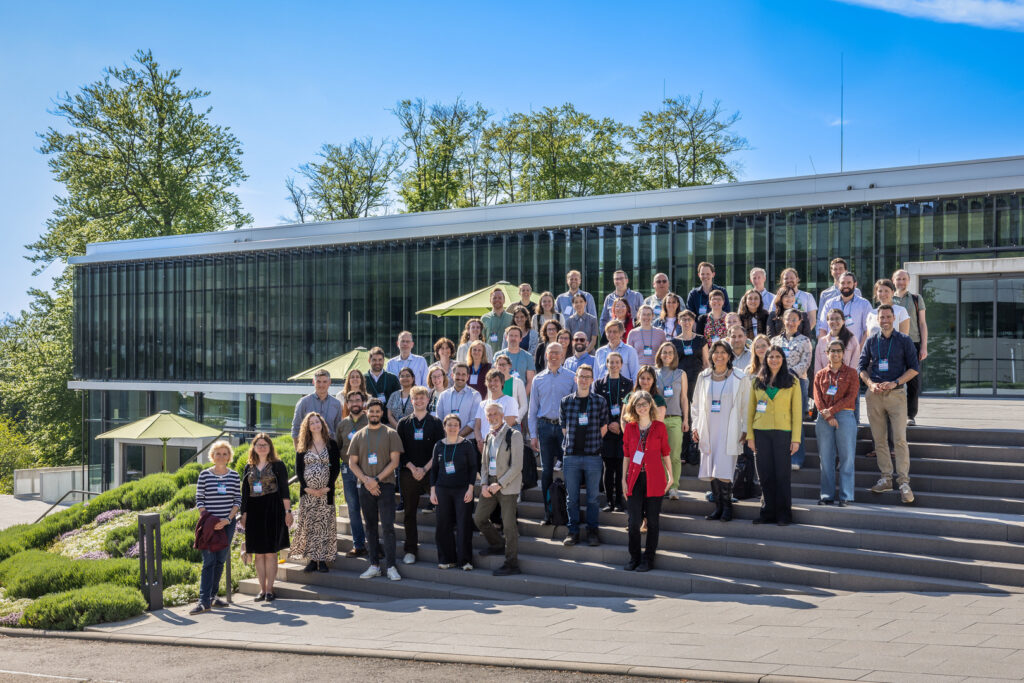
Sustainability at EMBL extends far beyond our own operations. In April 2025, we hosted the inaugural Sustainable Research Symposium: ‘Fit for the Future’ at EMBL Heidelberg and virtually. Organised in partnership with EMBO and the Sustainable European Laboratories Network (SELs), the event gathered over 300 participants to share strategies for greening the life sciences. You can watch the session recordings here.
Furthermore, EMBL has continued to actively engage with European funders who are increasingly looking at sustainable research practices. By sharing our data and methodologies, we help to shape a funding landscape that rewards environmental responsibility.
Environmentally Relevant Research
Lastly, 2025 saw our researchers continue to push the boundaries of environmentally relevant research. Environmental Research Initiative (ERI) projects explored how plankton can combat marine pollution with microbial mats for pollutant degradation, and in the Planetary Biology theme,a vast array of projects study life in context at large scale, with molecular and cellular resolution and in its natural environment. We set out to model and predict how life on our planet responds to current and future global challenges such as pollution, biodiversity loss and climate change.