
Michael Zimmermann
Group Leader
EditUnderstanding life in its natural context
Adaptive capacity of marine microbial communities to anthropogenic chemicals
Anthropogenic chemical pollution is an accelerating planetary-scale stressor that profoundly impacts marine ecosystems. Microbial communities mediate the fate of most environmental contaminants and are responsible for the planet’s primary chemical-buffering capacity. Yet we lack a mechanistic understanding of how exposure, biodiversity, and evolutionary history shape microbial resilience to increasingly complex pollutant mixtures. This project integrates natural marine ecotron communities and large-scale chemical–microbial interaction profiling to elucidate how marine microbes adapt to – and potentially mitigate – the impact of pesticide and pollutant mixtures. The results will deepen our insights into mechanistic planetary-scale biology by linking genetic and biochemical processes with community dynamics and ecosystem-level resilience.
Objectives
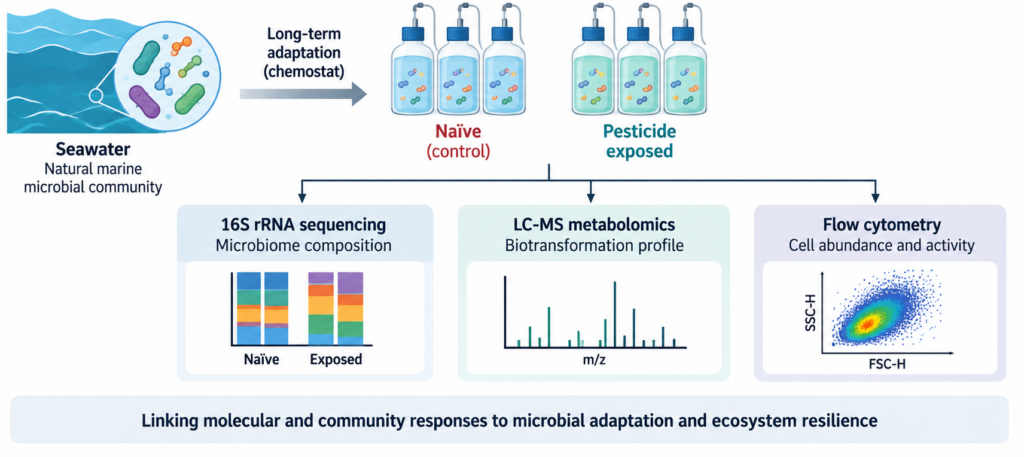
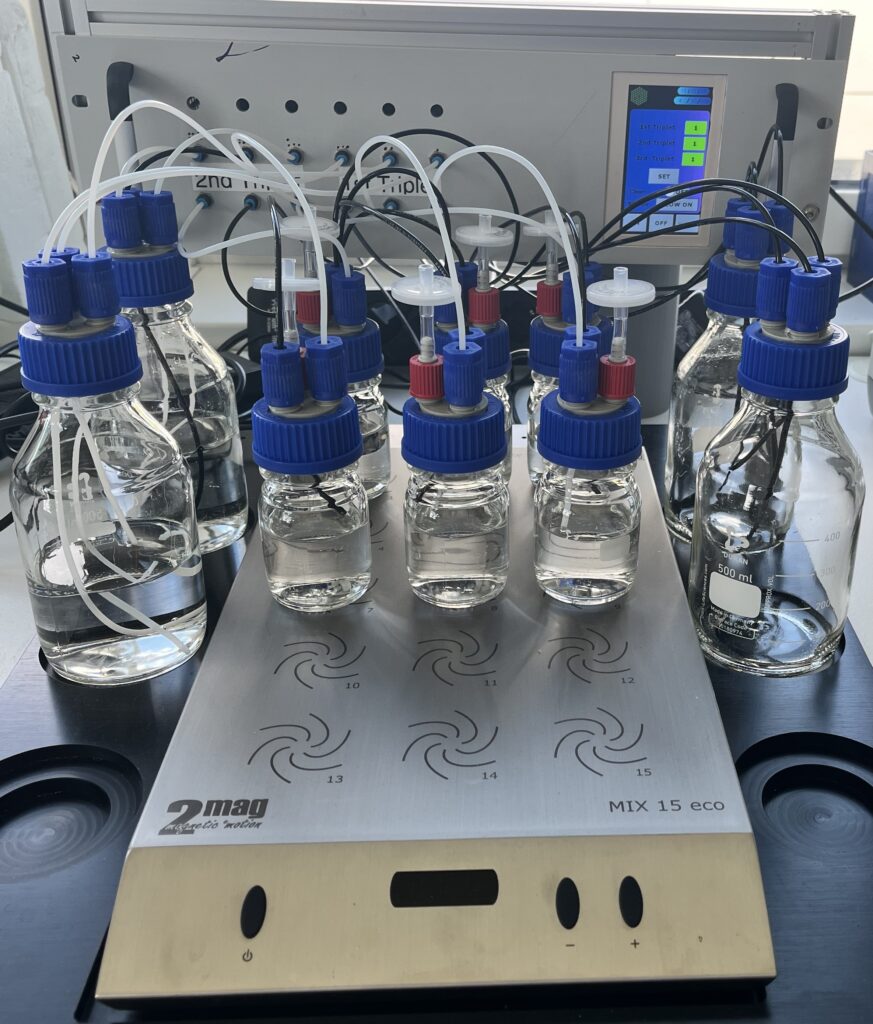
We integrate ecotron experiments and chemostat-based continuous culture adaptation with high-throughput LC-MS metabolomics, 16S rRNA amplicon sequencing and flow cytometry to elucidate community-level resilience, functional reorganization, and adaptive dynamics under ecologically realistic conditions, as depictured in Figure 1.
Group Leader
Edit
Postdoctoral Fellow (EIPOD)
Edit
IDAEA Barcelona