To survive, replicate, and cause disease, pathogens must profoundly modulate the biology of their host’s cells. Often this is mediated via effector protein secretion.
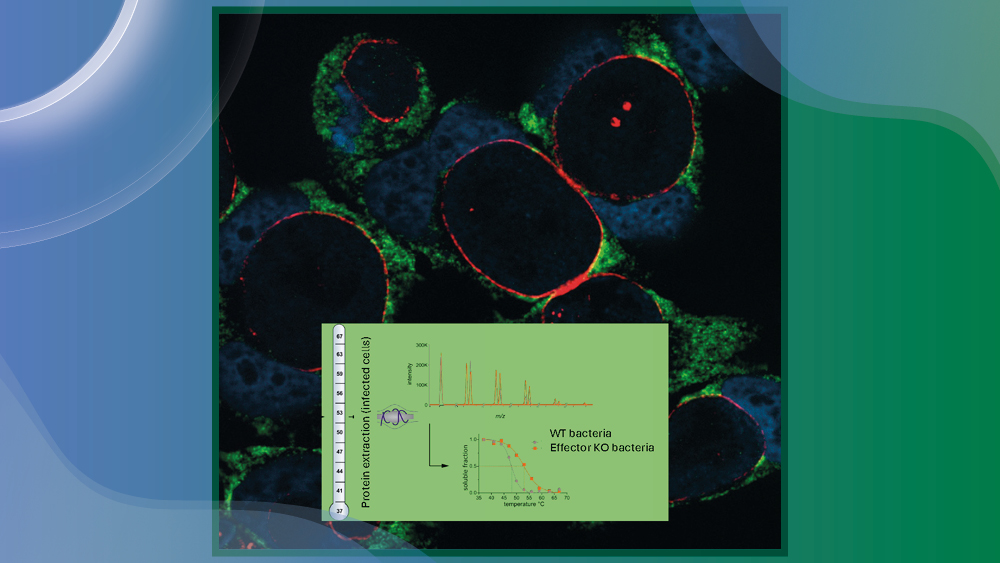
While numerous such effectors have been identified, the functions of most remain poorly understood. This project aims to explore the potential of Thermal Proteome Profiling (TPP) – a powerful omics technology measuring proteome-wide changes in thermal stability in intact cells – in identifying interactors of bacterial effectors and dissecting effector roles in host-pathogen interaction. To achieve these goals, the Savitski lab (EMBL), which has previously pioneered TPP, will team up with the Subtil lab (Institut Pasteur) and the Sixt lab (MIMS), who are experts in the genetic manipulation and analysis of the obligate intracellular bacterial pathogen Chlamydia trachomatis (Ct), a prevalent cause of reproductive and ocular diseases. The consortium will focus on two specific sets of Ct effectors, uncharacterized effectors containing the DUF582 domain and effectors involved in the maintenance of the Ct-containing vacuole. First, effector-deficient and complemented Ct strains, as well as human cell lines heterologously expressing individual effectors, will be generated. TPP, combined with phosphoproteomics, will then be applied to probe the influence of the Ct effectors on host protein abundance, thermal stability, and phosphorylation on a proteome-wide scale. Data integration and functional validations will identify effector interactors and impacted host pathways. By benchmarking TPP in the dynamic context of bacterial infection, this project will expand its utility in infection biology and provide mechanistic insights into Ct’s manipulation of host cells. The findings may inform novel therapeutic strategies that selectively target Ct’s virulence mechanisms.
Mikhail Savitski (EMBL Heidelberg), Agathe Subtil (Institut Pasteur), Barbara Susanne Sixt (MIMS)