
Jürgen Bauer
Lead
EMBLEM
Next generation imaging for biology across scales
IMAGINE will provide technologies to probe structure and function of biological specimens in their natural context
IMAGINE project further increases the technological level of the participating industries and feed the next generation of research instruments they will bring on the market for the scientific community at large.
Integrating Research Infrastructures into local, regional and global innovation systems: IMAGINE also focuses on its innovation on coordinating and creating a new open innovation ecosystem that is centred around the uniquely powerful interdisciplinary and intersectoral multi-stakeholder environment that are grouped around the RIs (WP12). The RIs play a key role in this integration, serving on the one hand as a key market testing platform for industry to test their new commercial instruments and services and on the other hand establishing the links to the leading academic technology developers that push the underlying physical and computational principles ahead.
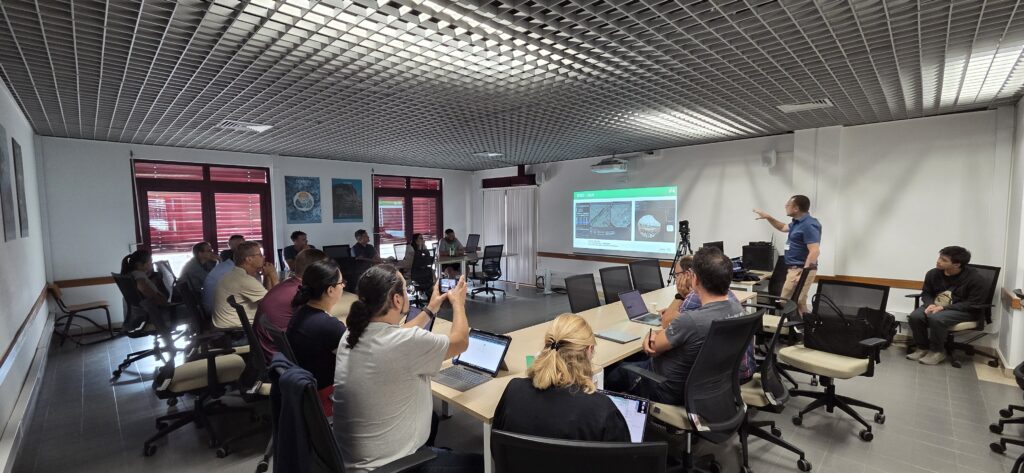
This WP develops pipelines and procedures to bring new scientific instrumentation developed in WP1 to WP5 more rapidly to market taking advantage of their fast validation in broad user communities by the service providers. It sets up the key processes needed to enable effective technology transfer from academia to industry, thus reducing the gap between early-stage technology invention and product development and maximising the socio-economic impact of the IMAGINE project.
The work package is led by EMBL Enterprise Management Technology Transfer GmbH (EMBLEM) as the commercial arm and technology transfer office of EMBL. Additional partners include Leica Microsystem, Euro-BioImaging, EMBL France, EMBL Heidelberg, Max Planck Institute of Biochemistry, Instruct ERIC, KTH Royal Institute of Technology, Paul Scherrer Institute (PSI), and Arinax.
Period 1
WP12 focused on supporting coordinated technology transfer between academic institutions and industry, promoting early involvement of industry partners to accelerate innovation. Preparatory activities included an online kick-off meeting in July 2023 and an Initial Workshop in October 2023, which brought participants together to exchange experiences, compare institutional technology transfer processes, and identify common goals. The workshop outcomes informed the creation of a framework for guidelines on coordinating technology transfer, structured around five main categories: Documentation, Education & Training, Infrastructure, IP protection, and social factors. Plans are in place to assign tasks for guideline preparation, maintain regular coordination meetings, and organize a future workshop to derive recommendations on shortening the innovation cycle, using IMAGINE project achievements as concrete examples.
Period 2
WP12 focuses on improving technology transfer and accelerating the innovation cycle. Task 12.1 produced guidelines (D12.1) for coordinated TT between academia and industry, covering infrastructure, IP, documentation, training, and early industry engagement to support TTOs and scientists. Task 12.2 aims to shorten the path from invention to product by optimizing transitions from development to validation and addressing contractual and procedural needs. A mid-term workshop identified key support needs—industry interaction, administrative, and contractual guidance—and emphasized clear definitions of development, validation, endpoints, and handovers. These outcomes will inform Deliverable D12.2 with recommendations to streamline innovation.

This project is funded by the European Union (GA#101094250). Views and opinions expressed are however those of the authors only and do not necessarily reflect those of the European Union. Neither the European Union nor the granting authority can be held responsible for them.