
Thomas R. Schneider
Head of EMBL Hamburg
ORCID: 0000-0001-6955-7374
EditScientists at EMBL Hamburg carry out research in structural and infection biology
Activities at EMBL Hamburg focus on state-of-the-art structural biology methods using synchrotron radiation, combining cutting-edge technology with an ambitious research programme for structures of multifunctional proteins and protein complexes of biomedical relevance.
EMBL Hamburg’s laboratories are on the German Synchrotron Research Centre (DESY) campus, with synchrotron radiation (PETRA III) and laser (FLASH) facilities available. In addition, a powerful X-ray free electron laser is under construction.
EMBL operates a new integrated facility, called EMBL@PETRA3, for applications in structural biology at the PETRA III ring. It comprises three state-of-the-art beamlines for macromolecular X-ray crystallography and small angle X-ray scattering of biological samples, complemented by facilities for sample preparation and characterisation, and data evaluation. EMBL Hamburg is also one of the main partners in the future Centre for Structural Systems Biology (CSSB) on the DESY campus.
EMBL Hamburg has set up an ambitious research programme for structures of multifunctional proteins and protein complexes of biomedical relevance. Present research interests of group leaders include cell surface receptors, protein assemblies in muscle cells, protein kinases, protein translocation into peroxisomes, and several projects relating to tuberculosis. Common to all projects is the goal to make optimum use of on-site high-brilliance synchrotron radiation and to explore novel opportunities of the X-ray Free Electron Laser. Beyond the tools in structural biology that are available on-site, EMBL Hamburg groups are engaged in many interdisciplinary collaborations with colleagues from other EMBL units, enabling access to a large variety of in vitro and in vivo functional techniques, including cellular imaging techniques.
EMBL Hamburg also has a well-established record for the development of novel, innovative technologies in structural biology. Leading software packages for the automation of data interpretation have been developed here and are used in a large number of projects across the world’s research community. One example is the ARP/wARP package that allows automatic X-ray structure determination. Another package, ATSAS, allows the automatic interpretation of small angle X-ray scattering data for structural shape determination. Finally, there are two groups that focus on the development and construction of new equipment for experimental stations in structural biology, using synchrotron radiation. Present efforts focus on the installation of new robotics that allow automatic placement of biological samples into specialised synchrotron experiment facilities.
Head of EMBL Hamburg
ORCID: 0000-0001-6955-7374
Edit
Characterisation of biological molecules and assemblies using small angle x-ray scattering (SAXS)
Edit
X-ray optics, precision mechanics, robotics, control electronics, cryogenics and control software
Edit
Integrative structural biology and Molecular biophysics
Edit
In-cell structural systems biology of infection
Edit
Metabolism-driven immunity
Edit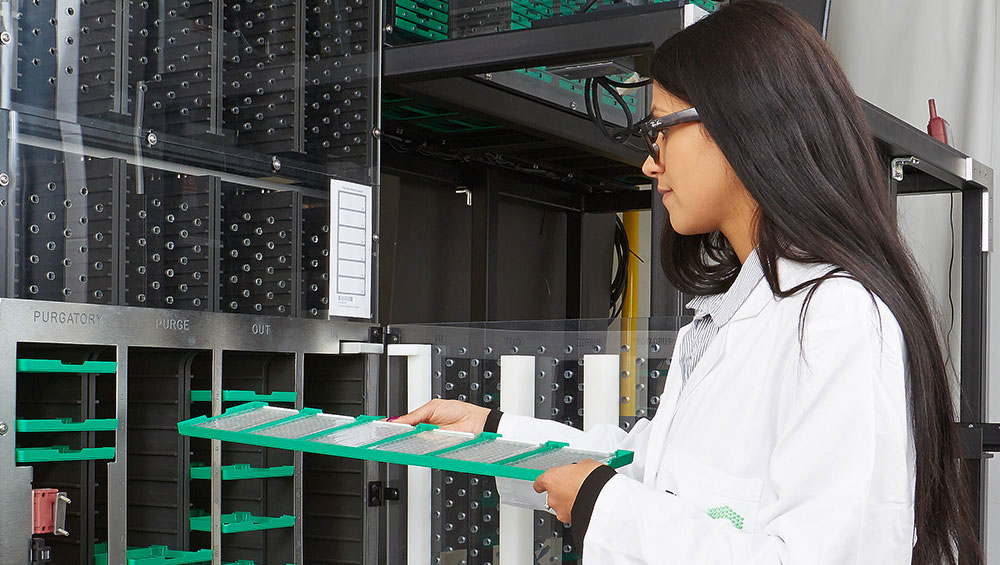
Advancing molecular biology research to study life in context

Research groups at EMBL are organised into nine units spanning six European sites

Explore our latest vacancies and sign up for job alerts to get notified when something suitable comes up