
Julia Mahamid
Head of Molecular Systems Biology
ORCID: 0000-0001-6968-041X
EditBridging systems biology to molecular mechanisms
The Molecular Systems Biology Unit investigates molecular structure, organization and function at a systematic level in and across cells.
We aim to gain quantitative and mechanistic insights into how molecular machines, pathways and other cellular functional units operate and coordinate in the cell, across evolutionary, temporal and spatial scales, and in fluctuating environments. Being at the forefront of technology development, the Unit integrates research to systematically quantify protein levels and states; map and predict protein and RNA structure, evolution, dynamics and interactions; view macromolecular organization and complexes in situ; and perturb macromolecular function and map its functional output. Integrated structural biology, systematic genetics and quantitative genome-wide measurements are instrumental for the generation of respective data, whereas computational biology and modelling play a central role in integrating them. With a stronghold in structural, computational and systems biology, the Unit pioneers technologies and large-scale data integration to study biological processes in the context of the cell, organism, community and ecosystem.
The MSB Unit embraces the rapid advances in structural biology approaches, AI-based structure prediction and structural bioinformatics, functional omics and modelling approaches, aiming towards holistic perspectives of protein/RNA networks and quantitative understanding of dynamic macromolecular systems. The synergy between experimental and computational groups within the Unit and across EMBL enables the integration of complex heterogeneous data across scales. This integration requires a multitude of approaches and technology development at the cutting edge: single-molecule biophysics, structural biology and cryogenic electron microscopy imaging to investigate macromolecular function in context; high-throughput genetics and biochemistry, as well as genomics, proteomics and metabolomics to systematically study and perturb functional units; and computational approaches and models to analyze, interpret and integrate the information. Within this framework, a wide variety of biological contexts and processes are studied. Microbial cells, communities and their interactions with their hosts and the environment is one of the common threads within the Unit.
Technologies developed in the Unit are disseminated in scientific services at EMBL, including the EMBL Imaging Center, Cryo-EM platform, the Metabolomics, Microbial Automation & Culturomics and Proteomics Core Facilities. All groups in the Unit are engaged in EMBL’s current research program, Molecules to ecosystems, shaping many of the new scientific directions in Planetary Biology, Microbial Ecosystems and Infection Biology.
Head of Molecular Systems Biology
ORCID: 0000-0001-6968-041X
Edit
Head of Molecular Systems Biology
ORCID: 0000-0002-0797-9018
EditNature (2026)
DOI: 10.1038/s41586-026-10530-7
Nature Microbiology (2026)
DOI: 10.1038/s41564-026-02318-2
Nature Structural & Molecular Biology (2026)
DOI: 10.1038/s41594-025-01699-y
Molecular Cell (2025)
DOI: 10.1016/j.molcel.2025.10.001

Deciphering function and evolution of biological systems

Organisational principles and 3D architecture of archaeal chromatin
Edit
Genetic and environmental control of developmental robustness
Edit
Assembly mechanisms and function of protein-RNA complexes at the single-molecule level
Edit
Exploring the chromatin landscape by cryo-electron microscopy
Edit
In-cell structural analysis of phase separation and molecular crowding
Edit
High-throughput cryo-EM
Edit
Stability proteomics for assessing the state of the proteome
Edit
Phenotypic patterning and molecular bacteriology in biofilms
EditThe following groups have been formerly active. Visiting group leaders maintain strong ties with the Laboratory, and some of the groups’ members may still be carrying out research on site. These groups do not accept any applications for new positions.

Integrated structural biology of translation regulation mechanisms
Edit
Systems (epi)genetics to study the basis of complex traits and diseases
Edit
Computational analysis of host-microbiota interactions in disease and drug therapy
Edit
Cryo-Electron Microscopy Specialist
Edit
Cryo-Electron Microscopy Specialist
Edit
Project Officer
Edit
Unit Administrator
Edit
Lab Manager
Edit
Postdoctoral Fellow
Edit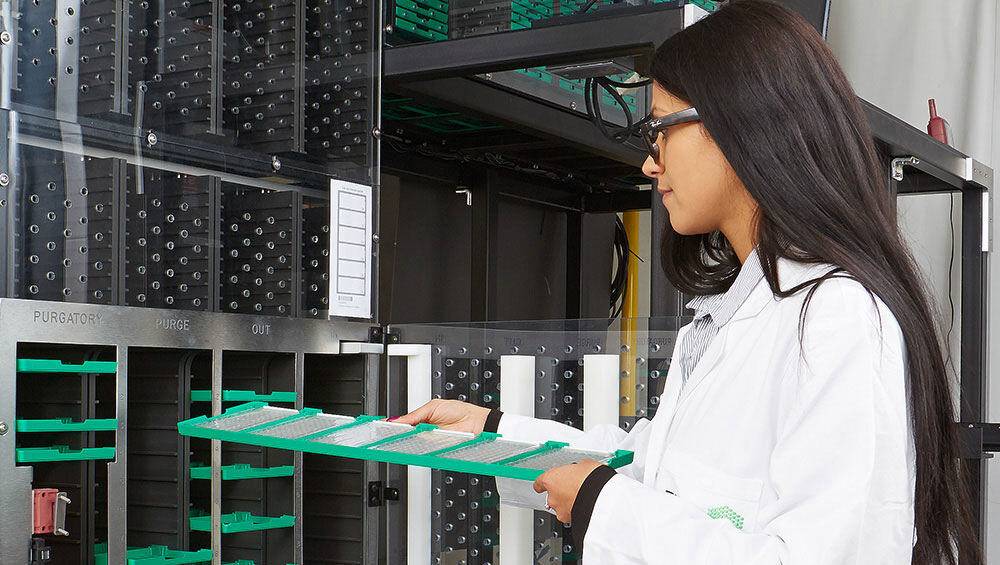
Advancing molecular biology research to study life in context

Research groups at EMBL are organised into nine units spanning six European sites

Explore our latest vacancies and sign up for job alerts to get notified when something suitable comes up