Episode 4
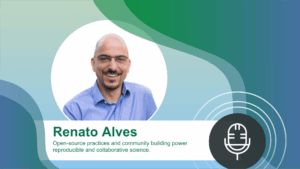
Open science thrives through a blend of open-source tools, robust infrastructure, and most importantly, strong, inclusive communities.
Renato Alves shares his journey from biology to bioinformatics and community management, highlighting how collaboration, mentorship, and kindness lower barriers, improve reproducibility, and connect lab work with data and code.
The key takeaway is that sustaining open science requires investing not just in technology, but in people, communication spaces, and roles that empower others to participate openly and confidently.
Episode 3
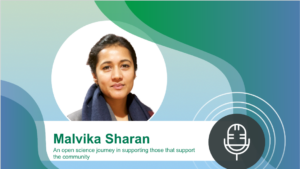
In this episode of the Knowledge Catalyst, Malvika Sharan, an EMBL alumnus, Senior Researcher at the Alan Turing Institute and co-founder of Open Life Science, discusses the value of research support roles, how to empower community leaders who help operationalize open science, and how inclusive approaches can shape the future of research.
Episode 2
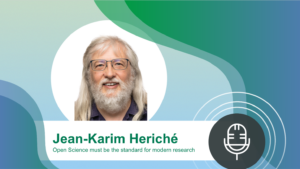
In this episode of the Knowledge Catalyst, Jean-Karim Heriché (JK), the Computational Support at EMBL’s Cell Biology and Biophysics Unit, shares insights from his career on how to make your data FAIR and your research more reproducible. He emphasizes that open science begins with consistent, thorough documentation, essential for managing datasets of any size or complexity. JK also advocates for more dedicated resources and support for scientists, recognizing data stewardship as a core part of their work.
Episode 1
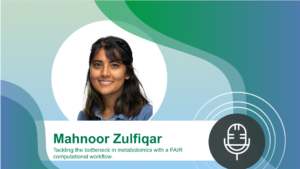
In this episode of The Knowledge Catalyst, Dr. Mahnoor Zulfiqar, postdoctoral fellow at EMBL, shares how she builds FAIR computational workflows to tackle challenges in metabolomics. From identifying unknown compounds using marine-derived metabolites to integrating tools across platforms with Docker and CWL, Mahnoor’s work enhances reproducibility and supports drug discovery. We explore how standardized, interoperable workflows can improve confidence in data analysis—and rebuild public trust in science.