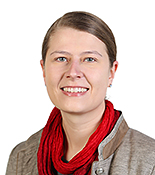
Anna Steyer
EMBL Imaging Centre
EMBL Course
EMBL Imaging Centre is offering a 5-day course diving into advanced operations of focused ion beam – scanning electron microscopy methods under cryogenic conditions (cryo-FIB-SEM), which allows to study biological samples in their native environment at high-resolution.
Content of the course:
• Theoretical background and practicals delivered by experts in the field
• Advanced sample preparation using waffle method, advanced lamella preparation, correlative workflows and lift-out procedures.
• Open equipment day to explore further
The course is limited to 12 participants. Deadline for registration is July 1st 2026.
There is no registration fee.
Selected participants from an Instruct member state can receive a travel grant up to 550€.
EMBL Imaging Centre

EMBL Imaging Centre
EMBL Imaging Centre

MSB Unit, EMBL Heidelberg
Invited speaker:
Rosalind Franklin Institute
Practical 1: Sample preparation by Waffle method (HPF and cryo-LM)
Standard cellular lamella production by cryo-FIB milling poses major challenges when preparing small, unicellular samples (e.g. bacteria or protists) that often result too thin to offer proper lateral support to the generated lamella. At the same time, thick multi-cellular specimen (e.g. 3D organoids, C. elegans) cannot be properly preserved by simple plunge-freezing preparation, where the limited heat transfer results in crystalline ice formation. Both challenges have been recently overcome by introducing a new method, termed “waffle method” (Kelley et al. 2022, Nature), allowing on-grid lamella preparation after high-pressure freezing.
The waffle method starts with the preparation of the high-pressure freezing (HPF) carrier and glow discharging of the transmission electron microscopy (TEM) grids. For the actual freezing by high-pressure freezing, a sandwich of HPF carriers surrounding a TEM grid where the sample was applied is assembled and frozen. After samples vitrification, the TEM grid is gently separated from the carrier and can now be checked by cryo-LM. Different objectives (5x, 10x and 100x) in combination with reflected light and fluorescence microscopy will reveal the structure of interest and its location on the grid.
The participants will have the opportunity to use:
Practical 2: Specifics of on grid cryo- lamella preparation for waffle samples
After sample vitrification, the TEM grid is introduced into the FIB-SEM and the region of interest is identified. Different milling steps with decreasing beam currents are applied from different angles to remove material (starting from 16 nA down to 30 pA). Understanding the geometry and cutting approaches while practicing on a real sample will give the best understanding of the challenges, throughput and the possibilities imposed by this method.
The participants will have the opportunity to use:
Practical 3: Automating lamella preparation and targeting using Serial-FIB and AutoTEM
Vitrified cells on a TEM will be introduced into the FIB-SEM to target regions of interest (SerialEM and AutoTEM toolbox). Multiple positions will be set-up to be milled automatically with the focused ion beam to get lamellae suitable for tomographic data acquisition.
The participants will have the opportunity to use:
Practical 4: Lift-out of waffled samples
Being able to visualize fully hydrated multicellular samples as close as possible to native conditions at highest resolution has seen an increasing interest by the community, made possible by improvements in efficacy and throughput in lift-out methods. Samples will be introduced into the FIB-SEM and prepared for lift-out, including ROI preparation, needle attachment, lift-out and slab deposition. As a last step lamella are thinned down in an automated process.
The participants will have the opportunity to use:

Selected participants will be announced on July 14th 2026. For selection purposes, please note that your application will not be considered without CV and a letter of motivation, stating your scientific background, available instrumentation at your home institute and how this course would be beneficial for your future work.
The participants are selected based on EMBL’s course and conferences inclusive criteria (which can be found on the course and conference homepage) and are summarized below:
Date: 9 - 13 Nov 2026
Location: EMBL Heidelberg
Venue: EMBL Imaging Centre
Deadline(s):
Application: 1 Jul 2026
Organisers:
Contact: Anna Steyer