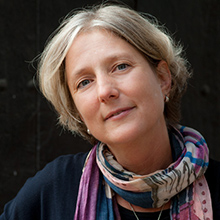
Martine Vrijheid
ISGlobal
Human Ecosystems Symposium
The symposium sets out EMBL’s vision to bridge experimental model systems with longitudinal human population studies to understand exposure impacts across the life-course. The programme will showcase cutting edge approaches including AI-driven analytical methods to establish exposure-phenotype associations and advance causal inference.
Whilst the event is free to attend, places are limited so please sign-up before the deadline to reserve your spot. We particularly encourage early career researchers to submit abstracts for poster presentations/short talks.
Event sign-up has now closed. Please contact aforeman@ebi.ac.uk for questions and to discuss any accessibility requirements.
| Day 1 | Monday 9th November |
| 09:00 – 09:30 | Registration |
| 09:30 – 09:40 | Opening Remarks: Human Ecosystems Co-Chairs (10 min) |
| 09:40 – 10:50 | Session 1: Environmental Exposures, Genetics and Human Health – Reviewing the Evidence (1 hr 10) Chair: Martine Vrijheid, ISGlobal Panelists: Annette Peters, Helmholtz Munich Caroline Relton, London School of Hygiene and Tropical Medicine Jessica Ewald, EMBL-EBI Talya Dayton, EMBL Barcelona |
| 10:50 – 11:10 | Break (20 mins) |
| 11:10 – 12:30 | Session 2: Mutations as a window into exposures Chair: Tim Coorens, EMBL-EBI (1 hr 20) Global surveillance of carcinogen exposures through somatic mutations, Mike Stratton, Wellcome Sanger Institute (15 min + 5 Q&A) Slide-Tags DNA: Spatially mapped whole genome and transcriptome profiling of single nuclei in human tissue, Andrew Russel, Broad Institute (15 min + 5 Q&A) Aging-associated metabolic constraints couple impaired regeneration to malignant clonal evolution, Mate Maus, VHIO (15 min + 5 Q&A) Unravelling the interplay between genetics and inflammation in the formation of lung neuroendocrine cancer, Andrea Garcia González, EMBL Barcelona (12 min + 3 Q&A) |
| 12:30 – 13:30 | Group Photo & Lunch (1 hr) Please can poster presenters mount posters on numbered boards provided. |
| 13:30 – 14:30 | Session 3: Untargeted Mass-Spectrometry to connect external exposures with internal impacts (1 hr) Chair: Jessica Ewald, EMBL-EBI The adolescent chemical universe: a European study, Lea Maitre, ISGlobal (15 min + 5 Q&A) Approaches for Higher Throughput and Higher Molecular Annotation Rates in High-Resolution Chemical Exposomics of Human Blood, Jonathan Martin, University of Stockholm/SciLife Lab (15 min + 5 Q&A) From Chemical Exposure to Biological Effects in Breast Cancer, Benedikt Warth, University of Vienna (15 min + 5 Q&A) |
| 14:30 – 15:00 | Poster Flash Talks (3 mins each) 1. Breast Cancer Exposomics: Quantification of >230 Exposure Compounds in a Historic Italian Cohort – Yunyun Gu, University of Vienna 2. Persistent proteomic and exposomic alterations characterize the preclinical phase of IBD, Alvaro Raya Marin, CIC-bioGUNE 3. Inferring Pesticide Modes of Action from Morphological and Metabolic Profiling in Human Cell Lines – Pia Mozdzanowski, EMBL-EBI 4. Modelling health and disease in blood proteomics – Xavier Soler, CRG 5. A comparison of multiple approaches for time-varying exposures in lifecourse Mendelian randomization: a simulation study – Chin Yang Shapland, University of Bristol 6. The role of environmental exposures and mycotoxins on gut microbiota and low-grade gut inflammation over the Flemish life course – Elias Maris, Ghent University 7. Epigenome-Wide Association Study of Prenatal Indoor and Outdoor Heat Exposure and Placental DNA Methylation – Yu Zhao, ISGlobal 8. Paternal inheritance of diet-induced metabolic disorders across generations is reversible and time-dependent – Nikola Todorov, CRG |
| 15:00 – 16:30 | Poster Session (1hr 20 mins) Abstract Book Session 1 – 15:00 – 15:45 (40 min) Session 2 – 15:45 – 16:30 (40 min) |
| 16:30 18:00 | Session 4: Exposome Impacts over the Lifetime (1hr 30) Chair: Jamie Hackett, EMBL Rome Measuring exposures from population-scale single cell genomics, Nicole Soranzo, HT/University of Cambridge (15 min + 5 Q&A) Identification of latent factors that drive GxE effects in large-scale eQTL studies, Lude Franke, University of Groningen (15 min + 5 Q&A) GxE across complex environments: lifestyle, microbiome, and allelic expression, Francesca Luca, University of Chicago (15 min + 5 Q&A) Mapping HLA variation to disease via GPT-based models, Rodrigo Bonazzola, EMBL-EBI (12 mins + 3 Q&A ) |
| Day 2 | Tuesday 10th November |
| 09:00 – 10:30 | Session 5: From human cohorts to model systems: new methods to systematically investigate exposures and phenotypes across fields (1hr 30) Chair: Jessica Ewald, EMBL-EBI From Hits to Mechanisms: Linking Exposures to Causal Disease Graphs, Anne Thessen, UNC School of Medicine (15 min + 5 Q&A) Connecting Exposure Data for Discovery – an EMBL-EBI perspective, Aleix Puig & James McLaughlin, EMBL-EBI (15 min + 5 Q&A) Invisible threads: Mapping the Exposome from Chemicals to Disease, Salvo Danilo Lombardo, University of Harvard (15 min + 5 Q&A) Open Targets Safety 2.0: Developing an integrated drug side effect resource for target safety and predictive toxicology, Ines Smit, EMBL-EBI (12 mins + 3 Q&A ) |
| 10:30 – 11:00 | Break (30 mins) |
| 11:00 – 12:30 | Session 6: Exposure Impacts over the Lifetime (1hr 30) Chair: Jamie Hackett, Mathieu Shultz, EMBL Rome Epigenetic regulation of ageing and rejuvenation, Wolf Reik, Altos Labs (15 min + 5 Q&A) “Reprogramming of the Epigenome by Early Life Exposures”, Cheryl Walker, Baylor College of Medicine (15 min + 5 Q&A) Disentangling age, period and birth cohort effects with biomarker data, Paolo Vineis, Imperial College London (15 min + 5 Q&A) Lifecourse: A Longitudinal GxE framework to explore the origins of health and disease in mammals, Matheiu Shultz, EMBL-Rome (12 mins + 3 Q&A ) |
| 12:30 – 13:30 | Lunch (1 hr) |
| 13:30 – 15:00 | Session 7: In vitro models to understand mechanisms of environmental exposure responses (1hr 30) Chair: Talya Dayton, EMBL Barcelona Modeling exposures and toxicity at the maternal-fetal interface, Kristina Haase, EMBL Barcelona (15 min + 5 Q&A) Normal epithelial cell biology determines lung cancer risk, Sam Janes, UCL (15 min + 5 Q&A) Immunocompetent human organoid systems for studying environmental exposures in vitro, Hudson Horn, Stanford Medicine (15 min + 5 Q&A) Mapping gene-environment interactions driving Small Cell Lung Cancer (SCLC) initiation in human airway organoids, Andres Marco Gimenez, EMBL Barcelona (12 mins + 3 Q&A ) |
| 15:00 – 15:20 | Closing Remarks (20 min) (Please remove posters at the end of the day) |
Confirmed speakers – more to be announced:
ISGlobal
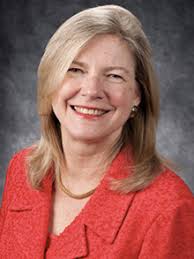
Baylor College of Medicine
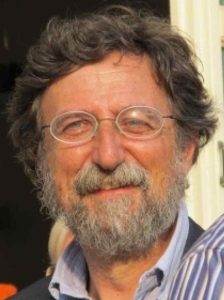
Imperial College London
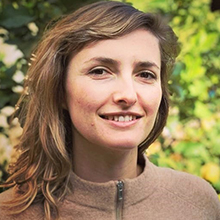
ISGlobal

Helmholtz Munich
University of Stockholm

University of North Carolina, Chapel Hill
University of Chicago

Altos Labs
Wellcome Sanger Institute
Broad Institute
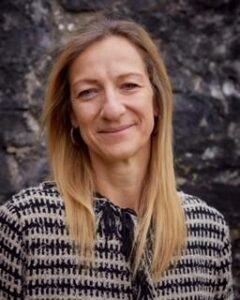
London School of Hygiene and Tropical Medicine
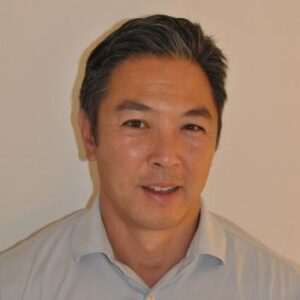
Stanford University
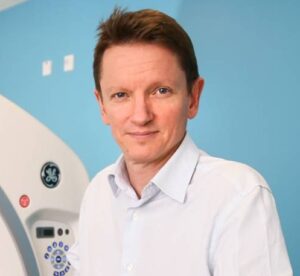
University College London
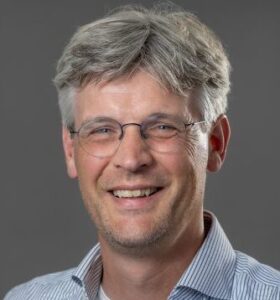
University Medical Center Groningen (UMCG)
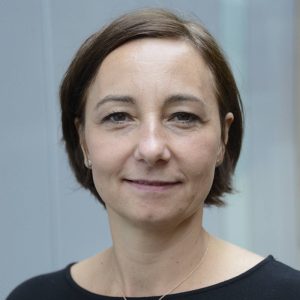
Human Technopole/University of Cambridge/Wellcome Sanger Institute
The poster session will run on Monday 9th November from 14:30 – 16:30 in the lobby outside the Auditorium starting with a series of short poster flash talks. Poster presentations are divided into two sessions based on number (1-21 in Session A, 22 – 41 in Session B).
More information about the submitted posters can be found in the Abstract Book
Venue
The PRBB Auditorium, Barcelona Biomedical Research Park Building (PRBB), C/Dr. Aiguader 88, 08003 Barcelona, Spain.
The airport is located in El Prat de Llobregat, and has two passenger terminals (T1 and T2). For more information on how to get to each terminal, airlines, and flight status please check their website or interactive map.
The Aerobus is an express bus service that connects the airport with the city centre in 35 minutes. You can take the Aerobus outside Terminal 1 (A1 bus) and Terminal 2 (A2 bus). This service runs every day of the year with departures between 2 and 15 minutes. From the city centre, you can take the metro or bus to move around Barcelona. Tickets can be purchased on the bus or online.
The train service (R2 line) runs approximately every 30 minutes to/from Barcelona airport to/from the city. The journey takes 25 minutes. The train service operates from Terminal 2 (T2). To get from T2 to T1, use the shuttle bus service (Bus transit T1-T2). You can take the train or get off at Barcelona – Sants Estació or Barcelona (connecting with L5 and L3) – Passeig de Gracia (connecting with L4, L2 and L1). Vending machines can be found in each station for ticket purchase. For additional information, please check the national railway website (RENFE).
You will find taxi rank outside any of the main terminal exits. Look for the sign pointing to the nearest taxi rank.
All official Barcelona taxis are black and yellow and should carry a rear blue license plate. They are required to charge you only the value on the taximeter (plus any surcharge, e.g. night rate). A taxi may be ordered by phone or found at an authorized taxi rank or flagged down in the street.
The metro network of Barcelona is very good and the trains go in a very fast pace. You do not have to worry about timetables. Almost all attractions are within walking distance of a metro or tram station. Where there are no subways, the gap was filled by tram.
Operating hours of the metro and tram:
Closest stations to PRBB building:
Buses
The operating times of the buses are different for each line. You will find a notice board with the timetable at each stop. They leave from about 5:00 clock to about 22:00 clock. Check the TMB website for detailed information.
Several buses stop near the PRBB: V27, V21, H16, 136, 47, D20, 59
Both the metro and the buses do not run all night. In Barcelona, there is a fairly dense network of night buses to get you back to your hotel all night long. Except for the line N0 all lines stop at Plaça Catalunya and can change there. The N0 line is a circular line that allows you to circle around the city center and change to the other NitBus. The night buses are operated by the private operator AMB. That is why the Barcelona Card and Hola BCN Ticket are not valid.
The N17 line goes to the airport.
The operating hours of the NitBus are also different for each line, but they run from about 22:00 to 05:00 clock.

Date: 9 - 10 Nov 2026
Location: EMBL Barcelona
Time: 09:30
Venue: The PRBB Auditorium
Deadline(s):
Registration: Closed
Organisers:
Contact: Amy Foreman