Further resources
- List of example questions, below
- Making the most of careers fairs youtube playlist – University of Cambridge
- What to do before, during and after a career fair – University of Calgary
- Within EMBL, list of upcoming career events
A career development blog for early-career researchers in life sciences
This blog aims to inspire early-career researchers who are exploring different career options and developing their skills. We provide interview-based profiles of life scientists working in diverse science-related careers, as well as articles on a broad range of career and skills development topics, with new content added regularly.

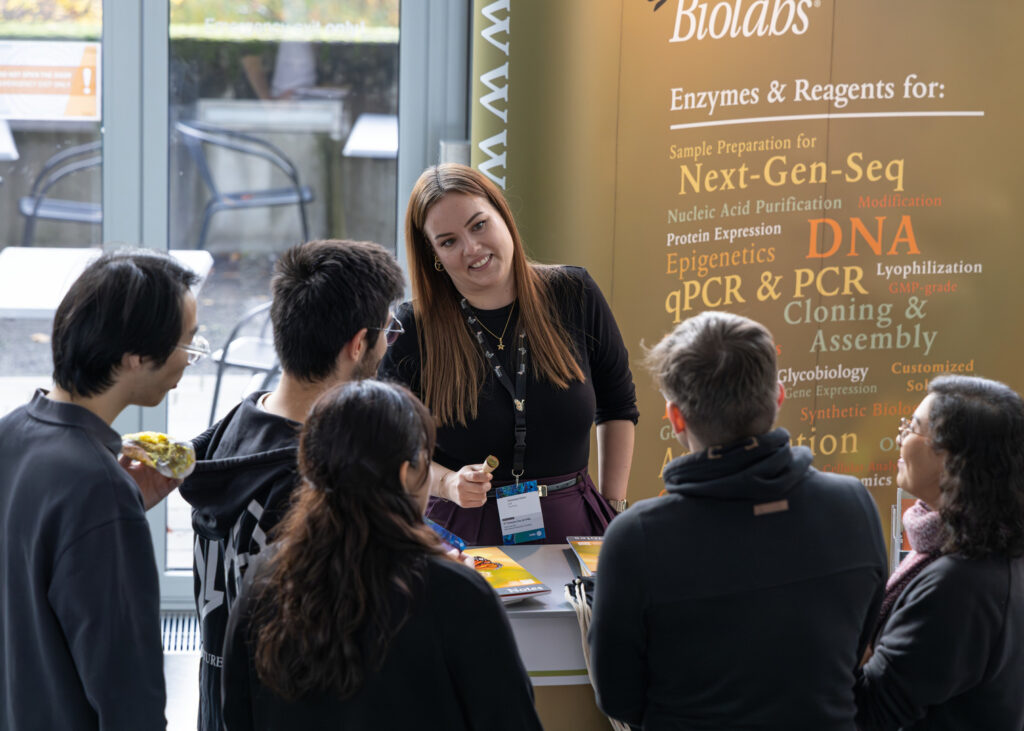
Career fairs offer a valuable opportunity to explore the career landscape. You can learn how different organisations position themselves, what kinds of roles they offer, and what they look for in candidates.
However, these events are often busy, with limited time for each interaction.
So you know what to expect, and how to make the most of the opportunity, we have put together 5 top tips.
Before attending, consider what you would like to get out of the event. This might include:
At the same time, keep in mind that companies are often there to raise awareness and engage with as many potential candidates as possible, rather than to fill specific roles. They are unlikely to be able to provide detailed, individualised advice to all interested attendees.
Setting realistic expectations will help you focus on gathering useful information.
You may meet different types of representatives, each offering a different perspective:
Being clear about who you are speaking to will help you ask questions they are well placed to answer.
Opening with “What does your organisation do?” is unlikely to lead to a useful discussion. Similarly, asking an HR representative in a large organisation which roles would match a very specific technical expertise may not lead to a clear answer.
Most fairs provide an online or printed catalogue with basic information about attending employers. Some fairs also offer talk sessions, which can provide more detailed information about specific companies or roles, or insights into application processes. If possible, review this information beforehand and prioritise which employers and sessions to visit based on your interests. It is also useful to plan when you will attend, and which employers are your priority, as queues are typically shorter earlier in the event.
For selected organisations:
For example:
A fuller list of sample questions is provided at the end of the article.
If you are actively seeking positions, consider updating your CV and bringing a few printed copies. For small companies where you are a good fit, this may allow your CV to be passed directly to a relevant team. In larger companies, this is less likely, as applications are typically handled through formal systems. You should also update your LinkedIn or other professional profile, ready to connect with people during and after the event.
You do not need to dress as formally as you would for an interview. Choose something you feel comfortable and confident in, while still being professional enough to create a positive first impression, particularly if you are interested in client-facing roles.
Representatives will speak with many people and are unlikely to remember individual conversations in detail or to be able to answer all your questions.
The aim of your introduction is therefore not to be memorable or to deliver a detailed “elevator pitch”, but to set the tone for the conversation and provide enough context to start a discussion.
We recommend introducing yourself in just two sentences:
For example:
“I am a PhD student at EMBL, with [relevant skill for role] developed through [an activity]. I am interested in learning more about entering your company as a [role of interest] directly from a PhD.”
You can then ask: “Before I ask my questions, could you tell me a little bit about your role at the company?”. This helps you tailor your questions to the role of the person you are speaking to.
Keep in mind that interactions are brief. If a queue is forming, focus on one or two key questions rather than trying to cover everything. If the conversation is going well and you have additional questions, you can ask: “Would it be possible to follow up with you or a colleague for a more detailed discussion?”.
To support effective follow-up, we recommend taking brief notes after each interaction during the event, including names and key points, as it can be difficult to recall who you spoke with after a full day of conversations.
After the event, you can then:
If you later apply for a role at a company you interacted with, referring in your cover letter to a conversation or session at the career fair can help demonstrate your interest and provide context for your application.
We also recommend complementing career fairs with informational interviews, which allow more in-depth conversations. You can use LinkedIn to identify people working in roles or organisations you identified at the fair. See our previous article and resources on informational interviews for further guidance.
Use these as inspiration, but prioritise what you personally want to learn. The best questions are those that are grounded in genuine curiosity, that the person is well placed to answer, and that go beyond information you can easily find online.
Questions for scientists in specific roles
Focus on day-to-day work, expectations, and team context.
(see also our informational interview handout for further questions, some of which can be used at career fairs: but remember that you can ask fewer questions at a career fair, compared to an informational interview)
Questions for HR representatives
Focus on processes, entry routes, and evaluation criteria.
Questions about roles and fit
Useful for scientists and HR specialists who have a good understanding of the role
Acknowledgments: article edited with support from ChatGPT