Ana Berna
ALBA
Spain
EMBO Practical Course
Funded by EMBO for excellence in the life sciences
This course will take place at EMBL Grenoble.
Recent advances in cryo-electron microscopy/tomography (cryo-EM/ET), super-resolution microscopy, and deep-learning-based protein structure prediction, combined with increasingly sophisticated sample preparation methods, have transformed structural biology. Solving the field’s most complex challenges will require researchers who can strategically integrate these powerful tools.
This course provides a comprehensive overview of modern structural biology methods, with emphasis on sample preparation, characterisation, and data integration.
Key topics include:
This latest edition of this long-standing course features a refreshed lineup of speakers and topics, highlighting the strategic use of cutting-edge protein structure prediction methods, and recent advances in in situ structural biology. The programme aims to equip participants with the theoretical and practical skills needed to combine complementary approaches and apply them to contemporary structural biology research.
Advanced PhD students and postdocs, currently working on challenging projects in structural biology that would benefit form hybrid approaches.
Participants will learn 3D structure determination of macromolecular assemblies at various resolution scales, and strategies to integrate data from X-ray crystallography, cryo-EM, SAXS, NMR, mass spectrometry, smFRET, and super-resolution microscopy.
“The course on Structural Characterisation of Macromolecular Complexes was very engaging, with lecturers eager to learn about our projects and providing valuable insights. I also especially appreciated the opportunity to meet fellow students from all over the world.” —Sophie Roth, Harvard University, USA
“It was a wonderfully intense experience. I learned more than I thought was possible in a single week.” — Marta Gapinska, University of Warsaw, Poland
This event has been granted the following EMBO sustainability badge:
ALBA
Spain

EMBL Grenoble
France
EMBL Grenoble
France
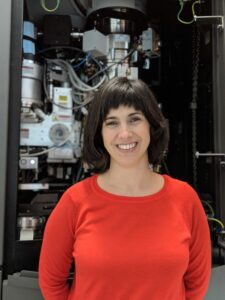
Human Technopole
Italy
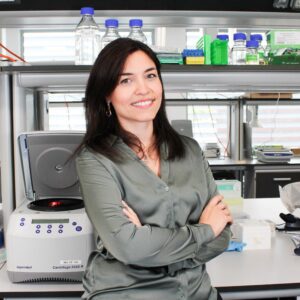
Human Technopole
Italy
EMBL Grenoble
France

EMBL Heidelberg
Germany
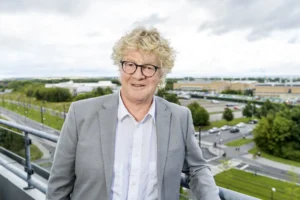
LINXS
Sweden
EMBL Hamburg
Germany
Kanazawa University
Japan
EMBL Hamburg
Germany

EMBL Grenoble
France
University of Bordeaux
France
University of Hamburg
Germany

EMBL Grenoble
Germany
Institut de Biologie Structurale
France
Human Technopole
Italy
University of Cambridge
UK

University of Vienna
Austria
Max Planck Institute of Biochemistry
Germany
Institut de génétique et de biologie moléculaire et cellulaire
France
University of Toronto
Canada
Martin Luther University Halle-Wittenberg
Germany

European Synchrotron Radiation Facility (ESRF)
France
Paul Scherrer Institut
Switzerland

The Pennsylvania State University
USA
University of Geneva
Switzerland

EMBL Grenoble
France
CEA
France
EMBL Grenoble
France
EMBL Grenoble
France
Human Technopole
Italy
Institut de Biologie Structurale
France
European Synchrotron Radiation Facility (ESRF)
France
EMBL Heidelberg
Germany
Are you on social media? Post using #EMBOMacromolecular and don’t forget to tag @EMBLEvents.
Date: to be confirmed but around 1 week before the start of the course.
During this virtual onboarding session the participants will participate in a short icebreaker activity, receive access to EMBL eCampus and course material.
| Time (Europe/Grenoble) | Session | Location |
|---|---|---|
| 12:00 – 12:30 | Arrival and registration | IIL / EMBL Hall |
| 12:30 – 13:30 | Lunch and speed networking | IIL / EMBL Hall |
| 13:30 – 14:00 | Welcome, house notes and course overview with safety briefing | EMBL Seminar Room |
| 14:00 – 15:30 | Flashtalks | EMBL Seminar Room |
| 15:30 – 16:00 | Coffee Break | IIL / EMBL Hall |
| 16:00 – 17:30 | Flashtalks | EMBL Seminar Room |
| 17:30 – 18:00 | Coffee Break | IIL / EMBL Hall |
| 18:00 – 19:00 | Lecture 1: Structural studies of nucleosome binding complexes Song Tan – The Pennsylvania State University, USA | EMBL Seminar Room |
| 19:00 – 20:00 | Dinner | Bouillon A |
| Time (Europe/Grenoble) | Session | Location |
|---|---|---|
| 08:45 – 09:00 | Overview of the day Matthew Bowler: EMBL Grenoble, France | EMBL Seminar Room |
| 09:00 – 09:45 | Lecture 2: Introduction to protein expression in E. coli Christophe Romier – Institut de génétique et de biologie moléculaire et cellulaire, France | EMBL Seminar Room |
| 09:45 – 10:30 | Lecture 3: Eukaryotic expression systems Martin Pellosse – EMBL Grenoble, France | EMBL Seminar Room |
| 10:30 – 11:00 | Coffee break and Meet the speakers | IIL / EMBL Hall |
| 11:00 – 11:45 | Lecture 4: Mass spectrometry in structural biology Andrea Sinz – Martin Luther University Halle-Wittenberg, Germany | EMBL Seminar Room |
| 11:45 – 12:30 | Lecture 5: Structural characterisation of protein RNA complexes Eva Kowalinski – EMBL Grenoble, France | EMBL Seminar Room |
| 12:30 – 14:00 | Lunch break | IIL / EMBL Hall |
| 14:00 – 14:15 | Overview of the practicals | EMBL Seminar Room |
| 14:15 – 16:15 | Parallel practical session 1 Participants divided into 4 groups of 5 attend one of the practical sessions Practical A: EM intro (Electron Microscopy) Practical B: cryoET – FIB-SEM (Electron Microscopy) Practical C: cryoEM and cryoET – collection (Electron Microscopy) | Meeting point: IIL / EMBL Hall |
| 16:15 – 16:45 | Coffee break | IIL / EMBL Hall |
| 16:45 – 18:45 | Parallel practical session 2 Participants divided into 4 groups of 5 attend one of the practical sessions Practical A: EM intro (Electron Microscopy) Practical B: cryoET – FIB-SEM (Electron Microscopy) Practical C: cryoEM and cryoET – collection (Electron Microscopy) Practical E: NMR (Nuclear Magnetic Resonance) | Meeting point: IIL / EMBL Hall |
| 18:45 – 20:45 | Group dinner at Restaurant Epicurien | Restaurant Epicurien |
| Time (Europe/Grenoble) | Session | Location |
|---|---|---|
| 08:45 – 09:00 | Overview of the day Carlo Petosa – Institut de Biologie Structurale, France | EMBL Seminar Room |
| 09:00 – 09:45 | Lecture 6: Introduction to super-resolution microscopy Jonas Ries – Max Perutz Laboratory, Vienna | EMBL Seminar Room |
| 09:45 – 10:30 | Lecture 7: Single molecule interactions and dynamics in transcription/translation Oliver Duss – EMBL Heidelberg, Germany | EMBL Seminar Room |
| 10:30 – 11:00 | Coffee break and Meet the speakers | IIL / EMBL Hall |
| 11:00 – 11:45 | Introduction to small angle x-ray scattering Melissa Graewert – EMBL Hamburg, Germany | EMBL Seminar Room |
| 11:45 – 13:15 | Poster Session 1 | IIL / EMBL Hall |
| 13:15 – 14:15 | Lunch with networking (career guidance) | IIL / EMBL Hall |
| 14:15 – 14:30 | Overview of the practicals | EMBL Seminar Room |
| 14:30 – 16:30 | Parallel practical session 3 Participants divided into 4 groups of 5 attend one of the practical sessions Practical I: Biophysics (BP) Practical J: AlphaFold2 (AF) Practical D: cryoEM and cryoET – analysis (Electron Microscopy) Practical E: NMR (Nuclear Magnetic Resonance) | Meeting point: IIL / EMBL Hall |
| 16:30 – 17:00 | Coffee break | IIL / EMBL Hall |
| 17:00 – 19:00 | Parallel practical session 4 Participants divided into 4 groups of 5 attend one of the practical sessions Practical B: cryoET – FIB-SEM (Electron Microscopy) Practical C: cryoEM/ET data collection (Electron Microscopy) Practical I: Biophysics (BP) Practical J: AlphaFold2 (AF) | Meeting point: IIL / EMBL Hall |
| 19:00 – 20:00 | Dinner | Canteen |
| Time (Europe/Grenoble) | Session | Location |
|---|---|---|
| 08:45 – 09:00 | Overview of the day Montserrat Soler Lopez – European Synchrotron Radiation Facility, France | EMBL Seminar Room |
| 09:00 – 09:45 | Lecture 9: Introduction to modern macromolecular crystallography Matthew Bowler – EMBL Grenoble, France | EMBL Seminar Room |
| 09:45 – 10:30 | Lecture 10: Serial X-ray crystallography Jörg Standfuss – Paul Scherrer Institut, USA | EMBL Seminar Room |
| 10:30 – 11:00 | Coffee break and Meet the speakers | IIL / EMBL Hall |
| 11:00 – 11:45 | Lecture 11: Time resolved studies Arwen Pearson – CFEL Hamburg | EMBL Seminar Room |
| 11:45 – 12:30 | Lecture 12: Neutrons in structural biology Trevor Forsyth – LINXS Lund, Sweden | EMBL Seminar Room |
| 12:30 – 13:15 | Lunch | Canteen |
| 13:15 – 18:00 | Free afternoon | |
| 18:00 – 19:00 | Dinner | Canteen |
| Time (Europe/Grenoble) | Session | Location |
|---|---|---|
| 08:45 – 09:00 | Overview of the day Ana Casanal – HT, Milan, Italy | EMBL Seminar Room |
| 09:00 – 09:45 | Lecture 13: Introduction to cryo-EM Frencesca Coscia, Human Technopole, Milan, Italy | EMBL Seminar Room |
| 09:45 – 10:30 | Lecture 14: Cryo-electron tomography Florian Wollweber – EMBL Grenoble, France | EMBL Seminar Room |
| 10:30 – 11:00 | Coffee break and Meet the speakers | IIL / EMBL Hall |
| 11:00 – 11:45 | Lecture 15: Nuclear Pore Complex Jan Kosinski – EMBL Hamburg, Germany | EMBL Seminar Room |
| 11:45 – 12:45 | Lunch | Canteen |
| 12:45 – 14:15 | Poster session 2 | IIL / EMBL Hall |
| 14:15 – 19:00 | Excursion: Group visit to Museum of the Grande Chartreuse and hike | EMBL Seminar Room |
| 19:00 – 21:00 | Dinner | Restaurant Epicurien |
| Time (Europe/Grenoble) | Session | Location |
|---|---|---|
| 08:45 – 09:00 | Overview of the day Sagar Bhogaraju – EMBL Grenoble, France | EMBL Seminar Room |
| 09:00 – 09:45 | Lecture 16: Atomic Force Microscopy Toshio Ando – University of Japan | EMBL Seminar Room |
| 09:45 – 10:30 | Lecture 17: Introduction to NMR spectroscopy Cameron Mackereth – University of Bordeaux, France | EMBL Seminar Room |
| 10:30 – 11:00 | Coffee break and Meet the speakers | IIL / EMBL Hall |
| 11:00 – 11:45 | Lecture 18: Biophysical characterisation of protein complexes Kristina Djinovic-Carugo – EMBL Grenoble, France | EMBL Seminar Room |
| 11:45 – 12:30 | Lecture 19: HDX mass spec of protein complexes Oscar Vadas – University of Geneva, CH | EMBL Seminar Room |
| 12:30 – 13:30 | Lunch | Canteen |
| 13:30 – 13:45 | Overview of the practicals | EMBL Seminar Room |
| 13:45 – 15:45 | Parallel practical session 5 Participants divided into 4 groups of 5 attend one of the practical sessions Practical J: AlphaFold2 (AF) Practical E: NMR (Nuclear Magnetic Resonance) Practical H: Mass Spectrometry (MS) Practical G: Serial-prep and Serial-MX (Serial crystallography) | Meeting point: IIL / EMBL Hall |
| 15:45 – 16:15 | Coffee break | IIL / EMBL Hall |
| 16:15 – 18:15 | Parallel practical session 6 Participants divided into 4 groups of 5 attend one of the practical sessions Practical C: cryoEM/ET – collection (Electron Microscopy) Practical D: cryoEM and cryoET – analysis (Electron Microscopy) Practical H: Mass Spectrometry (MS) Practical J: AlphaFold2 (AF) | Meeting point: IIL / EMBL Hall |
| 18:15 | Dinner | La Chappelle restaurant |
| Time (Europe/Grenoble) | Session | Location |
|---|---|---|
| 08:45 – 09:00 | Overview of the day Matthew Bowler – EMBL Grenoble, France | EMBL Seminar Room |
| 09:00 – 09:45 | Lecture 20: MD and cryoEM Maya Topf – CSSB Hamburg, Germany | EMBL Seminar Room |
| 09:45 – 10:30 | Lecture 21: Opportunities and challenges of AI methods in structural biology Randy Read – University of Cambridge, UK | EMBL Seminar Room |
| 10:30 – 11:00 | Coffee break and Meet the speakers | IIL / EMBL Hall |
| 11:00 – 11:45 | Lecture 22: Time resolved cryoEM of ATP synthase John Rubenstein – Hospital for Sick Kids, Canada | EMBL Seminar Room |
| 11:45 – 12:30 | Panel discussion on responsible conduct of research | EMBL Seminar Room |
| 12:30 – 13:15 | Lunch | Canteen |
| 13:15 – 13:30 | Overview of the practicals | EMBL Seminar Room |
| 13:30 – 15:30 | Parallel practical session 7 Participants divided into 4 groups of 5 attend one of the practical sessions Practical F: SAXS (Small Angle X-ray Scattering) Practical G: Serial-prep and Serial-MX (Serial crystallography) Practical E: NMR (Nuclear Magnetic Resonance) Practical A: EM intro (Electron Microscopy) | Meeting point: IIL / EMBL Hall |
| 15:30 – 16:00 | Coffee break | IIL / EMBL Hall |
| 16:00 – 18:00 | Parallel practical session 8 Participants divided into 4 groups of 5 attend one of the practical sessions Practical G: Serial-prep and Serial-MX (Serial crystallography) Practical H: Mass Spectrometry (MS) Practical A: EM intro (Electron Microscopy) Practical F: SAXS (Small Angle X-ray Scattering) | Meeting point: IIL / EMBL Hall |
| 18:00 – 18:30 | Coffee break | IIL / EMBL Hall |
| 18:30 – 19:15 | Lecture 23: Structural data visualisation Margot Riggi – Max Planck, Munich, Germany | Meeting point: IIL / EMBL Hall |
| 19:15 – 21:00 | Course dinner | Corne d’or Restaurant |
| Time (Europe/Berlin) | Session | Location |
|---|---|---|
| 08:45 – 09:00 | Overview of the day Carlo Petosa – Institut de Biologie Structurale, France | EMBL Seminar Room |
| 09:00 – 09:45 | Lecture 24: X-ray imaging in structural biology Ana Berna – ALBA, Barcelona, Spain | EMBL Seminar Room |
| 09:45 – 10:30 | Lecture 25: Phase separation Chloe Zubieta – CEA, Grenoble, France | EMBL Seminar Room |
| 10:30 – 11:00 | Coffee break and Meet the speakers | IIL / EMBL Hall |
| 11:00 – 11:45 | Lecture 26: Structural studies of cillia Gaia Pigino, Human Technopole, Milan, Italy | EMBL Seminar Room |
| 11:45 – 12:30 | Course evaluation | IBS Seminar Room |
| 12:30 – 13:30 | Lunch | Canteen |
| 13:30 – 13:45 | Overview of the practicals | EMBL Seminar Room |
| 13:45 – 15:45 | Parallel practical session 9 Participants divided into 4 groups of 5 attend one of the practical sessions Practical B: cryoEM and cryoET – analysis (Electron Microscopy) Practical F: SAXS (Small Angle X-ray Scattering) Practical H: Mass Spectrometry (MS) Practical I: Biophysics (BP) | Meeting point: IIL / EMBL Hall |
| 15:45 – 16:15 | Coffee break | IIL / EMBL Hall |
| 16:15 – 18:15 | Parallel practical session 10 Participants divided into 4 groups of 5 attend one of the practical sessions Practical D: cryoEM and cryoET – analysis (Electron Microscopy) Practical F: SAXS (Small Angle X-ray Scattering) Practical G: Serial-prep and Serial-MX (Serial crystallography) Practical I: Biophysics (BP) | Meeting point: IIL / EMBL Hall |
| 18:15 – 19:15 | Dinner | Canteen |
| 19:15 | End of course |
The course is limited to 20 participants. For selection purposes, please note that your application will not be considered without a letter of motivation.
Your registration for the event includes:
For this EMBO course, include accommodation, all meals throughout the duration of the course, admission and course materials. Travel expenses are NOT covered with the registration fee.
| Academia | €500 |
| PhD Student | €500 |
| Industry | €1100 |
The registration fee should be paid only after acceptance to the course. The results will be announced approximately 2-3 weeks after the application deadline.
If you are no longer able to take part in the course, please inform your course contact responsible for this event. Your registration and the submitted motivation letter will be deleted.
Please also check our Terms and Conditions for the cancellation policy.
After you have logged in and successfully registered, you will receive an email asking you to submit your motivation letter. Click on the link provided and enter your motivation letter in the text box provided. Alternatively you can submit your motivation letter by clicking on the link on the confirmation page directly after registering.
Instructions
Please note:
For detailed instructions, please watch our video on how to submit a course motivation letter.
For further information about registration and motivation letter submission please refer to the FAQ page.
Limited financial assistance is provided by the EMBL Advanced Training Centre Corporate Partnership Programme and EMBO in the form of travel grants and childcare grants.
Your place in the meeting is only confirmed by paying the registration fee, which is mandatory even when receiving a fee waiver.
The travel grant will cover the cost of travel (airfare, train, bus, taxi, and visa) and/or registration fees and is provided up to specified caps which are normally as follows:
– up to €500 for any participant travelling to an EMBO Practical Course.
– up to €1000 for any participant working in Chile, India, Singapore or Taiwan travelling to an EMBO Practical Course.
The organisers may reduce the grant cap to accommodate more participants. Recipients will be notified of their travel cap amount when they are informed of the outcome of their application. Original receipts must be provided with your signature for all costs incurred within two months of completion of travel. Scanned copies cannot be accepted.
There is the possibility to apply for a childcare grant to offset child care costs incurred by participants, speakers, trainers and organisers when attending a course. Eligible costs include (but are not limited to) fees for a babysitter or child-care facility and travel costs for a caregiver. Please note that priority will be given to early-stage researchers. There is a limited amount of funding available for the childcare grants and funds will be distributed amongst eligible applicants.
Applies to selected courses only. Availability will be indicated during the abstract or motivation letter submission process.
This grant covers costs related to your attendance to the course (registration, travel and accommodation costs). The grant is restricted to PhD students and postdocs who conduct basic biomedical research.
Whether you are eligible to apply for a travel grant, depends on when you received your university entrance qualification (e.g. Abitur, A-Levels, High School Diploma, Final State Examination):
– for PhD and MD students, as well as graduates, the university entrance qualification must not have been obtained more than 11 years ago at the time of the envisaged course
– for postdocs, the university entrance qualification must not have been obtained more than 13 years ago at the time of the envisaged course
For EMBO Practical Course participants with accessibility needs, there is the possibility to apply for an accessibility grant to offset costs incurred by participants or speakers when participating at a course. Eligible costs include costs incurred for equipment or adaptations to the course environment, or travel costs for an event companion to assist the participant or speaker during the course where necessary, etc. While we do our best to accommodate needs, please note that extensive changes to the conference environment might not be possible.
Please note that priority will be given to early-stage researchers. A maximum amount of €500 can be awarded per participant applying for an EMBO accessibility grant. In order to apply for this grant for EMBO Courses, you must be registered by the application deadline.
If you are attending virtually, you can apply for financial assistance in the submission portal by the abstract deadline. Read the instructions on how to apply for financial assistance. Only submissions for financial assistance will be accepted. Presentation abstracts cannot be submitted here and will be declined.
In your application you will be asked to summarise your current work, answer questions regarding why your lab cannot fund your attendance, and how your attendance will make a difference to your career. Application for financial support will not affect the outcome of your registration application.
*For some events, applications for Childcare Grants will still be done by email. Information about the grant will be sent out shortly after the abstract/motivation letter deadline. Please contact the event Conference Officer if you have any questions.
A selection process will take place with the results announced by email to all applicants / submitters. We aim to announce 3 weeks (21 days) after the abstract submission deadline but delays may occur.”
Selection results do not impact your admission to the meeting. Selection for registration fee waivers and travel grants is based on scientific merit, your current work or study location, the reasons for needing financial support, and the impact this event will have on your career.
Childcare grants will be allocated in the same timeframe (6-8 weeks before the event start date). Please note that priority will be given to early-stage researchers.
Check out this list of external funding opportunities.
For further information about financial assistance please refer to the FAQ page.
Reservations have been made for course participants at accommodation near the EMBL Grenoble site. More details will be shared with selected participants. Note, accommodation is included in the registration fee.
Address: EMBL Grenoble, 71 Av. des Martyrs, 38000 Grenoble, France
From Lyon-Saint Exupéry Airport take the airport shuttle bus Lyon-Saint Exupéry–Grenoble counter (Satobus) inside the airport or in the bus. A single ticket costs 22€, a return ticket 33€.The stop “Place de la Résistance” is within easy walking distance of the EMBL site.
From Grenoble take Tram B towards “Resistance roundabout” and exit at “Grenoble Presquile”. The site entry is 350m away from the stop.
For further information on getting to EMBL Grenoble visit our Travel Information page.
Information will be provided ahead of the course about installing any software required.
The EMBL eCampus learning platform will be used to collaborate, communicate and network with all of the course participants. All participants will receive information on how to join shortly before the course. We recommend using Chrome, Safari or Mozilla Firefox browsers for eCampus.
While using the software during the course, please make sure you have nothing else using your bandwidth. We recommend using a wired connection.
Sponsorship opportunities
We offer a variety of event sponsoring possibilities, with the flexibility to select a set sponsorship package or combine individual sponsorship options to suit your event budget. Discounts are available for companies sponsoring multiple events at EMBL Heidelberg. View other conferences, or contact sponsorship@embl.org. for further information.
If you are interested in becoming a media partner of this event, please visit our media partnerships webpage.
EMBL wishes to warn sponsors of EMBL conferences and courses of fraudulent schemes purporting to offer sponsorship opportunities on behalf of EMBL or affiliated with EMBL officials. One current scam campaign of which we are aware is conducted using the name ‘Judy Eastman’ (judy@gopcontact.a2hosted.com) and entails approaches to sponsors offering sponsorship opportunities on EMBL’s behalf. Please be kindly advised that all relevant communication regarding sponsorship of EMBL conferences, symposia and courses is handled by EMBL directly and is sent from an official EMBL account. EMBL does not work with any external providers on sponsorship acquisition.
Please also note that:
Suspicious communications purportedly from, for or on behalf of EMBL should be reported to EMBL at the following email address sponsoring@embl.de.
Want to let others know you’re attending this event? Take a look at our shareable media and feel free to use them in your social media channels or presentations.

Date: 27 May - 3 Jun 2026
Location: EMBL Grenoble
Venue: EPN Campus, Grenoble
Deadline(s):
Application: Closed
Organisers:
Contact: Nathalie Sneider
Download event poster