Chemical biology core facility
Infrastructure and expertise for assay development, small-molecule screening and use of medicinal chemistry to optimise compounds against novel targets for 'biotool' or early drug development.
Developing new drugs and tools to understand the chemistry of life
Life is a series of chemical reactions. Chemistry powers individual cells and whole organisms, and allows them to communicate with each other. Cells have perfected the control of chemical reactions, for example by evolving various enzymes – proteins that are adapted to make specific chemical reactions occur more rapidly.
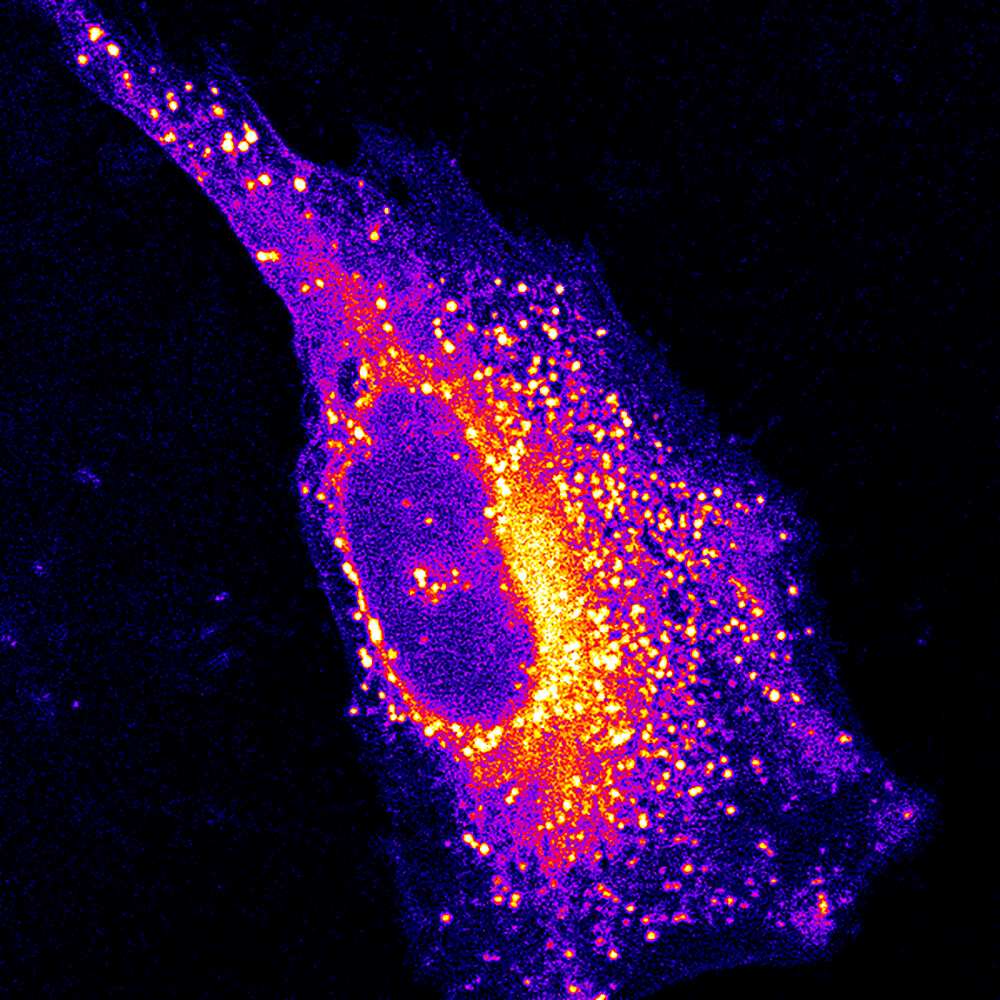
To understand more about the way life works, scientists can use chemical tools. Chemistry also allows scientists to develop new drugs that cure diseases by changing the activity of proteins or other molecules in the body.
At EMBL, chemistry is applied in various ways. The development of new chemical tools involves the design of molecules on the computer and their synthesis in the lab. These molecules can then be used to identify or tag other molecules in living cells, making it possible to observe them under the microscope. New tools also allow scientists to analyse all of a cell’s metabolites – the molecules that are produced by the chemical reactions taking place inside the cell.
To develop new drugs, several disciplines work closely together. At EMBL’s European Bioinformatics Institute (EMBL-EBI), computer programmes are developed for storing, searching, and analysing chemical data. These programmes allow scientists to predict the biological effects of specific molecules and help them to select interesting drug candidates. Engineering helps researchers by providing new technologies that enable thousands of molecules to be tested simultaneously for biological activity. Chemists can then modify these molecules further to enhance their properties. This approach can lead to the discovery of new drugs targeting common diseases, such as viral infections or cancer.
Infrastructure and expertise for assay development, small-molecule screening and use of medicinal chemistry to optimise compounds against novel targets for 'biotool' or early drug development.
About the team/jobSafety and toxicology concerns remain one of the most persistent challenges in drug discovery. This is an exciting opportunity to join a multi-disciplinary team on a project to develop a comprehensive open source side effect resource for the scientific and pharmaceutical community,...
Closes on 12th October. Posted 14th September 2026
EditEMBL Grenoble is a leading centre for molecular structural biology, bringing together an international community of scientists, engineers, and support professionals. At the interface of structural biology and cell biology, we investigate fundamental questions in RNA and infection biology, eukaryogen...
Closes on 1st October. Posted 10th September 2026
EditThe Dorrity group at EMBL Heidelberg is seeking a motivated and skilled molecular biologist to join as a Laboratory Officer. Our group uses cutting-edge single-cell genomic techniques to study how cells regulate gene expression over time, with the goal of understanding how individual cells make deci...
Closes on 1st October. Posted 10th September 2026
EditFrom microscopy to mycology, from development to disease modelling, EMBL researchers cover a wide range of topics in the biological sciences.