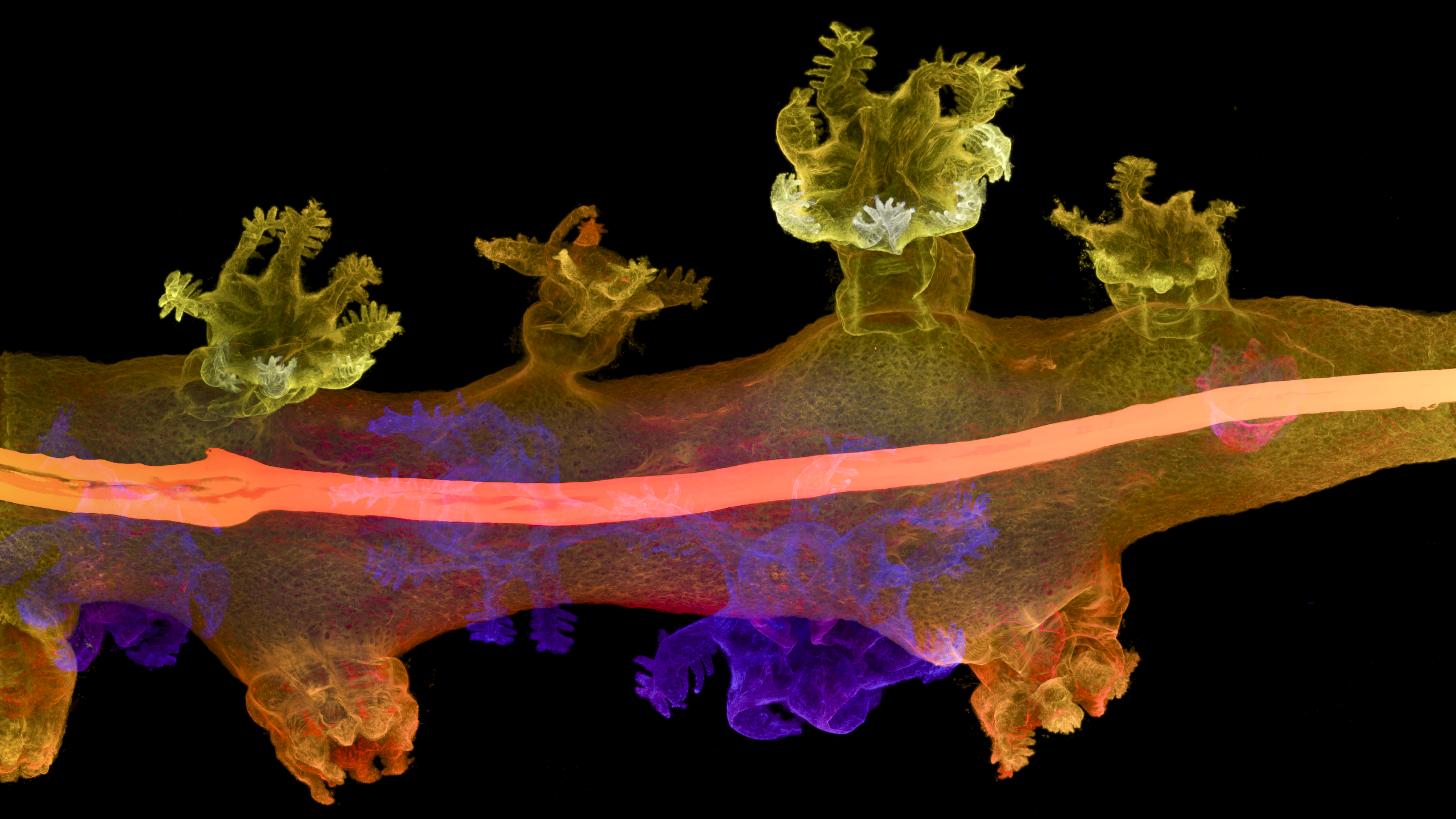
Zilien der Atemwege gegen Krankheiten
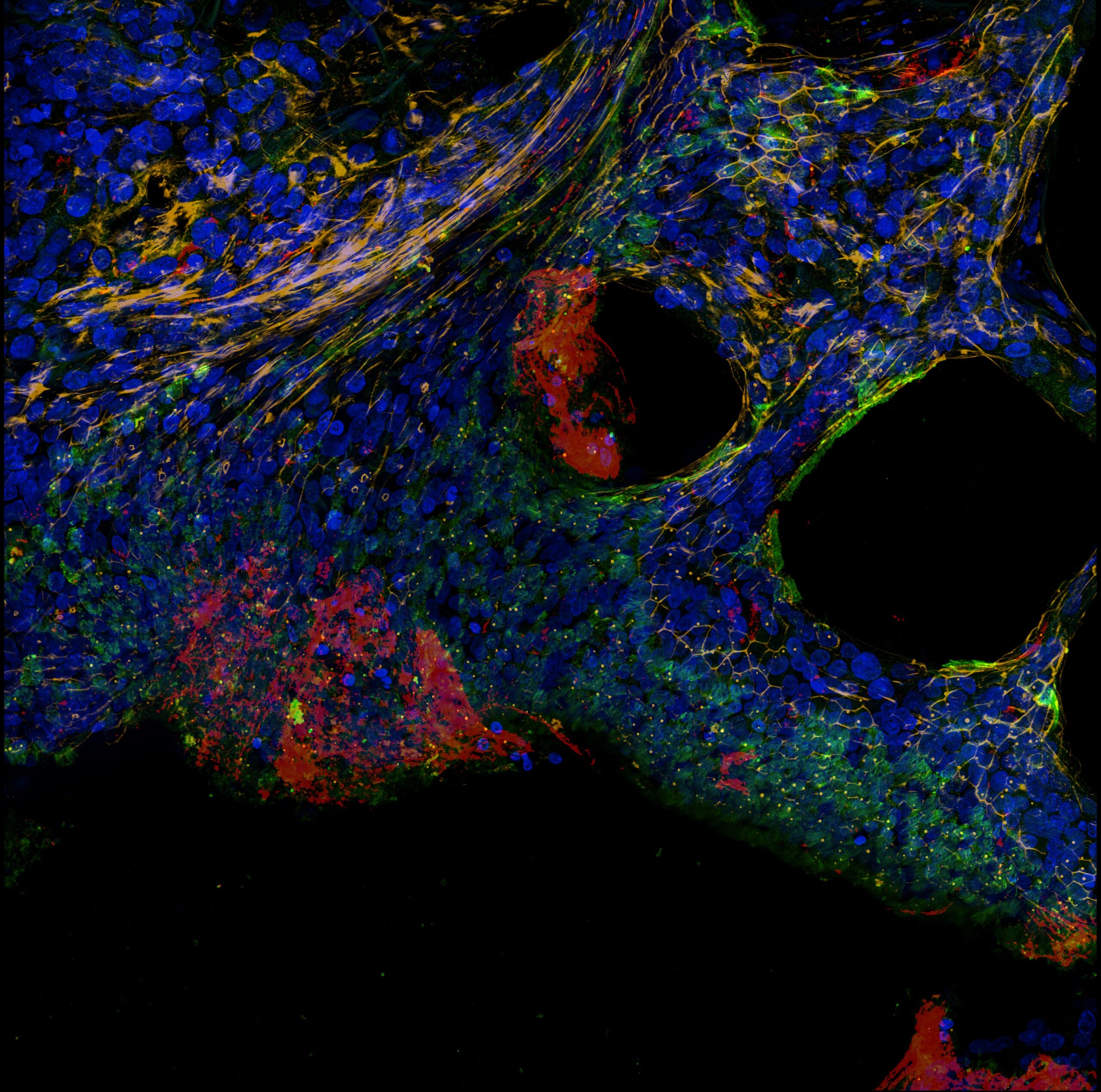
Untersuchung der Zilien und des Mukus der menschlichen Lungen
1. Platz Publikumspreis
Credit: Dennis Reininger / EMBL
An EMBL Exhibition
Im Mittelpunkt unserer Ausstellung befindet sich eine 40 m2 große LED-Wand — unser “Window of Wonder” — auf der Mikroskopiebilder in allen Farben leuchten. Dieses Jahr erneuern wir unser Display im Zuge des WoW-Awards: Um ihr Bild auf der LED-Wand zu präsentieren, haben Wissenschaftler*innen des EMBL und externe Mitarbeiter*innen ihre besten Mikroskopiebilder eingereicht.
Eine Jury wählte daraus die zehn besten Bilder aus. Vier Arbeiten – darunter zwei, die sich den dritten Platz teilen – wurden zusätzlich mit dem Publikumspreis ausgezeichnet. Die prämierten Bilder sind ab sofort auf unserer LED-Wand zu sehen.
Untersuchung der Zilien und des Mukus der menschlichen Lungen
1. Platz Publikumspreis
Credit: Dennis Reininger / EMBL
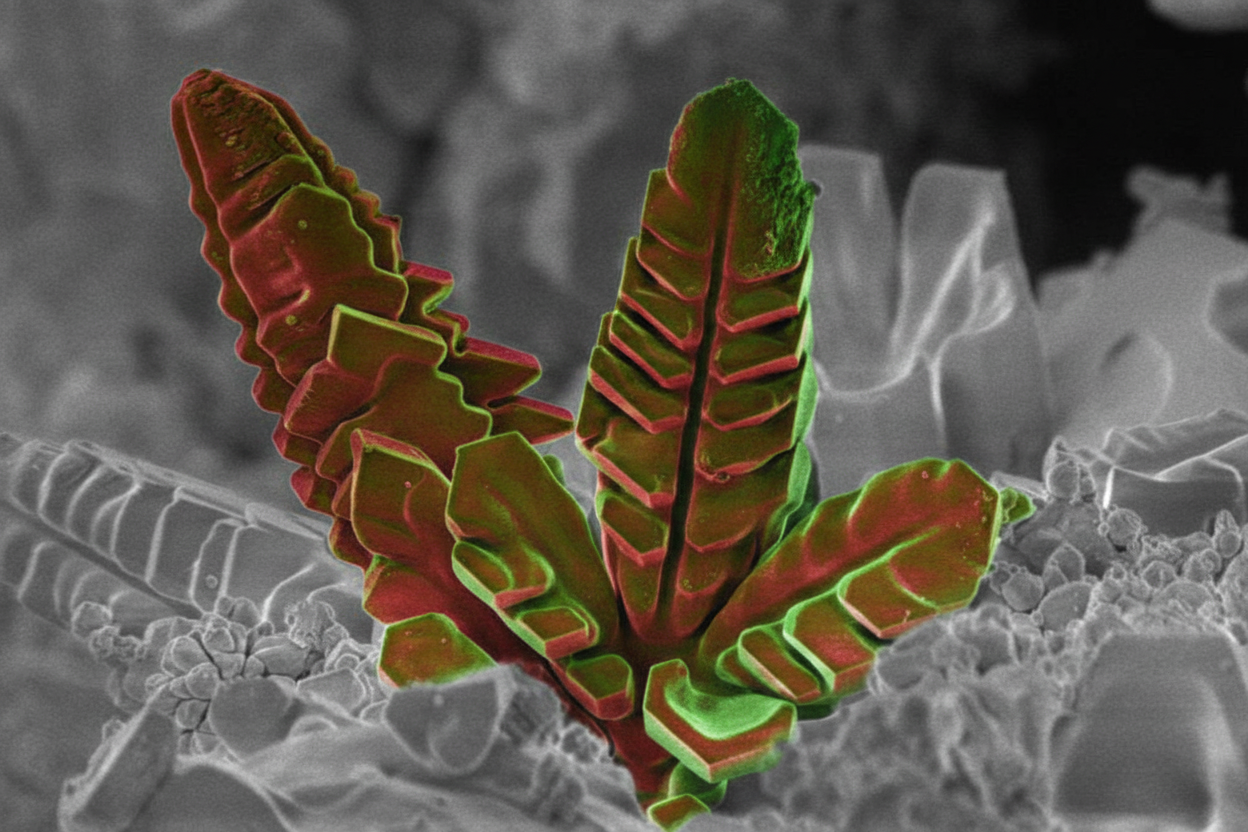
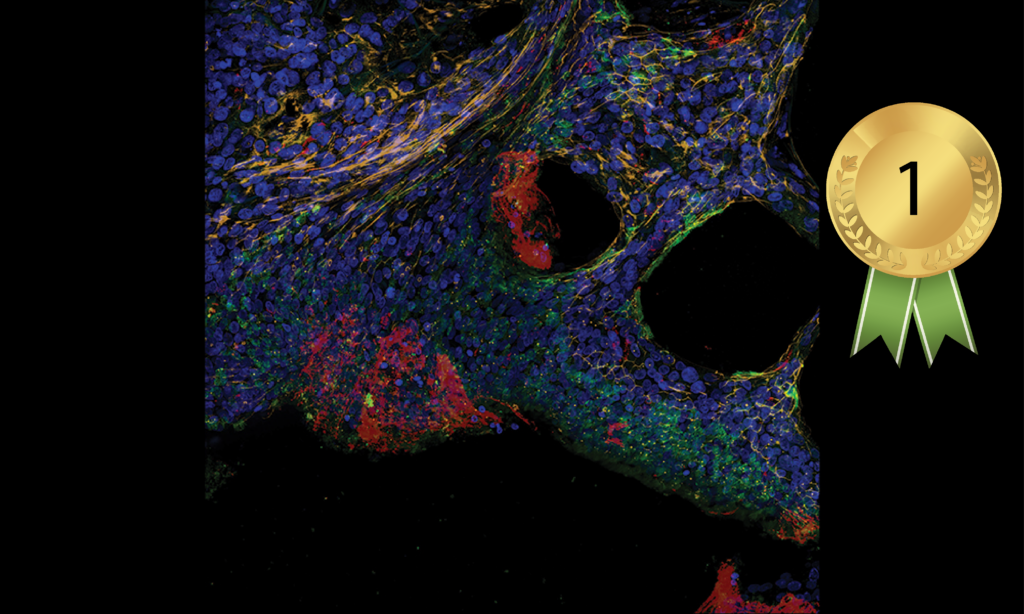
Bewundern der Schönheit in einer falsch eingefrorenen Probe
2. Platz Publikumspreis
Credit: Anna Steyer / EMBL
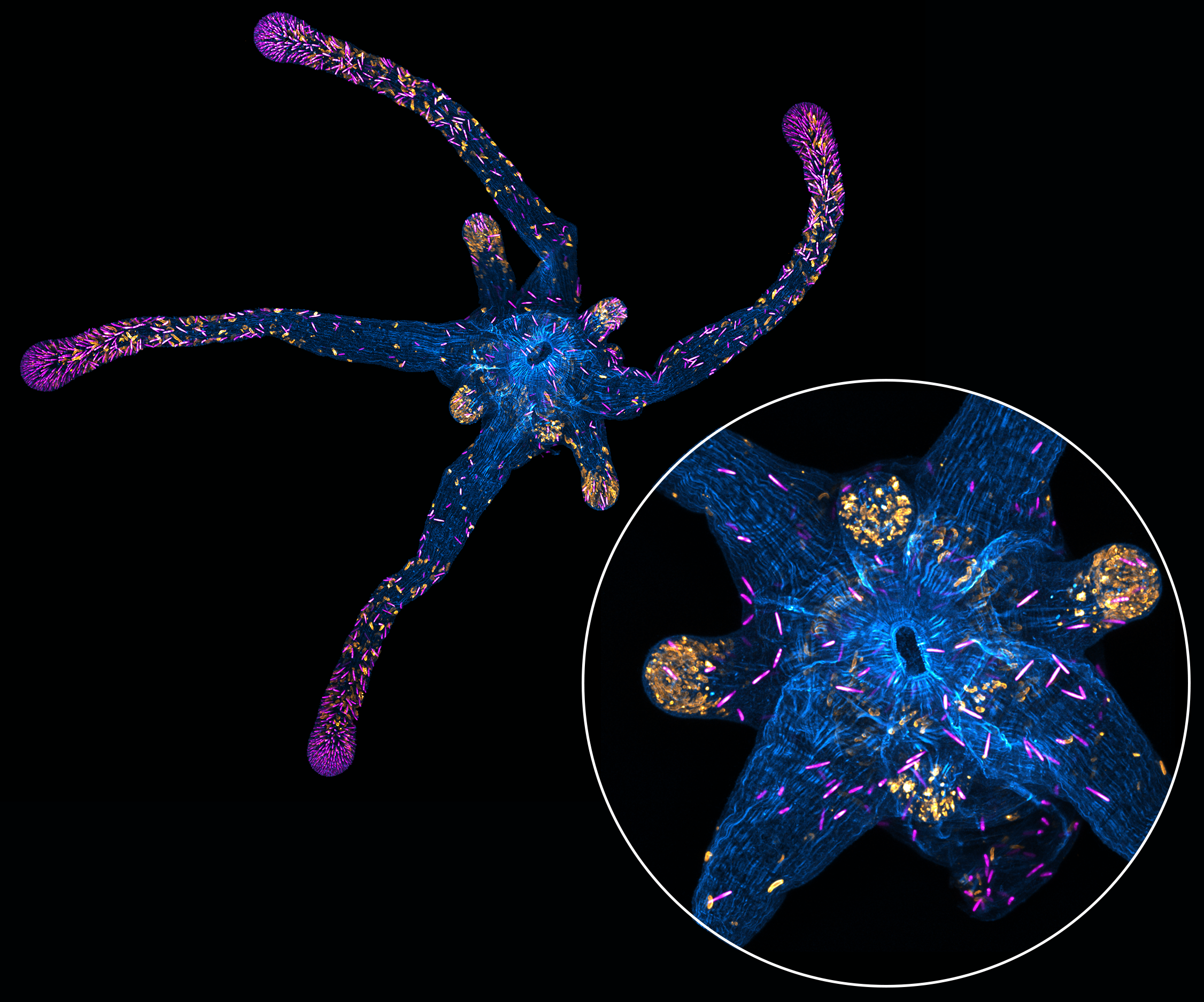
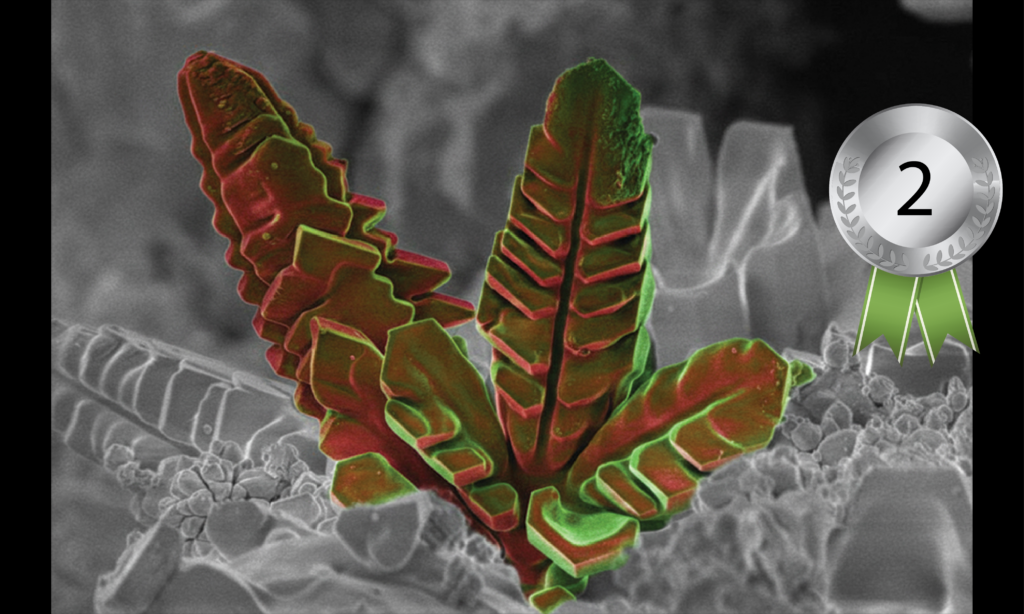
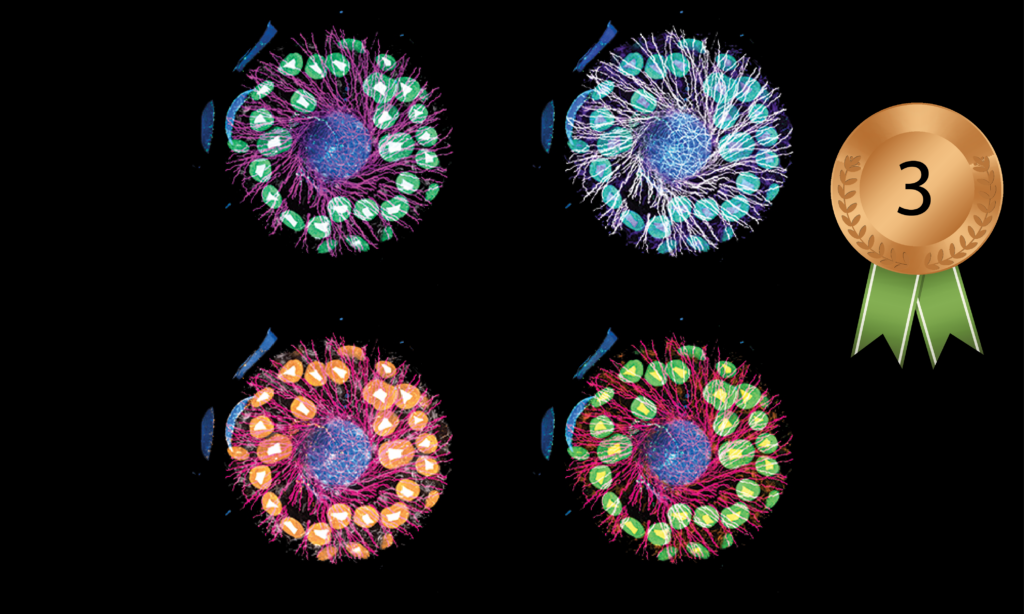
Neu wachsende Tentakel mit Nesselzellen einer Anemone
3. Platz Publikumspreis
Credit: Silvia Zanna, Aissam Ikmi / EMBL
Visualisierung eines Planktons im Stil von Andy Warhol
3. Platz Publikumspreis
Credit: Serena Flori, Felix Mikus, Eliott Flaum, Kevin Moog / EMBL
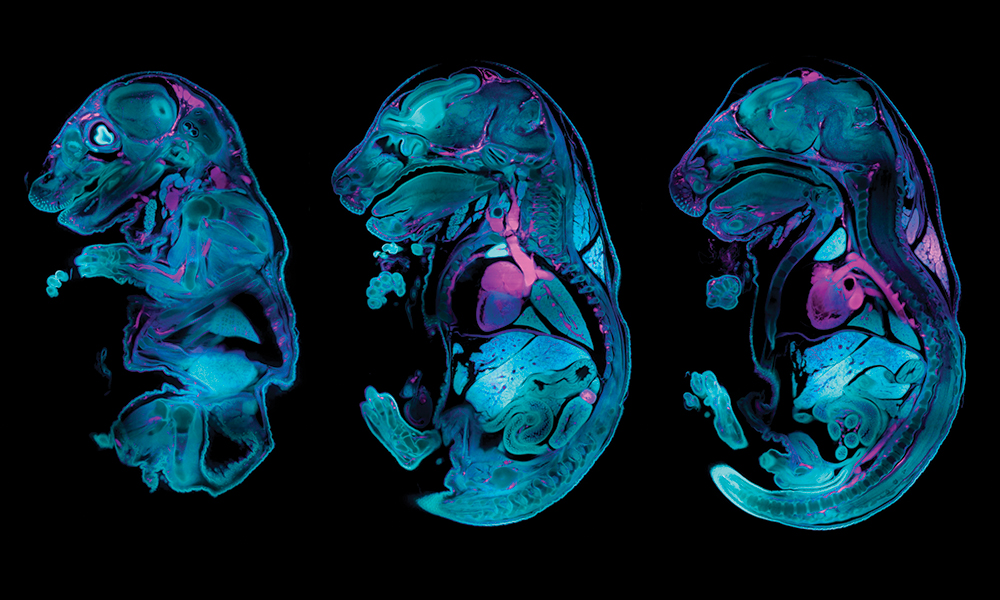
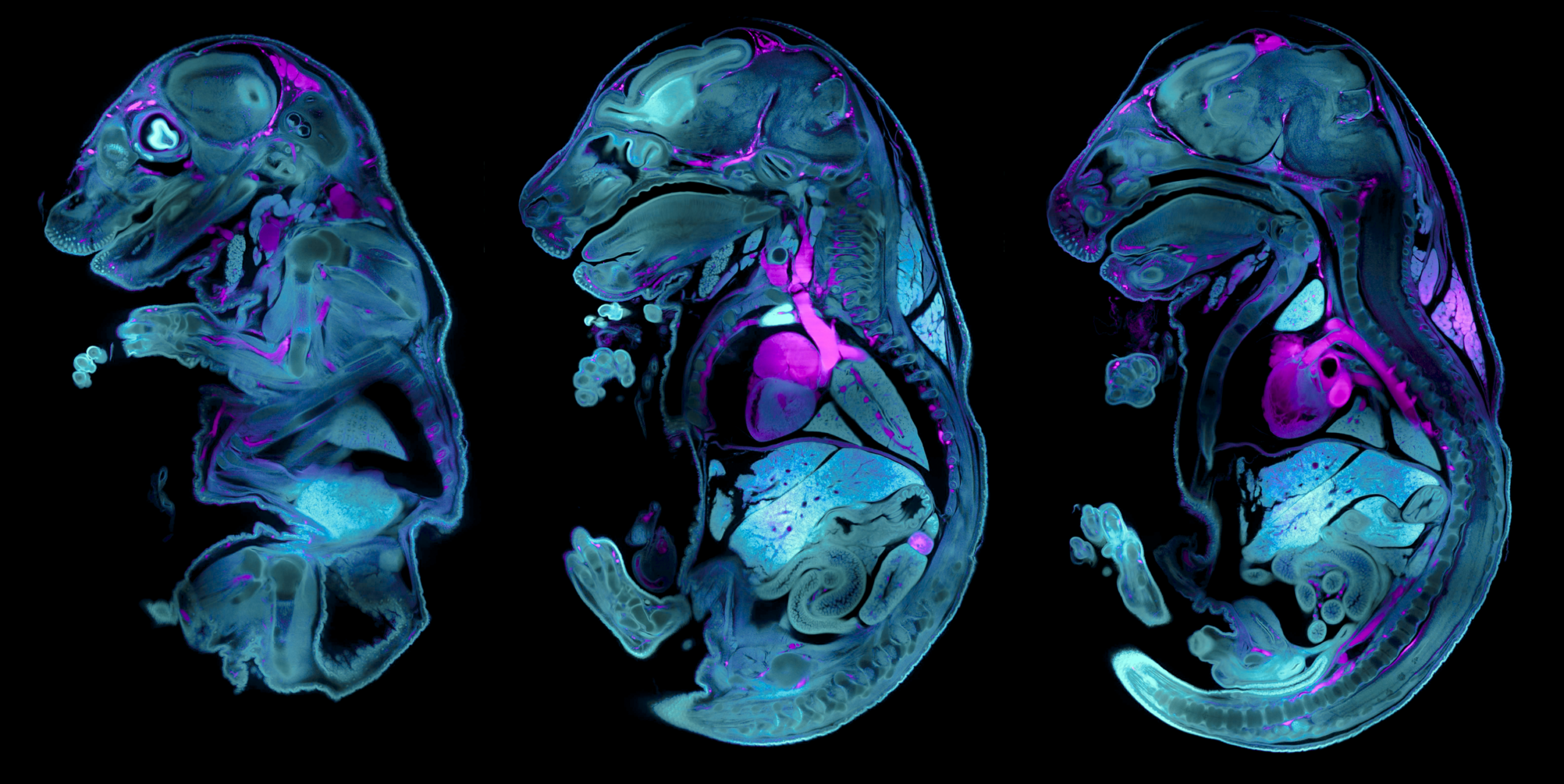
Mithilfe der Lichtblatt-Mikroskopie durchleuchtetes Mausembryo
Credit: Montserrat Coll Lladó / EMBL; Jürgen Mayer / Bruker Luxendo
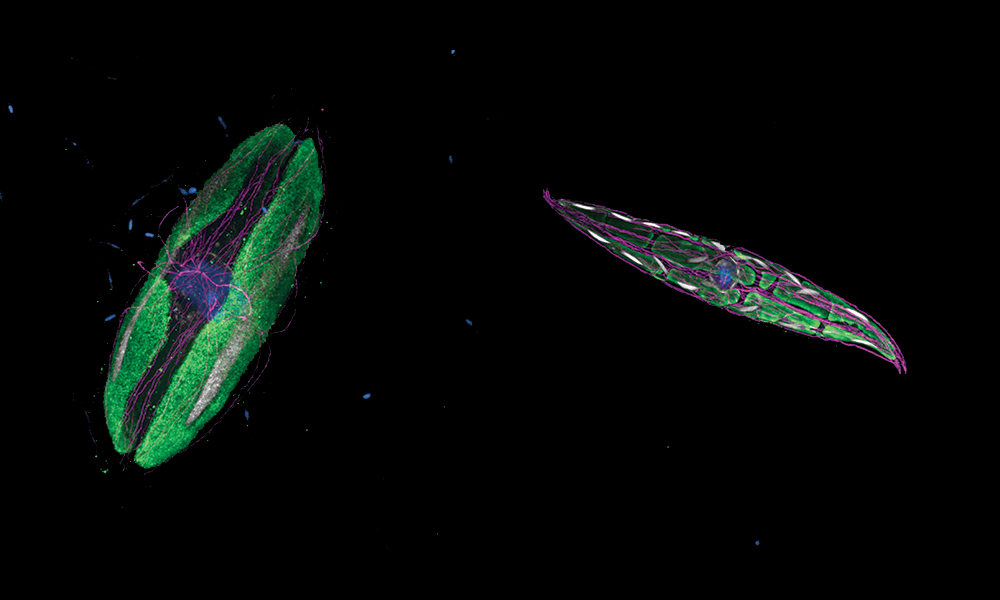
Aufnahme der mikroskopischen Lungen des Meeres, des Phytoplanktons
Credit: Kevin Moog / EMBL
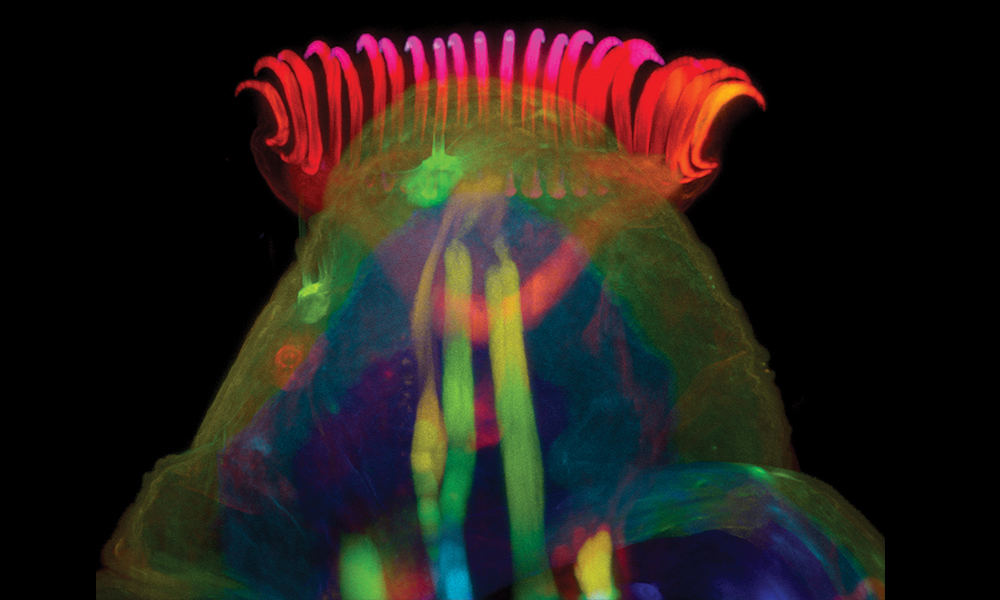
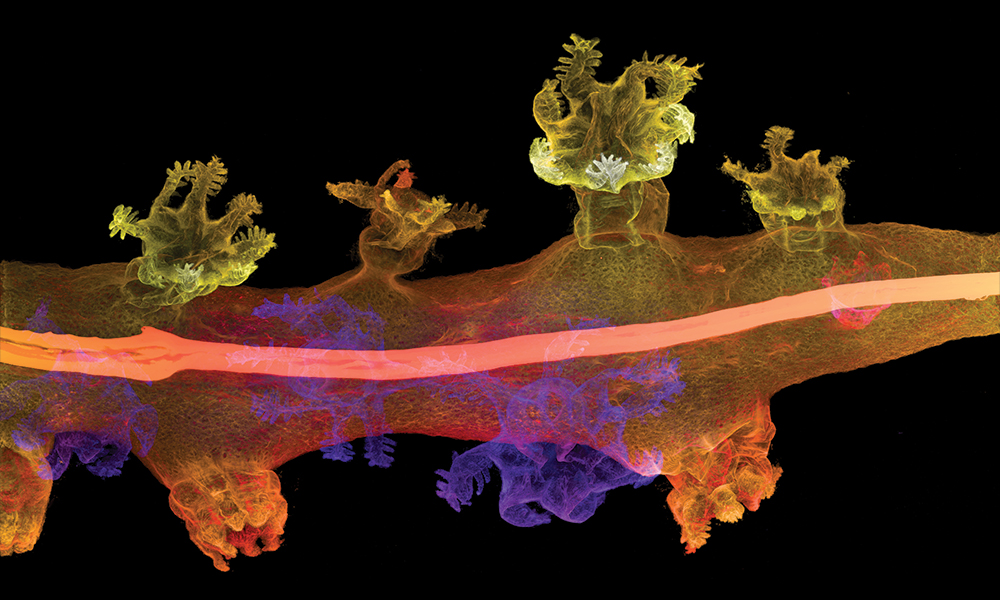
Darstellung der Hakenkränze am Bauchfuß einer Raupe
Credit: Montserrat Coll Lladó / EMBL
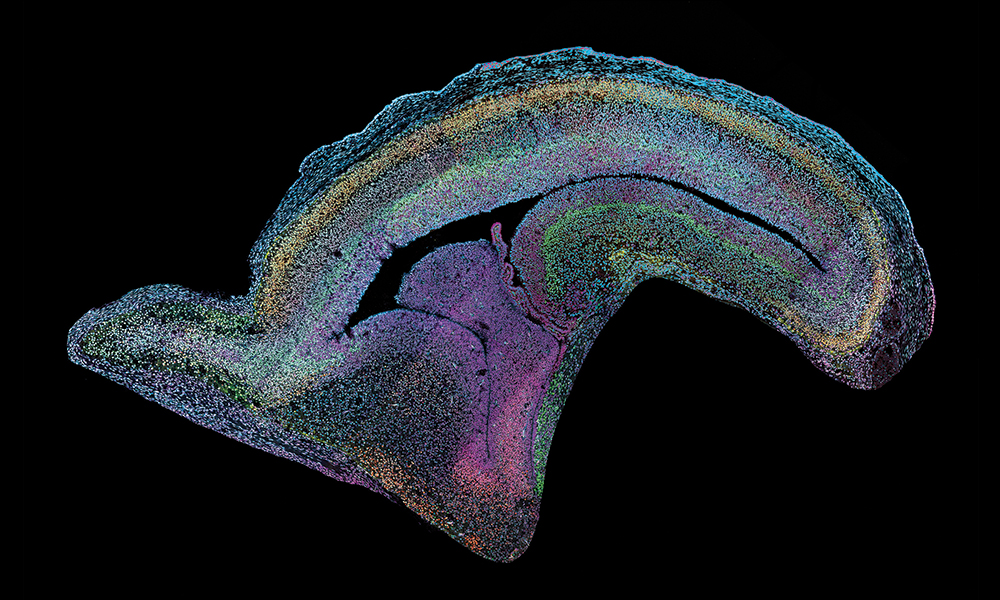
Farbliche Darstellung aller Neurone eines Mausgehirns
Credit: Yassin Harim, Giulia Di Muzio, Hsin-Jui Lu / DKFZ
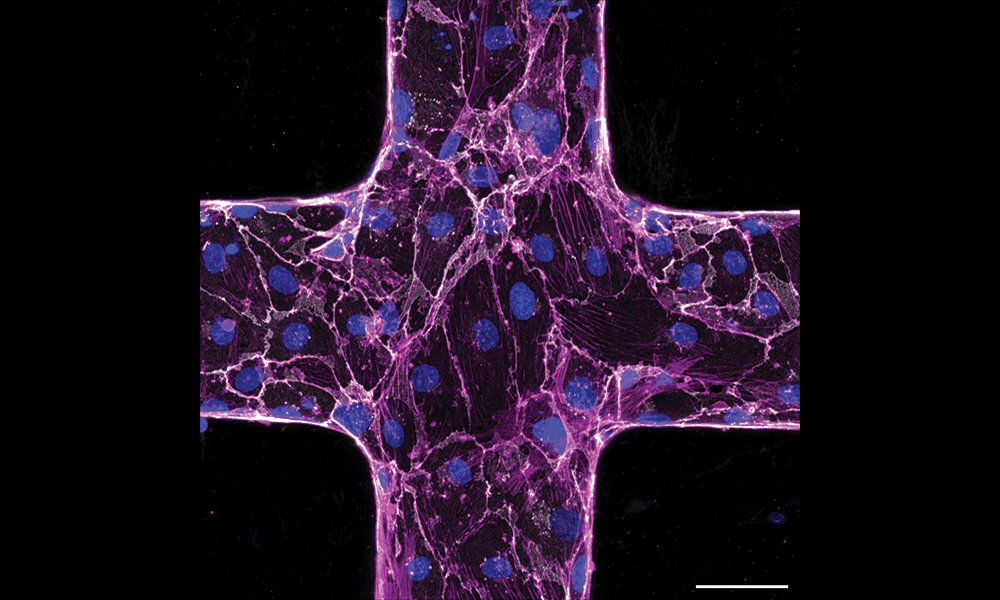
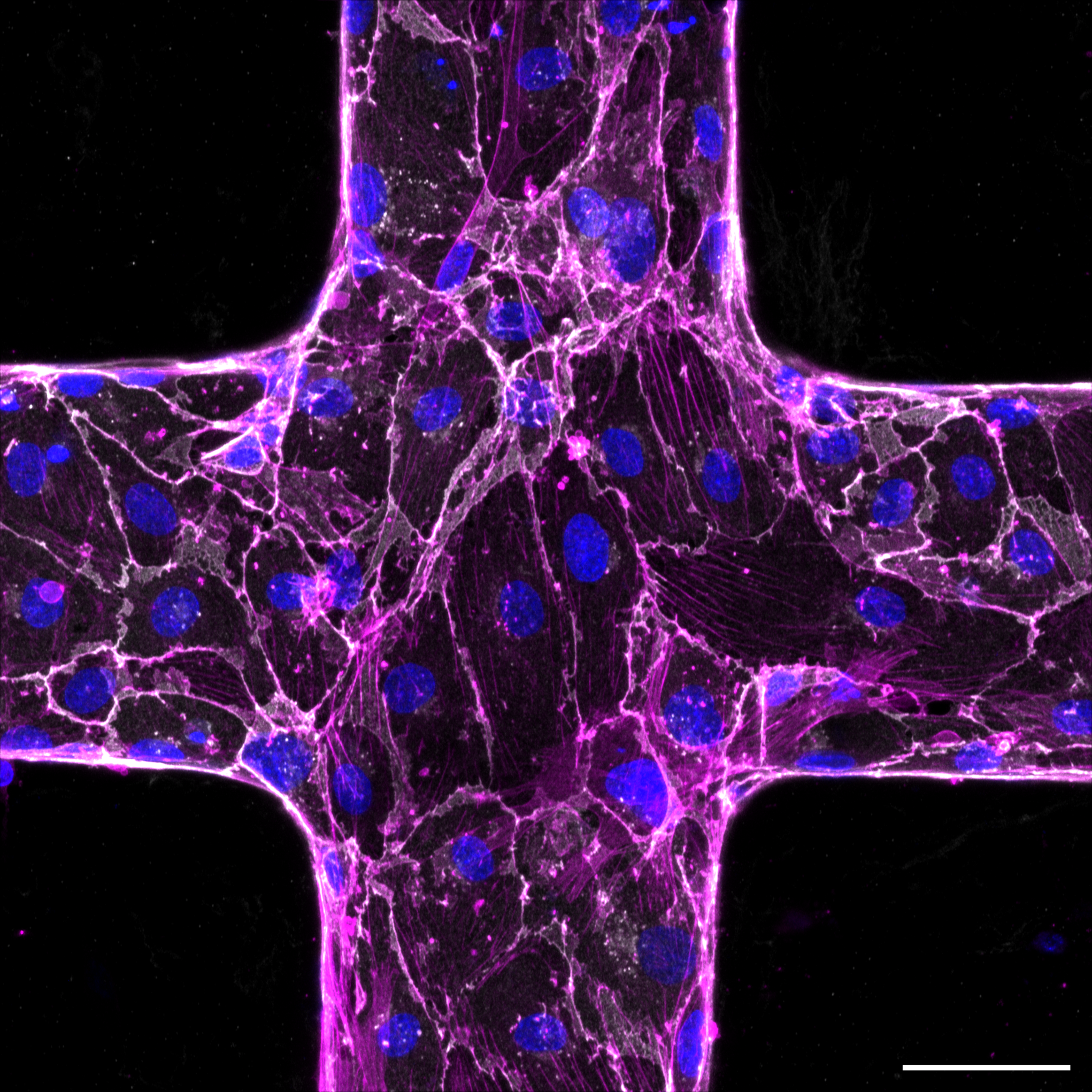
Wachsende Gehirnzellen auf einem mikrofluidischen Chip
Credit: Manuel Fiegl / EMBL
At the centre of our exhibition is our “Window of Wonder” — a 40 m² LED wall, where fascinating microscopy images can be experienced in their full beauty. In the course of this year’s WoW Award, the LED Wall has been refreshed with new visuals: EMBL scientists, along with external collaborators, submitted their most impressive microscopy images for the chance to be featured on the Wall.
A jury selected ten finalists from these images. Four of the works – two of those sharing third place – were additionally awarded the Public Choice Award. The award-winning images can be seen on our LED Wall from now on.
Studying lung cilia of humans and their mucus
1st place Public Choice Award
Credit: Dennis Reininger / EMBL
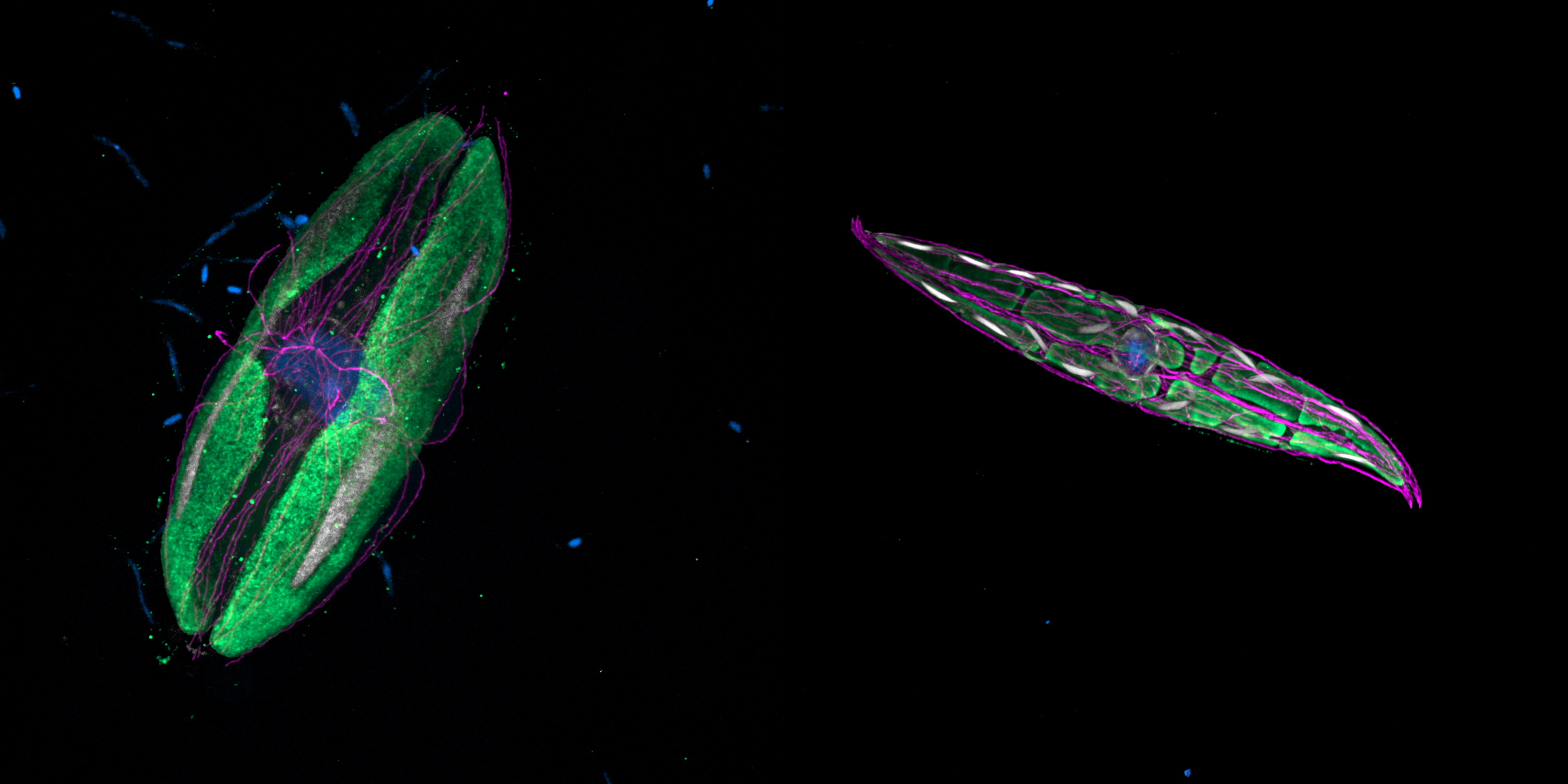
Admiring the beauty in a wrongly frozen sample
2nd place Public Choice Award
Credit: Anna Steyer / EMBL
Detecting an anemone's growing new stinging tentacles
3rd place Public Choice Award
Credit: Silvia Zanna, Aissam Ikmi / EMBL
Visualising plankton through the eyes of Andy Warhol
3rd place Public Choice Award
Credit: Serena Flori, Felix Mikus, Eliott Flaum, Kevin Moog / EMBL
Using lightsheet microscopy to see through the mouse embryo
Credit: Montserrat Coll Lladó / EMBL; Jürgen Mayer / Bruker Luxendo
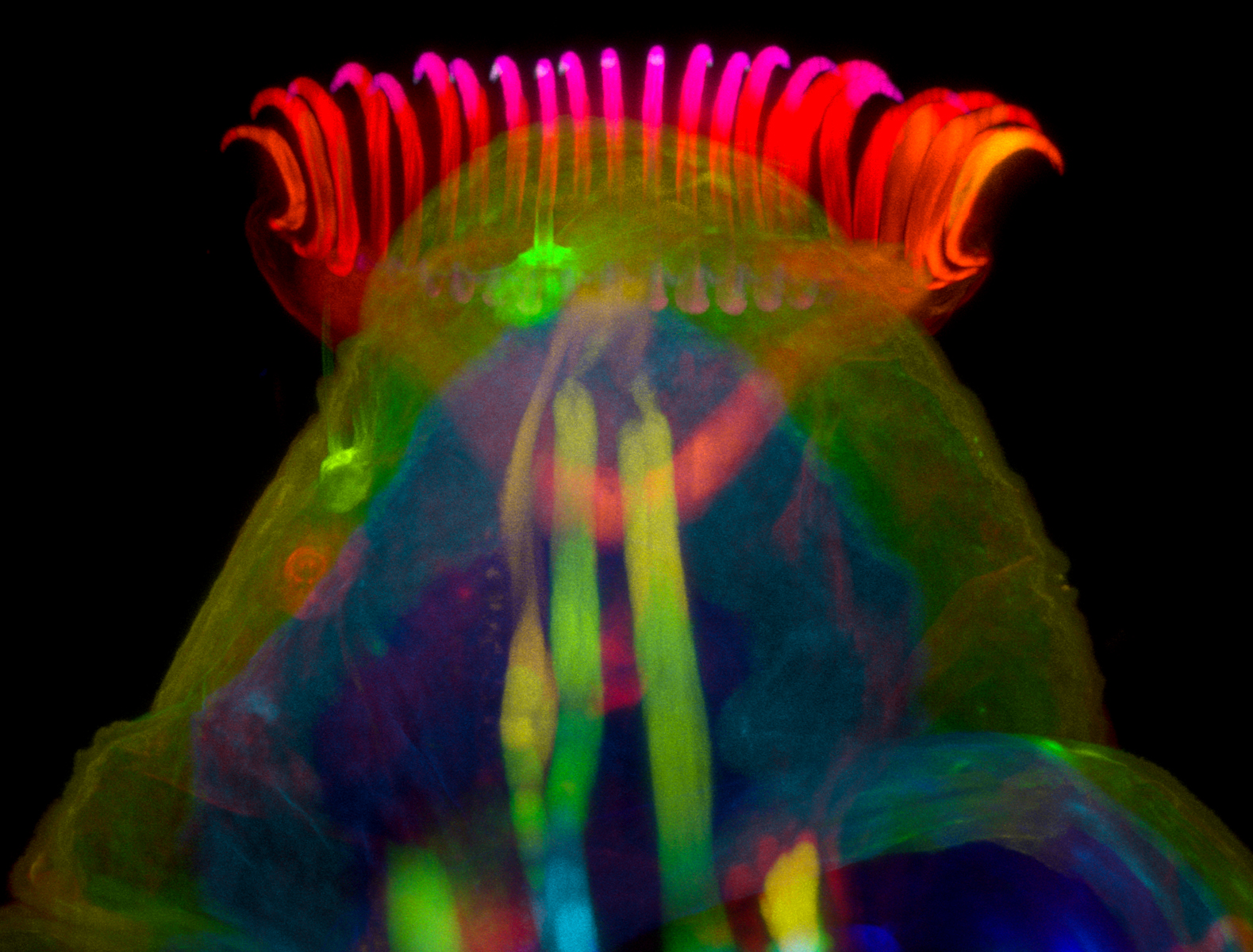
Observing the grappling hooks on a caterpillar's proleg
Credit: Montserrat Coll Lladó / EMBL
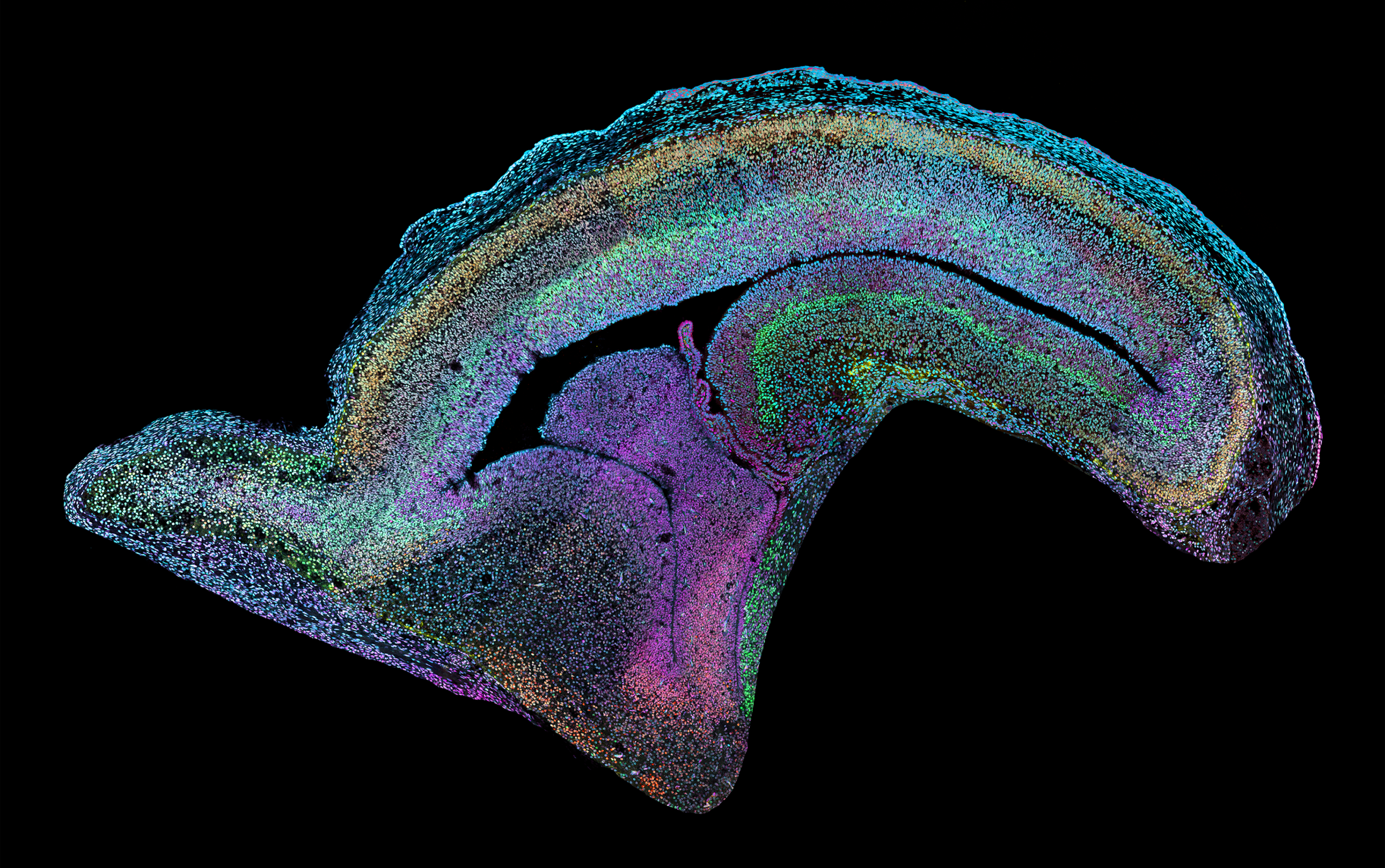
Seeing all the neurons of a mouse brain with colors
Credit: Yassin Harim, Giulia Di Muzio, Hsin-Jui Lu / DKFZ
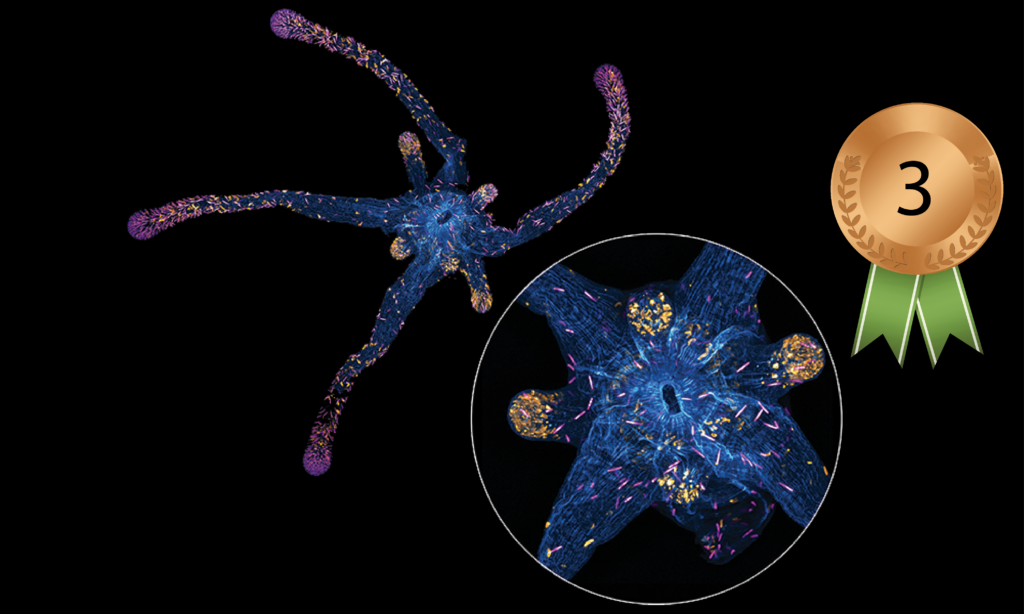
Finding collagen in a transluscent sea creature
Credit: Montserrat Coll Lladó / EMBL
With support from more than 30 countries, laboratories at six sites across Europe and thousands of scientists and engineers working together, the European Molecular Biology Laboratory (EMBL) is a powerhouse of biological expertise. EMBL is an intergovernmental organisation, headquartered in Heidelberg, and was founded in 1974 with the mission of promoting molecular biology research in Europe, training young scientists, and developing new technologies.
EMBL currently employs more than 1800 people in Barcelona, Grenoble, Hamburg, Heidelberg, EMBL-EBI Hinxton (near Cambridge), and Rome.
Publishing hundreds of research articles and hosting dozens of conferences every year, EMBL is driving visionary fundamental research and training Europe’s future scientific talent.