English
 Deutsch
 Français
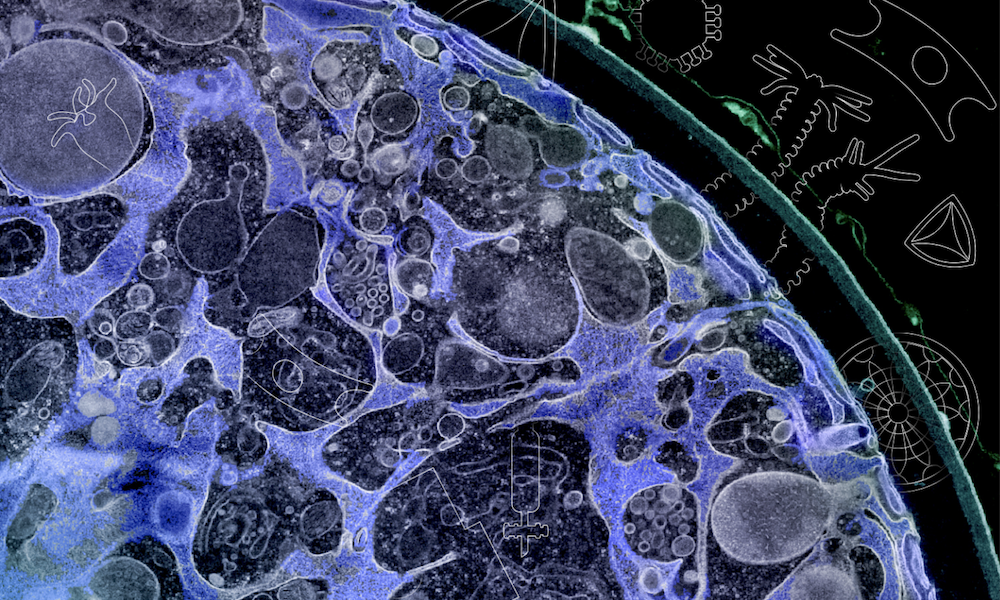
Diving into the world of plankton
BIOcean5D project
BIOcean5D is a large, multidisciplinary European research initiative, primarily funded by the EU’s Horizon Europe programme, focused on understanding marine biodiversity and how it changes across five dimensions: three-dimensional space (geographic variation), time (historical to present), and human impact (effects of human activities).
Objectives
- Study the full range of ocean biodiversity, from viruses and microbes to larger organisms, by integrating diverse biological, ecological, and environmental data.
- Investigate how marine ecosystems have evolved from pre-industrial times to today and how they are being reshaped by human pressures.
- Build novel technologies, monitoring tools, and predictive models that link molecular, organismal, ecological, and socio-economic dimensions of marine life.
- Create an open-access data hub that harmonises new and existing data from many sources to support research and policy.
These results are intended to help guide ecosystem-based management, conservation strategies, and informed decision-making about marine biodiversity and its value.
Impact
BIOcean5D aims to:
- Advance scientific understanding of marine biodiversity dynamics.
- Produce innovative indicators of ecosystem health.
- Support policy-makers and stakeholders with tools and knowledge for long-term sustainable ocean management.
Approach
BIOcean5D brings together major European laboratories and research networks, including molecular biology, marine biology, and sequencing centres across 31 partners in 11 countries. One of them, the European Molecular Biology Laboratory (EMBL), contributed to the project and designed a teaching resource to bring plankton research to the classroom.
Resource booklet
Focus of the resource “Diving into the world of plankton using the Curiosity Microscope”
This is a teaching lesson designed for secondary school science classrooms focusing on aquatic diversity and plankton. The materials give learners a hands-on experience exploring plankton and understanding their role in ocean ecosystems. Even though the material was initially designed to be used in conjunction with the Curiosity microscope developed through Plankton Planet, all activities can be executed with a standard light microscope.
Target Audience
Secondary school science teachers and their students
The resource is particularly useful for classroom activities involving biology, ecology or marine science and for general science classes rather than advanced scientific training.
Duration
The lesson is structured to be completed in about 2–3 class periods (e.g., 2–3 lessons).
Key Learning Outcomes
Learners using this resource will be able to:
- Explore and identify plankton using microscopy.
- Understand diversity in aquatic ecosystems, with a focus on marine plankton species.
- Connect microscopic observations to broader ecological concepts such as food webs and ocean biodiversity.
- Gain experience with hands-on science learning and scientific observation skills.
Access to the resource booklet
The “Diving into the world of plankton using the Curiosity Microscope” teaching resource is hosted on Zenodo and exists in the following languages:
English: https://zenodo.org/records/18246645
German: https://doi.org/10.5281/zenodo.14616180
French: https://doi.org/10.5281/zenodo.13881028
Italian: https://doi.org/10.5281/zenodo.14616185
Versions in Catalan and Spanish are coming soon!
Instructions in English on how to execute the resource’s task using a standard light microscope instead of the Curiosity microscope can be downloaded from the next tab.
Context & Metadata
Published: August 22, 2024
Type: Lesson plan / classroom material
License: Creative Commons Attribution 4.0 International (CC-BY-4.0)
Supported by: European Commission—BIOcean5D project funding.
Substitutes with a light microscope
Instructions in English on how to execute the resource’s task using a standard light microscope instead of the Curiosity microscope can be downloaded here.
Visualisation under a light microscopeSample preparation for observation under a light microscope
Topic area: Environmental biology
Type of resource: Paper-based
Age group: 16-19, 14-16
Contact: SEPE team
Author: Efraim Culfa
Share: