Fotis Kafatos Collection
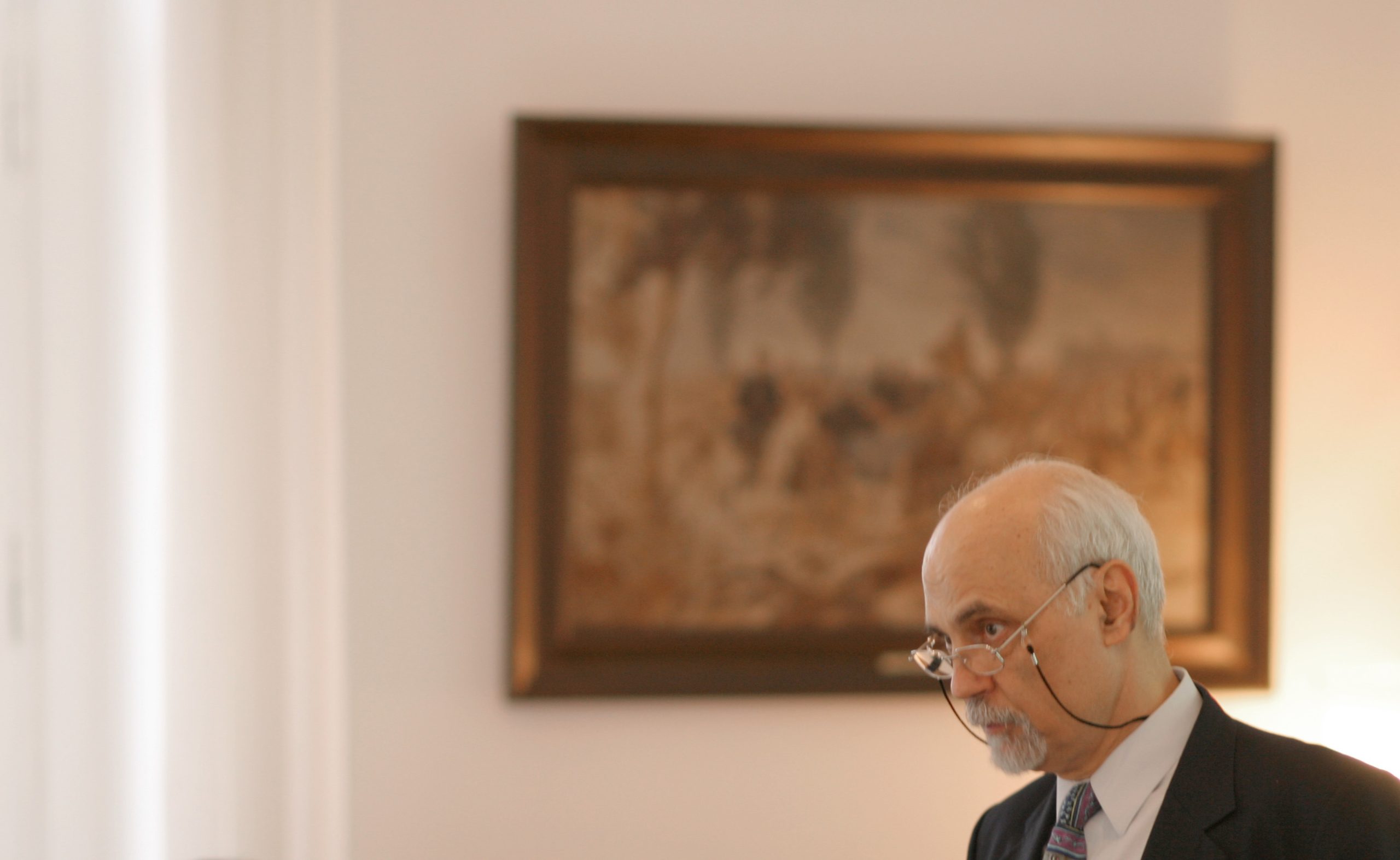
By Viktor Osminin, archives student assistant
The EMBL Archive and Records Management is thrilled to celebrate the sixth International Archives Week (#IAW2024) from June 3rd to June 9th, 2024, coinciding with the EMBL 50th Anniversary celebrations #EMBL50. The introduction of the archival collection of Fotis Kafatos, the third Director General of EMBL, to the EMBL staff and the public is the first of three blogs that will promote the importance of EMBL Archive for EMBL’s heritage, history and memory.
Collection overview
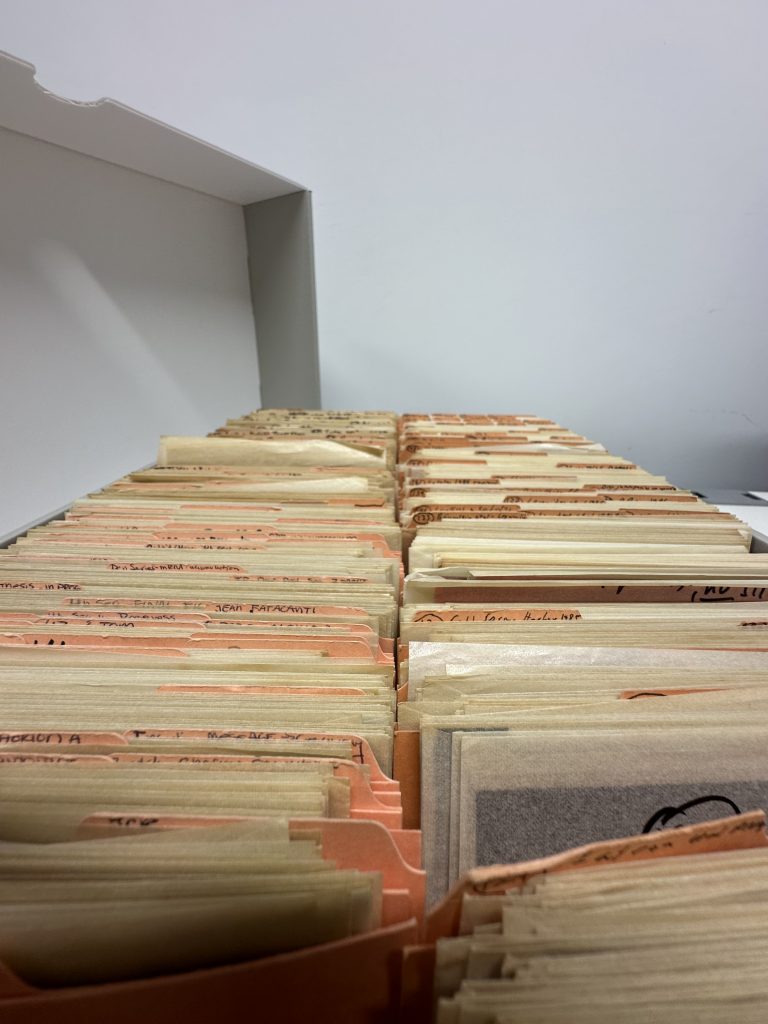
The Fotis Kafatos Collection comprises a wide range of scientific, administrative, consultative and personal materials dating from 1962 to 2014. The collection includes documents from Kafatos’ influential tenure as Director General of the EMBL from 1993 to 2005, as well as his distinguished work at Harvard University, the Institute of Molecular Biology and Biotechnology (FORTH-IMBB) in Heraklion, Imperial College London and the European Research Council. The material, available in several languages including English, Greek, German, French and Italian, covers 56 linear meters and was transferred from Imperial College London to the EMBL Archive in 2015 as part of a collaborative effort involving George Christophides, Professor of Infectious Diseases and Immunity in the Department of Life Sciences, Faculty of Natural Sciences, Imperial College London, Mehrnoosh Rayner, Head of EMBL Alumni Relations, and Anne Flore Laloë, EMBL’s first Archivist.
Access to the collection is generally granted for records over 30 years old and for all scientific documents. Confidential records are open to the public 50 years after creation, while sensitive records and personal correspondence are restricted for 80 years after creation. The collection has been meticulously processed and catalogued by student archivist Viktor Osminin, under the supervision of EMBL archivist and records manager Maria Papanikolaou, and provides an invaluable insight into Kafatos’ contributions to molecular biology and his leadership of several prestigious institutions.
Biographical note
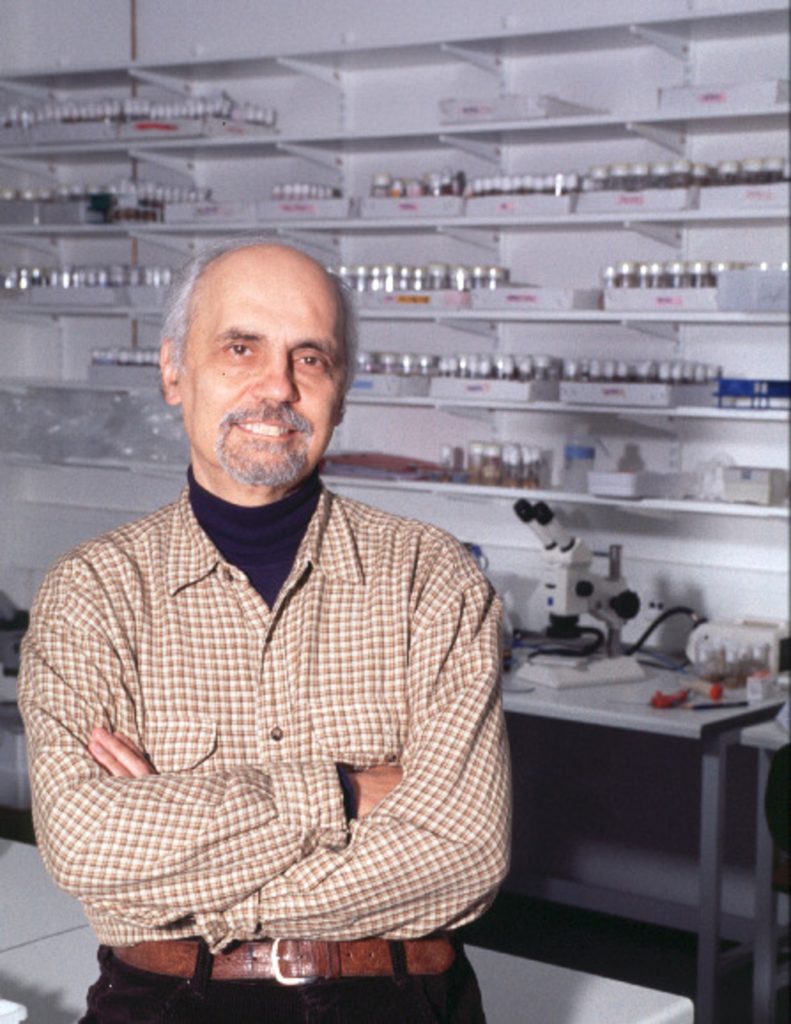
Fotis Konstantine Kafatos (1940-2017) was a prominent Greek developmental biologist and a science politician. Fotis Kafatos was born in Heraklion, Crete. After finishing school, Fotis Kafatos moved to study in the U.S. using the program for gifted Greek students sponsored by French philanthropist Anne Schlumberger. At 22, Fotis Kafatos made his first publication in co-authorship with famous American ethnologist Thomas Eisner. At the age of 29, he already received a full professorship position at Harvard University and led multiple laboratory group projects around his long-term research interests: the study of malaria and developmental mechanisms of the fruit fly, Drosophila melanogaster and DNA cloning technology, which after became used world-wide.
In 1972, Fotis Kafatos expanded his activities into the Mediterranean region: he started to teach at the University of Athens and, a few years later, he initiated the creation of the Institute of Molecular Biology and Biotechnology (IMBB) and associated research center (Foundation of Research and Technology Hellas-FORTH) in his hometown, managing this institution until 1994. His activities turned Crete from an arid scientific zone into one of the top research institutions in Greece. His achievements had been noticed, and, in 1993, Fotis Kafatos was selected as the new director-general of the European Molecular Biology Laboratory. Under his management, the institution substantially grew: for instance, two new sites were created (EMBL Rome and EMBL-EBI Hinxton).
In 2005, he left EMBL due to mandatory retirement at the age of 65. Fotis Kafatos took a professorship position at Imperial College London and started actively working on his idea of pan-European scientific cooperation, which later turned into the European Research Council, where he was selected as the first President (2007-2010). In a short time, the European Research Council developed into an extremely effective scientific merit-only bottom-up grant agency: even though ERC approves just approximately 500 grants per year, their approach is highly beneficial: ERC sponsored 5 Nobel prize winners and was involved in the production of more than 40,000 academic papers. In 2014, Fotis Kafatos retired and returned to Crete, where he died due to illness three years later.
Scope and content of the collection
The Fotis Kafatos archival material was transferred from Imperial College London (ICL) to EMBL in 2015, through a synergy between EMBL staff and ICL Fotis Kafatos colleagues. The majority of the material relates to Kafatos’ scientific, managerial and consulting activities between 1993 and 2010. Materials from the early period of Kafatos’ career (1958-1990) are available as a separate collection within the Harvard University Archives (Fotis C. Kafatos personal archive). The Fotis Kafatos collection at the EMBL Archive fills the gap in Kafatos’ personal collection for the years after the 1990s and is the first collection for Fotis Kafatos in Europe.
The collection is divided into twelve thematic series and thirty sub-series, largely following the original structure. Documents are usually organized into subject folders. Within these folders, documents are arranged chronologically. The collection consists mainly of correspondence, e-mail correspondence, facsimiles, meeting agendas, grant documentation (including drafts), reports, personal notes, and scientific papers (including drafts). The documentation is extensively annotated by Fotis Kafatos.
The twelve collection series are described and presented below in the order in which they are arranged in the collection.
- Academies series: This series consists of materials (mostly correspondence, personal notes, official documentation, and meeting documentation packages) associated with Kafatos’ membership in academic societies from 1991 to 2012, such as the Royal Society (UK), various European academies (Academie des Sciences-Institut de France), Academia Europaea, the European Academy of Science and Arts and multiple American and British Academies (the National Academy of Sciences, the Academy of Medical Sciences, American Academy of Arts & Sciences).
- BioMalPar series: BioMalPar Network of Excellence (BMP NoE or just BMP) was a temporary interinstitutional scientific and educational project on Malaria research (2005-2008) sponsored by the European Council. Fotis Kafatos was responsible for the PhD Programme operational management and supervision for some students. A significant part of the doctorate training as well as a few associated conferences had happened at the EMBL Heidelberg site. The collection also includes materials on the continuation of the BioMalPar project: MalParTraining and EVIMalaR.
- European Molecular Biology Laboratory series: Materials are dedicated to the selection of Fotis Kafatos as a new EMBL DG and internal EMBL matters, such as managerial meetings, preparations of documentation, relations with outstations, design, construction of new buildings, the establishment of EMBLEM, and other issues from 1993 until 2012. This collection represents only a minor part of documentation about EMBL: a huge complex of scientific material on EMBL is available within the ‘Science’ series, and correspondence and personal files on EMBL associates are broadly present within the ‘Personal’ series.
- European Research Council series: Documents relating to Fotis Kafatos’ work and involvement in European science politics from 2004 until 2012, including a complex of personal material on activities, which led to the establishment of the European Research Council (ERC) in 2007. Materials on his tenure as the first Chair and President of the ERC (2007-2012) are also part of the series.
- European Strategy Forum for Research Infrastructures series: This series contains documents associated with Kafatos’ activities as an expert, scientific advisor, and delegate of ESFRI (European Strategy Forum for Research Infrastructures) from 2005 until 2008. ESFRI is an organization responsible for strategic pan-European collaborations in the scientific field. ESFRI evaluates proposals and transfers them to the EC or the national member-state governments for possible funding. Kafatos was responsible for the expert evaluation of projects in the area of biology and medicine, which were included in the annual publication “ESFRI Roadmap”. Also, Kafatos was involved in the preparation of a “Biologic systems” project as an editor and independent consultant from 2005-2008.
- External Scientific Committees series: The documents in the ‘ESC – External Scientific Committees’ series cover Kafatos’ activities as an external expert from 1992 until 2012 (incl. associated auxiliary materials): a member of Scientific Committees, Steering Boards, or Advisory Boards of such institutions as Cyprus Institute, Gates Foundation, Finland Biotechnology Evaluation Steering Committee, Institute of Molecular Biology in Singapore, World Health Organization (WHO), Pontifical Academy of Sciences, Bijovet Centre, Conseil National de la Science, European Action on Global Life Science (EAGLES), Temasek Life Sciences Laboratory, SystemX.ch, International Risk Governance Council, Centre for Integrative Systems Biology at Imperial College London, Consiglio Nazionale delle Ricerche, University of Luxembourg, Hellenic Pasteur Institute, The Wolf Foundation, The Wellcome Sanger Institute, Heidelberg University, Goettingen University, Harvard University, The Sars Centre, Les Treilles Fondation, Flanders Interuniversity Institute for Biotechnology.
- Optical storage material series: Various optical storage items (CDs, DVDs, VHS tapes), held by Kafatos. Items are created between 2000-2011, mostly self-made or self-copied videos, presentations, reports, and documentation kits. Series include video recordings related to the following events: EMBL/EMBO Science & Society 2002, 2003; “Physics on Stage” 2003 Athens; INFRA/ERA meeting 2003; Kafatos 2003 birthday celebration; Biology of Disease Vectors Conference 2003, Mexico; ERC 2009 Istanbul meeting; Olympics 2004; BDV Course Colorado 2004; Kafatos 60th Birthday Reunion; Honorary doctorate award to Michael Ashburner.
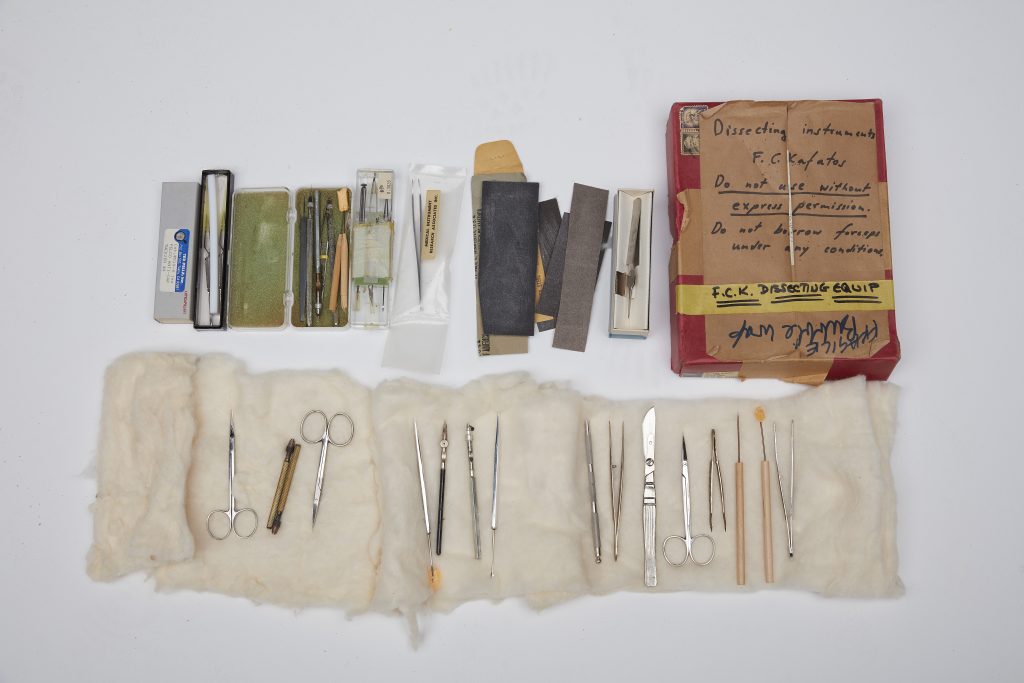
- Personal series: The series is dedicated to personal materials of Fotis Kafatos, such as artifacts (presents, souvenirs, regalia, instruments, etc.), an alphabetic catalogue of correspondence (from 1994 until 2004), individual records (documentation and correspondence for Kafatos’ employees from 1994 until 2007), photos and photo negatives (178 items), business consulting endeavors, collection of articles about Fotis Kafatos, Christmas letters, poems, and memoirs.
- Scientific material series: A rich collection of materials dedicated to Kafatos’ scientific activities and research management from 1976 until 2011, including separate subseries for scientific collaborations, grants preparation, scientific writing, and the WHO-funded international research project “Anopheles gambiae Research Initiative” (following the original structure). Documents provide a detailed overview of the scientific research process, especially in the late 1990s and early 2000s: from concept, initial correspondence, and grant application to the final product in the form of academic publications. Early drafts and personal notes are widely present.
- Travels series: Small series, dedicated to Kafatos’ professional travels in 2002, 2006, and 2007 (2 folders), including visits to such institutions as EMBL, ERC, Institut Pasteur, Lois Jeantet Foundation, WHO, Institute of Molecular Agrobiology in Singapore, Keystone Symposia, Harvard University, the Greek Society, the Sars Centre, German Rectors Conference, ESFRI, European Life Sciences Forum, University of Perugia, Howard Hughes Medical Institute, Genome Canada, Imperial College London, European Cooperation in Science and Technology- COST, Centre d’Immunologie de Marseille, Institute of Systems Biology, Wellcome Sanger Institute, Mac Arthur Foundation, Vlaams Institute of Biotechnology.
The Fotis Kafatos collection embodies the vision of the EMBL Archive as a cornerstone resource for documenting the history and progress of the life sciences in Europe. Rooted in the Archive’s mission to support and chronicle European research, instrumentation and education in molecular biology, this diverse collection offers a rich tapestry of insights. It not only traces the career of a distinguished scientist, but also illuminates the evolution of European science policy and the pivotal role of EMBL in the 1990s and early 2000s. In line with International Archives Week 2024 #IAW2024, the EMBL Archive highlights the importance of preserving and sharing the personal collections of scientists. These collections provide invaluable insights into the personal trajectories and contextual dynamics that drive scientific progress. They offer profound insights into how influential scientists navigate science policy and engage in international networking, shaping the scientific landscape.