
What I’ve Learned: Christoph Müller
Christoph Müller shared his thoughts on the state of life sciences and structural biology after 35 years as a researcher who has made important contributions to the field.
EditCutting-edge technology, zooming in on life at the tiniest scales
Taking a photo of yourself or your surroundings has never been easier. All you need is a smartphone, tablet, or a digital camera. In order to image biological structures, a stronger magnification is usually required. Additionally, small biological structures often have to be made visible first.
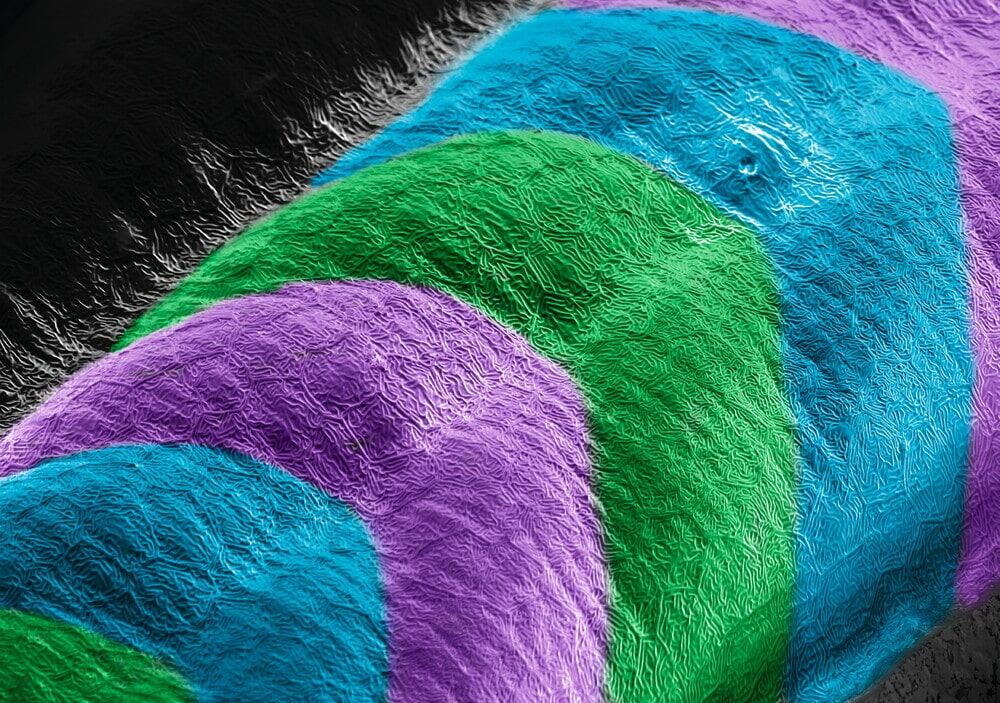
Depending on the imaging technique, this can be done by attaching fluorescent reporter molecules to them, or by adding compounds to increase the contrast. For many imaging experiments to work, molecules or subcellular structures have to be fixed in space. Adding chemical glues, letting molecules form a regular crystal, or cooling down the sample to very low temperatures are the most common approaches.
Other experiments, on the contrary, require cells and molecules to be able to move around freely. This helps biologists understand how cells develop over time, how tissues form, and how proteins shuttle between different cellular compartments to perform their function.
The technology and experimental approaches in biological imaging are constantly being refined. This allows for higher resolutions, faster imaging times, better contrasts – in sum, sharper and more detailed images and videos of biological structures and processes. At EMBL, numerous researchers from multiple disciplines are involved in advancing imaging techniques.
The atomic structures of molecules are revealed at EMBL Hamburg and Grenoble, where scientists use high-energy radiation in synchrotrons, electron lasers, and X-ray beamlines to visualize crystallized proteins. At EMBL Heidelberg and Rome, electron microscopy and advanced light microscopy approaches are developed and applied. These techniques allow researchers to determine the shapes of proteins and protein complexes, follow in real-time how cellular structures change upon external stimuli, or investigate how cells develop into more complex biological structures.
The Heidelberg campus is currently expanded with a brand-new imaging facility to further foster these activities. At EMBL Barcelona, entire biological structures such as tissues and organs can be visualized through ‘mesoscopic imaging’. This unique combination of state-of-the-art imaging technologies enables researchers at EMBL to visualize biology across multiple scales.
Imaging news from EMBL’s six sites
Christoph Müller shared his thoughts on the state of life sciences and structural biology after 35 years as a researcher who has made important contributions to the field.
Edit
EMBL Heidelberg welcomed a delegation from Bulgaria to strengthen scientific connections and explore opportunities for deeper collaboration.
Edit
EMBL’s new Head of Scientific Instrumentation Workshops discusses how building customised experimental setups can enable exciting new research.
EditEMBL facilities offering imaging services
A collection of state-of-the-art light microscopy equipment and image-processing tools.
Advanced expertise in electron microscopy, from sample preparation to image analysis, for a wide variety of biological samples.
Access to imaging platforms and support services to enable 3D imaging of biological tissues over time.
Advanced light microscopy instrumentation and sample preparation services.
The Dorrity group at EMBL Heidelberg is seeking a motivated and skilled molecular biologist to join as a Laboratory Officer. Our group uses cutting-edge single-cell genomic techniques to study how cells regulate gene expression over time, with the goal of understanding how individual cells make deci...
Closes on 1st October. Posted 10th September 2026
EditAbout the teamWe are seeking a skilled and highly motivated Bioinformatics Developer to join the Human Genomics Team at EMBL-EBI and contribute to the maintenance and development of the DECIPHER platform. DECIPHER is a global data sharing platform that fuels rare disease discovery and enables patien...
Closes on 9th October. Posted 17th September 2026
EditFrom microscopy to mycology, from development to disease modelling, EMBL researchers cover a wide range of topics in the biological sciences.